
☕️ What to know in a nutshell:
- Most coffee machines contain plastic in various parts—from the water tank to the brew basket to the internal water lines. Toxic chemicals from that plastic can leach out into your coffee—and heat and acidity increases leaching.
- The concern is not with occasional exposure here and there but with daily, longterm exposure to things like BPA, phthalates, PFAS, and microplastics.
- Be careful with “BPA-free” coffee makers—they can contain other bisphenols (such as BPS and BPF) which can be just as harmful as BPA.
- When choosing a non-plastic coffee maker, glass is usually best, followed by porcelain and stainless steel, and then low-plastic options.
- It’s much easier to find affordable plastic-free coffee makers for manual brewing. For example, pour-overs and French presses are great options.
- There are not very many options for 100% non-toxic/plastic-free automatic coffee machines. Your best choices are Simply Good Coffee or Ratio.
What this guide covers:
- Best Non-Toxic ⚡️ Automatic ⚡️ Coffee Machines
- Plastic-Free Manual Coffee Makers
- Pour over brewers
- French press brewers
- Espresso machines
- Moka pots
- Cold brew
- Turkish coffee pot
- Percolators
- What about an AeroPress?
- Is a Keurig non-toxic?
- What about instant coffee?
- Toxic chemicals to avoid in coffee makers
- Sorry, but not all BPA-free coffee makers are non-toxic
- Here are the non-toxic materials to look for in your coffee maker
- Other things to consider when choosing the best coffee maker for YOU
- Accessories and supplies for a non-toxic coffee routine
- Mold prevention and cleaning your coffee maker
- 🍋 Join Thousands of Subscribers Reducing Toxic Chemicals
This guide contains product recommendations and we may receive compensation if you purchase through certain links. As always, we only make recommendations that are genuine!
I know you’re probably here to shop, so I’ll give you my recommendations first—for automatic and them manual brewing options.
After that, I’ve got lots of info about what exactly to look for in a non-toxic coffee maker, how to reduce your exposure to microplastics, and more.
Best Non-Toxic ⚡️ Automatic ⚡️ Coffee Machines
It’s still slim pickings when it comes to plastic-free coffee machines that are automatic. Most machines use plastic for various parts—the water tank, the internal water lines, the brew basket, etc.
That’s why going with a manual brewing method is really the only way to go 100% plastic-free.
But, if you don’t have time in the morning or just need an automatic coffee maker for whatever reason, you do have a few good options for coffee makers that use minimal plastic:
Ratio
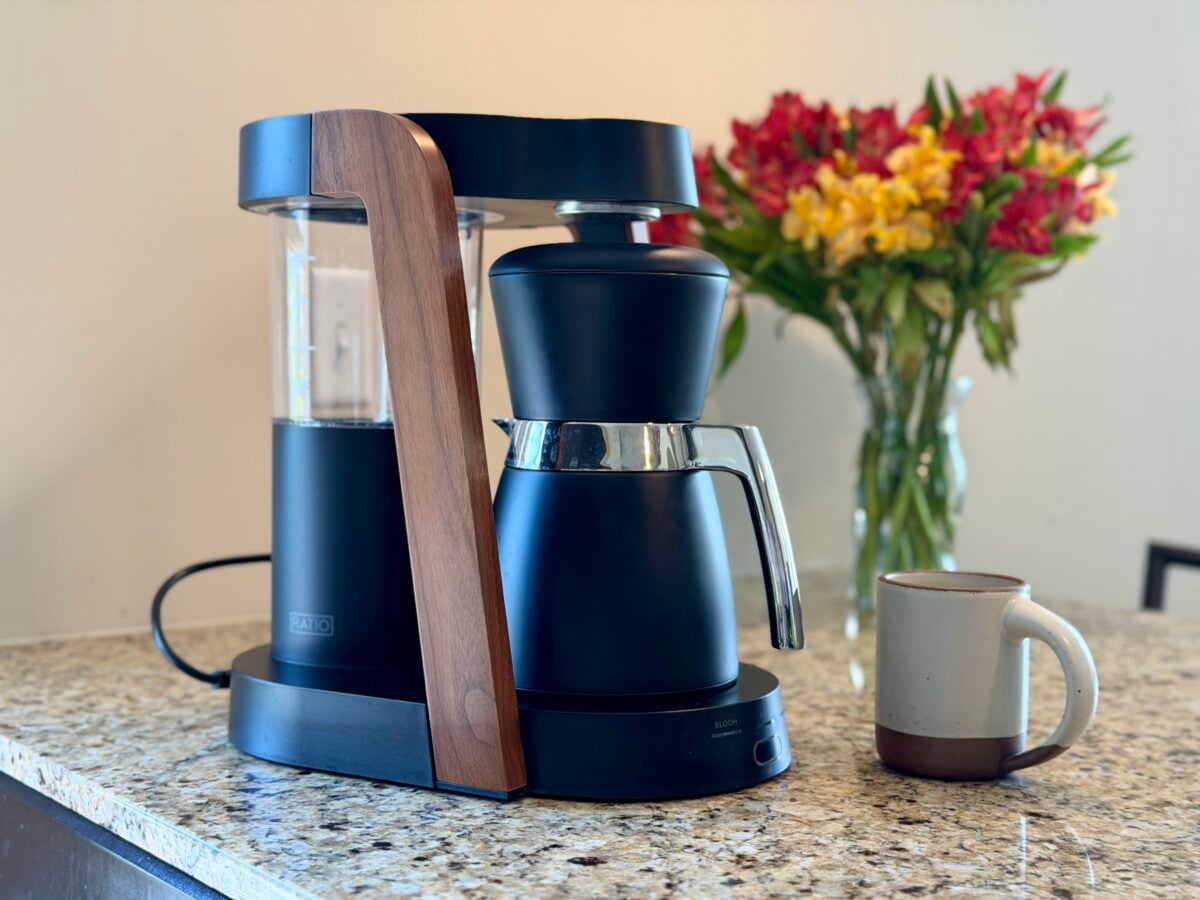
The below info is for the Ratio Eight line, which is the one I recommend (not the Six or Four, which use more plastic).
Price: $584-$845
Plastic? The water lines and carafes are plastic-free, so no hot water or coffee touches plastic in the Ratio Eight version. The water tank is not plastic-free at this time.
What makes it different? This is the lowest-plastic automatic coffee maker I’ve been able to find that has a thermal pot for keeping your coffee hot for a long time.
The Ratio Eight coffee maker is a great option for a number of reasons:
- They use as little plastic as possible. The plastic they do use is mostly Tritan (more on that in a minute) and medical-grade.
- The supply lines are made out of handblown borosilicate glass and the shower head is stainless steel.
- The carafes are made out of handblown glass or stainless steel.
- It’s customizable (you can choose the body color, the type of wood for the accent, and you can easily swap out carafes & accessories)
- Even though it brews with the push of a button, it mimics hand-made pour over coffee.
This is definitely an investment! But they do offer a 30-day “Love It Guarantee” and a 5-year warranty, if that makes you feel any better about coughing up the change.
Simply Good Coffee
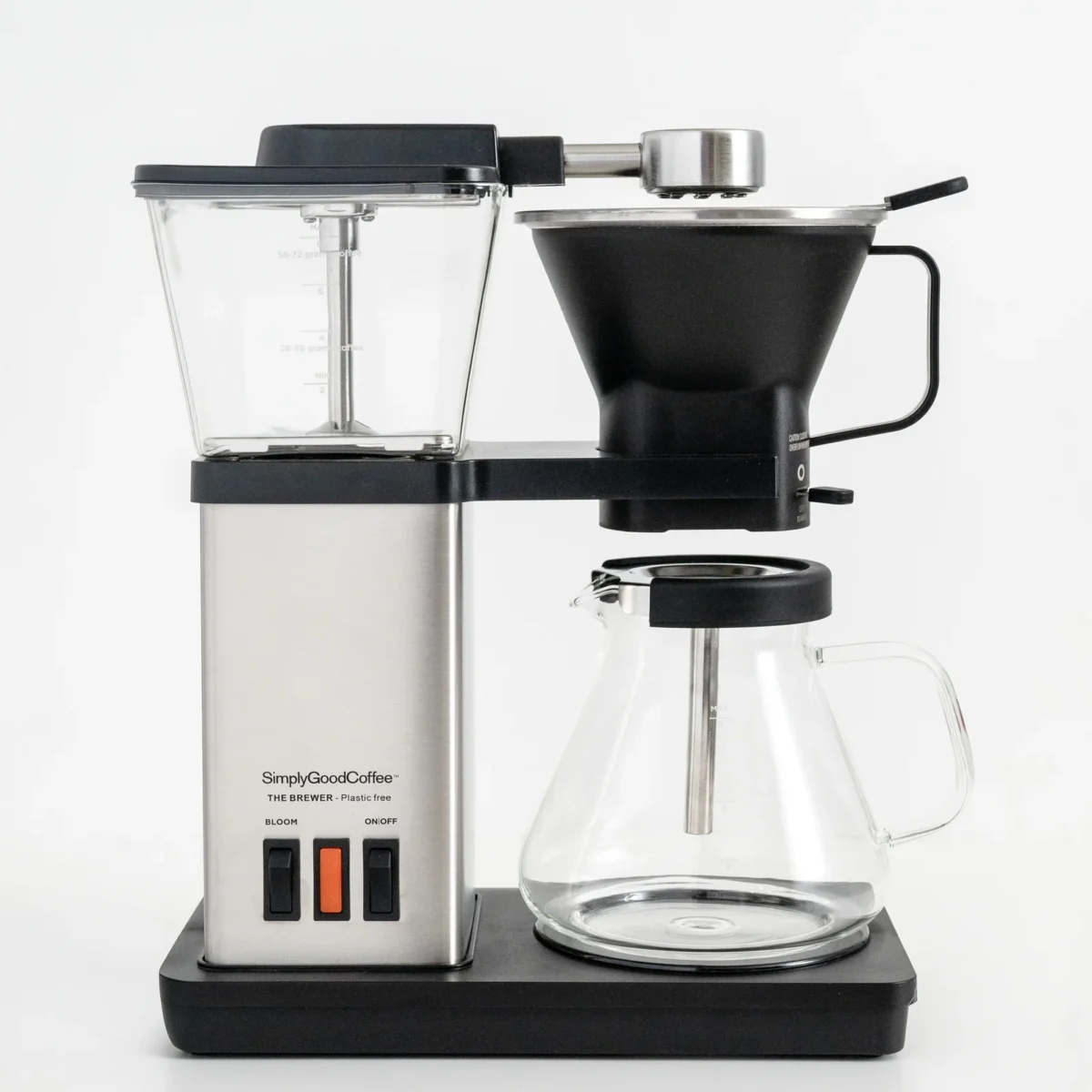
Price: $429-$479
Plastic? It’s not 100% plastic-free, but there is no plastic touching the water at any point in the process
What makes it different: The ONLY automatic option where no water or coffee touches plastic at all.
Simply Good Coffee’s “The Brewer” is definitely the cool kid on the block at the moment. They’ve been back-ordered for months.
It’s honestly a pretty simple automatic coffee maker: it’s got a one-touch button operation, it can brew 8 cups of coffee in 6 minutes, and it uses a bloom shower head for even water distribution (for a pour-over vibe).
The black parts of the machine you see pictured are plastic, and they are mostly used for insulation. But none of those parts touch the water or coffee at any point in the process—either before or after brewing.
Some other things you may want to know about is that they have a 30-day satisfaction guarantee and a 2-year warranty. Also, many of the parts are removable and dishwasher-safe for easier cleaning.
BTW, they have a few different versions, so just make sure you’re getting the plastic-free one!
This link will get you $25 off your purchase.
More tips for automatic coffee makers
What if you want an automatic coffee maker but can’t (or don’t want to) spend that much? Here are a few things to look for to decrease your exposure to plastics and other toxicants:
- At least choose a coffee maker that uses a glass or stainless steel carafe. The carafe is arguably the most important part to make sure is plastic-free because it’s where your coffee sits the longest (leaving more opportunity for leaching). It’s easy to find affordable automatic coffee machines with glass carafes from brands like Mr. Coffee.
- Minimize the amount of plastic-to-liquid contact time. That might mean spending an extra 30 seconds filling the water tank in the morning instead of filling up the night before and letting it sit there overnight.
- If the coffee maker came with a reusable filter that includes plastic, you could consider swapping it out with one that’s made out of stainless steel, organic cotton fabric, and/or paper filters. (More on how to choose non-toxic filters below.)
- For the plastic parts, look for brands that use “least-bad” plastics like Tritan. Although Tritan is still somewhat controversial (you can read more about that here), it’s one of the ‘least bad’ plastics—it’s supposed to be free from not only BPA but also all bisphenols and other hormone disruptors. Here are some more affordable brands that use Tritan (and similar) plastics in their coffee makers:
- Moccamaster (starting at ~$250 | Amazon, Crate&Barrel, Williams Sonoma, Walmart)
- Aarke (starting ~$400 | Amazon, Williams Sonoma)
- Breville (starting at ~$300 | Williams Sonoma, Crate&Barrel)
- Mr. Coffee (starting at ~$25 | Target or Walmart)
- Ninja (starting at ~$100 | Target, Walmart, and Best Buy)
Plastic-Free Manual Coffee Makers
It’s way easier (and more affordable) to go plastic-free and non-toxic if you have the time & energy for a manual brew.
Pour over brewers
Pour over is my personal favorite brewing method—I’ve been making a pour over every morning for years.
Here are a few good options:
Chemex
Price: $44-$162
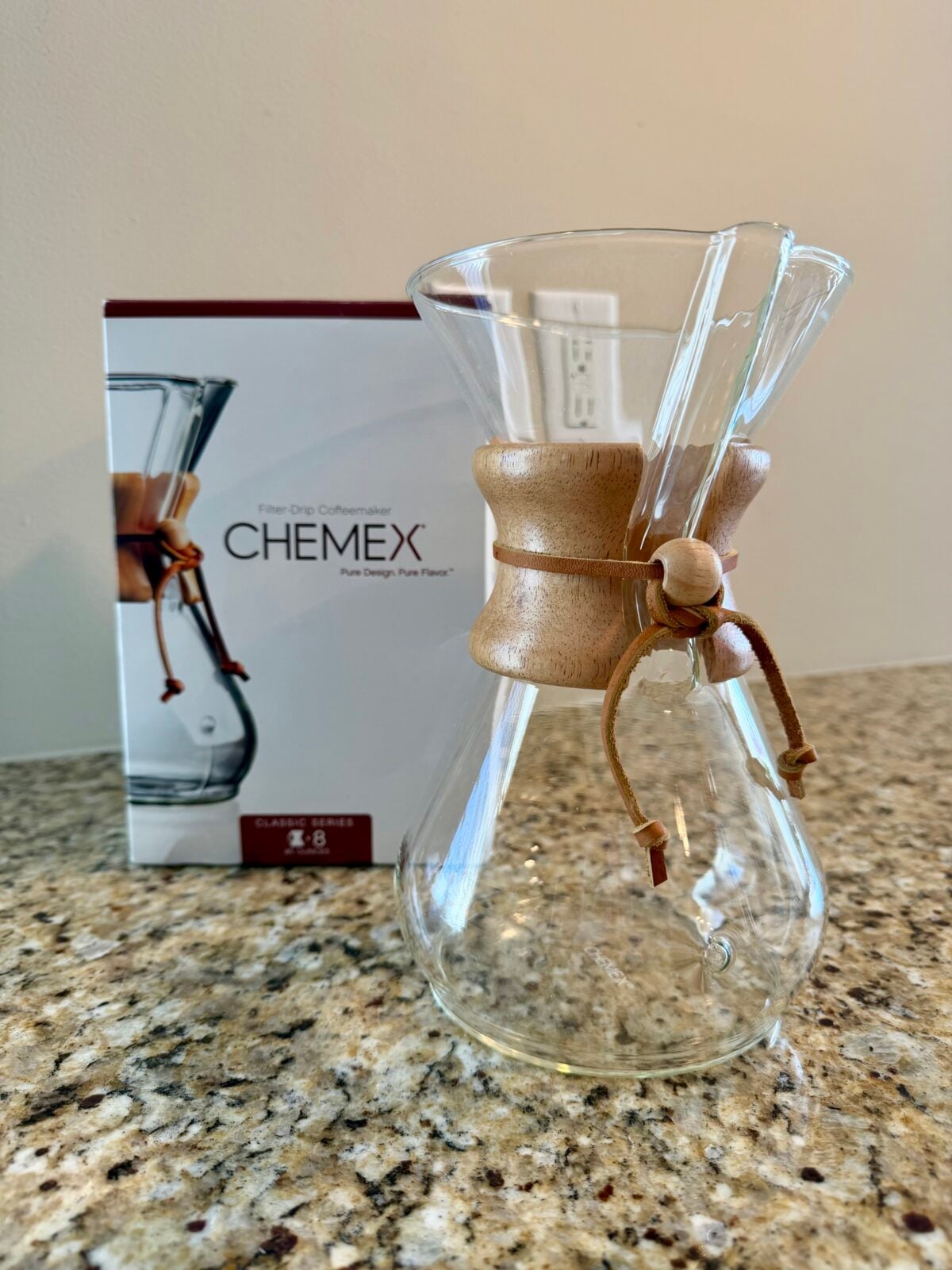
Plastic? None. Mostly glass, with paper for the filters and some wood/leather for the outer details.
What set it apart: If you need to brew a larger pot, go for Chemex. You can get a 10-cup carafe, which is larger than most other manual brewing options.
I’ve used Chemex’s pour over coffee makers for years now. The classic designs are almost entirely borosilicate glass, with a little bit of wood and leather on the outside. (They also have some all-glass options as well, which have handles.)
Chemex offers various sizes, from 3-cup to 10-cup. Most of their pour overs require filters (see below for how to choose a non-toxic coffee filter). They also offer a stainless steel reusable pour over cone and other fancy accessories and supplies—including a unique hand-blown glass water kettle! They also have a machine that will turn your pour over carafe into an automatic drip coffee maker, but unfortunately it uses plastic for the water tank and shower head.
Hario
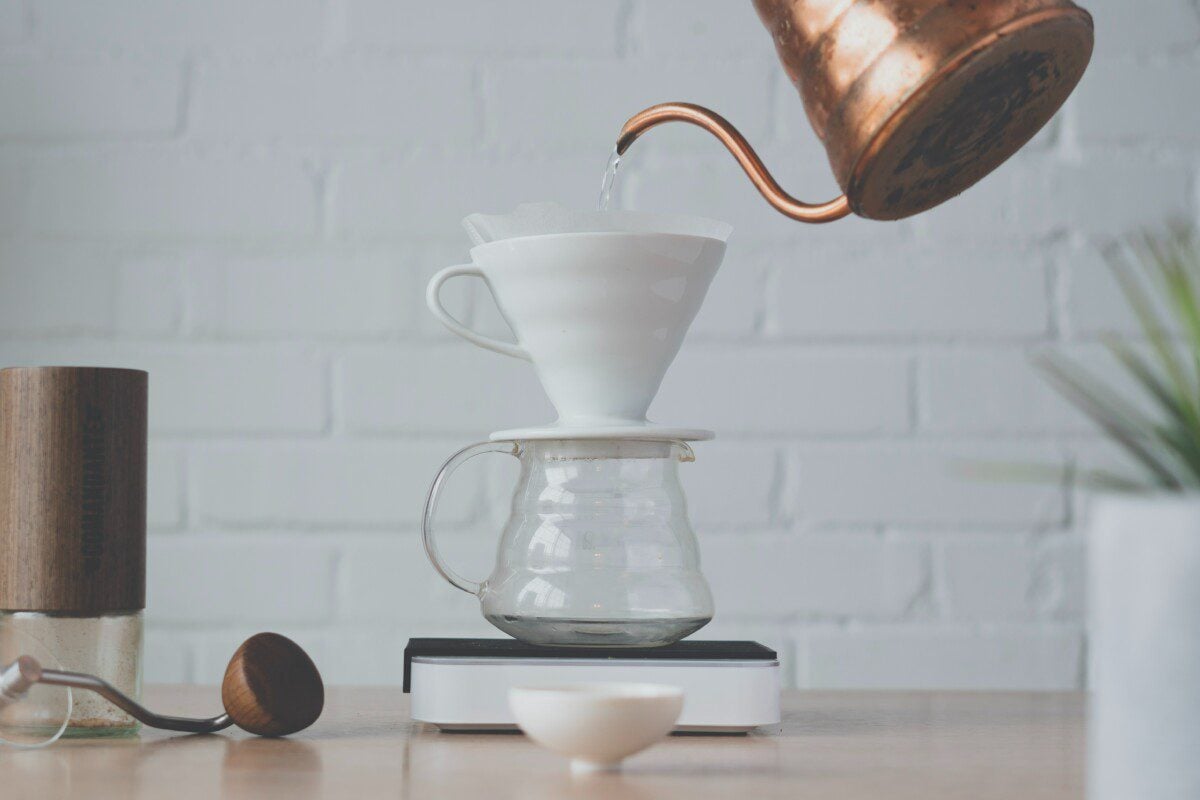
Price: $20-$175
Plastic? None. Glass, ceramic, and paper filters.
This is another classic brand that’s been serving up coffee brewing supplies since 1921. They offer a wide variety of pour over drippers, including some I do recommend (like the glass, white porcelain, and stainless steel) and others I do not recommend as much (like the plastic or the colored porcelain).
They have various brew kits that include glass carafes, as well as French presses, kettles, filters, grinders, drinkware, and even fancy coffee siphons.
Pure Over
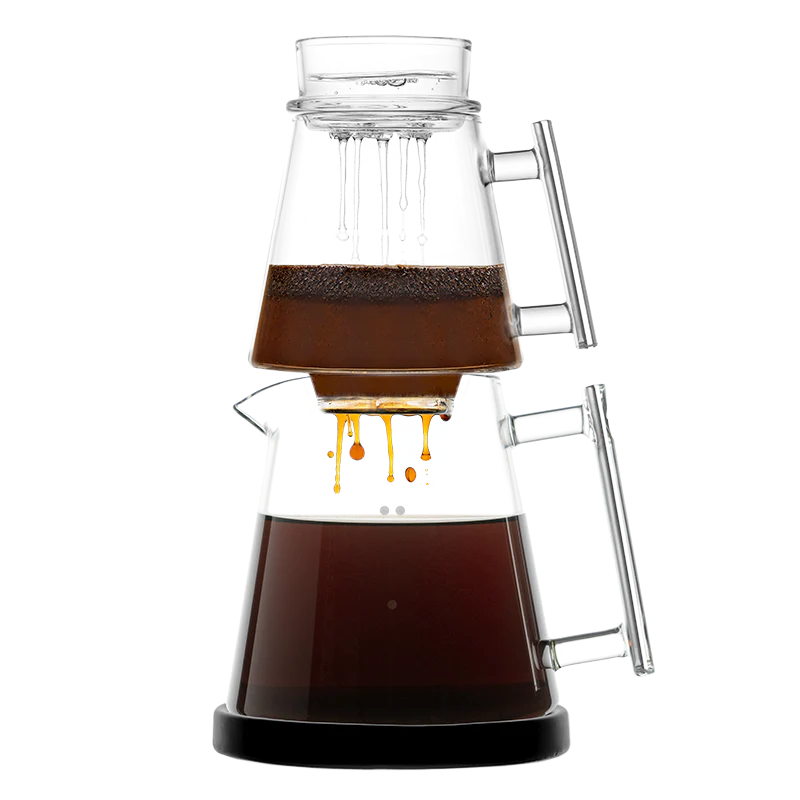
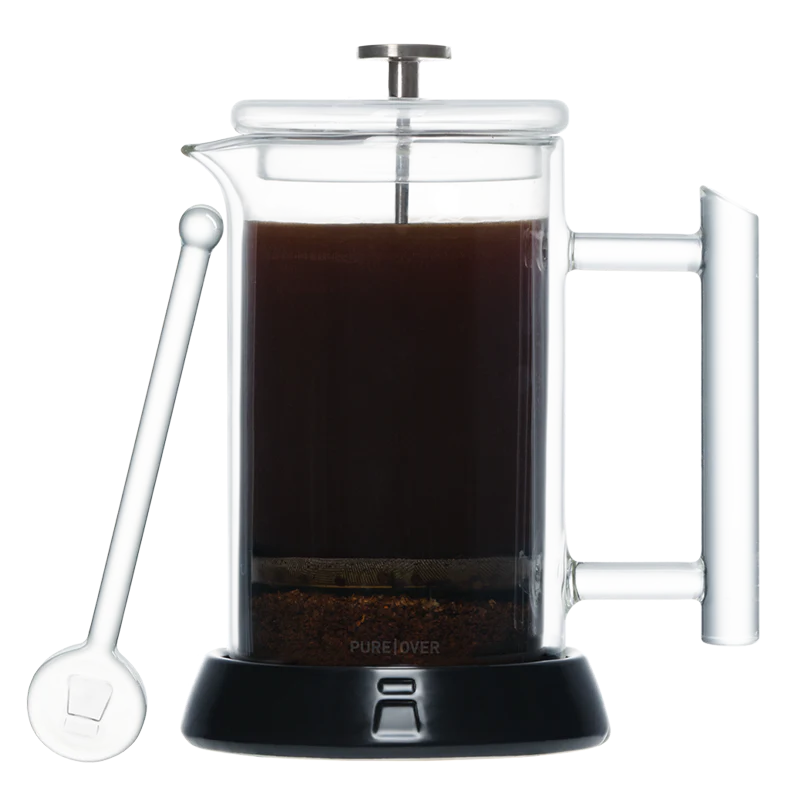
Types: Pour over, french press
Price: $109-$119
Plastic? 100% plastic-free. Mostly glass, with a ceramic base. And the french press has a stainless steel plunger/filter.
What makes it different: You don’t have to re-buy any paper filters! The top glass part is the filter.
I definitely like the idea of this style of pour over for a couple of reasons:
- You don’t have to worry about re-buying any paper filters or washing a cotton filter or anything like that.
- You don’t have to stand over your pour over waiting for the water to filter through and then pouring in more. You can essentially just pour all of the water in at once and then walk away (and get something else done!) as it filters through on its own.
This setup was actually created by an engineer and glass artist! Etai Rahmil, the founder of Pure Over, got the idea one day when he ran out of paper filters. Each piece is still handmade by glass artisans to this day.
If you’d rather have a french press instead of a pour over, they have that option as well. Not only is it also 100% plastic-free, but it’s also double-walled for better temperature regulation.
You can order these non-toxic coffee makers by themselves or get a set of glass mugs with them. All of the glass pieces are dishwasher safe, too.
More pour over options
There’s honestly no shortage:
- Public Goods has a regular ceramic pour over and filters. (Code FILTERY20 will get you 20% off.)
- Ovalware has a plastic-free pour over set with a stainless steel filter
- So does Bean Envy
- And Bodum
French press brewers
French presses are very easy to find. They’re usually pretty affordable and they require less effort compared to a pour over (since you don’t have to stand there and keep pouring more water into the top).
French presses are usually available in glass and/or stainless steel.
Some French presses come with plastic parts, so watch out for that. But it’s not difficult to find a completely plastic-free French press. Here are some options:
- Pure Over (listed above)
- Public Goods
- Pure Brew (Amazon)
- Frieling (stainless steel instead of glass)
Espresso machines
Pretty much all espresso machines contain plastic lines on the inside. If you want to avoid those, you could try a manual option like Rok or La Pavoni. These options have less plastic than the electric machines.
From my research so far, Gaggia seems to be one of the best low-plastic espresso machines. It’s handmade in Italy and comes with a lot of good reviews from espresso fanatics.
Moka pots
Go for stainless steel like:
Cold brew
Check out Ovalware’s plastic-free cold brew maker – made of glass, stainless steel, and silicone. You put the coffee in and let it brew overnight.
Turkish coffee pot
Again, it’s easier to go with stainless steel here (like this one, for example). Traditional Turkish coffee pots are made of copper, which will need to be re-tinned if & when the copper starts to become exposed on the inside.
Percolators
You can find stove-top ones or ones that plug in. Again, go for primarily stainless steel here, especially for the inside part that touches the coffee.
This is certainly not the full extend of non-toxic coffee makers, but those are the most commonly used ones!
What about an AeroPress?
The AeroPress is a manual BPA-free coffee maker that’s loved by campers and travelers. However, it’s made almost entirely of plastic (polypropylene), along with a few silicone parts. Although the plastic is “FDA and EU approved for use in contact with food” and “are free of BPA and phthalates,” that doesn’t necessarily mean it’s free from all bisphenols and any other endocrine disruptors.
Therefore, I don’t recommend AeroPress as a good non-toxic coffee maker, especially for everyday use.
Update: They now have an Aeropress made of glass, stainless steel, and aluminum. I don’t love that they use aluminum, but this is a better option than the plastic one.
Delter, another brand that’s similar to AeroPress, uses Tritan plastic for their manual coffee maker. As discussed above, Tritan is one of the “least-bad” types of plastic, but it still definitely cannot be considered a plastic-free coffee maker. You’d be better off using a French press if possible. Or a stainless steel pour over set up like this one.
Is a Keurig non-toxic?
Short answer: no.
This probably won’t be too surprising to you, but I don’t recommend Keurig as a non-toxic coffee maker, especially on a regular basis.
Not only does the Keurig machine itself use a lot of plastic, but most of the pods are made from plastic as well. Not only is this wasteful, but it can also expose coffee drinkers to plasticizers that may leach from the pods into the coffee as it’s being made. Although many Keurig pods are BPA-free these days, there’s no indication that they’re also free from other toxic bisphenols, phthalates, or other harmful plastic chemicals. You can learn more about this here.
Keurigs are also notorious for growing mold, which can then get into your coffee and make you sick.
If you are going to use a Keurig, make sure you clean it often and go with a low- or no-plastic coffee pod option. You can get a reusable stainless steel pod that you put your own ground coffee into, or you can go with a paper pod option.
Also, make sure it’s actual paper that’s used. Coulée Coffee Co, for example, advertises their coffee pods as “plastic-free” and “compostable,” but they’re not. They’re apparently made of PLA (polylactic acid) and while that is a bio-based plastic, it’s not home compostable. It can only biodegrade in an industrial facility, and no where in Coulée’s labeling do I see that clarification.
You could also check out Cumulus as a Keurig alternative, if you really love your single use pods. This machine only brews cold coffee, so you don’t have to worry about leaching quite as much (since heat increases leaching). Their pods are aluminum (though they are most likely lined with plastic, as pretty much all aluminum cans are).
What about instant coffee?
If you like the taste and texture of instant coffee, then it’s certainly a great option that only requires some hot water, a mug, and a stirring utensil.
The main downside to instant coffee is that it tends to have higher concentrations of acrylamide compared to regular coffee. Acrylamide is a probable carcinogen and a neurotoxin. (It’s found in other foods too, as well as smoke.)
Although most research so far has only found negative effects at high levels of acrylamide (levels higher than what we’d get through diet), it may be worth being mindful when you consider how much instant coffee you consume. For example, you may want to just stick with instant coffee when you’re traveling and drink regular coffee when you’re at home.
Go organic when you can to decrease exposure to pesticides. Here are some places to get organic instant coffee:
- Four Sigmatic
- Blue Bottle Coffee
- Om Mushrooms
- Mount Hagan
- Black Coffee Roasting Co.
- You could also try something like Golden Ratio, which is a lighter coffee option that brews like tea.
Toxic chemicals to avoid in coffee makers
The main concern with coffee makers has to do with the plastic involved. The primary chemicals of concern when it comes to the hard plastic (usually polycarbonate) used in coffee makers are bisphenols, such as BPA and BPS. These chemicals are often added to plastic to make them harder and more durable.
BPA is a known endocrine disruptor that’s linked to various health issues, including:
- Heart disease
- Cancer (including breast and prostate)
- Metabolic disorders (such as diabetes)
- Childhood asthma
- Fertility issues (such as reduced sperm count and recurring miscarriages)
- Birth defects
- Developmental, behavioral, and learning issues like ADHD and aggression
- Mental health concerns like anxiety and depression
- Inflammatory bowel disease (including ulcerative colitis and Chrohn’s disease)
Research shows that BPA often doesn’t follow the classic “the dose makes the poison” paradigm. Instead, even low levels of BPA that have been deemed as “safe” have the ability to disrupt healthy function and lead to developmental problems, cancer, and more.
BPA and related bisphenols can leach out of containers and into the food or drink that’s stored in them. Then we consume that food or drink, ingesting the chemicals into our bodies.
Decreasing the amount of plastic in your coffee maker is especially important for three main reasons:
- Heat: Higher temperatures increase the amount of chemicals that leach from the material. Unless you’re making an overnight cold brew, you’re likely using heat every time you make coffee.
- Acidity: Like heat, acid can also cause plastics to break down faster, and most people are aware that most coffees are pretty acidic.
- Frequency of use: Ideally, anything you use more frequently should be higher on the priority list when it comes to swapping out for a non-toxic (or at least less toxic) option. Most people are using their coffee maker daily or almost daily, so switching to a plastic-free coffee routine could be a great way to decrease your daily intake of BPA and other plastic chemicals.
Sorry, but not all BPA-free coffee makers are non-toxic
BPA has become quite notorious in recent decades, so most people are at least somewhat aware of its potentially negative effects on health.
However, getting a “BPA-free” coffee maker may not actually be as “safe” as you think.
This is because when BPA started getting a bad rap, manufacturers started replacing BPA with very similar chemicals such as BPS and BPF, allowing them to slap a “BPA-free” sticker on their product without actually solving the problem of endocrine disruption exposure.
(Other bisphenols like BPS and BPF have been shown to be just as bad as BPA. You can read more about that here.)
This is why you’ll ideally want to go for a completely plastic-free coffee maker, as opposed to one that’s just “BPA-free.”
Here are the non-toxic materials to look for in your coffee maker
When choosing a plastic-free coffee maker, here are the safer materials you’ll likely want to look for instead of plastic:
Glass
Glass is one of the safest materials for coffee, tea, and other drinks. It’s generally inert, meaning that chemicals don’t leach from it. Look for borosilicate glass, which is not only more resistant to thermal shock, but is also even more resistant to chemical leaching and absorbent than other types of glass.
Stainless steel
There are stainless steel cones for pour overs, stainless steel carafes, percolators, and more. Of course, espresso machines use quite a bit of stainless steel as well.
Some people may be concerned about whether or not stainless steel will leach heavy metals such as lead or chromium (especially with acidic foods or liquids). Some stainless steel products even come with a California Prop 65 warning label because of the potential negative health effects of lead and chromium.
High-quality 18/8 stainless steel (food-grade and/or medical-grade) is generally inert, meaning metals like lead, chromium, or nickel should not leach from it. Studies have really only found metals to leach from stainless steel cookware when acidic foods (like tomato sauce) are cooked for long periods of time (2 to 20 hours). This is noteworthy since coffee is acidic.
This is definitely worth considering when choosing your coffee maker, but the reason it may not be too much of a worry is because:
- The amount of chromium that could potentially leach from stainless steel when cooking acidic foods is low. In fact, the amount that new stainless steel leached in tomato sauce after being heated for a long time is about the same amount that the Mayo Clinic recommends is okay for a daily amount.
- The amount of leached chromium significantly decreases after about 6 uses.
- Similarly, nickel is essential in minute amounts, and humans ingest about the same amount that a new stainless steel pot leaches when heated.
The main people who should be wary about using a stainless steel coffee pot are those who have a nickel sensitivity/allergy (~5-10% of the population).
So, although there is some slight concern about metal leaching from stainless steel, all things considered, stainless steel is still a much safer option than plastic. So if you’re choosing between the two, go with the stainless steel.
Porcelain
Porcelain is another material that’s used mainly for pour over cones. Porcelain has also been found to contain traces of heavy metals such as lead. In order to avoid lead in porcelain, look for Prop 65 compliance and avoid brightly-colored porcelain, as those are more likely to contain heavy metals. (Go with white instead.)
Minimal plastic
Depending on what kind of coffee maker you want, you may not be able to avoid plastic completely. This is especially true of automatic drip coffee makers, which almost always use plastic for at least some of their parts.
When this is the case, you’ll want to try and choose a coffee maker that uses as little plastic as possible, especially for the parts that actually come into contact with the liquid: the water tank, the shower head, the brew basket, and the pot.
There are some tips below on how to decrease your exposure to toxic plasticizers even if you do use a plastic coffee maker.
Other things to consider when choosing the best coffee maker for YOU
What works for me and my household might not work for you and yours, and vice versa.
Material safety is just one factor to think about when you’re choosing your coffee maker… You’ll also want to get something that actually fits well with your preferences!
1. Convenience & routine
Consider your daily routine, including how and where you’ll be drinking your coffee and how much time you have to make it.
As already mentioned, it’s much easier to find manual coffee makers that are non-toxic and truly plastic-free. So if you work from home or have more time in the morning, something like a pour over might be a great fit for you.
However, if you’re often in a rush to get out the door in the morning, an automatic drip coffee maker might be more realistic for you… even if it’s not perfect in terms of materials.
Also think about where you’ll be making and drinking your coffee: at home, on the go, at the office? This may also determine what types of brew kit will work for you. You may even choose a different coffee brewing method for the weekdays versus weekends.
2. Taste preferences
Are you someone who likes their coffee to taste a very specific way, or will you drink anything?
For example, a French press is a great option for a non-toxic coffee maker that’s relatively quick and easy… but some people don’t prefer a French press because the coffee can have a grittier texture.
3. Budget
The amount of money you can potentially spend on a non-toxic coffee maker varies widely. You can grab a pour over cone and a reusable filter for $20 or less, or you can easily spend hundreds of dollars on a low-plastic automatic drip coffee maker.
4. Space
How much space do you have on your countertop (or wherever you’ll be making your coffee)? Do you need something that will need to be stowed away after each use, or can you get something that can sit on the counter all day long?
5. Number of people served
How many people will be drinking coffee each morning, and how much coffee does each person drink? If you need to make a lot of coffee at once, this will obviously eliminate certain options, like a french press or a single-cup pour over.
Accessories and supplies for a non-toxic coffee routine
Filtered water
Filtering your water is not only important for your health but also for the quality of your coffee and for preserving the long-term durability and function of your coffee maker.
Not only can the minerals and/or chemicals in tap water affect the taste of your coffee, but it can also lead to mineral buildup in your machine and/or reusable coffee filters. Coffee shops and roasteries always have their water filtration dialed in so they can give their customers excellent tasting coffee while protecting their machinery.
(I actually did some work with a coffee company once and they were adamant about using properly filtered water in order to get the best-tasting, highest quality coffee.)
Everyone’s water and living situation is different, so it’s hard to recommend a one-size-fits-all water filter. This guide will give you recommendations for different kinds.
Kettle
Depending on which brew method you choose, you may need a kettle as well. I recommend anything that is glass or stainless steel on the inside.
Coffee bean grinder
I personally prefer to buy whole bean coffee and grind it right before I brew it for a much fresher cup.
You shouldn’t have to worry about grinders too much because even most plastic grinders use stainless steel for the parts that actually grind the beans. Plus, you’re probably not going to keep your coffee sitting in the the grinder for very long.
Manual grinders usually have the least amount of plastic, but they can be inconvenient for everyday at-home use. (Although they’re great for traveling and camping.)
Otherwise, you can just use a simple electric grinder like this one from Bodum.
Filters
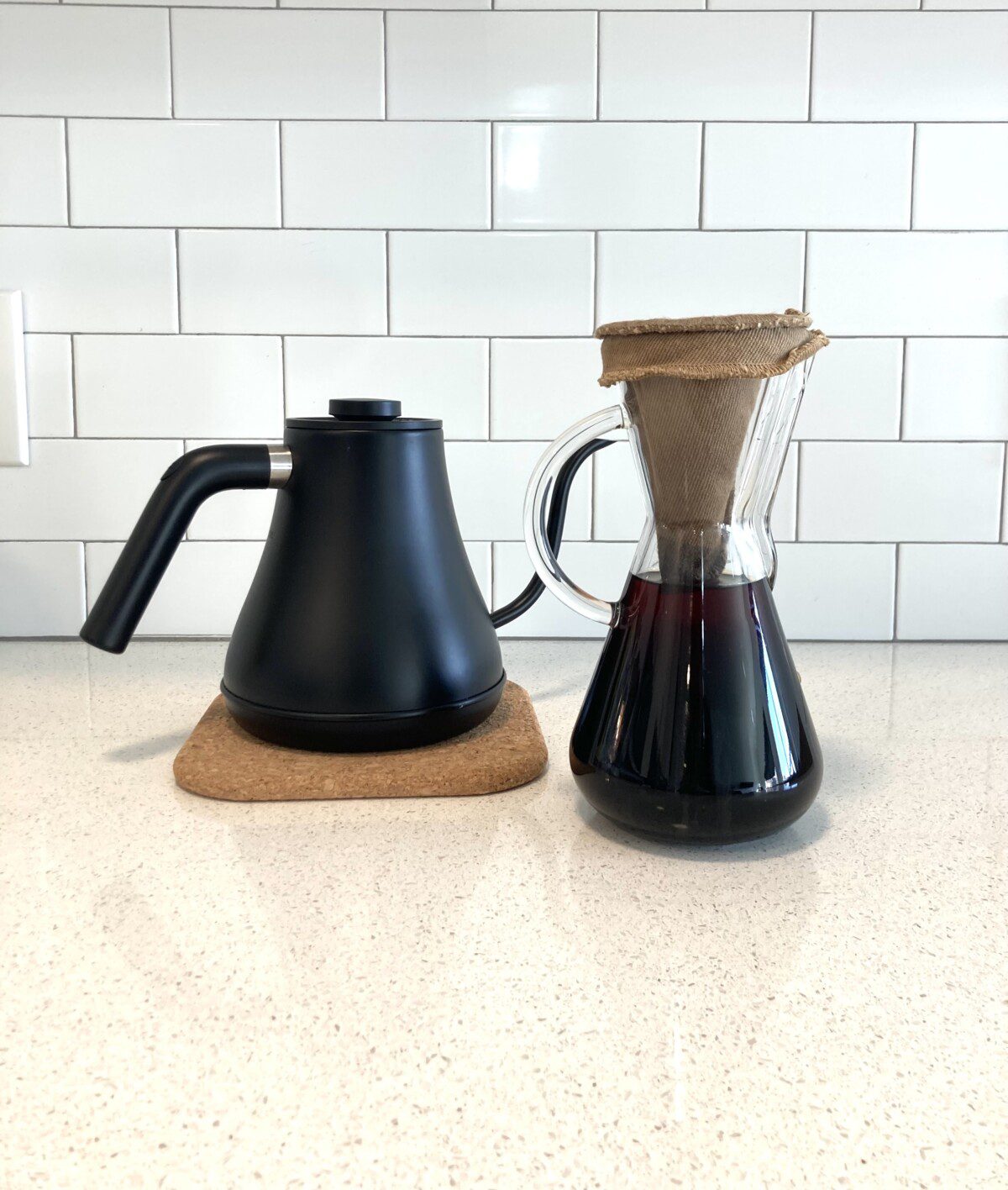
Your two main options when it comes to filters for your coffee maker are paper or fabric.
If you want to use single use paper filters, look for unbleached / TCF (total chlorine free) ones. This will help prevent you from being exposed to toxic dioxins and furans that result from the chlorine bleaching process. If You Care is a recognizable brand that’s relatively easy to find in stores.
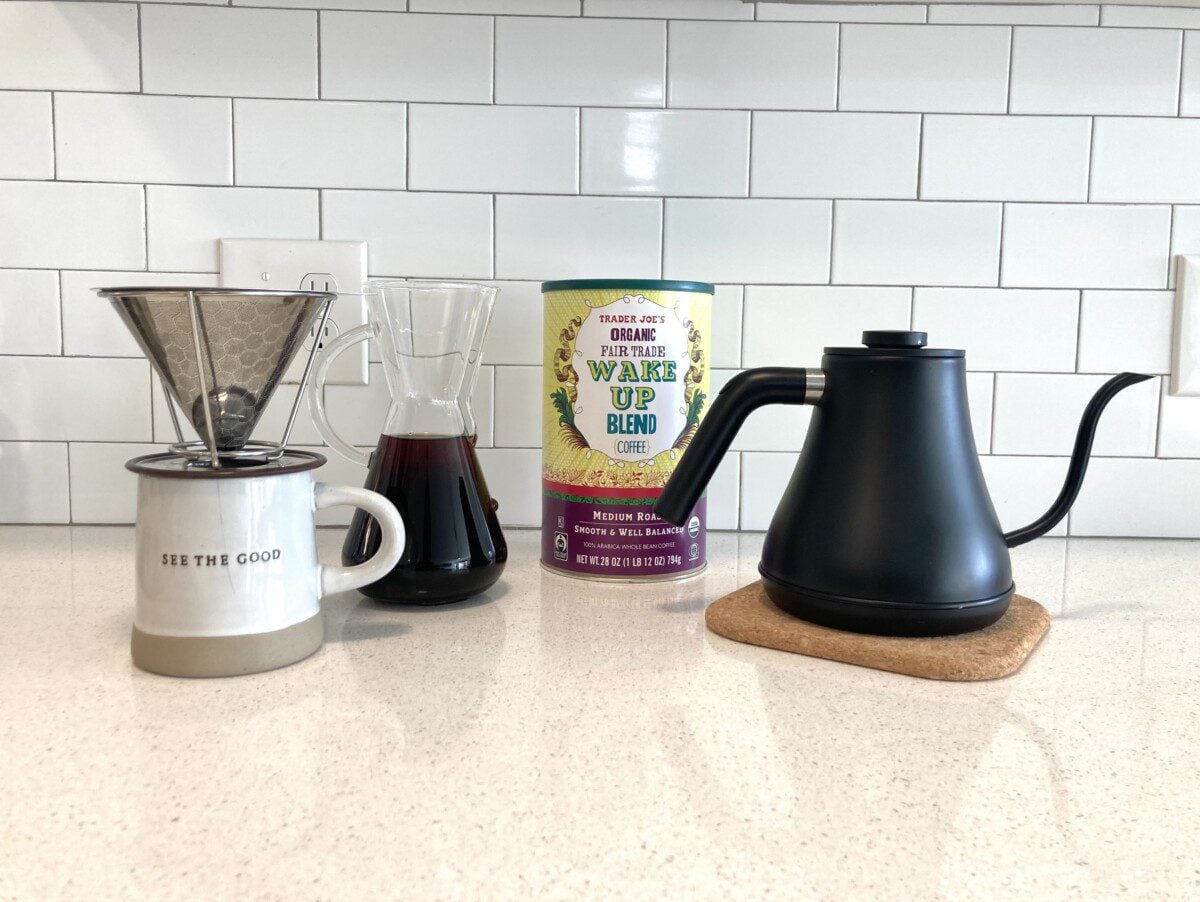
Coffee Sock (pictured above) offers reusable fabric filters that are made out of GOTS certified organic cotton and are available in a variety of different shapes and sizes (cone, traditional basket, tea bag, etc.).
Ebb Filter is a similar option—these reusable fabric filters use organic cotton that’s grown in Texas, woven in South Carolina, and sewn together in Oakland, California.
If you do use a reusable fabric filter, you’ll want to rinse the grounds out shortly after you brew your coffee in order to give the filter time to air dry before it has the chance to start growing any mold. You’ll also want to boil the filter every month or so to clean it.
Aaaand don’t forget the actual coffee

The good news is that it’s not that difficult to find organic coffee these days. Organic coffee is generally a better option not only because it doesn’t require toxic synthetic pesticides when grown and harvested, but it also often means the farmers and others involved in the supply chain are paid fairly.
The most common organic certification you’ll find on coffee (in the U.S. anyway) is USDA Organic. Related labels you may also see on coffee are Fair Trade USA or Fairtrade International (which ensure farmers are paid fairly but doesn’t necessarily have anything to do with pesticide use), Rainforest Alliance Certified (which is more holistic label that requires reduced pesticide use, but does not necessarily mean there aren’t any synthetic pesticides used at all), and Smithsonian Bird Friendly® (which also reduces the amount of pesticides used).
Those who are especially sensitive to mold may also want to choose a coffee brand that is regularly tested and verified to be free from mycotoxins.
Here are some of the best organic coffee brands to check out:
- Fabula (USDA Organic, Fair Trade, mold-free, low-acid)
- Lifeboost (USDA Organic, mold-free, low-acid)
- Purity (USDA Organic, Rainforest Alliance, Bird Friendly, mold-free). You can use the code THEFILTERY for 20% off your first order.
- Thrive Market (USDA Organic)
- Four Sigmatic (USDA Organic, also contains adaptogenic mushrooms)
- Stumptown (check the label: many, but not all, are organic)
- Blue Bottle Coffee (check the label: many, but not all, are organic)
One last note here: third-party certifications can be very helpful, especially when buying from larger coffee companies. However, obtaining and maintaining a certification can be costly for small coffee producers, so some farmers opt out of third-party certifications even when they are actually growing organically. Many small, artisan coffee companies have direct relationships with the farmers, so don’t be afraid to ask for more information about the story and process behind the coffees that your local coffee shop sells.
Mold prevention and cleaning your coffee maker
Automatic drip coffee makers and single-serve Keurig-type machines can be especially prone to mold and bacteria growth, which can potentially make you sick. This is in large part because there are a lot more parts and tight spots in these machines compared to alternatives like a Chemex or a French press.
If you’re going to use an automatic coffee maker, remember that prevention is best when it comes to mold and bacteria. It can be very difficult to get rid of mold once it’s growing, especially since even “dead” mycotoxins can cause problems for people with CIRS and mold sensitivity.
The easily removable pieces should ideally be cleaned with dish soap after each use. Take as many of the parts off as you can, leave the lid open, and let everything air dry as much as possible.
Then once every 2-4 weeks, you can clean and de-calcify your machine by putting equal parts water and white vinegar into the machine and running it like you would a pot of coffee. (You don’t necessarily need any fancy coffee maker cleaners or descaling solutions for this.)
If there are any parts you can scrub with a dish or straw cleaning brush, you can do that as well.
This guide will give you more info on how to identify (and prevent) “Keurig sickness” and more tips on how to deal with a moldy coffee maker.

need to know which brands are consistently BPA free for all their coffee makers. Be the first to tell the public this, as it does not seem to be on the web.
And which 5-cup mini brew coffee makers should be in this list. I am looking at Mr. Coffee and Black + Decker, since they are the only mini systems that were BPA free in the 12-cup size lists on line. But not their 5-cup mini makers.
These are such awesome options. Finally some plastic free options. Now which coffee to get that is clean? Any recommendations? I saw a few here but wasn’t sure if they taste good.
Anyone have any good ones that have no mycotoxins and are third party tested? Thanks
Yes, I like Purity Coffee. I’ll get around to doing a coffee roundup at some point! In the meantime, Organically Becca has a good one: https://organicallybecca.com/comparing-organic-clean-coffee-brands-free-of-mold-mycotoxins/
Check out Simply Good Coffee! They have a really nice looking plastic-free automatic drip coffee maker. It says no plastic or aluminum touches the water at any point! Seems pretty great, I hope to get one in the future.
Thank you! They’re on my list actually for when I update this. 🙂
Is there a reason why stainless steel percolators weren’t mentioned? Trying to find my husband an easy nontoxic coffee maker
No, that’s a pretty good option! I did mention them, just not very obviously. It’s under the “Even More Low-Plastic Coffee Brewing Options” section. 🙂
Any recommendations for a safe at home cold brew machine?
Hi Dana, yes – I recommend Ovalware! (https://www.ovalware.com/products/coldbrew) It’s made from glass, stainless steel, and silicone. I did list it in the article, but it’s kind of hidden at the bottom. 🙂
Are Nespresso pods safe? Do you believe them when they say the aluminum pods do not leach? Seems hard to believe given the high heat…
Hi Phil,
I haven’t looked into Nespresso in-depth, but it APPEARS that the pods are lined with something that prevents the aluminum from coming into contact with the coffee. It’s unclear what that lining is actually made out of, but we’ll reach out and ask. We will try and do a deep dive into Nespresso sometime soon!