
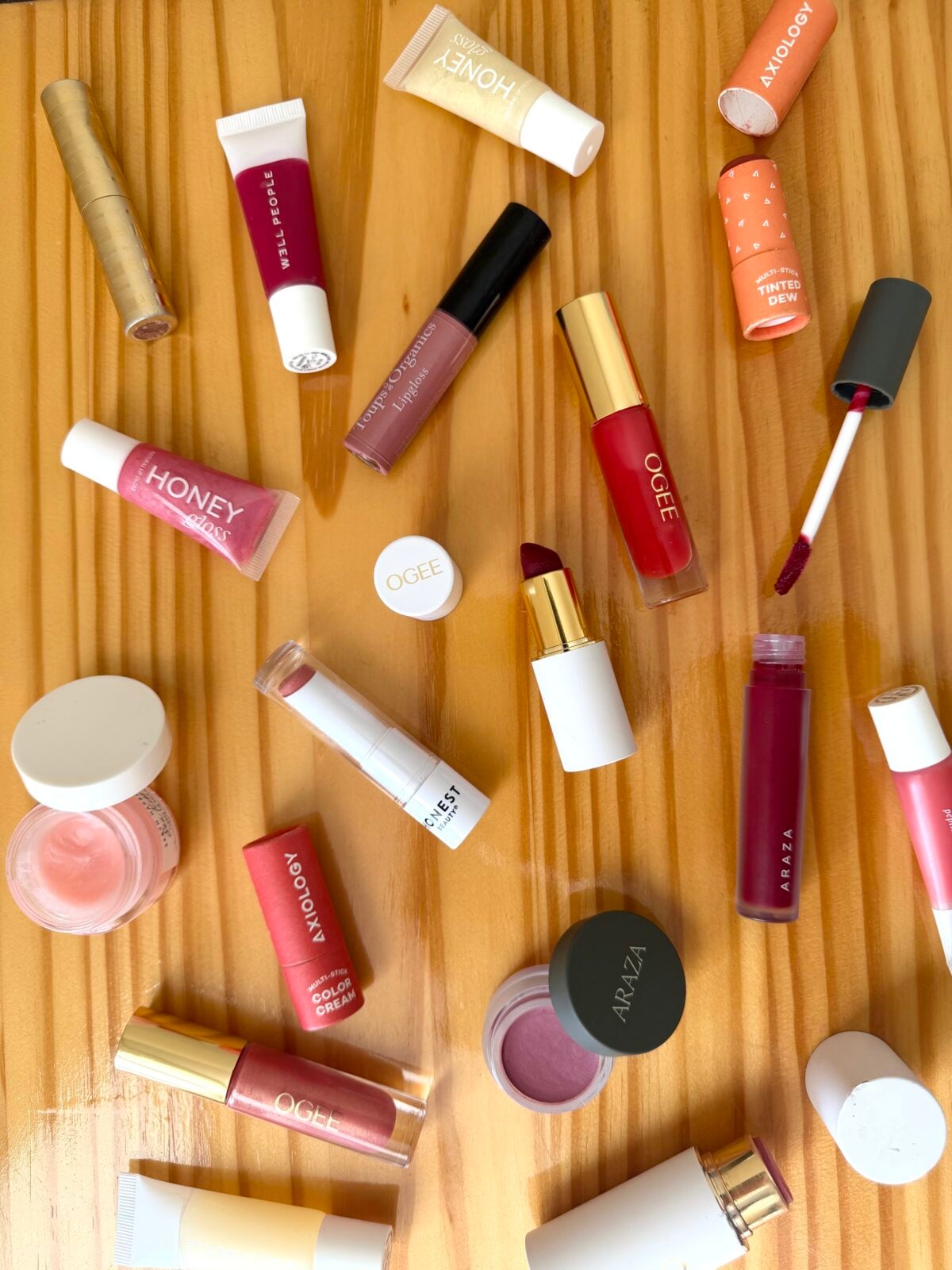
A few of my favorite non-toxic lipsticks & lip glosses by category:
- My favorite overall: Araza and Ogee
- Most affordable: Honest and W3ll People
- Plastic-free: Axiology or Attitude
- Best for tweens: Klee Naturals or Prim & Pure
+ a lot more recommendations below!
Do you really need a ‘non-toxic’ lipstick?
You’ll have to be the final decision maker on that, but for a product that sits on your lips all day, I want to make sure you have all the info when making that decision.
Unfortunately, the cosmetics industry lacks stringent regulation, so not everything you find on shelves is toxin-free. (I cover some of the most common toxic ingredients found in conventional lipstick brands below.)
You’re not likely to get cancer or suffer reduced fertility from putting on conventional lipstick once or twice, of course.
But the problem with lipstick toxicity (along with pretty much any other product) comes from the overall, long-term exposure from repeated use. With lipstick, you’re not only absorbing it through your skin as you do with other cosmetics, but you’re likely ingesting a lot of it too as you lick your lips, eat, drink, etc. If you’re putting on lipstick multiple times a day, each day, every week… that can all add up!
Add this to all of the other toxins we’re exposed to on a day-to-day basis—from other cleaning and personal care products to contaminants in our air and water.
We don’t have control over many of these exposures, which is why I encourage you to swap out the things you do have control over… cosmetics being a powerful one!
✨ Reducing the number of toxicants in your makeup bag can be overwhelming. That’s why I recommend taking it one step at a time, replacing your favorite cosmetic products with non-toxic alternatives as you run out.
P.S. If you’re looking for chapstick-style lip balms, I’ve got another article for you.
What this guide includes:
This guide contains product recommendations and we may receive compensation if you purchase through certain links. As always, we only make recommendations that are genuine!
The best brands for non-toxic & natural lipstick, lip gloss, and lip stain
I’ve picked out some of the best clean lipstick brands that are non-toxic and lead-free. (Plus, I’ve included some lipstick brands that are safe for kids and tweens below as well!).
Not only that, but they come in a wide variety of options so you can find your preferred colors and textures.
☝️ But first! A quick note about titanium dioxide: Titanium dioxide shows up in almost every tinted lip product (even most clean brands) because it’s what makes colors actually show up opaque on your lips. Without it, mineral pigments like iron oxides would look sheer and translucent. It’s also the ingredient that makes lighter and nude shades possible, since you need that white base to lighten darker pigments.
The reason clean brands still use it is that there really isn’t a great alternative. Zinc oxide can work but tends to feel chalky and doesn’t always give the same color payoff. Synthetic dyes can achieve opacity without it, but then you’re moving away from a clean formulation. So it’s a genuine trade-off.
Titanium dioxide is definitely not the most toxic ingredient, but some people still choose to try and avoid (or minimize) it. If you want to learn more about it, I have an entire deep dive here.
I’ve noted which brands below use titanium dioxide and which ones do not, so you can make the decision for yourself!
Araza
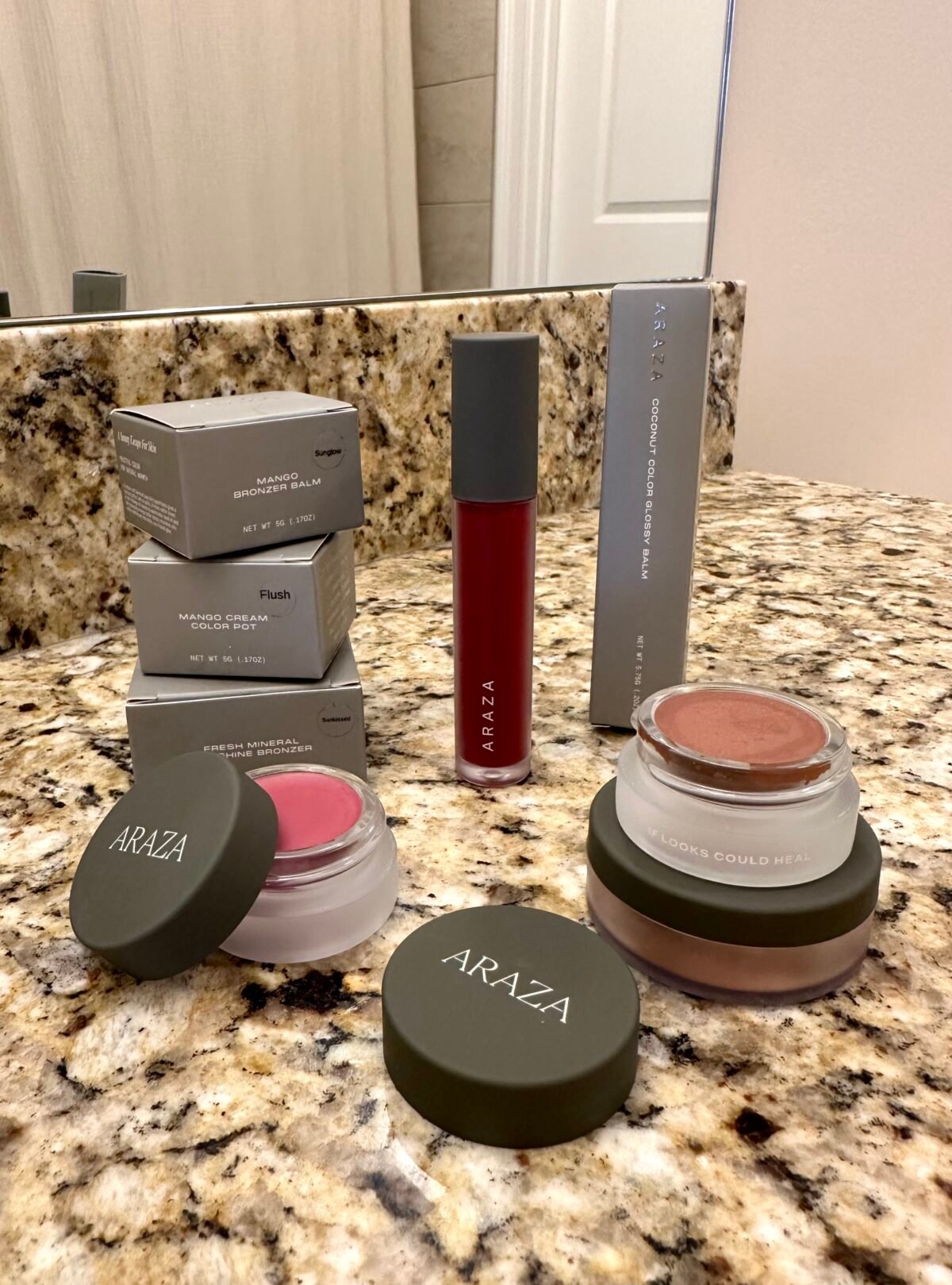
Carries: Lip gloss, lip balm, multi-use color pot
Price range: $12-$28
Vegan/cruelty-free? Cruelty-free, but not vegan (contains beeswax). Also, some colors may contain carmine.
Plastic-free/refillable? No
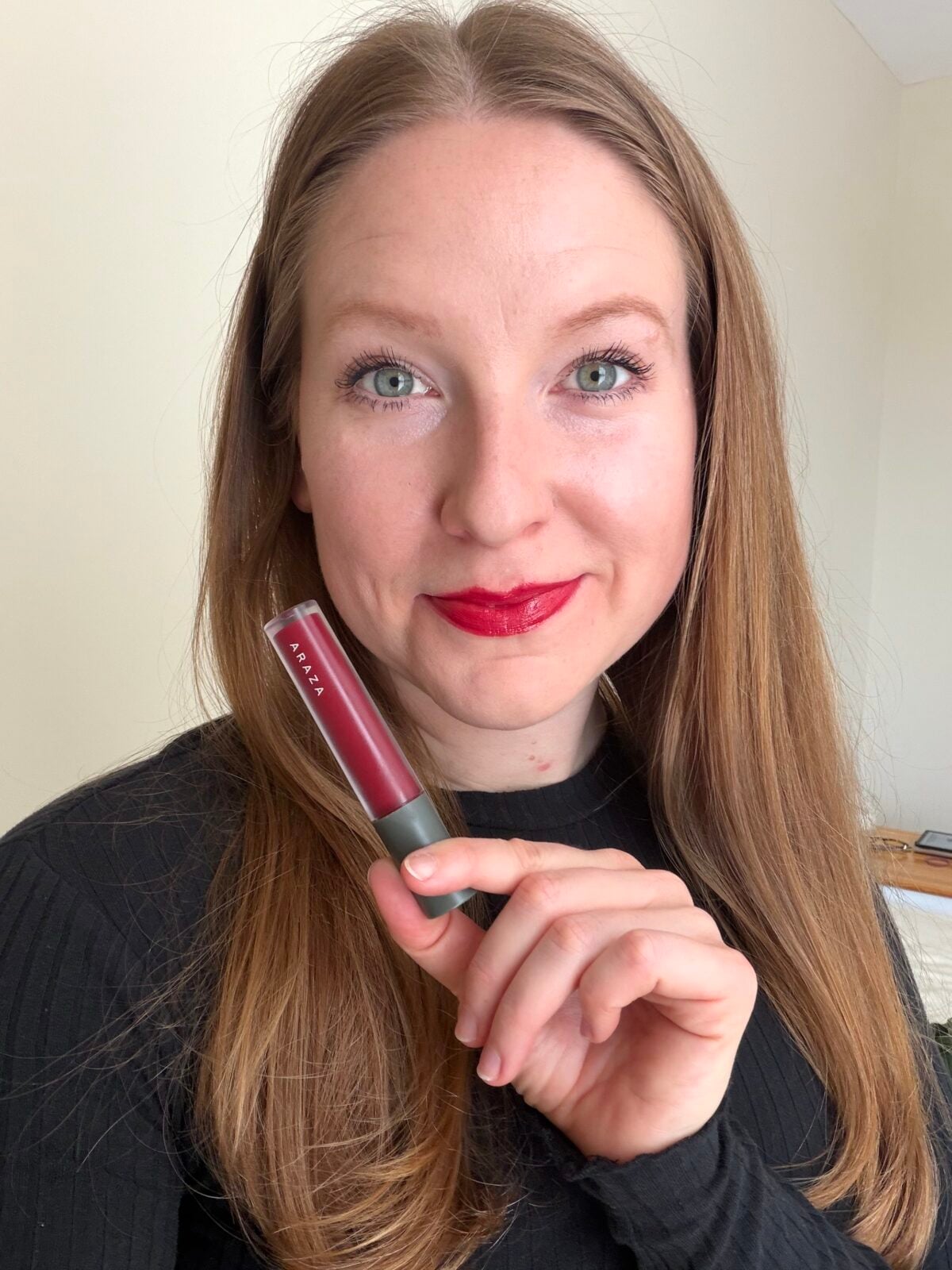
I have been loving Araza’s natural makeup the past several months. I’m impressed with the color they were able to get with this deep red lip gloss using all natural ingredients!
They have a wide range of organic lipstick colors available, though, including more neutral ones.
In addition to the regular tube/stick style lip glosses, they also have color pots that can be used as both a blush and a matte lipstick.
All of their ingredients are real, and many of them are organic. They’re even certified Paleo through The Paleo Foundation, which sets it apart from other makeup companies. This means that every ingredient is free from soy, dairy, legumes, grains, gluten, and anything artificial.
Their whole ethos is that makeup should not just be for covering up, but that it should actually be nourishing. So their lip products contain ingredients like castor seed oil for hydration and vitamin E for anti-aging.
It’s also made in small batches in the USA.
When I asked Araza about heavy metal testing for potential contamination, they told me that while they do not currently test every finished product for heavy metals, it is on their roadmap. They said, “In the meantime, we require supplier documentation for our mineral ingredients, including SDS/MSDS and specifications/COAs with impurity information, and we use the EU approach as a benchmark (no intentionally added heavy metals, only technically unavoidable trace amounts within safe limits).”
Does not contain titanium dioxide.
Use code THEFILTERY for 15% off.
Ogee
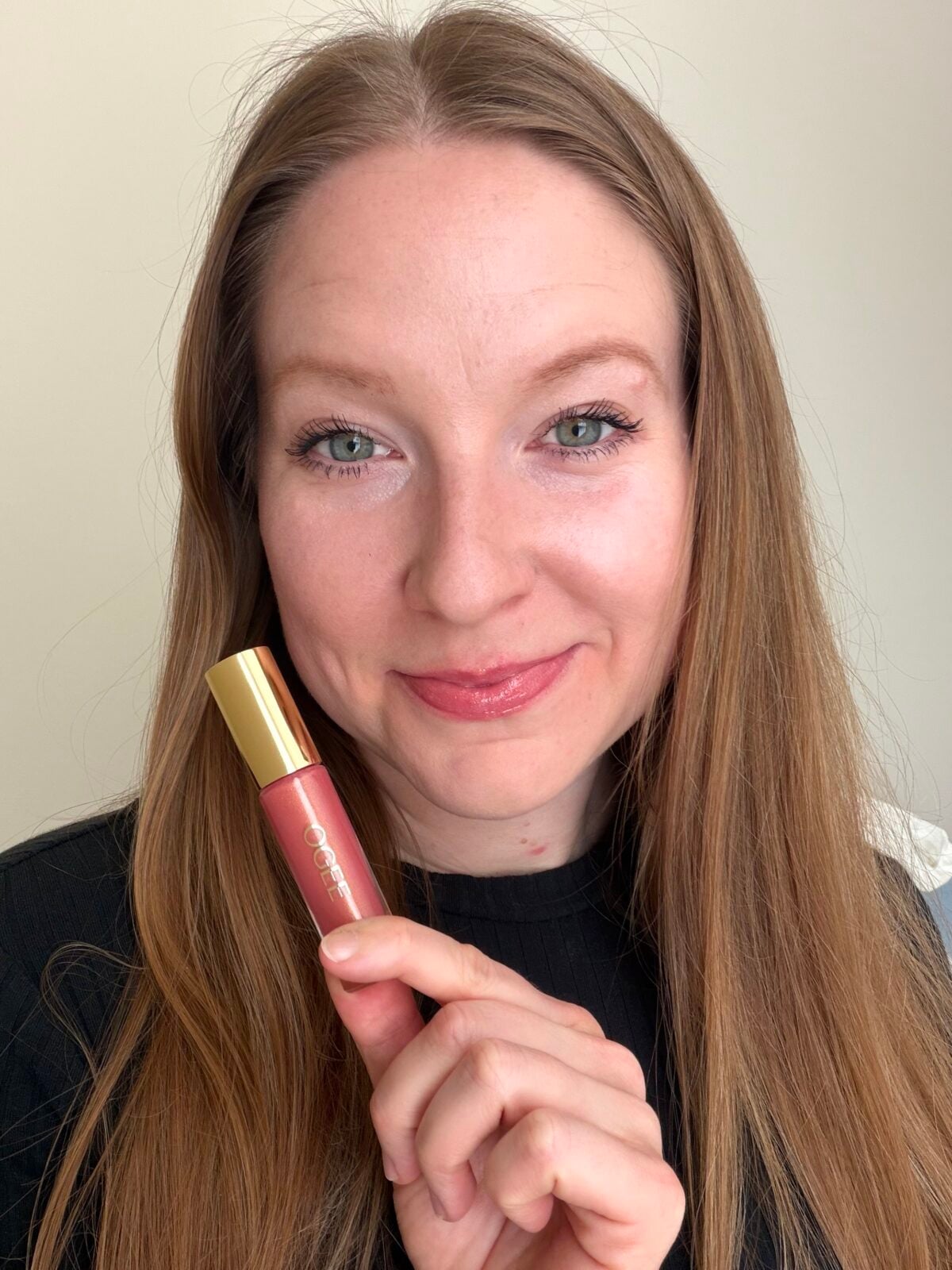
Carries: Traditional lipstick, tinted lip oil pencil, lip gloss (sheer and tinted), multi-purpose colored contour sticks
Price range: $29-$46
Vegan/cruelty-free? Cruelty-free, but not vegan. Several of their lip products contain beeswax, and the lip gloss contains carmine.
Plastic-free/refillable? Yes, the lipstick is refillable (the others are not)
Ogee has become one of my favorite organic makeup/skincare brands in recent years. It’s one of those brands that kind of just checks all the boxes: clean ingredients, high-performing formulations, quality aesthetics.
The majority of the ingredients they use are certified organic (around 90%, depending on the specific product). They are all-natural, gluten-free, non-GMO, and made in the USA.
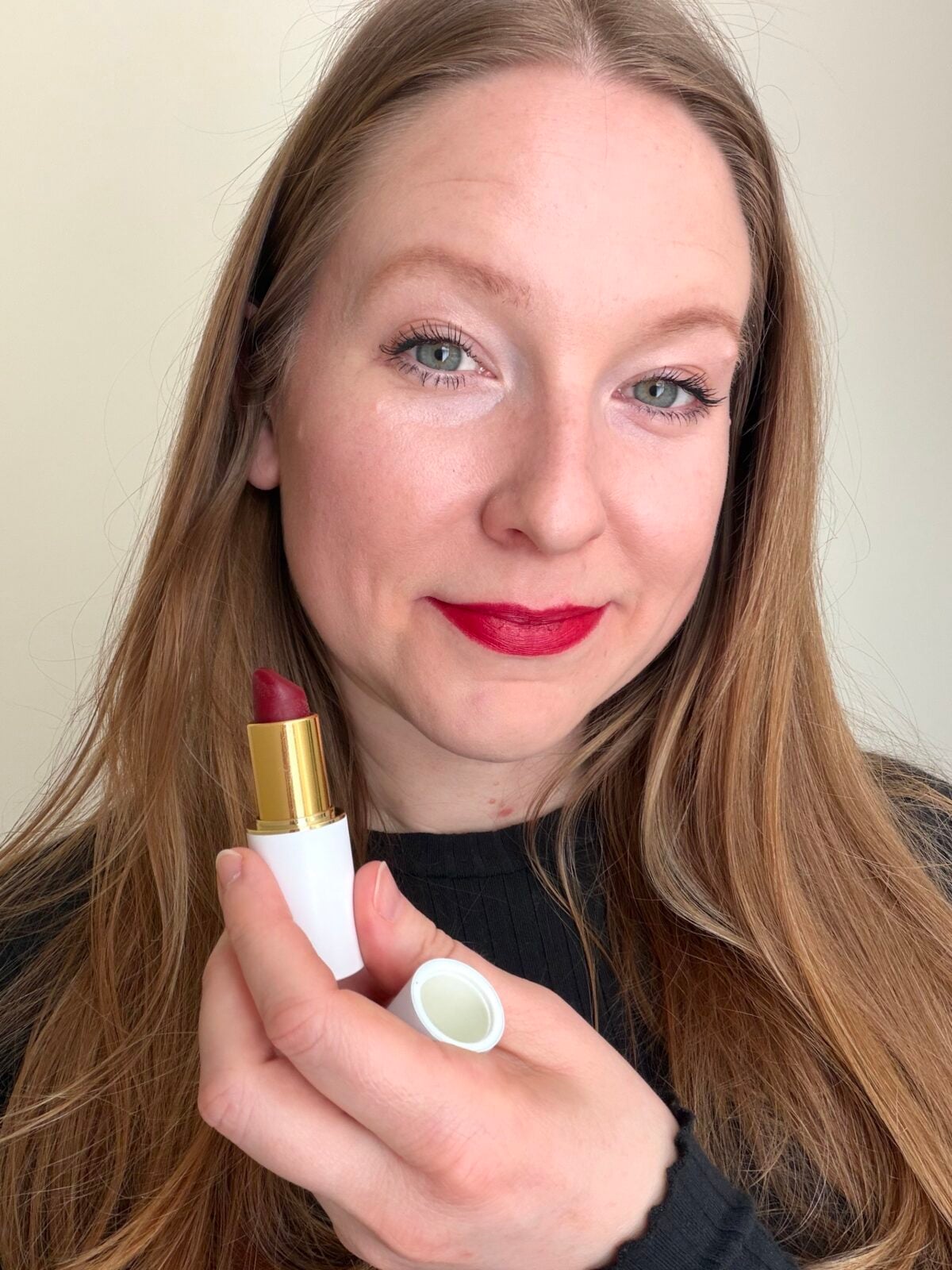
I really like their deep matte lipstick for dressing up and going out, as well as their more sheer organic lip gloss for everyday wearing.
I also love their contour sticks. Some of them can totally be used as both a cheek and a matte lip color.
When I asked Ogee about heavy metal contamination testing, they said: “Ogee conducts testing to ensure that any trace levels of heavy metals present in the products fall within the safety limits established by applicable cosmetic regulations.”
May contain titanium dioxide.
Toups & Co.
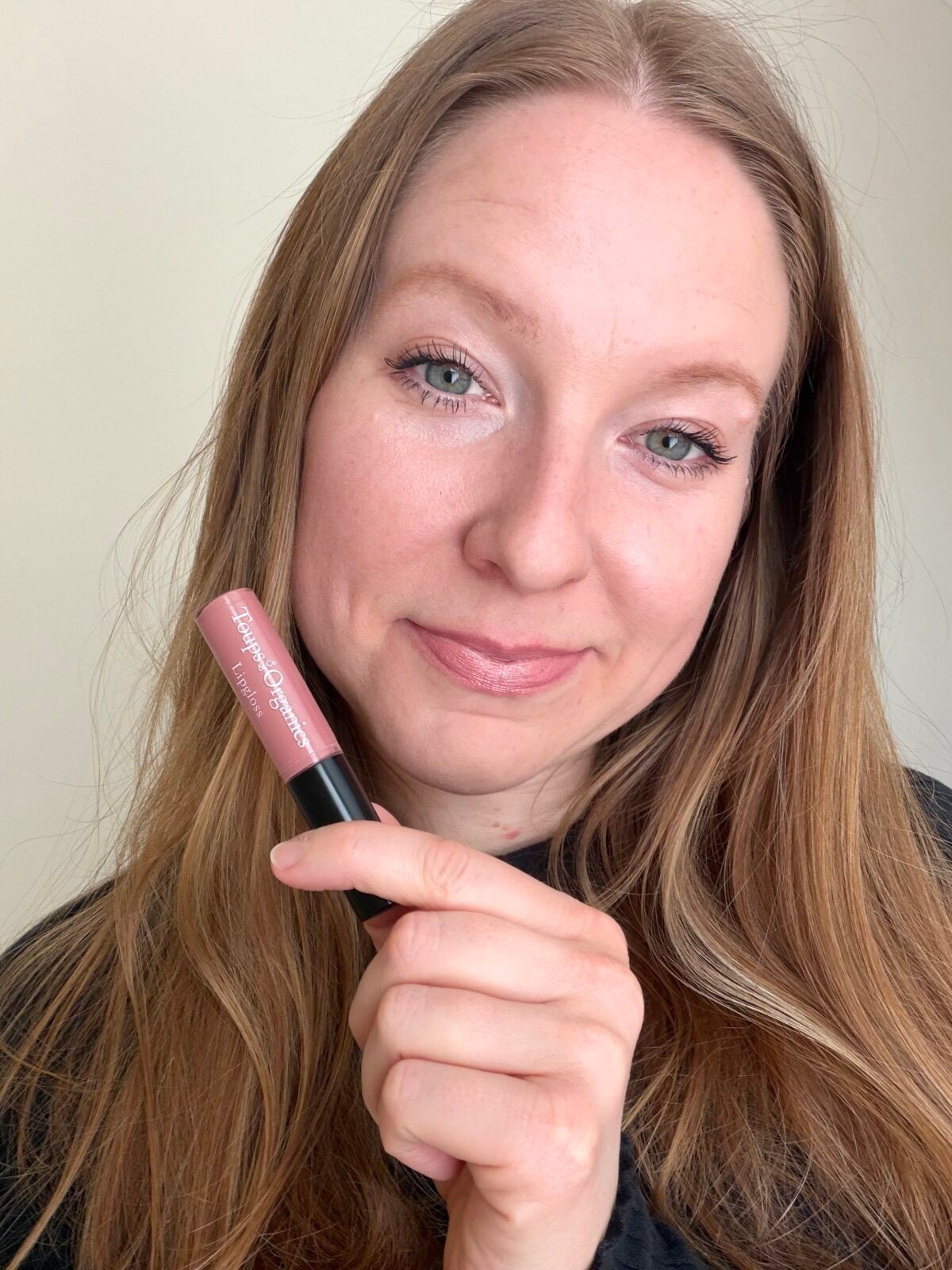

Carries: Regular lipstick, lip gloss, lip balm (tinted and non-tinted/chapstick-style), multi-purpose cheek/lip stick
Price range: $14-$32
Vegan/cruelty-free? Some products are vegan and others are not. Some contain tallow and/or beeswax. Just check the ingredient list of the specific product you’re looking at!
Plastic-free/refillable? No
Here’s another natural skincare brand that’s become a fave of mine in recent years. I really like their body care products, but their makeup is pretty good too—especially if you specifically want something that is all-natural and made by a small, family-owned business. They are based in Alabama (where their organic makeup is handcrafted!). They source ingredients from small, local, and organic farms as much as possible.
Their lipsticks come in a range of reds and pinks and are infused with things like nourishing avocado oil, vitamin E, and jojoba oil. Almost all of their ingredients are natural and/or certified organic. I like how minimalistic their ingredient list is, too. There’s nothing artificial here.
I find their lip gloss to be a bit more matte compared to other brands. So I’d say it’s actually more like a cross between a lip gloss and a lipstick.
May contain non-nano titanium dioxide.
Here’s our full review on Toups & Co.
P.S. Our link will get you 15% off.
Primally Pure
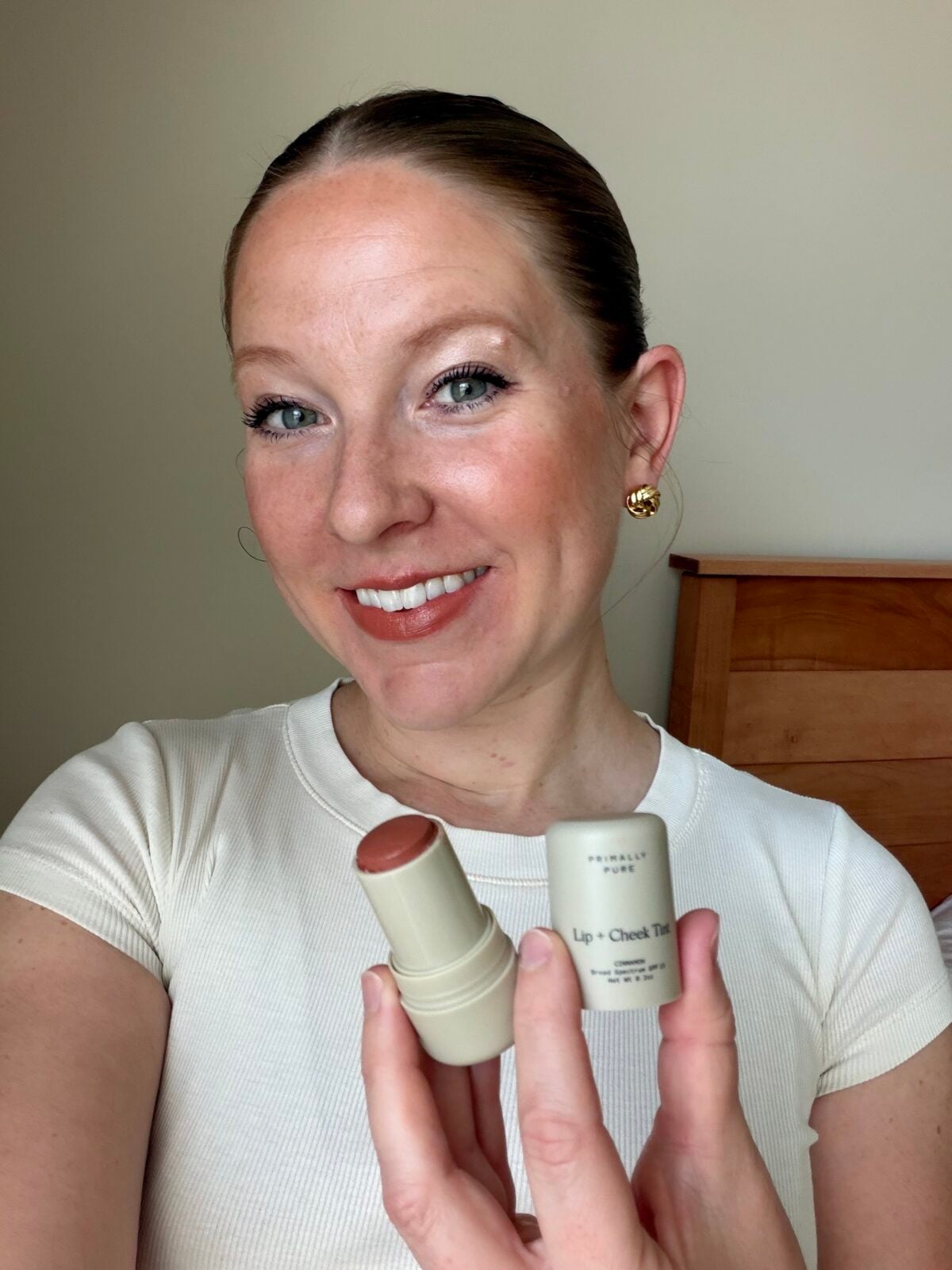
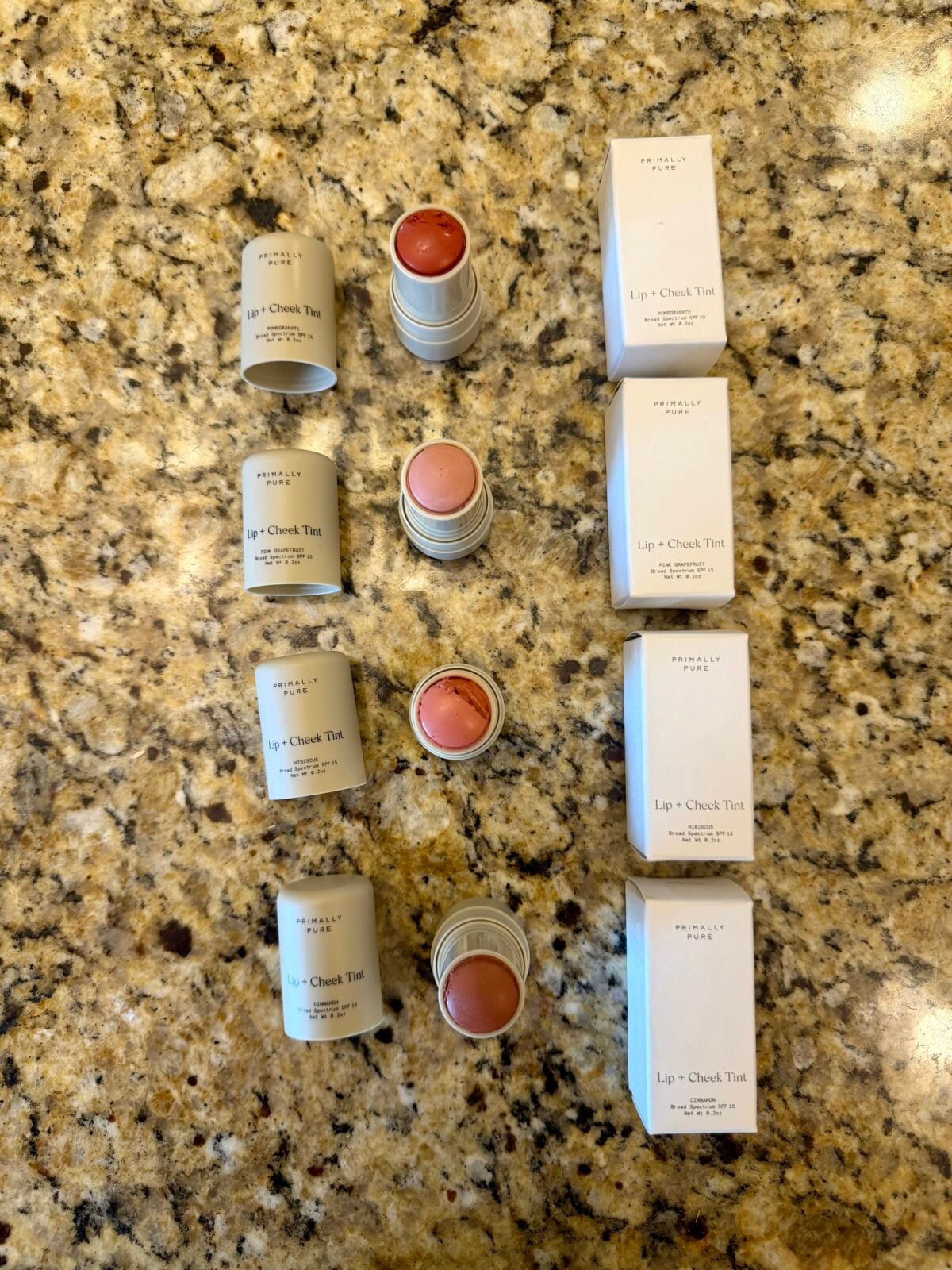
Carries: Tinted Lip + Cheek Stick, Tinted Lip Balm, Regular Lip Balm, Lip Oils, Lip Polish
Price Range: $14-$26
Vegan/cruelty-free? No (contains tallow)
Plastic-free/refillable? No
Abbie’s Review: I love a multi-purpose product. This Cheek + Lip Tint is many things in one: makeup and skincare. Bronzer, blush, and lipstick. Plus SPF.
It’s got the perfect balance of being moisturizing and dewy, but without feeling greasy or thick. On the lips, it feels like a cross between a balm and a lipstick.
It’s got non-nano zinc oxide to give it an SPF 15, plus a bunch of skin-nourishing ingredients like grass-fed tallow, jojoba oil, mango butter, seabuckthorn, and astaxanthin for antioxidants and vitamin C.
It definitely feels like skincare—not just makeup.
My personal favorite shade is the Cinnamon.
This has been in my purse for half the summer. It’s great for touch-ups or even as a replacement for my standard chapstick. (Although, I do love their regular lip balm as well—it’s so soft.)
Would I re-buy it? Yep!
THEFILTERY will get you 10% off.
W3ll People
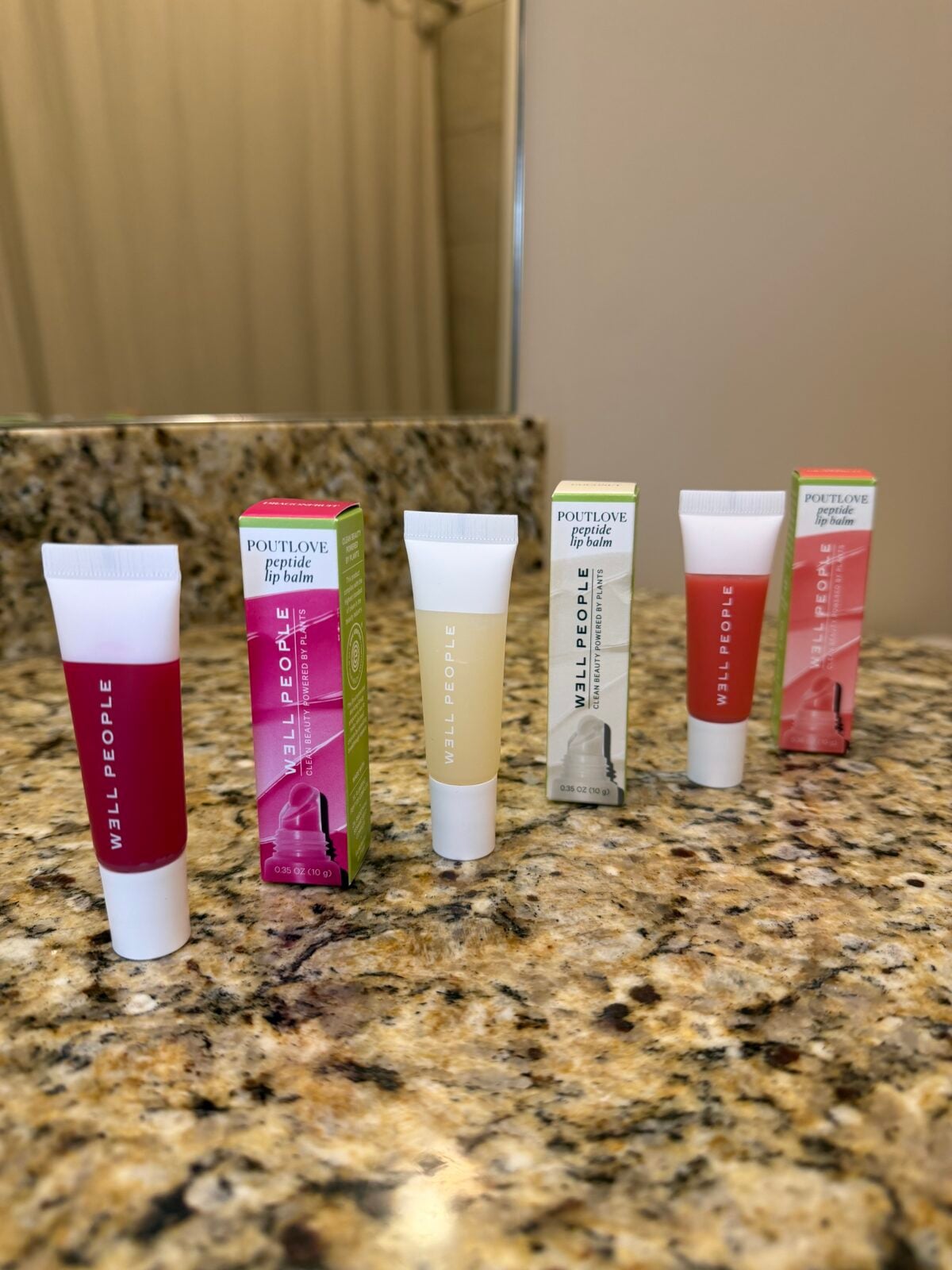
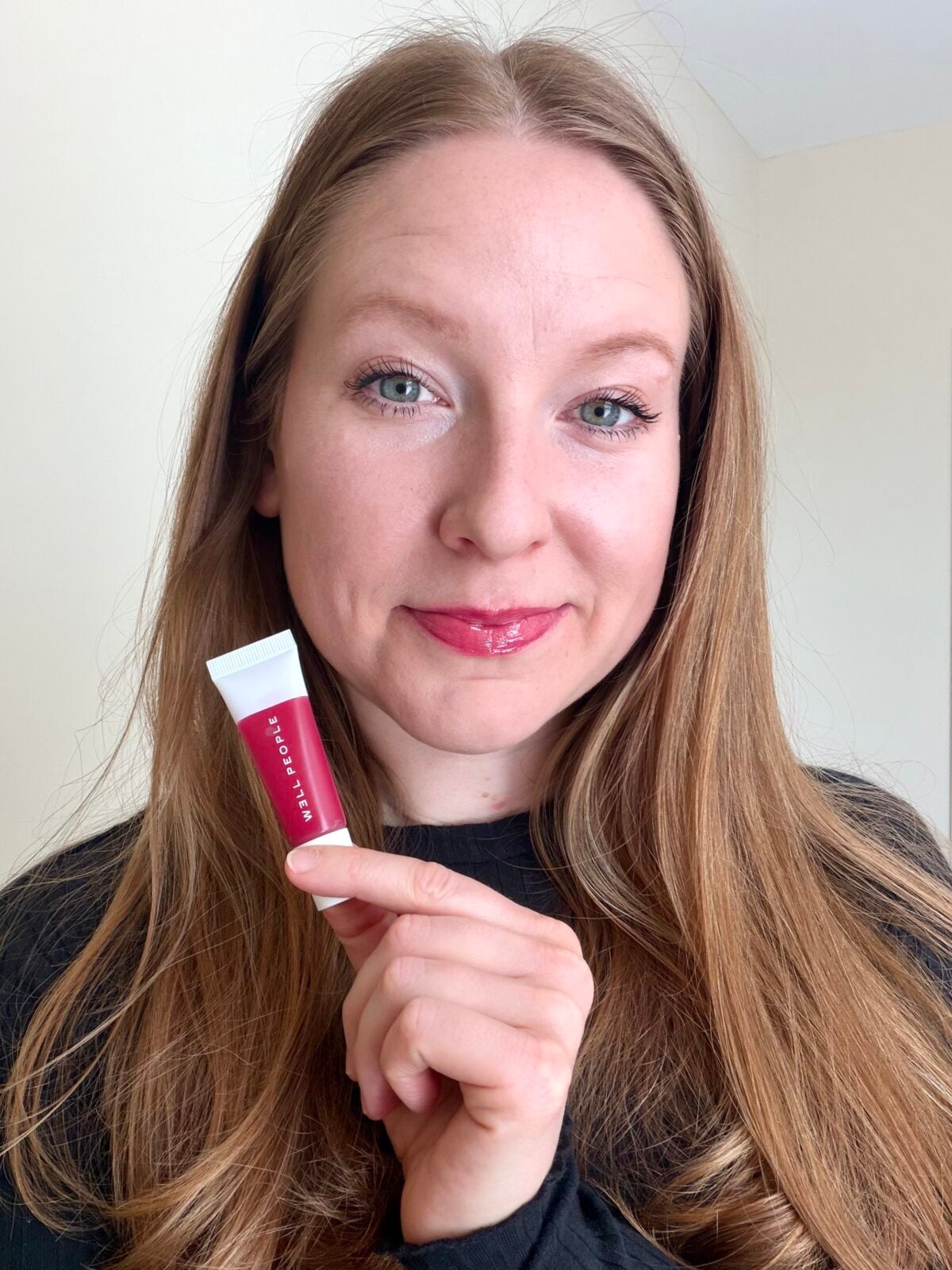
Carries: Peptide glossy lip balm, Tinted lip balm, Tinted lip oil
Price range: $12-$15
Vegan/cruelty-free? Yes
Plastic-free/refillable? No
W3ll People was founded by “an elite makeup artist, cosmetic dermatologist, and a tree-hugging entrepreneur.”
They don’t have any traditional-style matte lipsticks anymore, but they have several different types of clean lip glosses and balms. They have a range of clear to deep reds.
And they are some of the most affordable options on this list.
I really like these glosses! They all provide a good amount of glimmer & shimmer, and the darker ones give me a good pop of color at the same time.
If you’re looking for a 100% natural lip gloss, then this brand is not for you. They do use some synthetic ingredients, including a couple of red lake colors (depending on the shade). This is not ideal, but it’s not the worst either (especially if you want a vegan option). They also use a couple of synthetic polymers and waxes, but the ones they use are not considered liquid plastics.
So overall: these lip glosses may not be perfect, but all things considered, they are pretty clean—especially if you’re vegan and/or on a budget.
They are EWG Verified and Fair Trade Certified though.
May contain titanium dioxide.
Honest
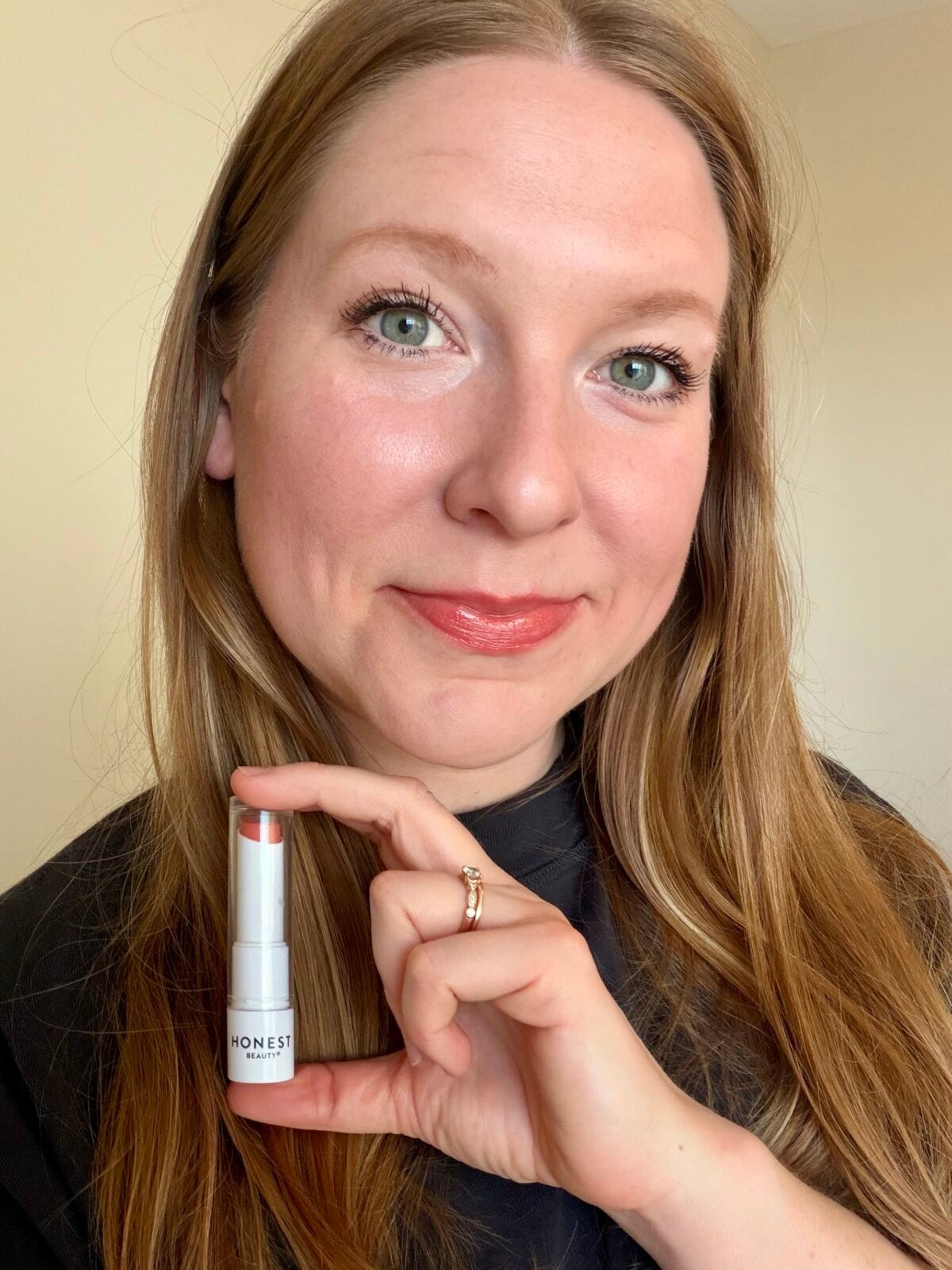

Carries: Tinted lip balm
Price: $10
Vegan/cruelty-free? Yes
Plastic-free/refillable? No
One of the reasons why I love Honest is because they’re one of the most accessible non-toxic brands. Their prices are reasonable, they have a lot of products to choose from to meet a variety of preferences, and you can often find their products in big box stores like Target.
I like their tinted lip balms—I think they’re really practical for everyday use. They give me a pop of color without going overboard, while moisturizing at the same time. It definitely feels more like a balm than a lipstick when it’s on my lips.
They’re EWG Verified and infused with nourishing ingredients like jojoba oil and shea butter.
May contain titanium dioxide.
Axiology
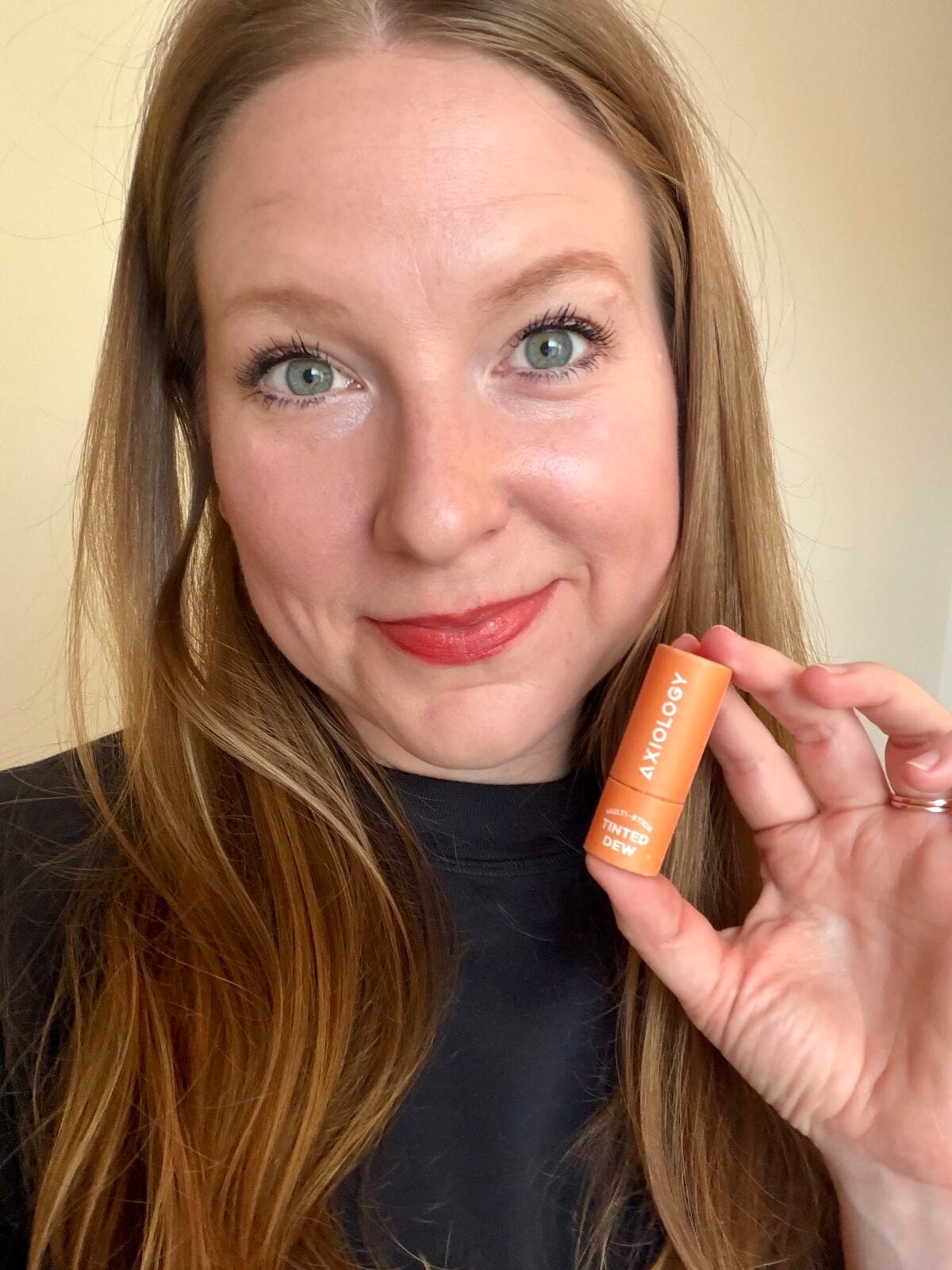
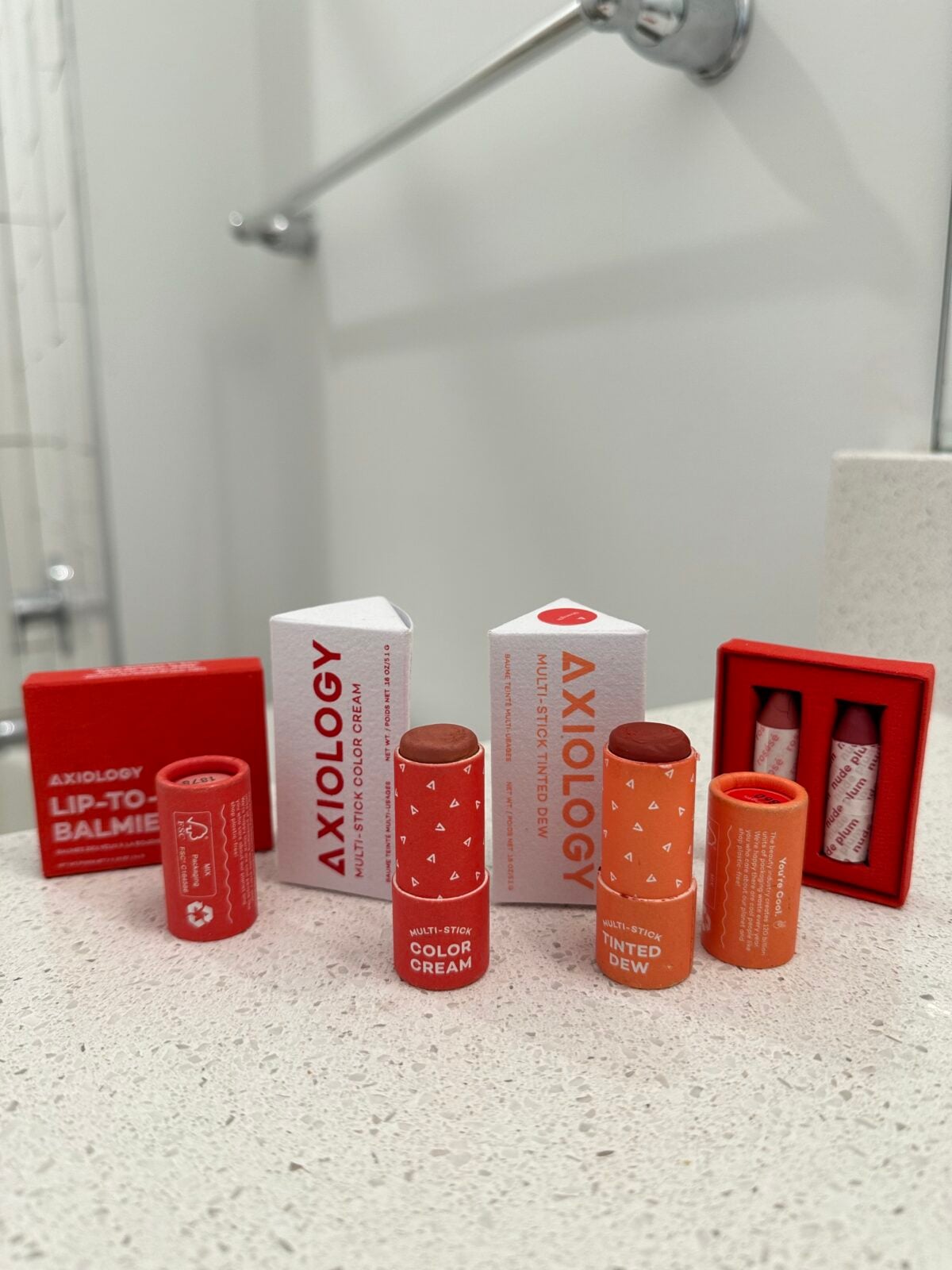
Carries: Multi-purpose Balmie crayons and sticks
Price range: $18-$74 (for a multi-pack)
Vegan/cruelty-free? Yes
Plastic-free/refillable? Yes—totally plastic-free packaging
If you’d prefer a zero-waste non-toxic lipstick, you have to check out Axiology. They have two main natural lip products:
- Their 3-in-1 Balmies are crayon-style and they have a dyer, more matte texture.
- The Multi-Sticks have a lid and come in more of a lip balm type of packaging format. They are more dewy and moisturizing.
Both options can be used on your whole face—blush, bronzer, contour, eyeshadow, and lipstick.
I have tried both and while I do like both options, I think I prefer the Multi-Sticks. They just feel a little more moisturizing on my skin. When using on my lips, it kind of feels like a cross between a lipstick and a lip balm.
The Multi-Stick is also easier to travel with / throw in my purse because of the type of packaging.
They do not use any synthetic dyes, they’re handmade in the USA, and they have won several beauty awards from traditional publications like Cosmopolitan and Byrdie.
When I asked the Axiology team about their heavy metal testing they told me: “We use cosmetic-grade pigments that meet the FDA’s requirements for purity and heavy metals for use in cosmetics. Each batch of pigment manufactured is tested and receives a certificate of analysis.”
May contain titanium dioxide.
withSimplicity
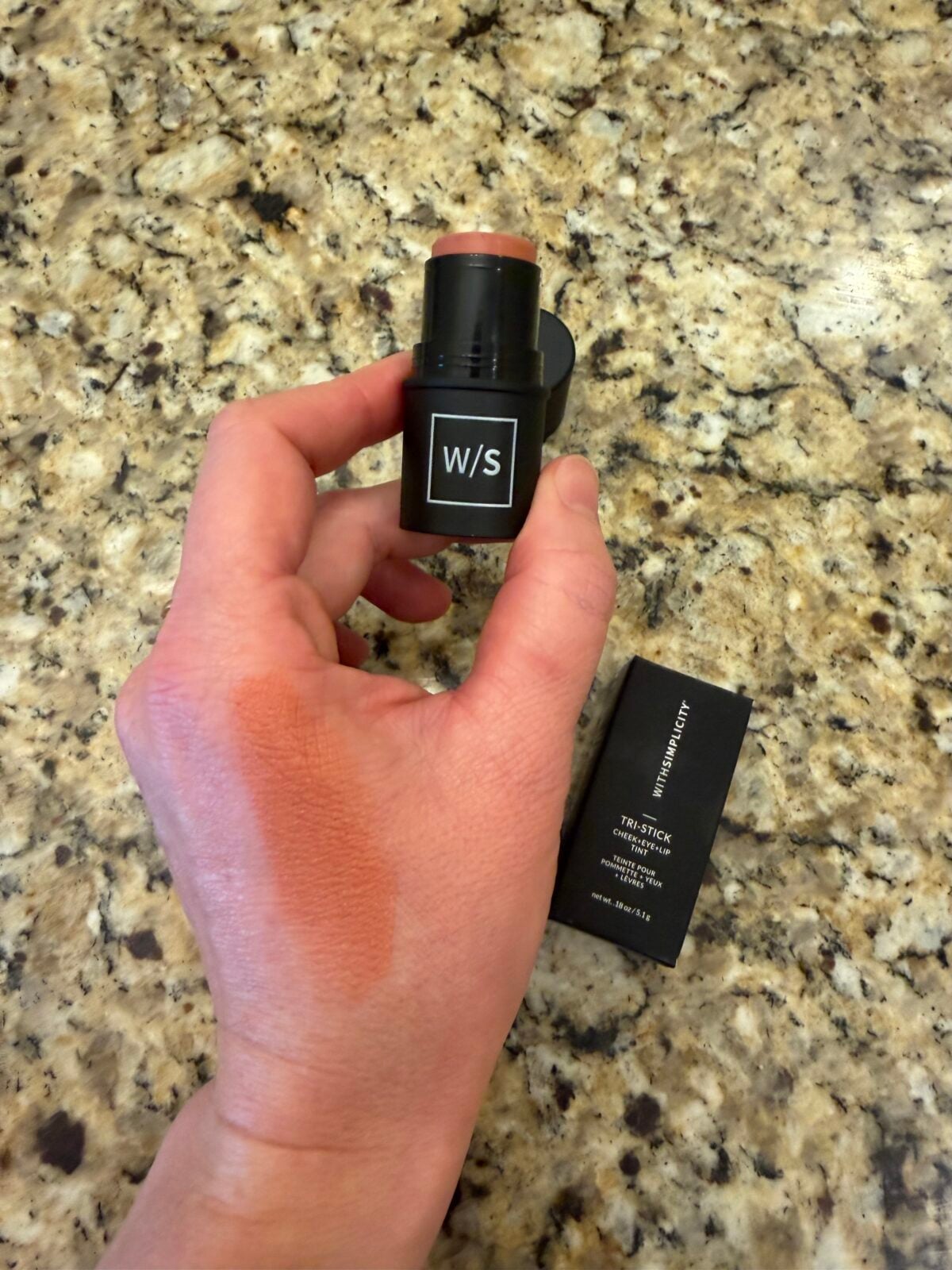
Carries: 3-in-1 Stick, Lip balm, Lipgloss, Lipstick
Price range: $5-28
Vegan/cruelty-free? Cruelty-free but not vegan (contains beeswax)
Plastic-free/refillable? Not right now.
This Tri-Stick Cheek/Eye/Lip Tint is for all of the minimalist makeup lovers. I love a good multitasking product.
You can just swipe this stick onto your cheeks, lips, or eyes, blend in with your fingers, and go. It’s a good size to throw in your purse, too.
It’s not just makeup either; it’s got ingredients that nourish the skin as well: oregano extract for antioxidants, rosemary extract and goldenseal to help calm inflammation and acne, and castor seed oil to hydrate and protect the skin barrier.
I would definitely re-buy this multi-stick, and I plan to try their other lip products in the future as well! Here’s my full withSimplicity review.
P.S. You can get 15% off with my link.
Attitude
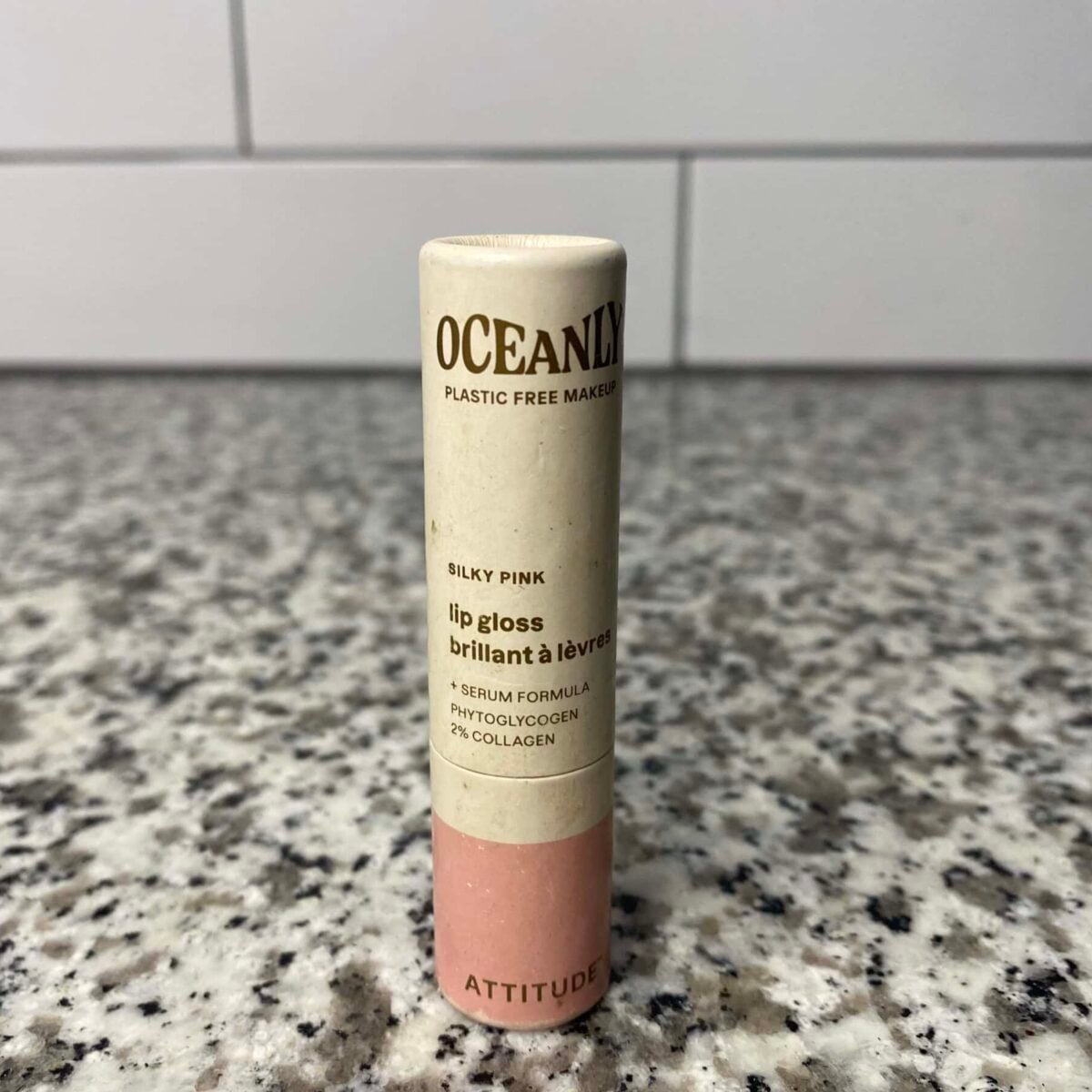
Carries: Tinted lip gloss and multi-purpose cheek/lip sticks
Price range: $20-$30
Vegan/cruelty-free? Yes
Plastic-free/refillable? Yes, comes in a plastic-free tube
This lip gloss stick is made with moisturizing ingredients like vegan collagen, Kpangnan butter, algae extract, and phytoglycogen to deeply nourish dry, chapped lips.
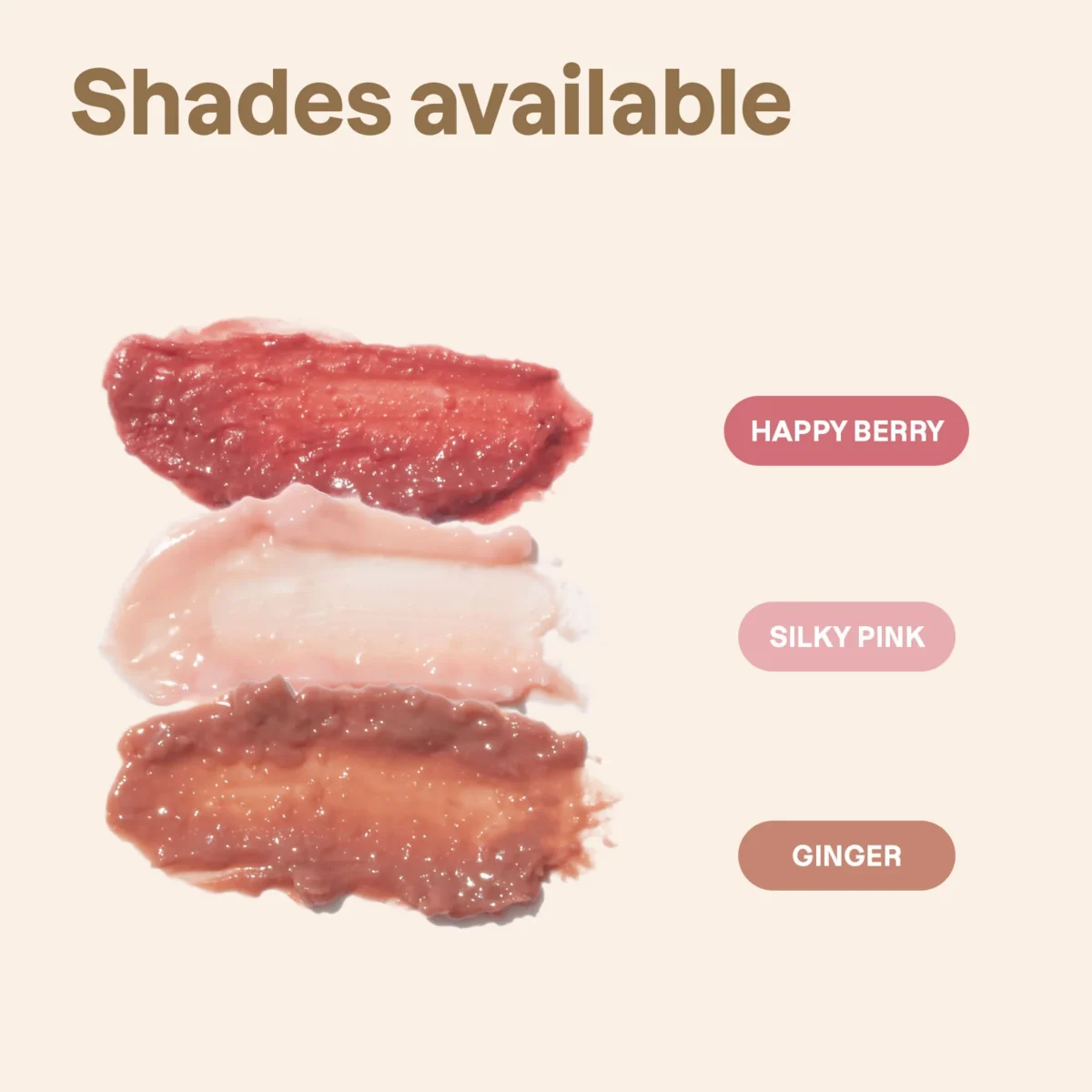
Formulated using 99.3% natural origin ingredients, this creamy gloss comes in three shades that deliver intense hydration with a sheer stain of color.
This is a stunning lip product. It glides on smooth, hydrates my lips, and leaves a gorgeous hint of color.
Even though it applies like a balm, it delivers a shiny “lip gloss” finish. The color lasts for a few hours and then has to be re-applied, but since the formula feels like a lip treatment, I find myself re-applying it anyway. This balm is so nourishing it feels like I’m wearing skincare on my lips.
I tried the shade Silky Pink, and it’s the perfect subtle pop of color for everyday wear.
If you’d rather have a more matte color instead of gloss, you can use one of their blush sticks as a natural lipstick as well.
This is one of the few brands that does not use titanium dioxide OR carmine for color.
True Botanicals
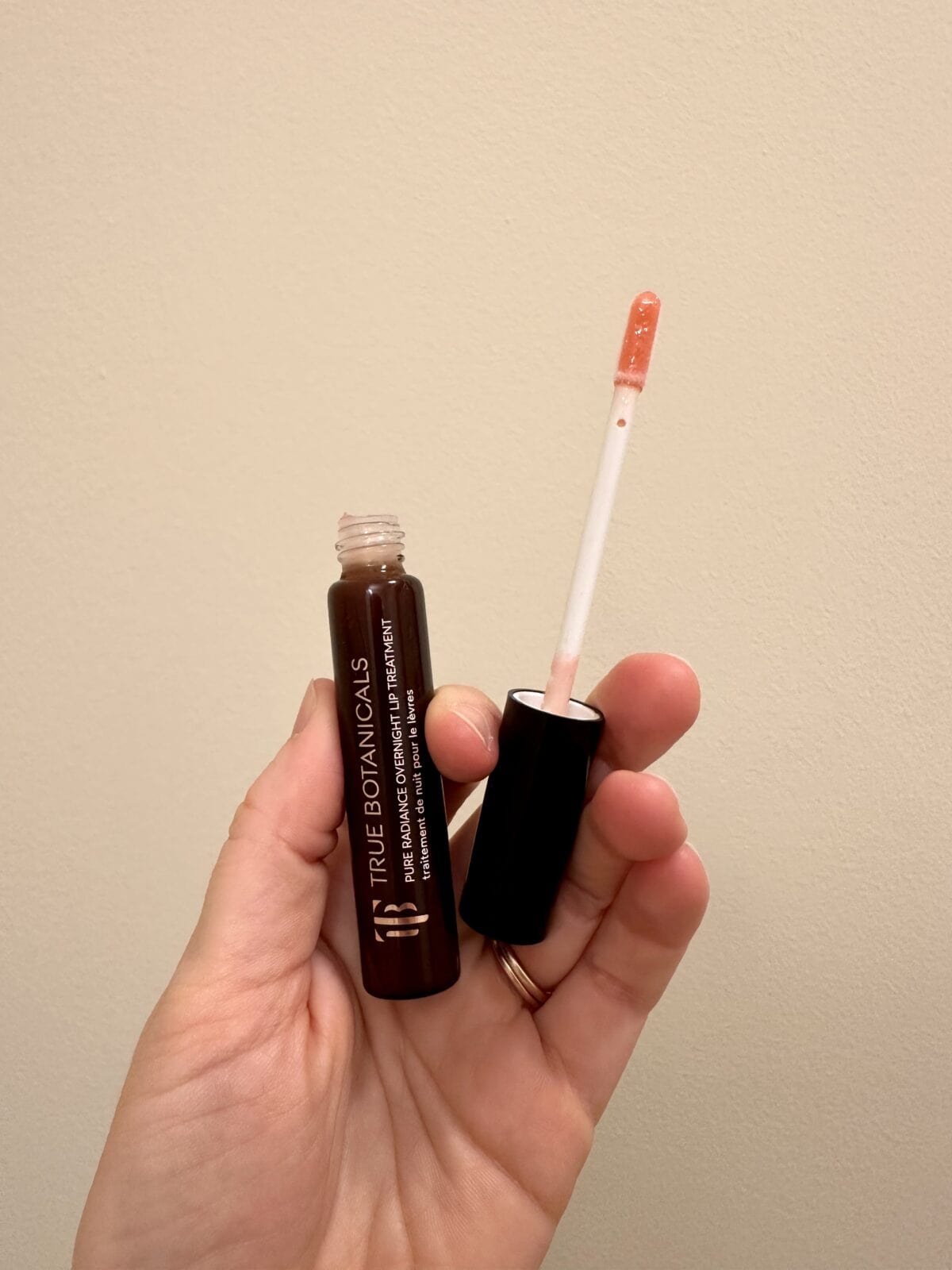
Carries: Overnight Lip Treatment (which can totally double as a daytime gloss!)
Price: $32
Vegan/cruelty-free? Yes
Plastic-free/refillable? No
I love True Botanicals’ Pure Radiance Overnight Lip Treatment. While it’s technically meant to be an overnight treatment, I throw it on as a daytime lip gloss too.
It’s on the thicker side, so it feels kind of luxurious and it stays on pretty well. It’s mostly clear with a slight pink to it. It has a very smooth texture. It gives the slightest tingle, but it’s not something you’d really notice unless you were paying attention.
The primary ingredients they use to give your lips a fuller and less wrinkly look are:
- tsubaki oil, which helps to plump things up
- arctic cloudberry oil, which helps to retain moisture
- and red raspberry seed oil, which helps to repair and protect the lips
Does it make my lips look like I’ve had actual filler? No. But does it make them look slightly fuller and more hydrated without risking pillow face? Yes.
Earth Harbor
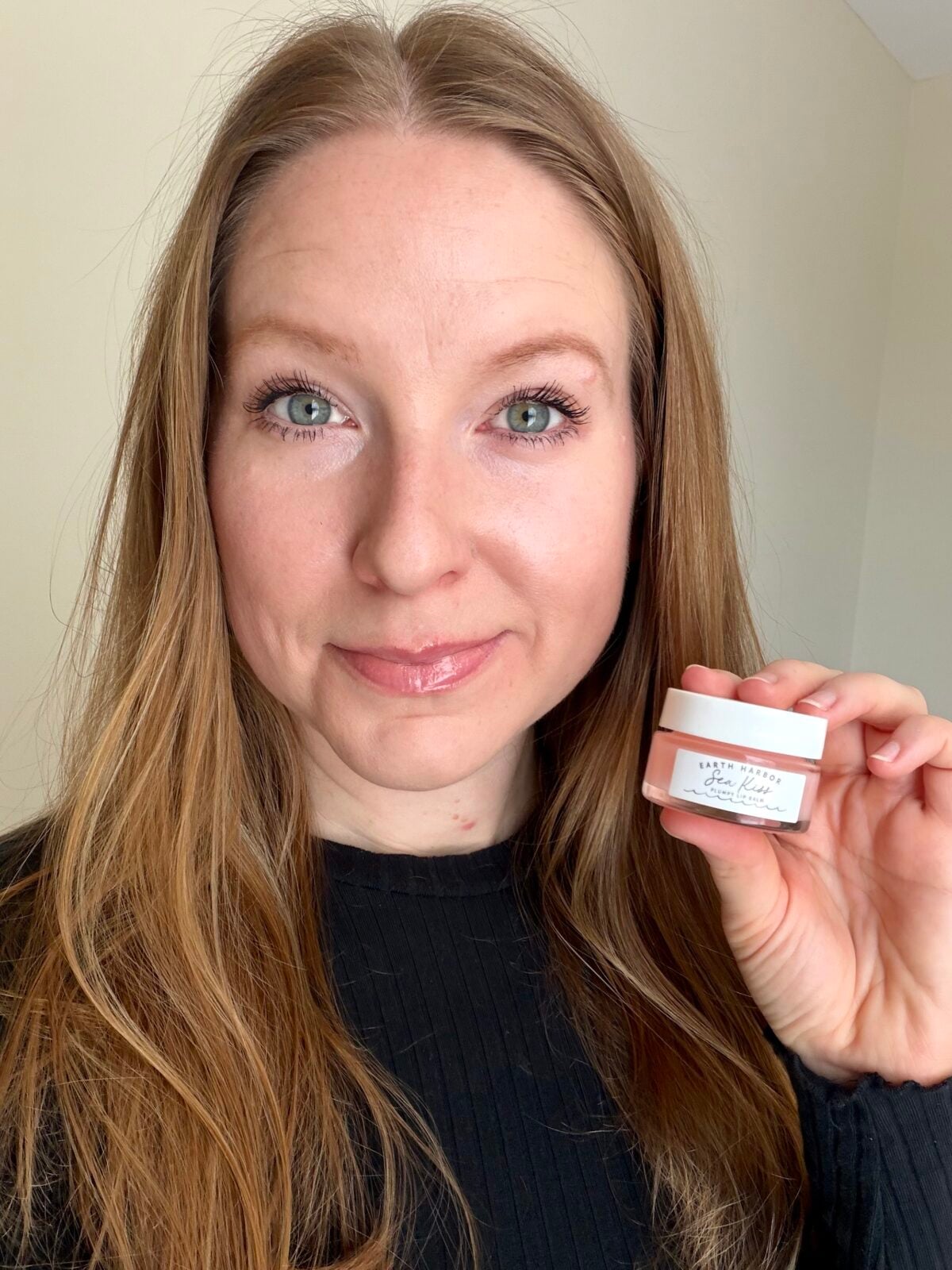
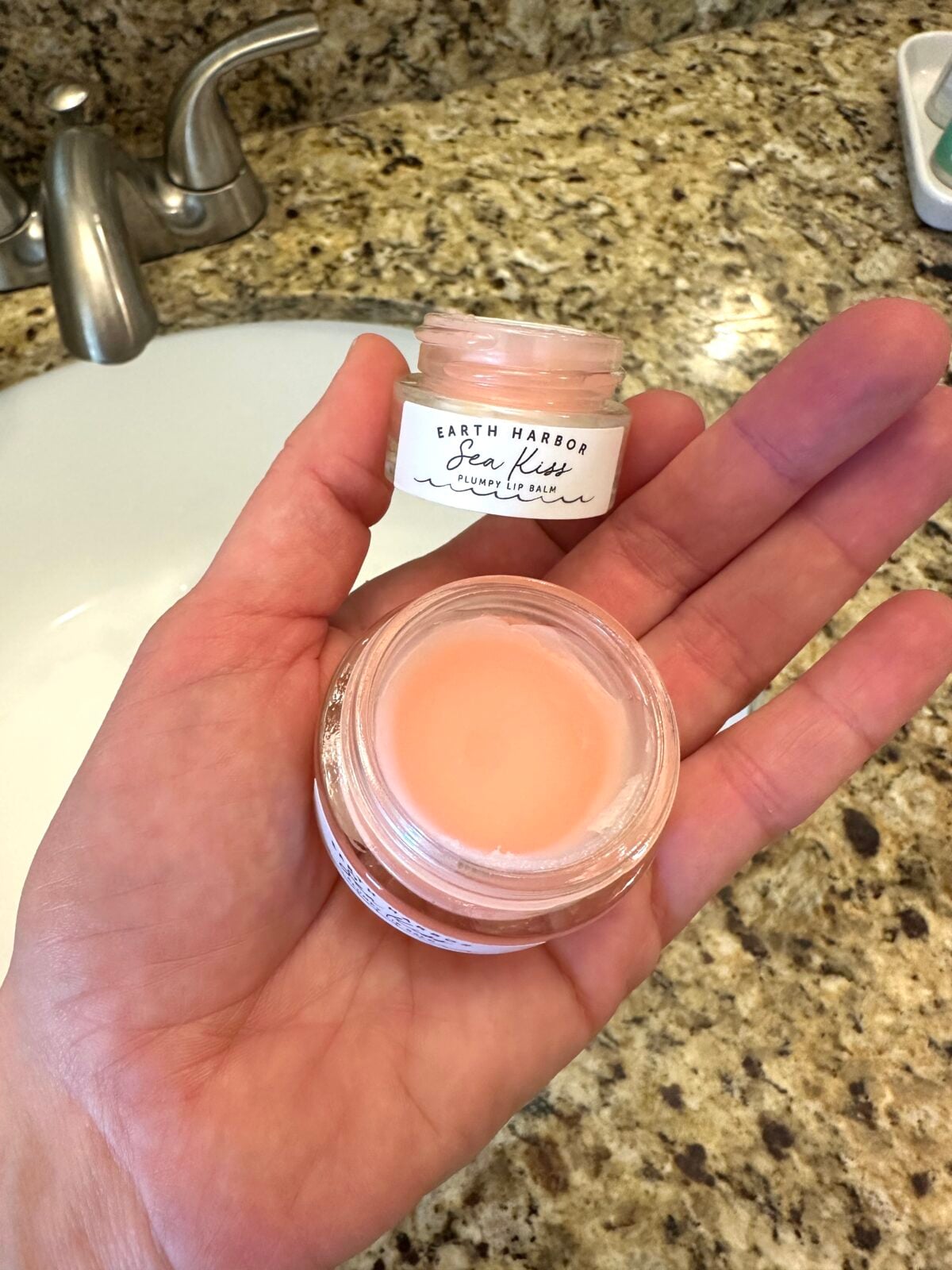
Carries: Just a Sea Kiss Plumpy Lip Balm
Price range: $18
Vegan/cruelty-free? Yes
Plastic-free/refillable? Yes! It comes in three sizes: regular (15 ml, which comes in a glass jar & plastic lid), refill (15 ml; glass jar with aluminum lid), and mini (which is only available in one of their sets).
Overall, I like this lip gloss for a little moisturization and shine. It’s kind of mid-weight—it’s not one of those super-thick glosses that make my lips feel weighed down, but it’s thicker than a regular chapstick-type balm.
It definitely goes on smoothly and helps to soften my lips.
The “plumpy” part of it is very subtle. Don’t expect it to be one of those lip balms that makes your lips feel like they just got stung by a bee. But there is a slight tingle / cooling sensation.
It’s also got a very subtle rose scent to it (which I’m assuming comes from the evening primrose that’s added to support fullness and add some antioxidants).
Other ingredients include things like castor seed oil, shea butter, prickly pear, seaweed, and squalene. Some of the ingredients are certified organic.
I think this would be a great clean lip balm for tweens who are into skincare.
Use code THEFILTERY15 for 15% off.
Even MORE non-toxic & natural lipsticks & lip glosses to try
Here are even more natural & clean brands that I hope to try in the near future!
- Fat and the Moon: Carries natural lip stain, balm, and lip ‘paint’ in a variety of colors. All-natural, wild-crafted, hand-made. Minimal ingredients. Plastic-free. Not vegan (beeswax). Use code THEFILTERY for 15% off.
- withSimplicity: They have lip gloss, lipstick, lip balm, and a lip-to-cheek stick. Overall, their formulations are very clean, mostly natural, and a good chunk of organic ingredients. I haven’t tried their lipsticks yet, but I do like their other skincare products. Vegan. May contain titanium dioxide (but it’s non-nano). Use code THEFILTERY for 15% off.
- MG Naturals: I actually was not aware of this brand until recently, but I would love to try their lip products because they have some of the cleanest formulations on this list. No titanium dioxide, lake dyes, or synthetic ingredients. They have all-natural lip gloss and lipsticks. They also say they batch test their products to look for potential heavy metal contamination.
- INIKA Organic: They have a lot of options—lipstick, lip oil, balms, serums, peptide treatments, lip/cheek pots, and more. They do use titanium dioxide for some products, as well as a few synthetic ingredients. Vegan, certified organic by OFC Australia, and Halal.
- 100% Pure: They have a range of balms, glosses, and matte lipsticks. They do use some titanium dioxide and lake colors, depending on the specific product. Vegan & cruelty-free.
- rms beauty: They have a lot of different options, including traditional lipstick, lip oil, lip pencil, lip gloss, lip serum, an overnight lip mask, and a lip-to-cheek color pot. A lot of their ingredients are certified organic and/or wild-crafted, depending on the specific product. Some of their lip products contain more synthetic ingredients than others. They do use titanium dioxide and/or lake colors in some of them. Some are vegan and some are not (contains beeswax). Overall, their makeup performs well and can compete with conventional brands, though.
- Ilia: This is another low-tox makeup brand that can totally compete against conventional cosmetics in terms of performance (long-lasting, etc). They have lip gloss, lip crayon, multi-sticks, and lipsticks in a wide range of colors. Some of their formulations are not the cleanest though. Although some of them are free from synthetic dyes and titanium dioxide, others do use lake colors, synthetic wax, and liquid plastics. They’re kind of a ‘middle ground’ brand in terms of clean ingredients—definitely not the worst, but not the best either. It really depends on the specific product.
- Counter: Formerly known as Beautycounter. I actually have used their lipsticks in the past (not sure if it was the same formulation they have now), and I really liked them for a user perspective. I really liked the way it felt on my lips and they add vanilla so they smell good! Their current lip collection is relatively clean, but similar to RMS and Ilia, they do use some synthetic ingredients, lake dyes, titanium dioxide, and unfortunately, a couple of liquid plastic ingredients (in the Hyaluronic Lip Balm and the lip/cheek palette). Other products, like the lip pencil, are cleaner. Mostly vegan, but double check the specific product for beeswax.
- Crunchi: They have a lip crayon and tinted lip oil, both of which are EWG Verified. The crayon is vegan and pretty much clean. The lip oil is not vegan (beeswax) and also contains a potential liquid plastic for its first ingredient. Similar to some of the other brands mentioned above—not the most natural formulation, but not bad either! Both may contain titanium dioxide.
Non-toxic lipstick & lip gloss brands for kids and tweens
It’s tough to find non-toxic makeup that’s specifically made for kids.
That being said, here are a couple of the best brands for non-toxic lip gloss and lip balm for kids:
Klee Naturals


Carries: Lip gloss, lip shimmer balm
Price range: $5-$12
Vegan/cruelty-free? No (beeswax and carmine)
Plastic-free/refillable? No
These super cute red, pink, and clear glittery lip glosses are made from almost completely natural ingredients and are free from toxins like parabens, phthalates, colors, dyes, and gluten. Klee Naturals has a lot of really cute makeup kits and gift sets, too.
May contain titanium dioxide.
Prim and Pure

Carries: Lipstick crayon, “Magic Mood” lipsticks, lip gloss, lip balm
Price range: $5-$25 (for a mluti-pack)
Vegan/cruelty-free? Some are vegan; others contain beeswax
Plastic-free/refillable? No
Prim and Pure has some really cute safe makeup products for kids, too. They’re made with plant-based ingredients like organic castor oil, shea butter, and essential oils for scent. Their ingredient lists are pretty minmal.
Some of their lip products may contain titanium dioxide and others do not.
Honey
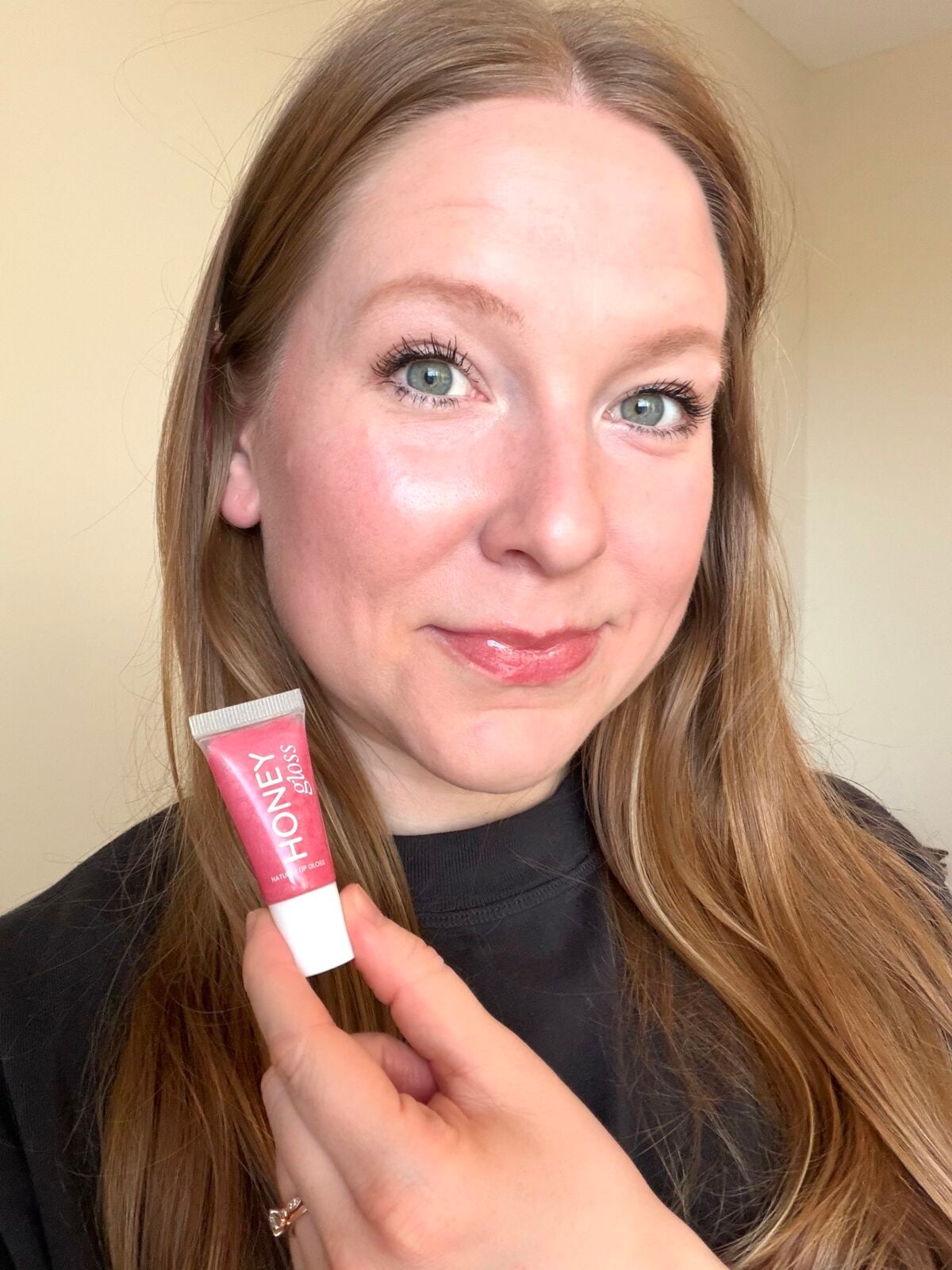
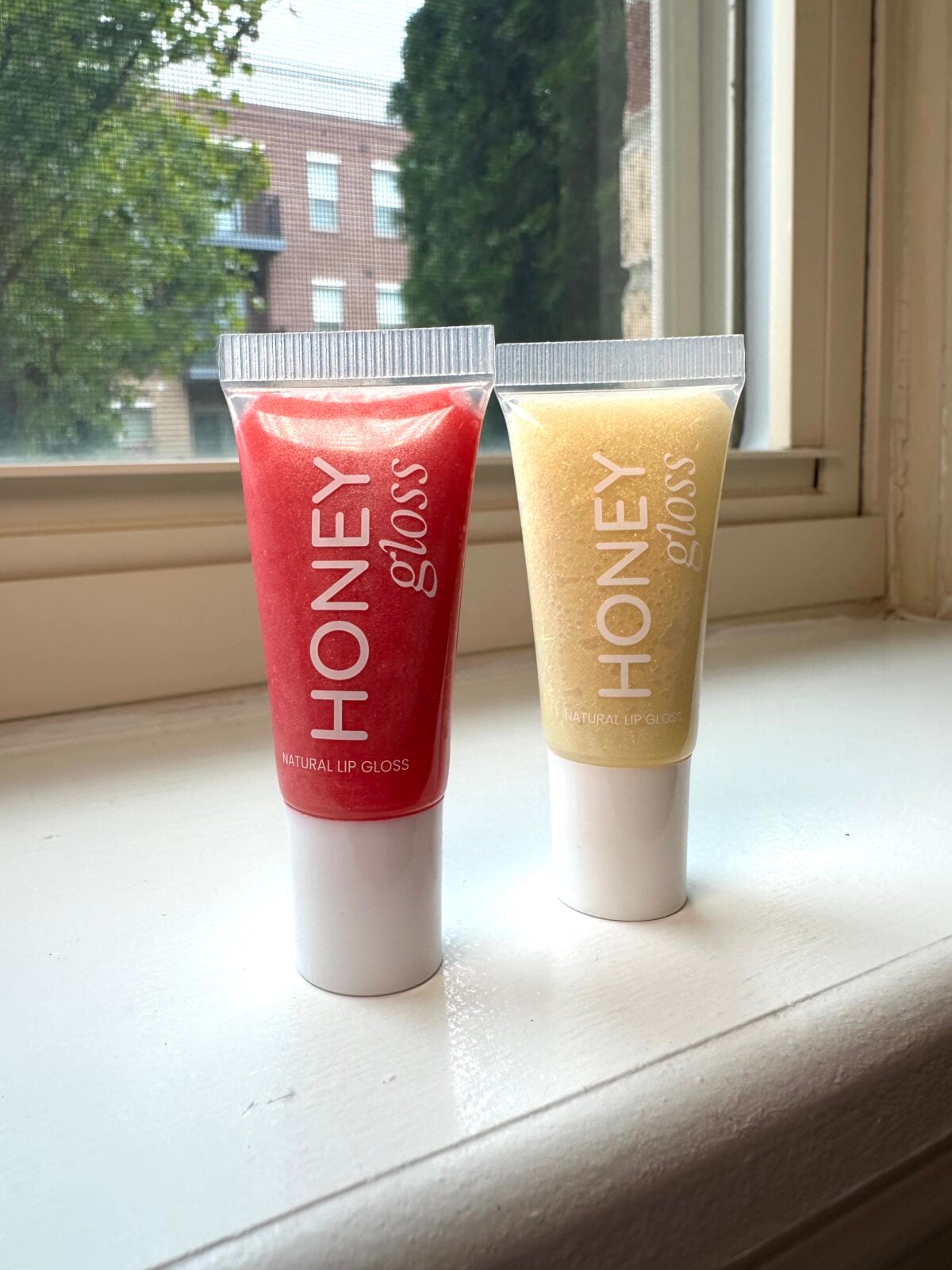
Carries: Natural lip gloss, cheek & lip tint
Price range: $13-$18
Vegan/cruelty-free? The lip gloss: yes. The cheek & lip tint: no (contains tallow and beeswax)
Plastic-free/refillable? No
This brand isn’t necessarily for tweens, but I think it’s a great fit for them. So much shimmer!
I’ve tried their Honey Gloss natural lip gloss. It’s on the thinner/lighter weight side, which I think is good for kids. It’s not super thick and the color is subtle. I would say it’s not quite as long-lasting as some of the other brands.
And of course, I love that the ingredients are clean, minimal, and all-natural. They use cold-pressed castor oil and jojoba oil, candelilla wax, organic stevia, natural mica powder, and pomegranate sterols. Very minimal ingredient list.
May contain titanium dioxide (non-nano).
Use code THEFILTERY for 10% off.

What ingredients to avoid in lip products
So, what are the chemicals in lipstick to avoid? Here are some of the major toxicants to be wary of, and why:
Butylated compounds
Butylated hydroxytoluene (BHT) and its relative, butylated hydroxyanisole (BHA), are synthetic antioxidants that are also commonly used in lipstick to extend shelf life.
BHA has been linked to reproductive and developmental toxicity, along with cancer.
Although more research still needs to be done on BHT specifically, it should also be noted that it’s a toluene-based ingredient. Toluene is a well-established toxin that can cause neurological damage and more.
Colors & dyes
Half the reason most people even use lipstick is for the color. But what is used to make those bright reds and fresh pinks, and are they safe?
Colorants can be a bit confusing because they can come in several different forms:
- Earth-derived
- Plant-derived
- And synthetic/artificial
There are pros and cons to these different types of colorants, and this is an instance where “natural” does not always equal “better” or “safer.”
Here are the main categories of dyes used in lip colors:
Earth-derived colors & dyes
Earth-derived pigments come from sources like mica, iron oxide, titanium dioxide, zinc oxide, coal tar, and petroleum. You may see these ingredients listed with the word “lake,” which is the term used for pigments or dyes that are precipitated with metal salts.
This is where lead and heavy metal contamination often come from. Ideally, you want to purchase from brands that are stringent in choosing their suppliers and even conduct independent testing of their own to test for contamination of these metals.
You’ll also want to avoid carbon black, which is usually used for darker shades of lipstick and lip liner (as well as things like mascara and eyeliner). Carbon black is produced by combustion of carbon-based products (like coal tar), and is linked to increased risk of cancer and other negative health outcomes.
On an ingredient label, carbon black might also be listed as “D&C Black No. 2,” “acetylene black,” or other things.
Plant-derived colors & dyes
Plant-derived pigments include colors that come from fruits and flowers. This sounds like a much safer option (and it likely is most of the time!), but you’ll want to buy from reputable brands who are sourcing their ingredients responsibly.
Another thing to consider when it comes to plant-derived ingredients is how much processing has gone into converting the ingredient from a raw plant to a dye that can be used in a cosmetic product. Sometimes, the process can be quite intense, requiring so many different chemicals that it can make the line between “natural” and “synthetic” a bit blurry.
And of course, organic is always best, since conventional plant-derived products can contain traces of toxic pesticides.
Synthetic & artificial colors & dyes
Lastly, there are synthetic and artificial colorants. Although it may typically be assumed that synthetic and/or artificial ingredients should be avoided, these are actually the most strictly regulated by the FDA when it comes to cosmetics. The FDA actually has pretty specific rules about which specific colorants can be used in what kind of cosmetics, and how much.
That said, some of the synthetic colorants that are still used in cosmetics are safer than others. You’ve probably heard about the infamous “red dye 40”… Even though we may think of it more in terms of food and drink, it’s used in cosmetics as well!
Some “lake” colors are safer than others. But the truth is that lake colors often lead to a brighter, molder, more long-lasting color compared to some plant-based alternatives. That’s why you’ll see a lot of low-tox cosmetics brands like Ilia, RMS, and Counter use them.
This is one of the areas where you’ll have to decide what your personal priorities are. If the formulation is otherwise ‘clean’ but you want something that will be able to last throughout the day, then going for a lipstick that uses lake dyes might be totally fine with you!
If you’re concerned about colorants, dyes, and lakes, don’t hesitate to reach out to your favorite brands and ask more questions about how their colors are sourced and what sort of independent testing is done.
Related:
Fragrance
“Fragrance” (also listed as “parfum”) is such a ubiquitous ingredient that it can be found in virtually all cosmetic, personal care, and cleaning products these days.
The problem with “fragrance” is that it’s not an actual ingredient; it’s an umbrella term that can include over 3,500 different chemicals. Some of these chemicals are perfectly safe, while others can cause cancer, infertility, and more (like phthalates, for example).
Under U.S. law, companies can include any of these ingredients in their formulations without actually listing them on the label. This obviously makes it very difficult (sometimes even impossible) to know exactly what’s in your lipstick.
Heavy metals (including lead and cadmium)
Although regulations have been restricting and prohibiting lead in many other products like paint and baby toys, the amount of lead in lipstick wasn’t actually tested until 2007.
That year, the Campaign for Safe Cosmetics tested 33 popular lipstick brands and found that 61 percent of them contained lead, with levels ranging up to 0.65 parts per million.
Then, after receiving significant pressure from consumers and lawmakers, the FDA finally conducted its own investigation two years later. This study found ranges of lead from 0.09 to 3.06 ppm—even higher than in the Campaign for Safe Cosmetics study!
The big problem with lead is that there is really no safe amount; even exposure to small doses can have negative effects, especially for children. Some of these negative consequences include neurotoxicity (learning, language, and behavioral problems), reduced fertility, delayed puberty onset, and other hormonal issues.
Which lipstick brands contain lead?
Brands that have tested positive for lead include:
- CoverGirl
- Revlon
- The Body Shop
- L’Oreal
- Maybelline
- Clinique
- Burt’s Bees
- Peacekeeper
- Dior
- M.A.C.
- Avon
Notice that this list includes a couple of more “natural” brands, like Body Shop and Burt’s Bees! (Although, it is worth noting that The Body Shop was owned by L’Oreal when these tests were conducted and it has since been sold to Natura. This may or may not have impacted the formulation and production of its products.)
Other heavy metals like chromium, cadmium, aluminum, and manganese.
Unfortunately, lead isn’t the extent of the metal problem when it comes to lipstick and lip gloss. A 2013 study out of the University of California found eight other heavy metals in lip products, including chromium, cadmium, aluminum, and manganese. All of these metals come with their own potential consequences to one’s long-term health.
Parabens
Parabens are a common category of toxicants that you’ll find in a lot of your cosmetics and personal care products.
These are preservatives that help prevent the growth of things like mold and other microbes. Considering that mold can be toxic, adding preservatives to personal care products and cosmetics is a good thing!
But the problem is that parabens are linked to a host of serious health concerns, from cancer to infertility. They are endocrine disruptors, which means they can disrupt your body’s many important hormonal systems, causing negative downstream effects. (Plus, there are much safer preservatives that can be used instead.)
PFAS
You probably know about these toxic “forever chemicals” by now. It’s the Teflon that makes your cookware non-stick, or the GoreTex that makes the rain slide off your hiking boots.
PFAS can be added to cosmetics intentionally or unintentionally.
When added intentionally, it’s used to make cosmetics waterproof or “long-lasting.” Avoiding intentionally-added PFAS is relatively easy. Avoid ingredients with “fluoro” in the name and shop from brands that have strict policies about using PFAS-free makeup formulations.
Non-intentionally added PFAS are another story. They seem to be everywhere; the more products are tested, the more we find contamination. It’s theorized that they get there somewhere in the manufacturing process—from non-stick molds, lubricated machinery, conveyor belts, etc.
As a consumer, there’s not too much you can do about this at this time. Governmental regulation on a larger scale is really the only thing that’s going to fix this problem. The good news about this, however, is that the amount of PFAS in contaminated products is going to be much lower than in the products where PFAS were added on purpose.
Retinyl palmitate
This is a concerning ingredient that is found in a lot of lip products. It is composed of palmitic acid and retinol (Vitamin A) and is used as a “skin-conditioning agent.”
According to the FDA, along with Norwegian and German health agencies, when it’s applied to the skin in the presence of sunlight, retinyl palmitate can potentially speed the development of skin tumors and lesions. This is why it’s important to avoid wearing retinyl palmitate on areas that will be exposed to the sun (like your lips!).
What about ‘liquid plastics’?
This is a huge gray area when it comes to cosmetics. There is a group of ingredients that are used in cosmetics and skincare that could potentially be considered liquid plastics.
These ingredients have so far not been considered toxic for the person wearing them. Rather, the potential concern comes from whether or not these ingredients actually fully biodegrade in the environment once they get washed down the drain, or whether they just contribute to our growing microplastic/nanoplastic pollution problem.
I have not totally eliminated liquid plastics from my regimen, but I’m definitely trying to reduce them out of the precautionary principle. It’s a topic I’m keeping my eye on. If you’re interested in learning more about this, you can listen to this podcast episode.
I hope this guide has helped you find the best non-toxic lipstick or lip gloss that fits your preferences and budget.
If there are any other brands you love that are not included here, let me know in the comments and I’ll consider adding them!


chatgpt cited your article and I am glad I rushed here. You have abundance of info, exactly what i was looking for especially related to titanium dioxide because it’s considered carcinogen, but not in non-nano form. Besides this you clearly pointed out reality of lead free lipsticks/tints. Thank you.
Glad I could help clarify! (Also glad the robot is actually citing my work, lol)
This is a huge wake-up call, especially thinking about how much we actually ingest over time. It’s wild that even some “natural” brands have struggled with heavy metal traces in the past.
I’ve been leaning toward Beauty Heroes lately for this exact reason. Their vetting is so strict that it feels way safer than just guessing based on a “natural” label. Do you find that knowing about the testing makes you stick to one trusted brand, or do you still like to experiment?
Both! Knowing about the testing helps a lot, but I’m always trying new brands. (But also, that’s my job haha… I would not try as many different brands if I had a different job.)
Just found you
I ordered a lip paint from
Fat and the Moon, and I entered your discount code (the filtery15), but it showed that it wasn’t valid.
You forgot the “the” (thefiltery15) 🙂
Hi I have just read your information re none toxic lipstick Every time I wear lipstick my gums hurt. Which out of all your recommendations of none toxic lipstick would be my best choice to try. Least harmful. Thankyou Mary. I’m 70. Go to dentist regularly. I like a matte lipstick
Hi,
I don’t see Mineral fusion lipstick on EWG website.
Is it really EWG verified?
Hi Khyati, thanks for bringing that to our attention! You’re right – it looks like the Mineral Fusion lipsticks are no longer EWG Verified. We’ve edited the article accordingly (and also plan to do a more thorough update of this whole article in the near future as well!)
What about young living?
Hmm… I can’t find YL’s lipstick on their website… Are they still making it?