 Subscribe to our weekly email newsletter. →

In a Nutshell:
- Because of what’s known as the “fragrance loophole,” there are over 3,500 different chemicals that can legally “hide” in perfume, making it impossible for you to know what’s actually in them.
- This is how toxic chemicals like phthalates and other endocrine disruptors, carcinogens, and allergens end up in much of the perfume sold today.
- Below is a list of phthalate-free perfume brands that make high-quality feminine, masculine, and gender-neutral scents. Some are 100% natural and some use a mix of natural and synthetic ingredients.
- If you want something that’s 100% natural, go with:
- If you want to go with something more affordable but still pretty “clean,” go with:
- If you love your conventional perfume and what something with comparable scents, check out:
- The best options available at Sephora is:
- The best option available at Ulta is:
If you’ve spent any time looking into non-toxic personal care products, you’ve probably run into the issue with the word “fragrance.”
I cover this in detail in another article, but here’s the gist: a legal loophole lets companies hide more than 3,500 ingredients under the single word “fragrance.”
Because of this, conventional perfumes, colognes, body sprays, and other scented products often contain toxic chemicals like phthalates, carcinogens, and more… and there’s really no way for you to know what’s inside because the exact formulation is protected as a “trade secret.”
The good news? There are plenty of non-toxic, natural perfume brands that focus on safe, transparent ingredients. And I’ve rounded them up for you here.
What this guide covers:
- Fragrance and Chemical Sensitivity
- Most Conventional Personal Fragrances Contain Potentially Toxic Ingredients
- What’s the Deal with Denatured Alcohol?
- “Phthalate-Free” Perfume vs. All-Natural Perfume
- How To Choose the Best “Clean” Perfume for You
- The Best Non-Toxic & Phthalate-Free Perfume Brands (With Feminine, Masculine, & Gender-Neutral Scents)
- Even More Phthalate-Free Perfume Brands
- Most Toxic Perfume Brands
- Should You Go Fragrance-Free?
- Eau de Toilette vs. Eau de Parfum vs. Perfume
- Final Thoughts on Phthalate-Free & Non-Toxic Body Sprays & Fragrances
 Join Thousands of Subscribers Reducing Toxic Chemicals
This guide contains product recommendations and we may receive compensation if you purchase through certain links. As always, we only make recommendations that are genuine!

Fragrance and Chemical Sensitivity
It’s estimated that around 20-30% of the population has some sort of sensitivity to fragrances… And it’s apparently getting worse. A 2018 study found an over 300% increase in Multiple Chemical Sensitivities compared to the decade prior.
Outside of fragrance-sensitivity specifically, there is a rising number of people who struggle with things like allergies, asthma, auto-immune disease, multiple chemical sensitivity, autism, and other chronic conditions. These folks may be sensitive to certain ingredients and scents as well.
Pregnant people and infants are also more susceptible to the negative effects of certain fragrance chemicals. If you or a loved one fits into one of these categories, it’s all the more important to use non-toxic perfume.
Most Conventional Personal Fragrances Contain Potentially Toxic Ingredients
A lot of people, however, won’t notice any acute, immediate effects of spraying or dabbing themself with perfume each day. The problem with the hidden chemicals used in conventional perfumes come from being used over time.
The endocrine disruptors, carcinogens, and allergens used under the “fragrance umbrella” add to one’s overall toxic burden. The toxic burden is the total amount of environmental toxins you’re exposed to and absorbing on a day-to-day and year-to-year basis. This toxic burden can cause problems over a long period of time, even in an otherwise healthy person.
A few potential adverse health effects of common perfume chemicals are:
- neurotoxicity
- nervous system damage
- kidney damage
- respiratory issues
- ataxia
- inflammation, especially in the intestines
- dizziness
- fatigue
- decreased fertility and reproductive problems
“Fragrance” can also be listed on an ingredient label as:
- Parfum (the most common alternative)
- Natural fragrance (usually means it’s derived from all-natural, plant-based ingredients)
- Aroma
- Cologne
- Eau de parfum
- Eau de toilette
- Perfume
- Musk
Phthalates Are Hormone Disruptors
Phthalates are used in fragrances to make the scent last longer on your skin and clothes.
But phthalates are known endocrine disruptors, which means they can interfere with healthy hormone functioning and lead to all kinds of negative health concerns down the road, including infertility and cancer.
Endocrine disruptors (which are the same things as “hormone disruptors” by the way) have been linked to things like:
- decreased sperm motility
- fertility
- genital abnormalities in baby boys
- asthma
- allergies
- and much more
Other Toxic Chemicals in Perfume
In addition to phthalates, the potentially toxic ingredients that are commonly found in perfume include, but are not limited to:
- acetaldehyde, which can affect the reproductive, nervous and respiratory systems
- benzophenone, which is linked to endocrine disruption and organ system toxicity
- butoxyethanol, which is an irritant, reproductive toxicant, and carcinogen
- methylene chloride, which is possibly carcinogenic
- musk ketone and other synthetic musks, which are endocrine disruptors
- styrene, a carcinogen
What’s the Deal with Denatured Alcohol?
Most perfumes and colognes also use denatured alcohol as their base. It’s essentially the carrier that allows the fragrance molecules to be dispersed.
Denatured alcohol (often listed on ingredient labels as “alcohol denat”) is basically alcohol that’s been made to be undrinkable by altering the taste and smell and/or making you vomit if you drink it. If a fragrance manufacturer does not use denatured alcohol, then they have to have a liquor license and pay higher taxes. (And as you can probably guess, most of them don’t.)
This is one of the reasons why the most natural personal fragrances are more expensive. Not only does the alcohol itself cost more (food grade, organic, etc.), but brands also have to work with a special manufacturer who maintains a liquor license and pays a higher tax rate for that alcohol.
Our concern is what manufacturers use to denature the alcohol. Diethyl phthalate (or DEP) is one chemical that’s been used for denaturing, and we just talked about why that’s a problem.
Nowadays, more perfumers are using ‘phthalate-free’ denatured alcohol. The two most common chemicals used to denature alcohol today are tert-butyl alcohol and Bitrex.
Tert-butyl alcohol
Also known as TBA, t‑BuOH, t-butanol, or 2-methyl-2-propanol.
Unfortunately, there’s limited human data on TBA exposure or health effects. The potential concerns with TBA from animal studies involved thyroid tumors and kidney toxicity. These effects were shown through chronic oral and inhalation exposure at very high doses. There is some evidence of potential carcinogenicity in mice and rats but there is not enough evidence to be conclusive. As of right now, I haven’t found evidence of potential hormone disruption.
In these studies, rats were given between 90 and 650 mg/kg of TBA per day. Whereas the amount of TBA that’s going to be in your perfume is around 0.0008–0.0033 mg/kg. That is like ~27,000 to 500,000 times lower than what the rats were fed!
Now, it’s important to note that the dose does not always make the poison. So I don’t mean to outright dismiss the results from these studies. However, the way I see it, the amounts of TBA used in these select animal studies are so far off from what we’re exposed to in real life that we just cannot transfer the (inconclusive) data to our human selves. Simply put: we just need more research.
The good news is that TBA is not easily absorbed through the skin. (It is easily absorbed into the bloodstream through inhalation though, so if you’re worried, maybe hold your breath as you spray if you’re going to use it.)
All in all, I would say TBA is without a doubt a better option than phthalates when it comes to denaturing alcohol. But the overall lack of data on it doesn’t give me a ton of assurance regarding it’s longterm safety either. So this is one you may want to avoid out of the precautionary principle, especially if you a) can afford to buy more expensive perfume, and b) wear perfume every single day (as opposed to every once in a while).
Bitrex
Bitrex is the brand name for denatonium benzoate. It’s extremely bitter, which makes people not want to drink it. (Sometimes people put it on their fingernails to break a nail-biting habit!  ) It’s the other chemical commonly used to denature alcohol.
Good news: This one really doesn’t come with any issues. There is currently no indication that it comes with any risk of cancer or hormone disruption. It can cause skin, eye, or respiratory irritation and/or acute toxicity at high exposure, but this would mostly only be relevant in a manufacturing setting. The amounts used in personal fragrance are so low that they shouldn’t cause irritation.
“Phthalate-Free” Perfume vs. All-Natural Perfume
First, remember that just because an ingredient is synthetic does not automatically mean it’s “bad,” and just because an ingredient is natural or plant-based does not automatically mean it’s “good.”
Similarly, just because something is “phthalate-free” does not automatically mean it’s totally ‘non-toxic’ or ‘all-natural.’
At the end of the day, whether you choose an all-natural perfume or a fragrance brand that uses some synthetic ingredients comes down to your personal preferences, priorities, and budget. Some folks prefer natural scents while, while others like a more unique smell that can really only be created via synthetic blends. Some may prefer to only buy fragrances with ingredients they can actually recognize, and I get that, too. But the 100% natural options tend to be more expensive, so if you’re on a budget, then you might want to go with a ‘cleaner’ synthetic choice.
I’ve included all kinds of options below so you can choose what’s best for you.
Remember: “Clean” perfume doesn’t actually mean anything.
There is no agreed-upon definition for the term “clean.” What is “clean” to one person or brand may be different than what is “clean” to another person or brand.
That’s why we still have to do our own research and decide what we want according to our own standards.
How To Choose the Best “Clean” Perfume for You
- Look for a “phthalate-free” label. This is the bare minimum for a safe perfume.
- Look for a FULL list of ingredients, including the ‘fragrance’ ingredients. AVOID undisclosed “fragrance” or “parfum” (unless it’s published elsewhere, like on their website).
- Decide if you want something that’s 100% natural, or if you are okay with some synthetic ingredients.
- This one is a bit complicated! Some synthetic ingredients are nature-identical, meaning they are made in a lab but they are the exact same molecule that you’d find in nature. Additionally, synthetic ingredients can be more affordable and can sometimes smell stronger/last longer, depending on the specifics.
- Some ingredients are marketed as “safe synthetics,” when in reality, there isn’t much research on them at all. They may be safer than alternatives, but we may not know for sure either, due to lack of data.
- You could make the argument that synthetic ingredients are unsustainable because they are derived from petroleum. However, you could also argue that some natural ingredients are sourced in unsustainable ways as well… You can see the gray area here!
- Again, at the end of the day, you’ll have to decide what you’re most comfortable with and what your preferences and priorities are.
The Best Non-Toxic & Phthalate-Free Perfume Brands (With Feminine, Masculine, & Gender-Neutral Scents)
Without further ado, here are my picks for the best ‘clean’ perfume and non-toxic body spray brands that use non-toxic ingredients. Some of them use a mix of synthetics combined with natural oils, while others are 100% natural.
You’ll also find a mix of eau de parfum sprays, roll-on perfume oils, serums, solid perfumes, powders, and more. And every single one is phthalate-free.
Wyld Notes


- Gender-neutral scents
- Uses 100% natural ingredients
- Organic non-denatured sugarcane alcohol base
- Vegan & cruelty-free
- Offers a Discovery Kit so you can choose your favorite
My favorite scent: Timeless Floral
This is one of my new favorite brands!
Even though these fragrances are made of 100% natural ingredients, they do not smell like straight-up essential oils. They smell like real perfume and have unique scents.
But at the same time, they’re not over-powering either. (I’m still pretty sensitive, so I can’t handle super strong smells.)
I got the Discovery Set so that I could try out all of the scents. I really like them all and I had a hard time choosing my favorite! I think if I had to choose, though, it’s the Timeless Floral. My husband’s favorite sent is the Rugged Wilderness, followed by Fireside Citrus.
They’re all pretty gender-neutral, which is awesome. But I would say the Timeless Floral and Sweet Decadence are more feminine, where the Smoky Ember, Rugged Wilderness, and Fireside Citrus lean more toward a masculine vibe.
I like that they are intentional about sourcing from regenerative farmers, and they even give back 1% of profits to reforestation efforts.
Use code THEFILTERY10.
Esas


- 100% natural
- MADE SAFE® Certified (some of them)
- Uses non-denatured certified organic sugarcane alcohol
- Vegan and Leaping Bunny Cruelty-Free
- A lot of their main scents are targeted toward women, but they have a Men’s Collection as well
- They have and a Scent Discovery Kit and Scent Quiz to help you find your favorite(s)
My favorite scent: It’s between La Mer and Sweet Cream & Vanilla
My husband’s favorite scent: He’s torn between Fearless, Kismet, and Sea Salt + Sage. (I really like the Sea Salt + Sage too.)
Esas was actually started by two women who left the traditional fragrance industry to start their own, healthier brand. I love how they have combined their chemistry degrees with their love for sustainable agriculture and their diverse heritage to create a brand that’s better for people and planet.
They also have complementary products like room & car spray, hand soap, and deodorant!
I have really been loving this brand lately. I actually tried both of their Discovery Sets (the Core Collection and the Limited Edition) and I can say they definitely have something for everyone. They have floral scents, citrusy ones, masculine and feminine, etc. Some of the scents are a little more subtle than others, but none of them were so overpowering that I couldn’t handle it. Which you know I appreciate!
Use code THEFILTERY15 for 15% off.
Abel

- 100% natural
- Uses non-denatured organic grain alcohol
- Entire collection is Vegan Society certified
- All the scents are ‘genderless’
- They have minis, Build-Your-Own Sets, and a Fragrance Finder quiz to help you choose your favorite!
My favorite scent so far: Pink Iris
Abel was founded by a former winemaker and their scents were all formulated by a master perfumer. They’re all free from synthetic ingredients, but they don’t just throw a bunch of essential oils in a bottle. They actually use biotech to produce unique, longer-lasting, and more sustainable natural ingredients in a lab using plant sugars, bacteria, fungi, and yeasts. (This is where the founder’s winemaking skills come into play!)
I love the fact that their new bottle caps are home compostable, too.
P.S. They have room sprays, too!
DIME

- Uses non-denatured organic sugar cane alcohol
- Options for girls, guys and gender-neutral
- Uses synthetic ingredients, but transparently lists them all
- So far, they have one EWG Verified™ option (the 7 Summers scent)
- Vegan & Cruelty-Free
- Offers a Sample Kit to help you choose your scent
My favorite scent so far: 7 Summers
My husband’s favorite: Voir Le Bon
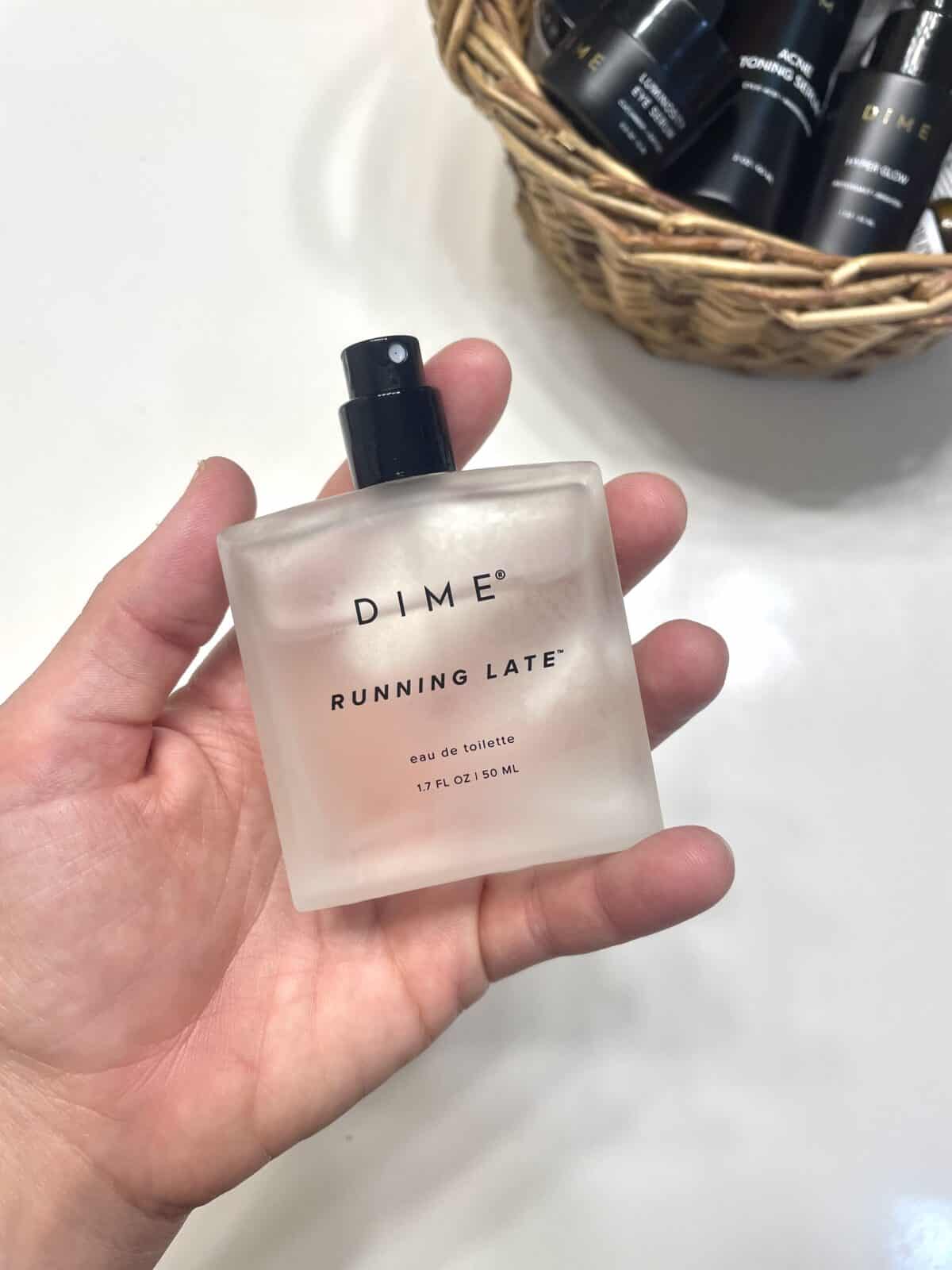
Lauren A’s favorite: Running Late
This is a really great option for a cleaner perfume that’s much more affordable than the 100% natural options listed above. (Like, half the price or less!)
I actually really like DIME’s perfumes because they have unique and long-lasting scents, but they’re not too strong.
Not all of their fragrances are EWG Verified at this time, but the 7 Summers one is. (Many of their other skincare products are EWG Verified as well. A while ago, they told me they’re working on getting everything Verified; it just takes a while.) Everything is phthalate-free and paraben-free.
Many of their scents are targeted more towards women, but they do have a few men’s colognes as well.
They do use some ethoxylated ingredients, which come with contamination concerns. And some of the “safe synthetics” they use lack thorough safety data.
I’ve actually tried several of their scents now: I Love Your Smell Baby, Lovely Sweet Dreams, Dans Les Bois, and 7 Summers.
I really like and wear them all, but I think 7 Summers is still my favorite. If I had to summarize their vibes in the most concise terms, I’d say I Love Your Smell Baby is fruity, Lovely Sweet Dreams is floral, Dans Les Bois is more elevated & mature, and 7 Summers is just young & fresh. I’d say the first two are more feminine and the last two could pass as gender-neutral scents.
P.S. They also have a Signature Set Duo, which includes the 7 Summers and Dans Les Bois, which you can use as either a tester and/or a travel perfume.
Lauren tried their “Running Late” perfume and she said:
“As someone who is relatively sensitive to smells, I really like this perfume. It’s definitely noticeable, but not too strong. I chose the Running Late scent, which they describe as ‘a happy, energetic scent with citrus and floral notes.’
I wouldn’t say it’s gender-neutral, but it’s not super ‘girlie’ either. It’s a scent that works both for daytime or going out on the town at night.
I would definitely re-buy this perfume, but I also might want to try some of the other scents next time, too!”
Use code THEFILTERY for 20% off.
Heretic


- Feminine, masculine, gender neutral scents
- Although they are not 100% natural, they are mostly natural
- Uses food grade, non-denatured, non-GMO, organic sugarcane alcohol
- Vegan and cruelty-free
- Discovery Sets available
These fragrances are for your more “provocative” side.
Although they offer fun and sensual scents like “Dirty Coconut” and “Florgasm,” their ingredients are far from dirty. These vegan and cruelty-free fragrances are free from phthalates, parabens, synthetic dyes, and formaldehyde, and they’re all blended together with organic sugar cane alcohol. You can find the full fragrance ingredient list on each product page.
Their fragrances are not 100% natural, but they do use majority natural ingredients. Additionally, they are all naturally-derived and/or nature-identical synthetics.
Heretic offers roll-on perfume oils as well as eau de parfum sprays in small and large bottles.
Henry Rose


- Feminine, masculine, gender neutral options
- Most of their scents contain alcohol denat, but not all of them. Menace is one scent that uses organic sugarcane alcohol instead. (I’ve reached out to them for more clarity on this and will update when I hear back from them.)
- Leaping Bunny certified Cruelty-Free, but not totally vegan
- Uses synthetic ingredients, but transparently lists them all
- EWG Verified™ and Cradle to Cradle Certified™
- Offers Discovery Sets to help you can choose your scent
My favorite scent: Jake’s House
This brand is for the person who reallllyyyy loves their conventional perfume but wants to switch to a cleaner option. When it comes to the performance and scent profiles, Henry Rose’s unisex fragrances can truly replace the ones you might be used to from conventional department store brands.
While they do use synthetic ingredients, they are “removing the last black box in the beauty industry, and revealing our mystery.” In other words: they transparently publish all of their ingredients.
Not only are they free from a list of thousands of potentially problematic ingredients, but Henry Rose was also the first fine fragrance to be both EWG Verified™ and Cradle to Cradle Certified™.
They’re not 1000% “clean”. Like DIME, they do use some ethoxylated ingredients and some of the “safe synthetics” they use lack thorough safety data.
Their bottles are made from 90% recycled glass and their caps are made from sustainably-sourced and compostable soy. They give back a portion of profits to Breast Cancer Prevention Partners, too.
If it’s your first time buying or you don’t know what kind of fragrance you’re looking for, grab one of their Sample Sets. You’ll get mini bottles of all of their fragrances so you can try them out for yourself at home, and then get $20 off a full-sized bottle whenever you make your choice.
I will say that Henry Rose is not for those with a strong sensitivity to fragrance. I can handle some fragrance, but I’m still pretty sensitive and sometimes Henry Rose can be too much for me personally.
Cultus Artem

- Gender-neutral scents
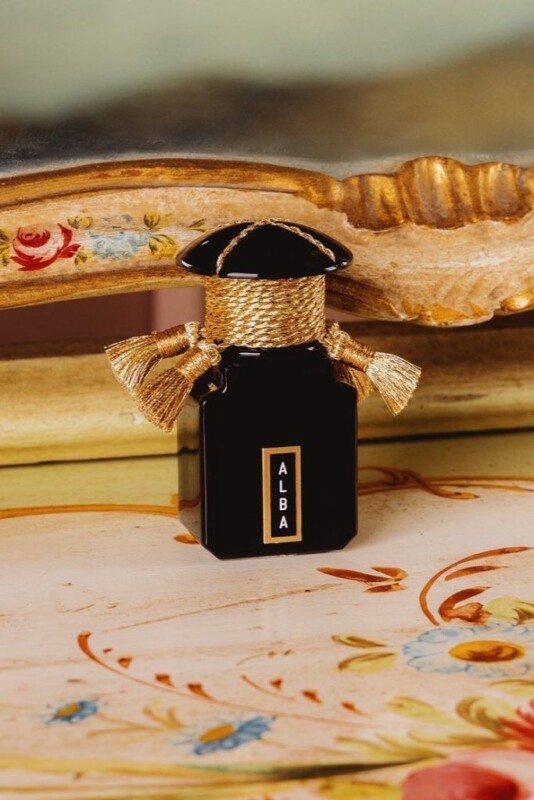
- Very luxurious (and a price point to match!)
- Their fragrance ingredients are mostly natural but they do use denatured alcohol
- All of the fragrances are cruelty-free and some of them are vegan
- They offer samples to help you choose
Cultus Artem is unhurried; they produce their fragrances in-house to eschew the mass production and disposable possessions that proliferate our culture today. Their name comes from the latin root words for culture + art-making.
In addition to taking steps to decrease waste throughout the entire production process, the team at Cultus Artem adheres to the European Union standards for ingredient regulations (even though the perfume is bottled in the USA). They’re completely free from things like parabens, organosulfates, phthalates, color additives, synthetic dyes, ETA/MEA, DEA, TEA, and toluene.
They do use alcohol denat (listed as “perfumery alcohol”). I reached out to them to ask and they do use the most common denatured alcohol which contains TBA (at 0.125% concentration) and Bitrex) (at 0.00052% concentration).
Summer Solace


- Water-based natural perfume (so you don’t have to worry about the denatured alcohol)
- Masculine, feminine, unisex
This simple, handmade, water-based perfume spray is made with just a few ingredients: pH balanced purified water and organic plant and essential oils. These make for a great everyday perfume spray that won’t be too strong, even for many individuals who are chemically sensitive.
Established by an organic chef and gardener, Summer Solace Tallow is a small, family-owned business dedicated to the production of slow-made, deeply nourishing, organic tallow-based skincare and home goods. They also offer tallow candles.
Even More Phthalate-Free Perfume Brands
These brands are better than your conventional perfume brands, but they also have a few shortcomings, too. The ones with *asterisks are the brands that actually disclose all of the ingredients so I recommend those ones more than the others.
- *Abbott NYC: They do transparently list all of their ingredients and their fragrances are all phthalate-free, unisex, cruelty-free, and vegan. They are manufactured locally in New York and New Jersey. They use a mix of natural and synthetic scents, and they use alcohol denat for their base. | Amazon
- *by/rosie jane: This one is made in LA, vegan & cruelty-free, and phthalate-free. They are not all-natural, but they do publish all of their fragrance ingredients. They do use organic alcohol denat, but they don’t say what’s used to denature it. | Amazon | Sephora
- *Good Chemistry: They are not all-natural but they do list out all of their fragrance ingredients. They do use alcohol denat, but everything is made without phthalates. They are vegan & cruelty-free. | Target | Amazon | Walmart
- DedCool: Made in L.A., this gender-neutral, vegan, and cruelty-free brand is made without any parabens, phthalates, carcinogens, EDTA, fillers, or animal by-products. While it’s made with organic extracts, they also use a “proprietary” fragrance blend, so not all of their ingredients are publicly available. They do use alcohol denat.
- Maison Louis Marie: This fragrance brand (which is based on a family tradition that’s over 200 years old!) is free from a long list of toxic ingredients (including pthalates), however, they still don’t list the actual ingredients that are included in each of their scents.
- *PHLUR: They use both natural and synthetic ingredients and they publish all of their ingredient lists online. They’re all free from BHT, phenoxyethanol, parabens, phthalates, and polycylic and alicyclic musks. Vegan and Leaping Bunny certified cruelty-free. They use alcohol denat. | Amazon | Sephora
Most Toxic Perfume Brands
Unfortunately, the following perfume brands don’t disclose their fragrance ingredient lists, so they can’t be considered non-toxic. Many of them have little to know safety or sustainability policies in place as well.
- Byredo
- Calvin Klein
- Clinique
- Chanel
- Dior
- Dolce & Gabbana
- Elizabeth Arden
- Estée Lauder
- Givenchy
- Gucci
- Hermés
- Jo Malone London
- Juice Couture
- Lancome
- LUSH
- Marc Jacobs
- Pacifica (This is a sneaky one; I wish they were more transparent! They say they use natural/essential oils, but they don’t list them out and they also use alcohol denat.)
- Philosophy
- Ralph Lauren
- Raw Spirit
- Tiffany & Co.
- Tom Ford
- Versace
- Yves Saint Laurent
Should You Go Fragrance-Free?
If you’re just starting your low-tox lifestyle and are feeling overwhelmed, one thing I usually suggest is that you start by eliminating some of the products you don’t actually need to wear every day.
Things like perfume, nail polish, scented fabric sprays… You don’t really need to use those types of products.
By eliminating them (at least for a period of time), there are less ingredient lists you have to worry about, and you can significantly cut down on your exposure to all sorts of chemicals almost immediately. (And you can save some money, too!)
Then if you want to, you can always add these products back into your life later, as you find safer versions of them. Some people find it’s actually just simpler and easier to continue going fragrance-free.
But there’s another reason why you may want to consider going fragrance-free and that has to do with accessibility and communal support.
By going fragrance-free, you’re being mindful of the folks around you—be it in your workplace, at the grocery store, etc.—who may have chemical sensitivities.
I have had to leave a coffee shop before because the woman who sat down beside me was wearing such strong perfume and I couldn’t handle it. I’ve sat through shows at the theater, anxious the whole time about a strong scent around me.
And I am only mild to moderately sensitive to fragrances; I know there are folks out there who are more sensitive than I am.
If you don’t want to completely eliminate your body sprays, then maybe you could just cut back and wear less. (Alternating your scents could help, too. If you wear the same scent every day, then you’re more likely to become accustomed to it and spray more.)
All of that said, I know how much folks love perfume… I get it! So if you are going to wear fragrances, of course I would rather you wear a safer one! That’s why I have this guide.
Eau de Toilette vs. Eau de Parfum vs. Perfume
As you shop for perfume, it might be helpful for you to understand the difference between a few different terms. These different types of fragrances generally refer to the concentration of scent and how long the smell will likely last.
- Perfume: This tends to have the highest concentration of scent with the strongest and longest-lasting smell (usually 20-30% concentrated).
- Eau de Parfum (or just Parfum): This is the middle of the road when it comes to scent concentration (usually 15-20%).
- Eau de Toilette: This has the most subtle scent concentration (5-15%).
- Cologne: In North America, “cologne” is most frequently thought of as men’s fragrance. In other parts of the world, cologne is actually a term used to indicate an even lighter fragrance option, with about 2-4% concentration.
Most of the time, these options are available in a spray form, of course, but you’ll also find solid perfume and roll-on oils.
This probably goes without saying, but those who are extra sensitive to chemicals may want to go for one of the lesser concentrated options.
How Much Perfume Is Absorbed Into My Body?
Your skin is a powerful barrier that has systems in place that stop or minimize certain toxicants from getting into your bloodstream.
Not everything you put into your skin gets absorbed (despite what a lot of people on the internet say!).
That said, the cosmetics industry uses ingredients called penetration enhancers to make things easier for your skin to absorb. So how much of a product gets absorbed depends on the formulation of the product.
So basically, we absorb some but not all of what we put on our skin (somewhere around 64% on average).
Final Thoughts on Phthalate-Free & Non-Toxic Body Sprays & Fragrances
Natural, non-toxic perfumes are not impossible to find and your body will thank you in the long run! But finding the right scent (and brand) can be tricky.
When shopping for non-toxic perfumes, gauge the ingredient transparency from the brand. Simply having nothing to hide usually indicates a degree of safety at the very least.
Pay attention to the brand’s mission, product ethos, purpose, and environmental impact. This will show you a more robust scope of the brand rather than just checking the product label for non-toxic perfume ingredients.
Finally, in addition to the health benefits of a natural fragrance, buying from the brands listed here is a great opportunity to support small, eco-conscious businesses and artisans!
Let me know in the comments what your favorite non-toxic perfume is!


What about Ffern? It’s newer and claims to use natural ingredients. I love the smells.
Looks like an interesting brand! They say they don’t use phthalates and use 95-100% natural ingredients, which is good. But they don’t disclose all of their ingredients, unfortunately. Also, there seems to be a discrepancy on what kind of alcohol they use. On their FAQ page, they say they use “quintuple-distilled organic Italian grain alcohol,” but then on one of the product pages I checked, it says alcohol denat. So my opinion at this time is that this company isn’t the best, but isn’t the worst either!
I was wondering if any one has any information on Michael Malul colognes? I recently purchased a sampler and some of the ingredients just say fragrance (parfum). I have contacted the company who emailed me saying they don’t use phthalates and only use clean proprietary blends.
The “proprietary blend” answer is a common one, unfortunately.
I do not agree that Byredo is the most toxic, they do NOT USE phtalates. I talked to their rep.
you can contact them and ask.
That’s good to hear that they don’t use phthalates – thank you for letting us know! Unfortunately, there are other not-great ingredients other than phthalates to consider.
What about Nina Ricci L’aire du Temps? Any info on that? I used that for 50 plus years which is a concern. I had severe endometriosis & horribly painful periods until a hysterectomy when I was 40 after 1 miscarriage & 2 healthy babies. It did take me 8 yrs to conceive. It makes me wonder if that perfume was the cause of the endometriosis.
I’m fragrance sensitive & it’s the only one I could wear, so it’s puzzling. I miss wearing it, but…
I’m so sorry to hear about your experiences. You’re definitely not alone in that; so many women have experienced similar things. I looked at the ingredients in the Nina Ricci perfume you mentioned and unfortunately, I would not recommend it as a non-toxic option.
OK, nontoxic is straightforward enough. But when a brand claims “free of” anything, with no mention of certification nor EWG— are we just going on trust in the brand’s own claims?
This is a very helpful piece— thanks!
Hey Regina! Glad you found it helpful. Third party certifications definitely have their pros & cons. They certainly provide a level of accountability to increase trust with consumers. But they are also costly for small brands to get and maintain. So just because a brand does NOT have a third party certification doesn’t necessarily mean it’s not safe. There’s always a certain amount of trust that we have to give to brands (whether we like it or not!)
Great article, thanks! What about Sol de Janeiro hair & body sprays? They make the classic Brazilian Crush. They advertise as phthalate and paraben free and list all ingredients on their website.
Hi MB, Unfortunately, Sol de Janeiro doesn’t ACTUALLY list all of their ingredients on their website (at least not that I can find!). If you look under the Ingredients on the product page, you’ll see “Parfum (Fragrance)” listed, which could mean 3,500+ different ingredients are included (and they don’t have to label it accordingly). It’s definitely a good thing that they’re free from phthalates and parabens, but I can’t totally recommend them at this time.