
Ratio is one of only two automatic coffee makers that is (kind of) plastic-free.
Most coffee makers have a lot of plastic on the inside—the water lines, the brew basket, the shower head, etc.
As hot water and coffee run through those parts, they can leach microplastics into your coffee. And with more people getting worried about microplastic exposure and how it could be negatively affecting their longterm health, a lot of folks are trying to find a plastic-free coffee maker for their morning ritual.
The fact that the Ratio Eight coffee maker doesn’t have any plastic in the brew path was the biggest selling point for me, and it’s why I wanted to try it out for myself.
My husband and I have been making manual pour overs each morning for years, and while I do love a pour over, it would also be nice to have something that’s faster and requires less work from us—at least for some mornings!
Ratio has a lot going for it, but it also has some downsides. I’m going to give you my honest thoughts in the hope that it will help you decide if it’s a good fit for you, your lifestyle & preferences, and your budget.
What this review covers:
This guide contains product recommendations and we may receive compensation if you purchase through certain links. This article is not sponsored, but the coffee maker was gifted with no strings attached (thank you!). As always, we only make recommendations that are genuine!
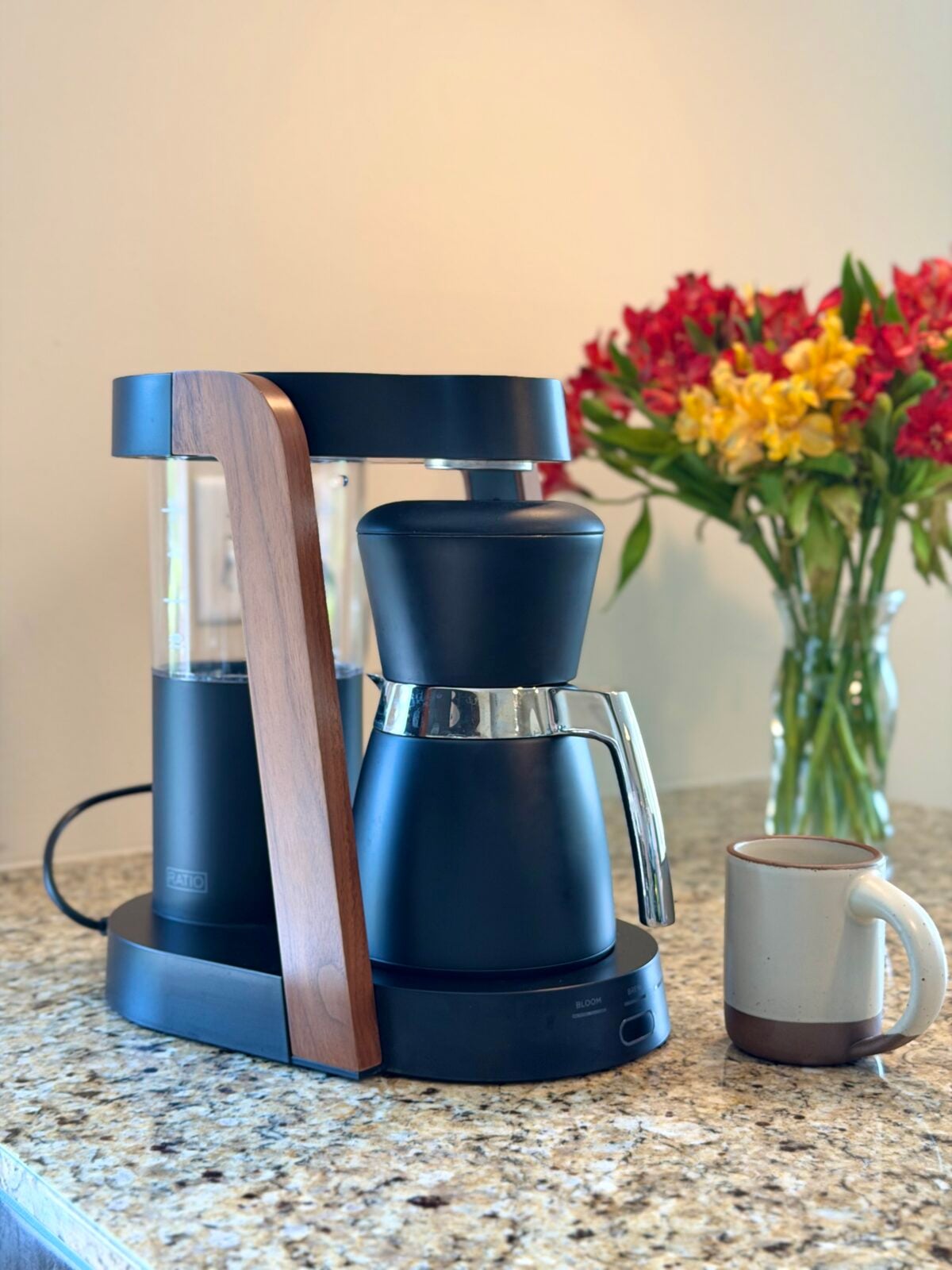
First: the basics on Ratio
Ratio makes automatic coffee makers, but technically they’re are more of a hybrid. Yes, you can just push a button and the machine will brew the coffee for you, but you’re actually still making a pour over. Ratio’s aim was to offer a coffee maker that helps people get a more consistent result on their pour over quality, without having to pay too much attention to detail.
Here are the different options they have available, and the main differences between them:
Ratio Eight: This is the one I have. It’s the most expensive option and has the least amount of plastic. (It’s also the best looking one. 😆) I have the Series 2, which is an upgraded re-design of the first edition of the Eight.
Ratio Six: This is their mid-range option. It’s actually very similar to the Eight—it’s just not as expensive, not as pretty, and uses more plastic. (Although, you can upgrade this one to be low-plastic as well; I’ll get to that in a sec.)
Ratio Four: This is their smallest and most affordable machine. This is more for the Keurig people who only want to brew a small amount of coffee at once. It also has the most plastic.
Their machines are designed in Portland, Oregon, where the brand is based. They are assembled in China. (I believe they used to make at least some of them in the US, but they moved to China to try and bring the cost down for customers.)
Oh, and they’re available on Amazon too, if you shop there.
My experience using the Ratio Eight Series 2
The setup: Super easy. There’s not really anything to assemble; you just pull the pieces out of the box, plug it in, and it’s ready to go.
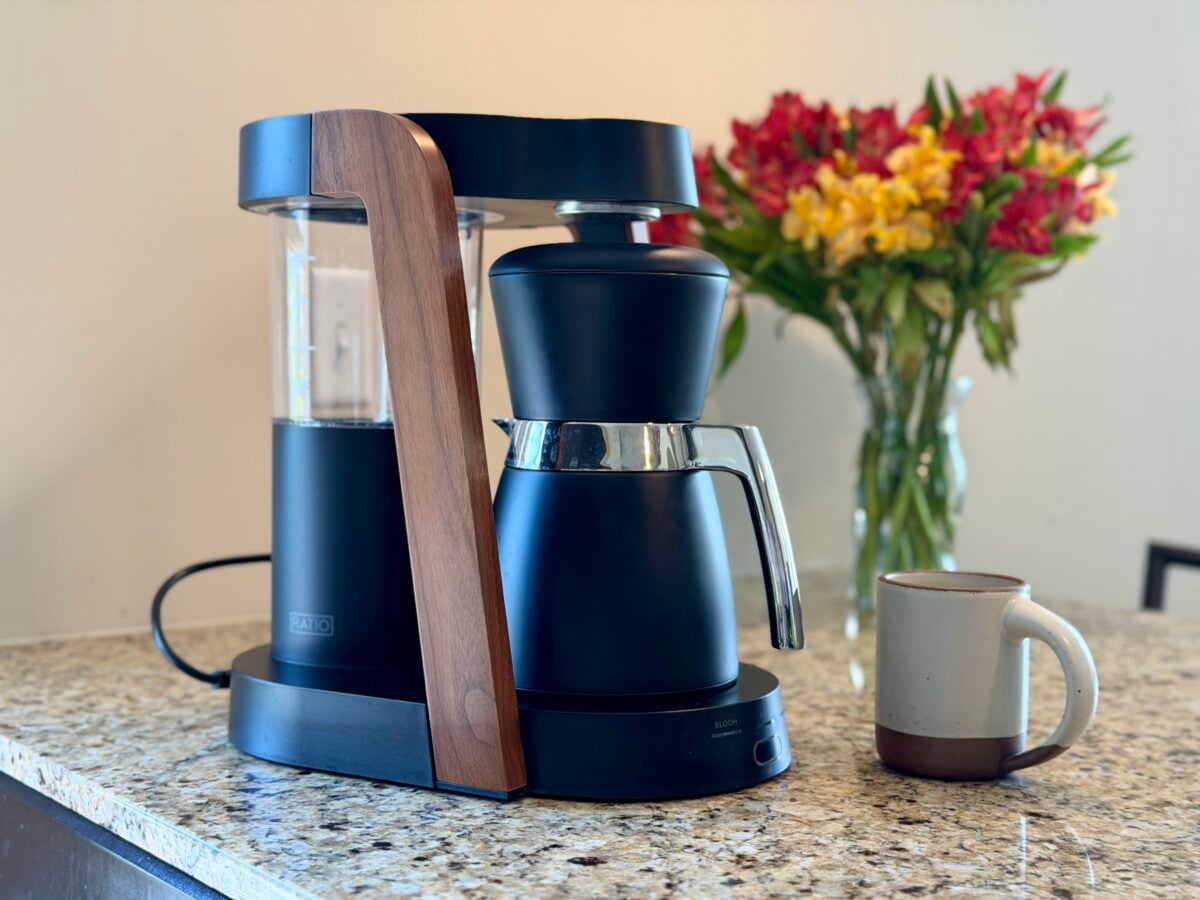
First impression: It’s so pretty! It just looks nice on the kitchen counter.
It does have a slightly larger footprint than some other typical coffee makers, so you may want to take that into consideration if you don’t have a lot of counter space. It’s just over 14 inches tall, 14 inches long, and about 10 inches wide. The Series Eight is the largest, followed by the Six, and the Four is the most compact.
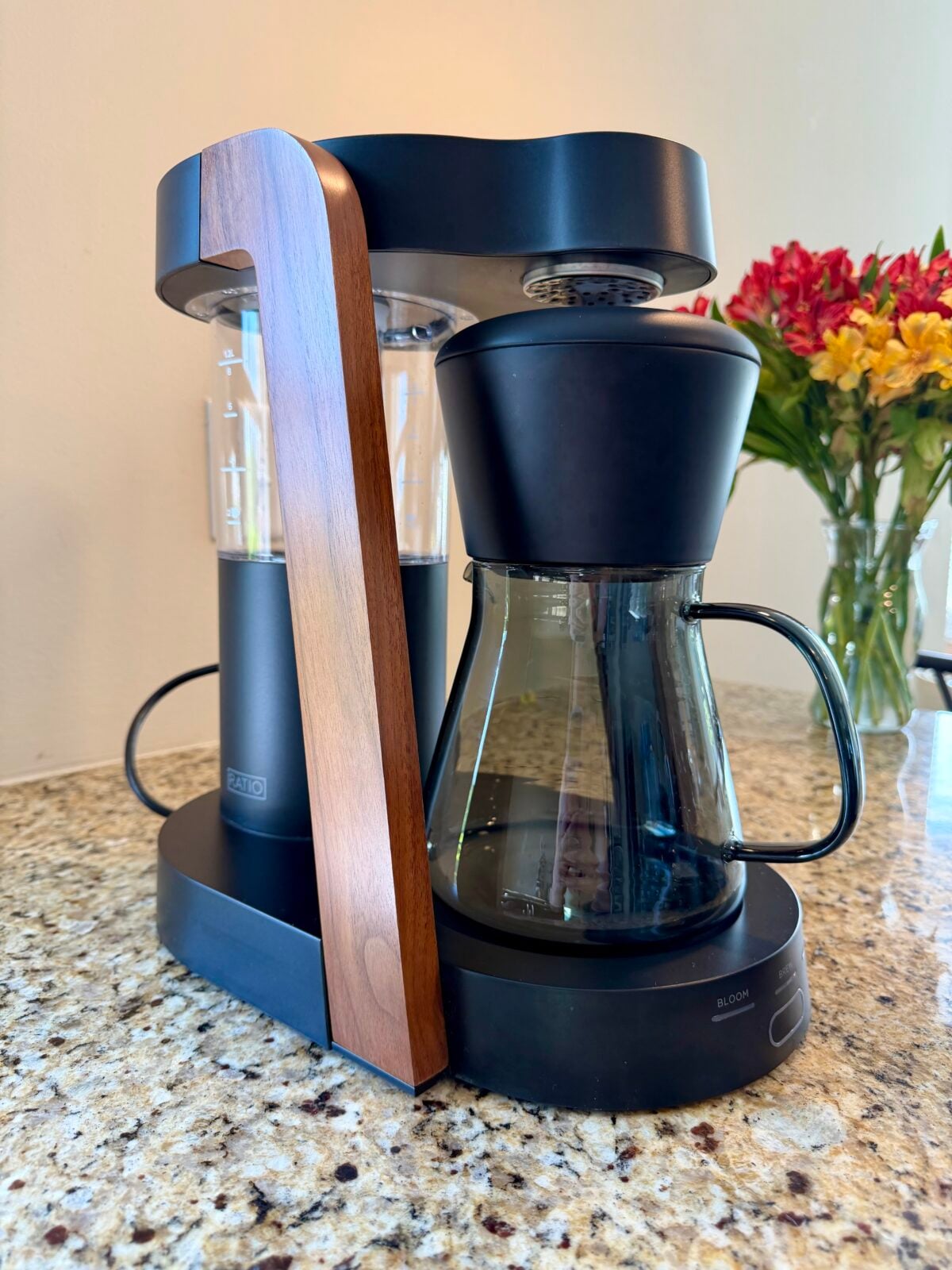
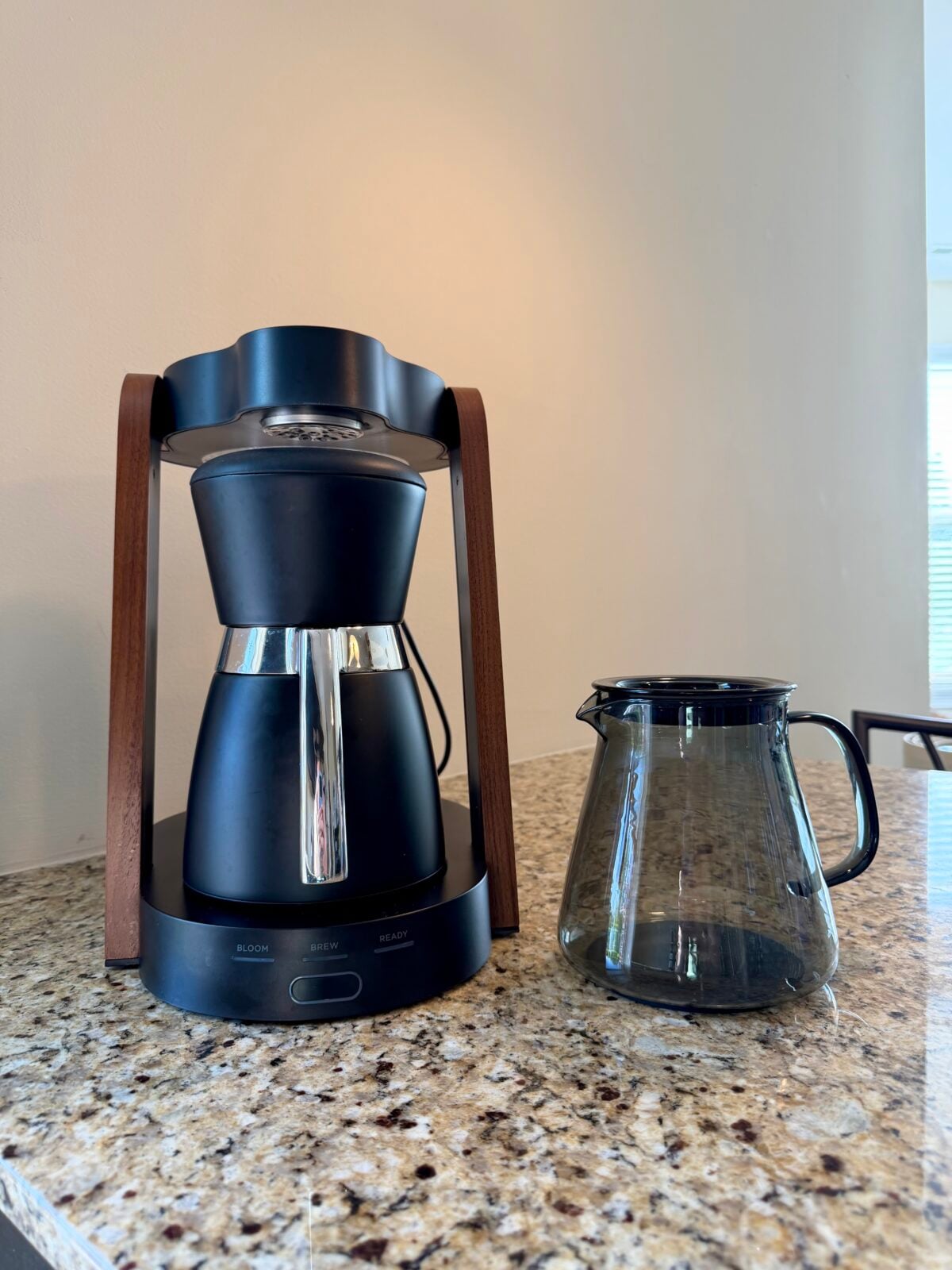
The carafe options: You can get either a glass carafe or a double-walled stainless steel thermal carafe. I actually got both, just to try them.
I use the stainless steel one way more often than the glass because it actually keeps the coffee hot for longer. I work from home and drink my coffee slowly, throughout the whole morning, so I want it to stay warm.
Both carafes both come with lids to help keep the heat in longer, but the glass one still doesn’t keep the coffee hot for very long. So the glass would be better for you if you tend to drink your coffee right away or transfer it to a travel mug to take with you.
The glass lid has an opening where the pour spout is. With the stainless steel one, however, you can actually twist the lid to cover the pour spout and keep the coffee hot longer. It’s really easy to just twist the lid when you go to pour more coffee, then twist it back to seal it.
The glass carafe also has silicone on the bottom to help you not accidentally break it.

The brew basket: No matter which carafe you decide to use, the brew basket sits right on top of the carafe (the same way a manual pour over would).
I’m using the stainless steel brew basket combined with a reusable stainless steel mesh filter inside. But you can use regular paper coffee filters if you’d prefer.
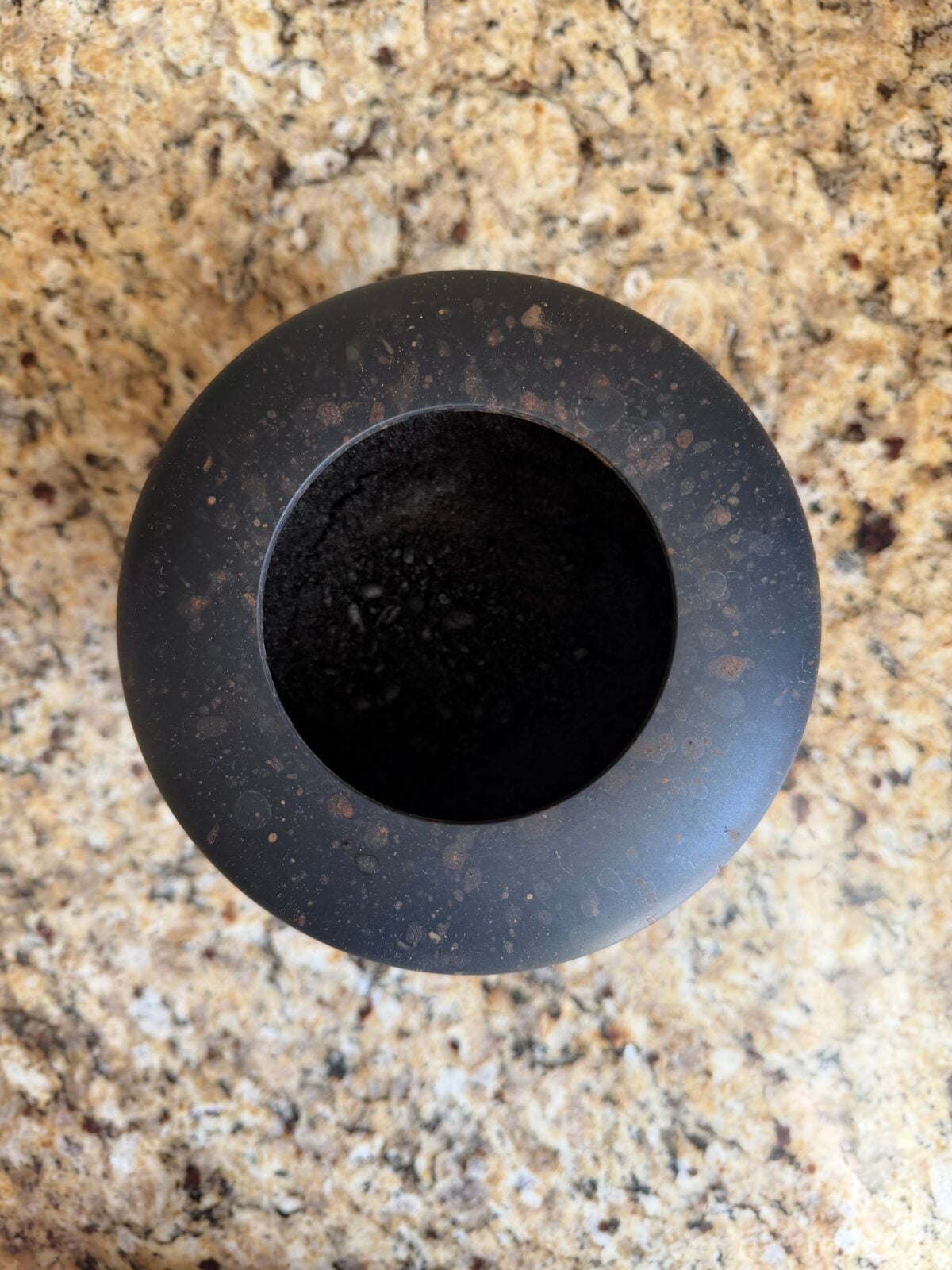
The brew basket has a circular “splash guard” lid that you put on top so that when the water hits the grounds, it doesn’t send drops of coffee onto your walls or countertops. Here you can see the effects of the splashguard:
And then here’s the cutest part of the whole setup: the brew basket has it’s own plate / catcher thing. So when the coffee is finished brewing, you just set the brew basket right onto the catcher and then replace it with the carafe lid. So you don’t have to worry about putting the brew basket into the sink or onto a separate mug or anything like that.

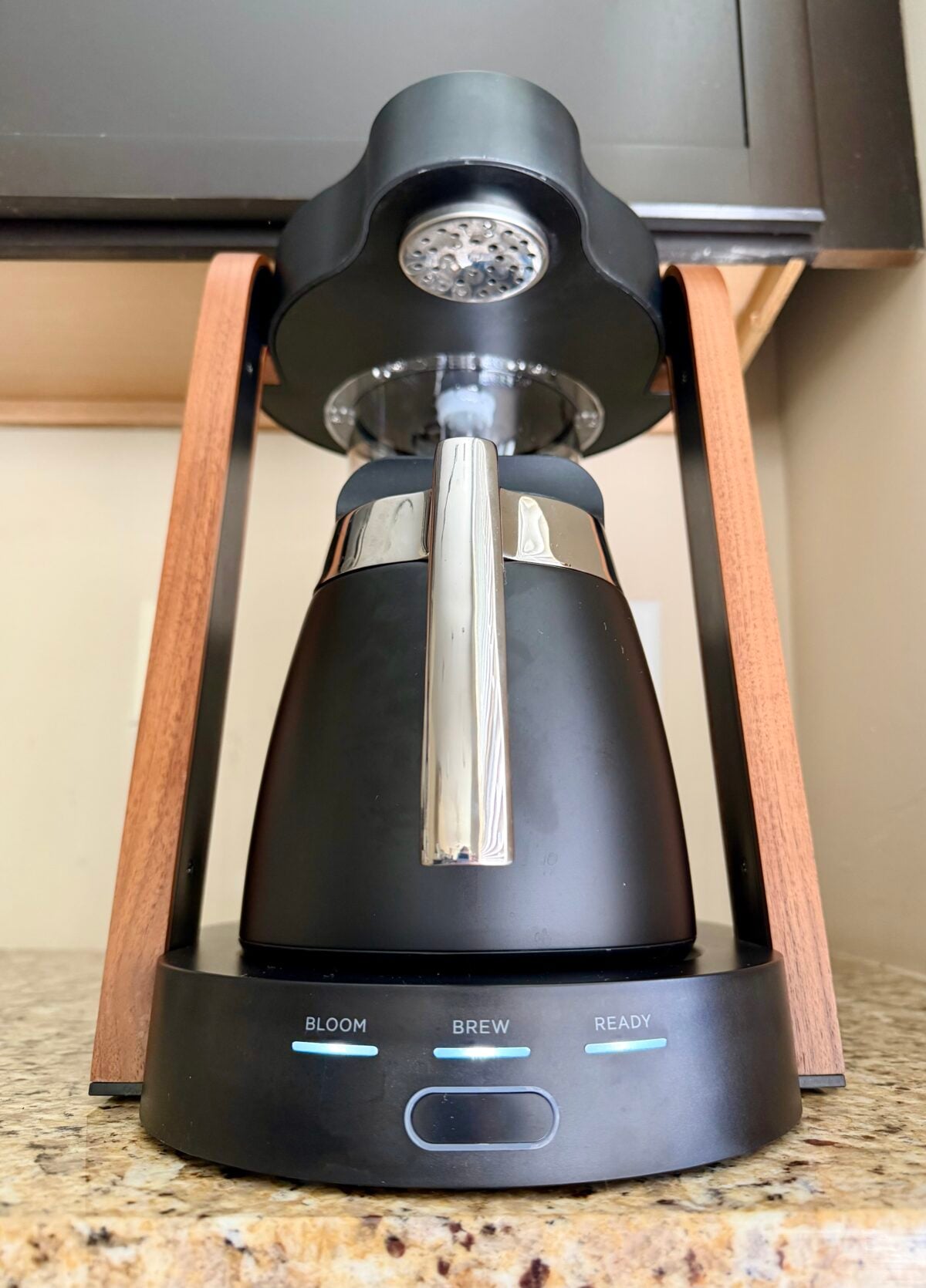
The brew button: There’s just one button on the front, which you press when you’re ready for the coffee to brew. It comes pre-programmed to automatically brew “Recipe A,” which includes a Bloom cycle for even saturation, followed by a Brew cycle that pulses hot water on the grounds… giving you the perfect pour over pot of coffee.
But if you want, you can switch to “Recipe B” by holding the start button for 3 seconds. Recipe B is meant for smaller cups of coffee (10-20 ounces).
There are three indicator lights on the front that say “Bloom,” “Brew,” and “Ready” so you know what the status is.
Things I love about the Ratio coffee maker
No plastic in the brew path.
Let’s get to the details about the plastic because that’s part of the whole reason I wanted to review this specific coffee maker in the first place.
The Ratio coffee maker is not plastic-free… but it’s the closest you’re going to get for now.
A truly plastic-free automatic coffee maker doesn’t exist (yet!?). If you want to go 100% plastic-free, you’ll have to go with a manual method, like a French press or manual pour over.
But I totally get why manual brewing isn’t for everyone. If you have to get up super early, if you have a baby, or if you just have a lot going on… You might not have the luxury of standing there and pouring hot water over grounds for several minutes.
The Ratio Eight Series 2 has no plastic in the brew path, which means that no hot water or coffee touches plastic.
The water lines are made of borosilicate glass, the showerhead is stainless steel, and of course the carafes are stainless steel or glass (with some silicone for the lids).
The water tank is the only part that’s made of plastic that actually touches the water. While this isn’t ideal, it’s worth noting that a) it’s made of Tritan plastic, which is one of the ‘least bad’ kinds of plastic on the market, and b) the water is not hot when it’s in the tank (which is noteworthy since heat increases leaching).
The outer body of the machine uses a good amount of plastic, but of course it doesn’t touch any of the water or coffee. Again: maybe not ideal considering it’s probably going to end up in a landfill one day, but there’d be other costs to pay if they managed to make it 100% plastic-free: it would likely be a much heavier and more expensive machine.
Now let’s talk about the plastic in the other Ratio versions.
The Ratio Six also has glass water lines and a stainless steel showerhead, but the brew basket uses plastic. However, you can really easily swap that out for the stainless steel brew basket that the Ratio Eight uses. This is huge because you can get a low-plastic automatic coffee maker that’s much cheaper: $799 for the Ratio Eight versus $414 for the Ratio Six + stainless brew basket. Yes, $414 is still a pretty penny, but hey, it’s almost $400 less than the Eight.
The Ratio Four can also be altered a bit to reduce the plastic. You can remove the brew basket and just replace it with a regular ceramic dripper. The hot water does pass through a small amount of plastic in the showerhead portion of this one though.
At the time of publication, the Ratio is one of only two automatic coffee machines I’ve been able to find that have little to no plastic in the brew path. The only other option is Simply Good Coffee. Like the Ratio, this one is not totally plastic-free, but the brew path is. (Just make sure you’re looking at their “Plastic-Free Brewer” option, as their others DO use plastic in the brew path.)
I think both are good options in general. The Simply Good Coffee is not as beautiful, is cheaper than the Ratio Eight (but more expensive than the Ratio Six), and there is usually a months-long back-order.
It’s beautiful.
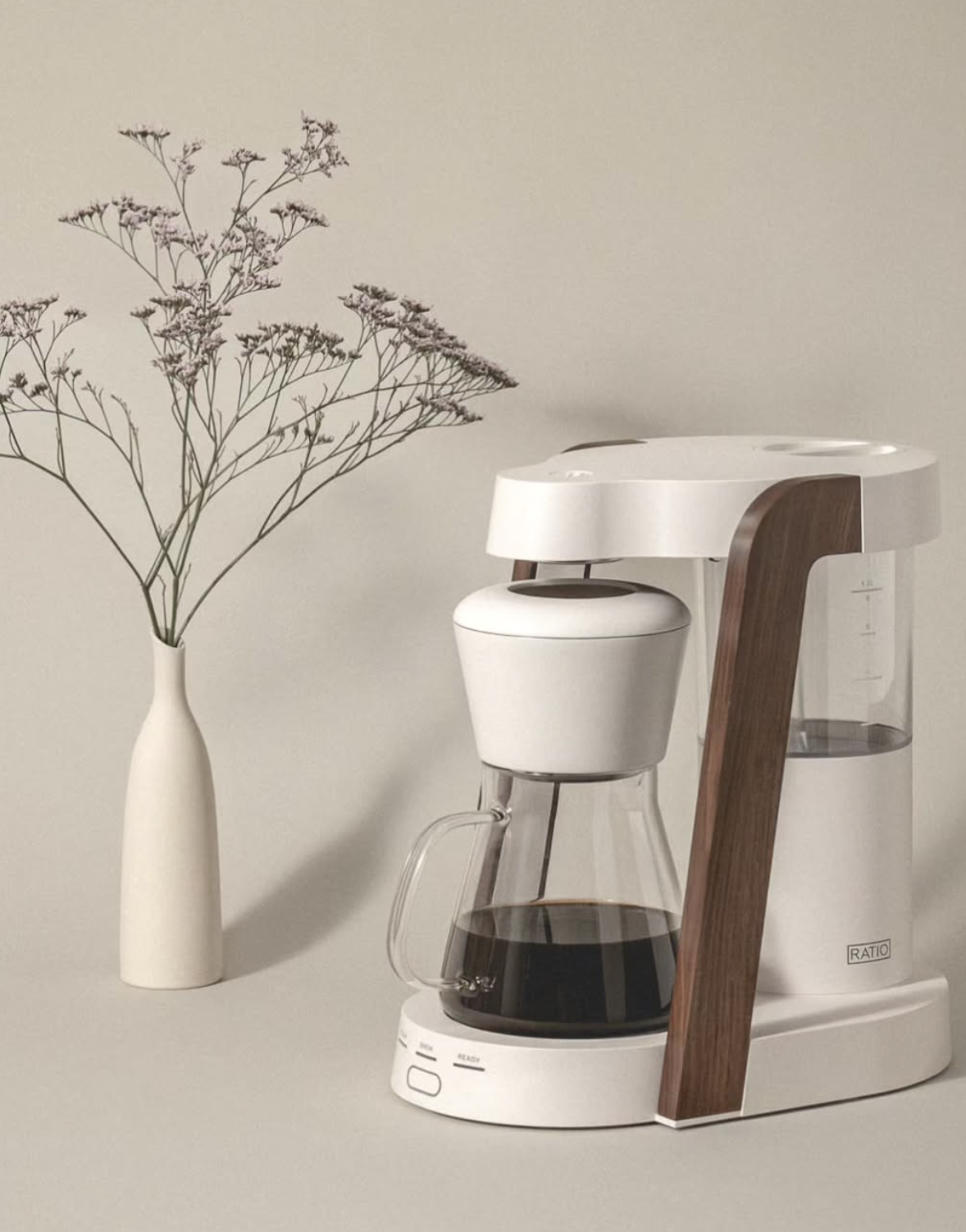
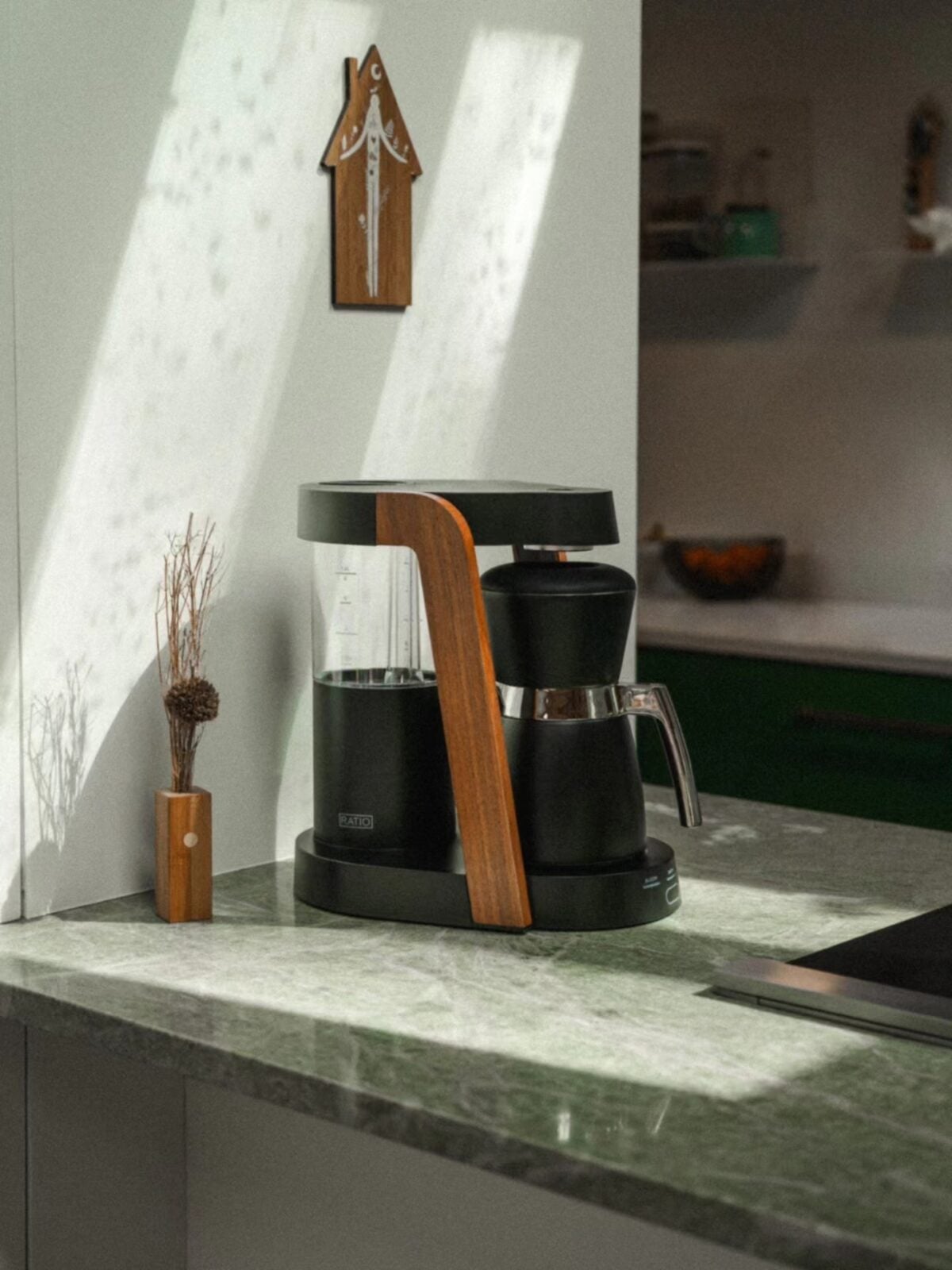
There’s not that much to say here. If you care a lot about your kitchen aesthetics, then you’ll probably love the Ratio Eight. The solid wood trim really gives it a unique and elevated look.
I chose the Matte Black version, but they also have a “Linen” option (aka off-white).
5-year warranty & 30-day guarantee
It might go without saying, but I always appreciate when brands have solid return policies and warranties, especially on higher-priced items that you’re probably going to be using every day.
Ratio offers returns within 30 days, so you can send it back if you try it and decide it’s not for you. (You do have to pay for the return shipping though.)
All of their machines also come with a 5-Year limited warranty for the USA for manufacturer defects. Like most warranties, it doesn’t cover things like improper use or normal wear & tear.
Continual improvement.
The Ratio team has released several different versions over the years. They’ve made design improvements on existing models (for example, the Ratio Eight Series 2 introduced a flat-bottom stainless-steel filter basket that the Series 1 didn’t have), and they’ve also launched more affordable options.
They also are working on even more improvements right now that I can’t tell you about yet. 🤫
Things I DON’T love about the Ratio coffee maker
The price.
I won’t lie: this is one of the biggest downsides for price-conscious consumers. The Ratio Eight Series 2 currently runs for $799. While that’s definitely not unheard of among coffee aficionados (that’s honestly pretty average for an espresso machine), it’s steep for an automatic coffee maker.
I will say, however, that they actually dropped the price by $100 when they went from the Ratio Eight Series 1 to the Series 2. I appreciate that they’re doing what they can to move in the direction of more affordability.
No programmable timer.
My husband was quick to point this one out. 😅 You can’t program the coffee maker to start brewing at a certain time in the morning.
Despite the fact that this might be my household’s #1 feature request, it’s not a big deal either. All it takes is one press of a button in the morning.
No hot plate.
The plate on the bottom does not heat up, so it doesn’t keep your coffee hot for a long period of time.
This is actually a conscious decision they made because hot plates tend to burn your coffee and make it bitter.
The double-walled stainless steel carafe with the silicone lid pretty much solves this problem; it keeps my coffee warm for a couple of hours. I just wanted to note this about the hot plate in case it matters to you.
Be careful of steam on walls & cabinets.
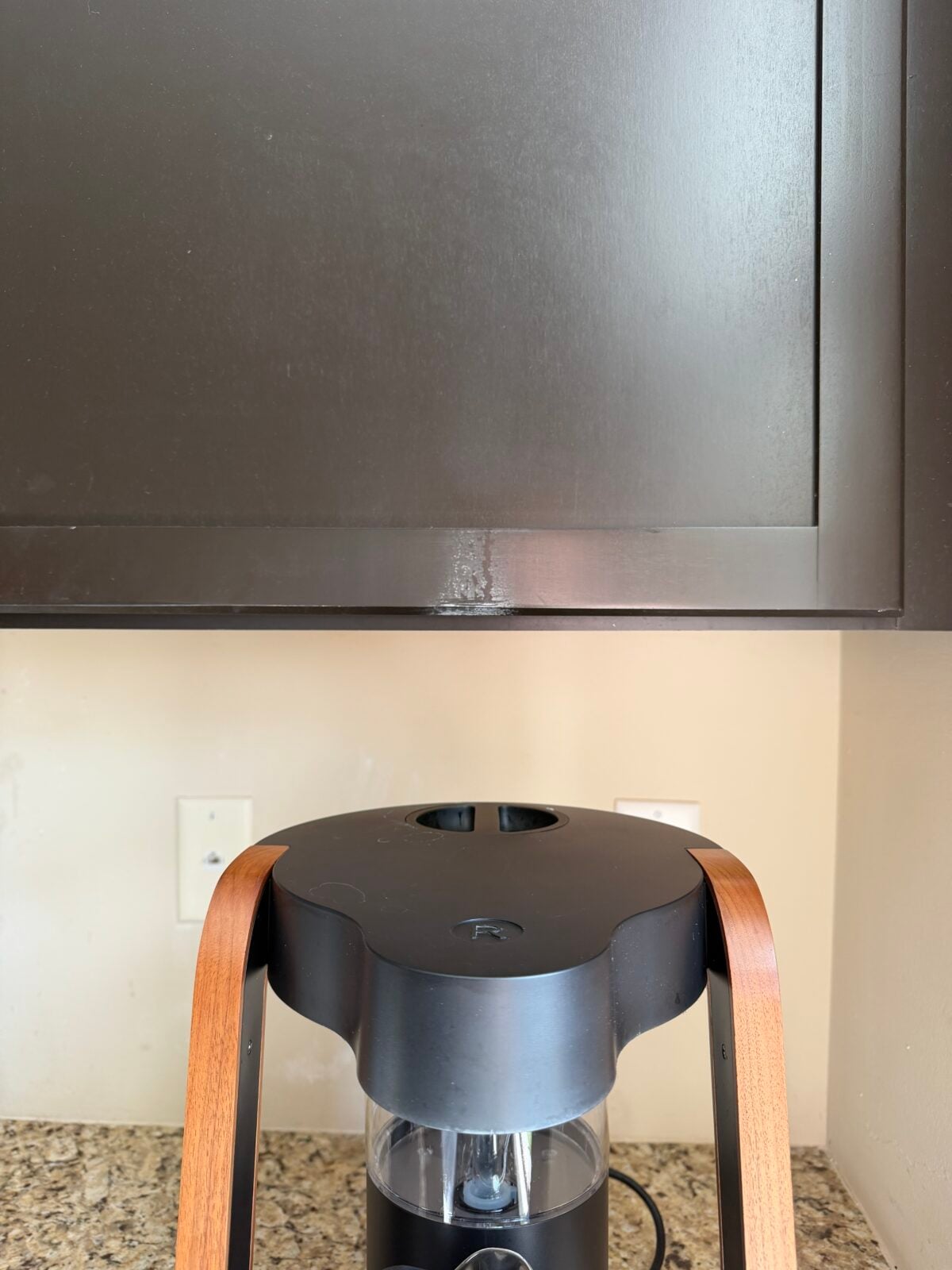
It releases some steam while brewing, which could lead to some moisture on the wall or cabinet, depending on where you have the machine placed. I have mine below a cabinet and one day I left the cabinet door open while the coffee brewed. It left a little white patch, which you can see in the photo below. (It did scrub off though.)
Just something to be aware of.
My Ratio coffee maker pros & cons in a nutshell
To sum it all up:
👍 Pros:
- Coffee tastes great (pour over quality)
- No plastic in the brew path (no hot water or coffee touches plastic)
- Very easy to use & minimal setup
- Programmable to brew a large or small amount of coffee (1-8 cups)
- Looks nice on the kitchen counter
👎 Cons:
- Not cheap
- No programmable timer
- No hot plate (not truly a con because hot plates can lead to burnt and bitter coffee)
- Water tank is still made of plastic