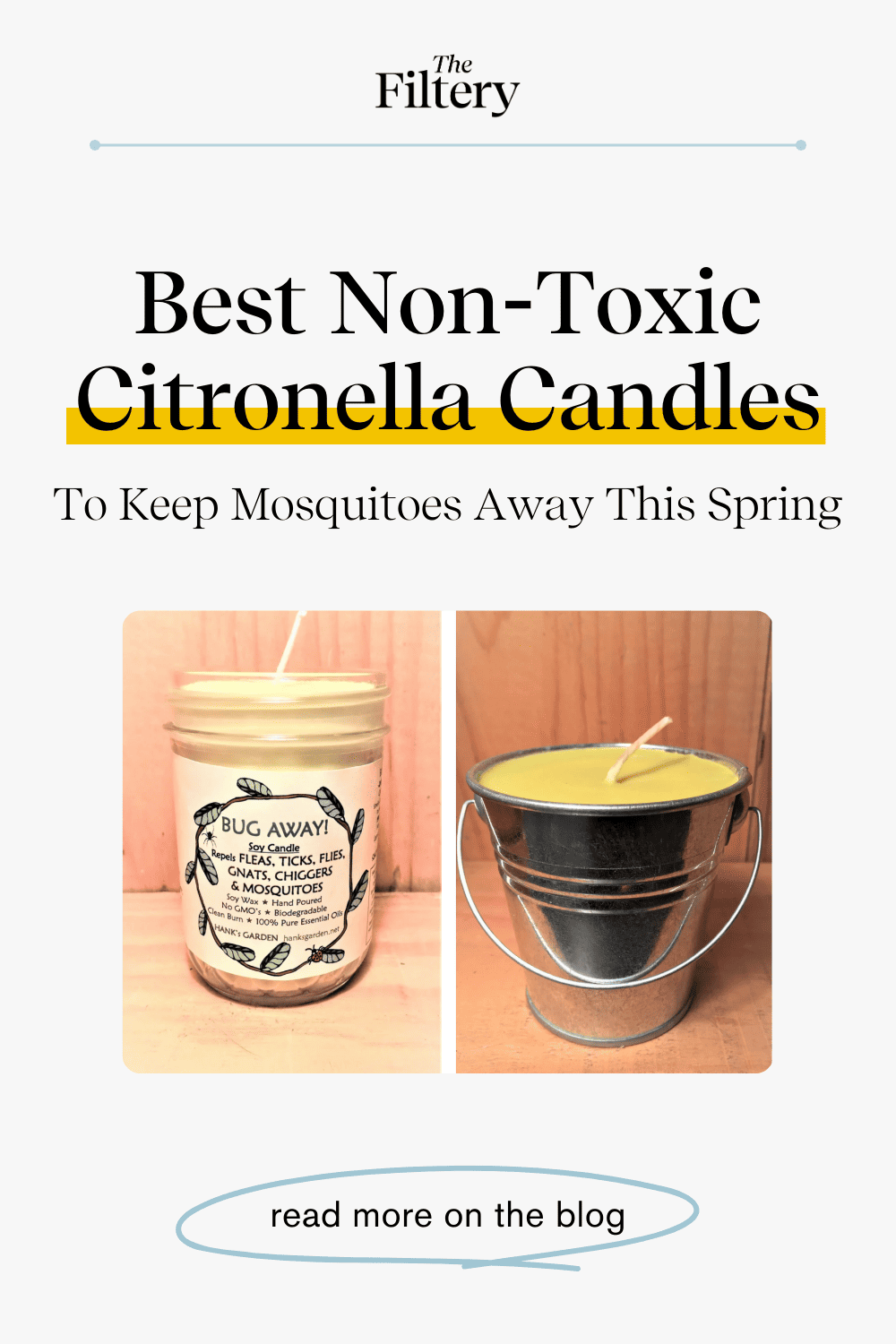

It’s the time or year when we have to gear up against summer mosquitoes—and non-toxic citronella candles are one of the easiest ways to do it.
Of course, you want your bug-repelling tools to be safe, not filled with questionable chemicals like permethrin, pyrethroids, or cyfluthrin, which are common in conventional pest control sprays.
Natural citronella candles that are made without synthetic fragrances or petroleum-based additives can be a good low-tox option for your summer bug-repelling arsenal. Citronella oil (derived from a type of lemongrass) works by masking the scents that attract bugs, making it a safer alternative to harsh chemical repellents.
Plus, citronella oil gives off a fresh, citrusy aroma that most people actually enjoy, so you can repel bugs and set the mood at the same time.
Below, I’ve rounded up my favorite non-toxic citronella candles for both indoor and outdoor use to help you enjoy a bite-free, low-tox summer.
What's in this guide:
This guide contains product recommendations and we may receive compensation if you purchase through certain links. As always, we only make recommendations that are genuine!
Non-Toxic & Eco-Friendly Citronella Candles To Help Repel Mosquitos
Fontana Candle Co.
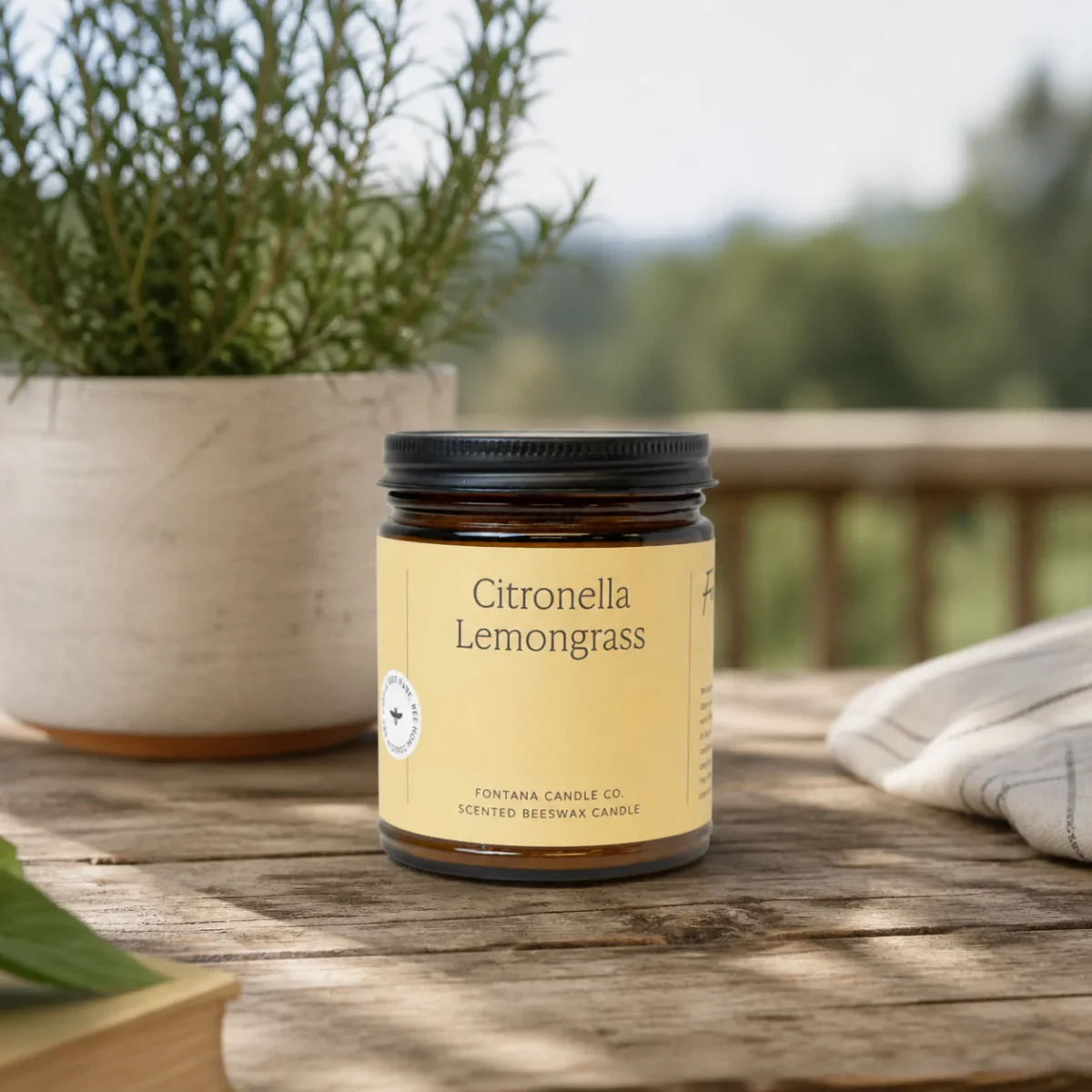
Made of: Coconut & beeswax wax + essential oils (citronella, lemongrass, rosemary, peppermint)
Burn time: Approx. 24 hours
Fontana Candle Co. is one of my favorite brands for non-toxic candles! They take great care in making their candles. Everything is made in the US and they are committed to only using high-quality, safe, & transparent ingredients.
Their citronella candles are made with more beeswax than their other candles in order to ensure a longer burn time. That way, you can keep the summer evenings rolling longer—without being bothered by mosquitos or toxic scents.
They’re MADE SAFE certified, too, which means the ingredients have been third-party vetted for safety.
Use code THEFILTERY15 for 15% off.
Drunkn Mosquito
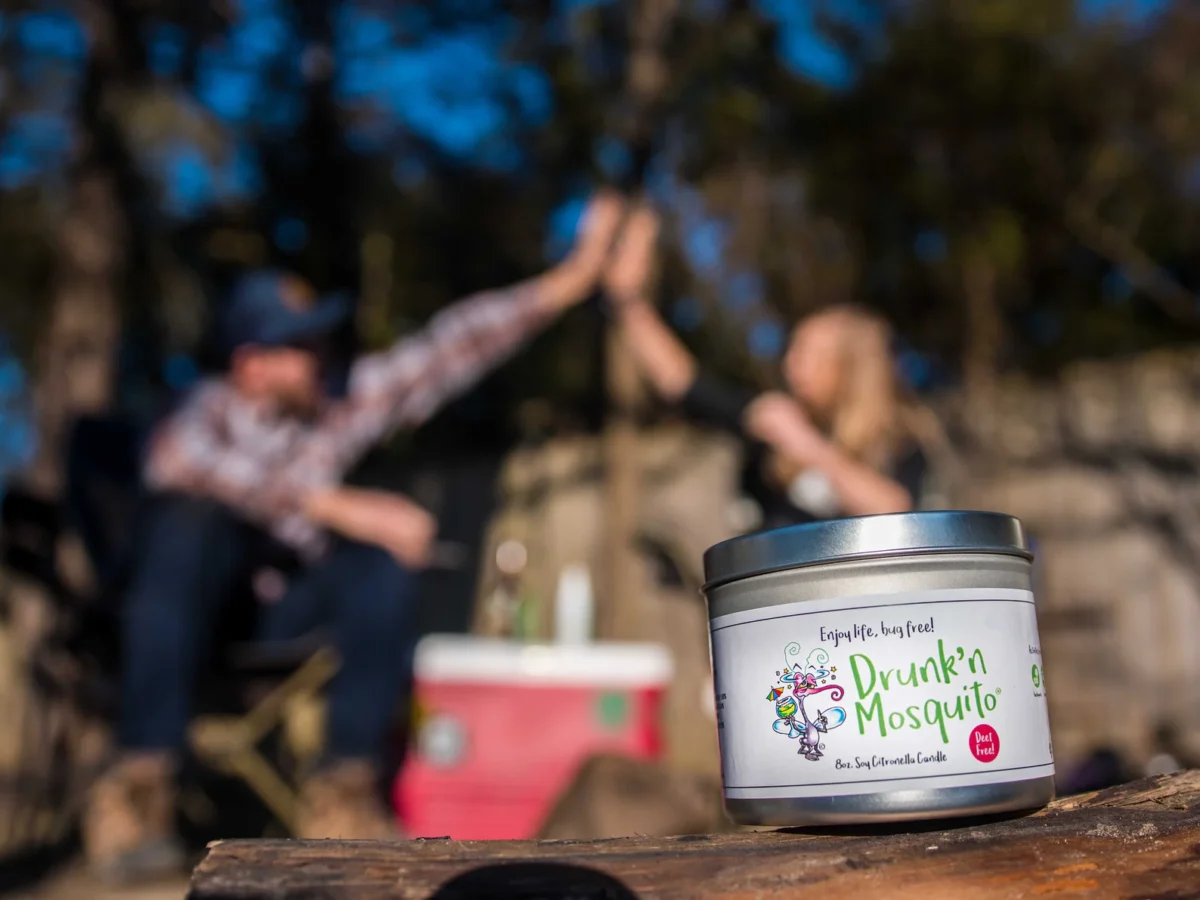
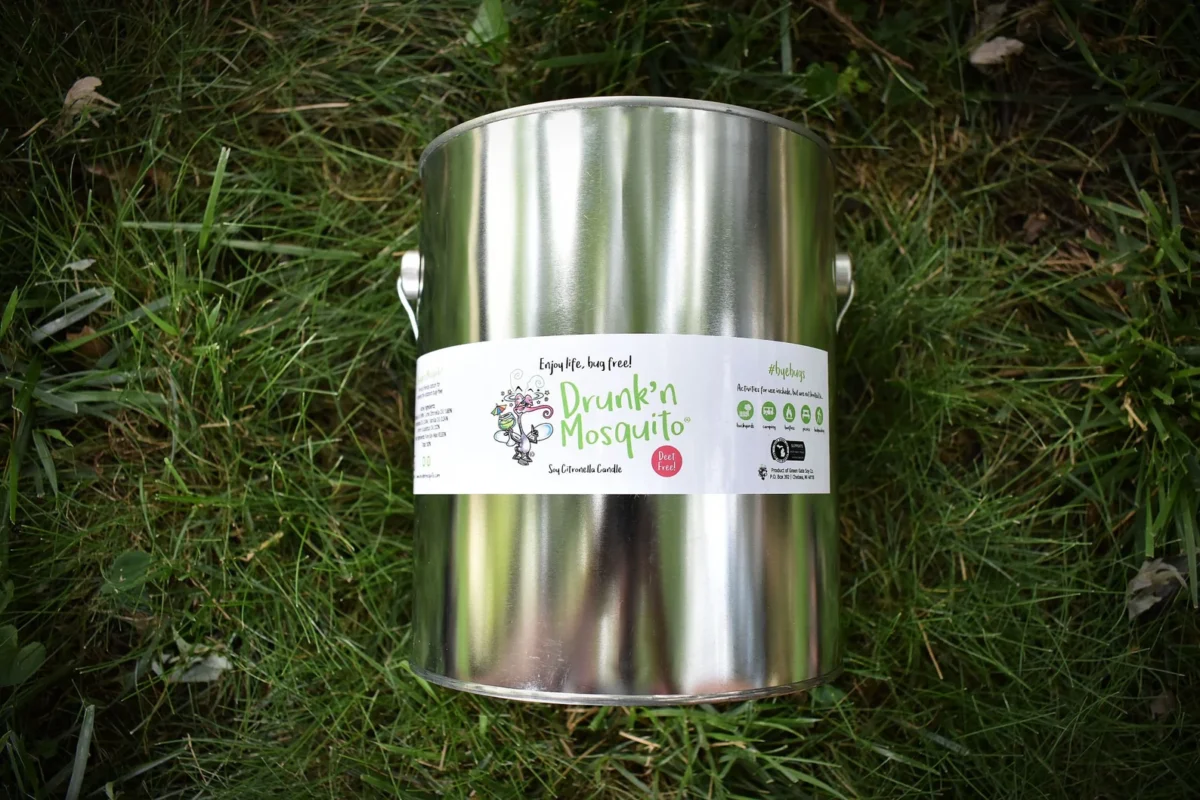
Made of: Soy wax and oils (eucalyptus, lime citronella, lemongrass, citronella and vanilla)
Burn time: 100-800 hours!
These citronella candles are made with 100% pure soy wax with oils like citronella, eucalyptus, and vanilla added.
They’re intentionally filled only halfway up so that the jar will act as a wind barrier and keep the candle from going out.
These candles are hand-poured in Michigan and each purchase helps preserve Michigan State Parks, trails, and waterways.
Aire
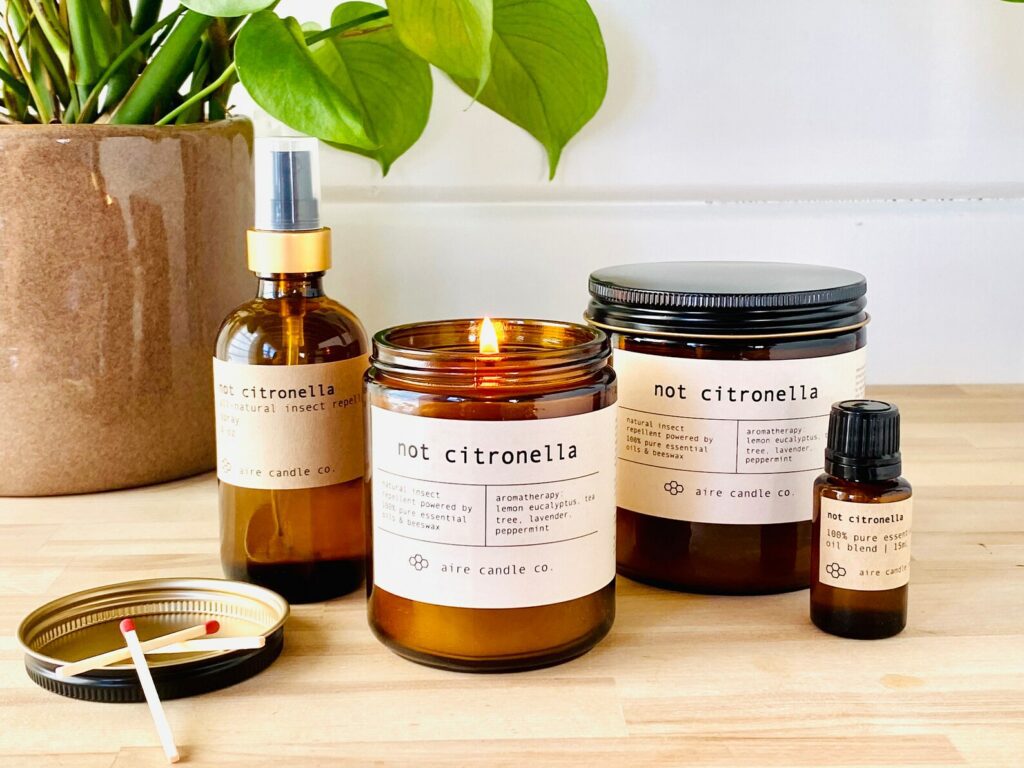
Made of: Beeswax coated cotton wick, beeswax, & essential oils
Burn time: 50 hours
If you are sensitive to citronella, just don’t prefer it, or want something that’s safer to burn indoors, check out this “not citronella” insect repellant candle from Aire.
Aire’s candles aim to help you enjoy your soirée well into the evening without having to deal with unwelcome visitors. They combine different essential oils known to repel different insects: lemon eucalyptus, lavender, peppermint, and tea tree.
All candles feature natural cotton wicks coated in beeswax and are “dressed” in amber glass jars with metal lids. Aside from burning for up to 50 hours, this blend is also free of dyes, fillers, phthalates, lead, soy, and paraffin.
Murphy’s Naturals
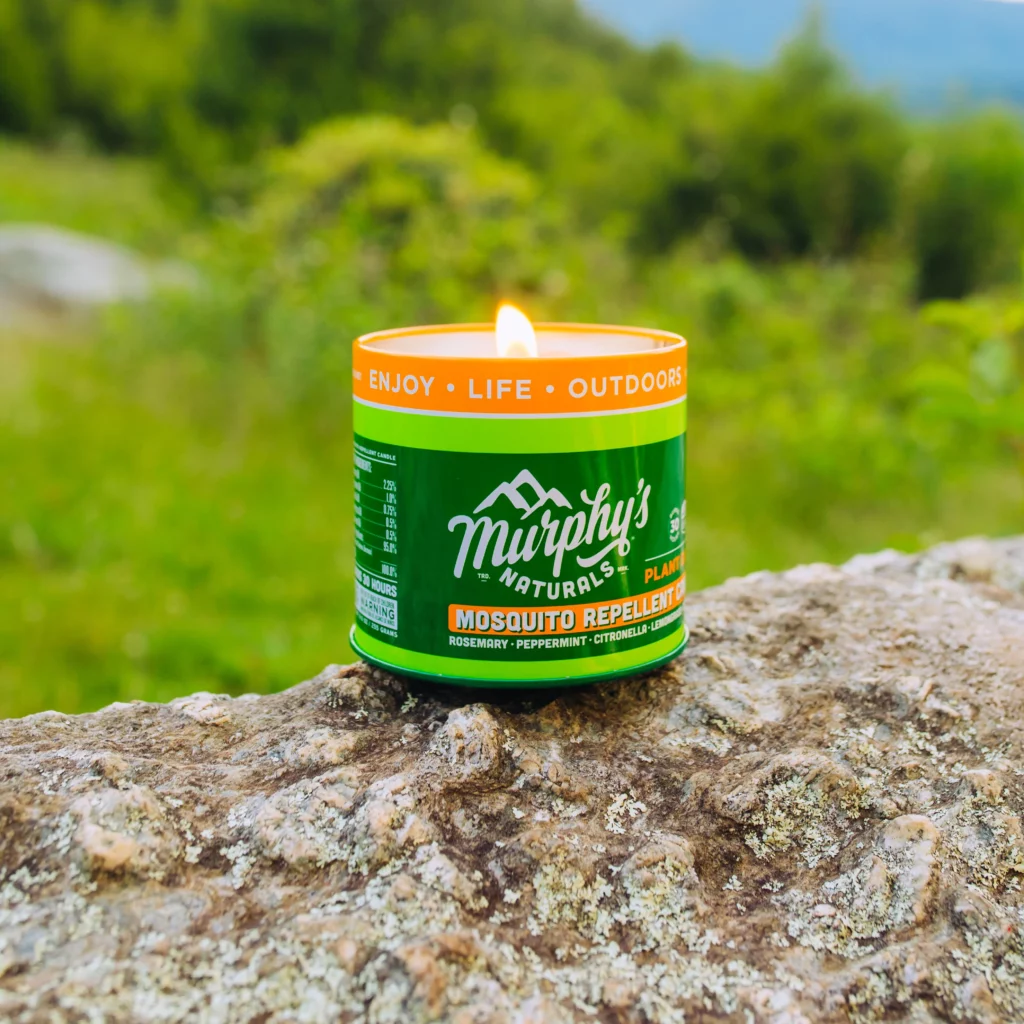
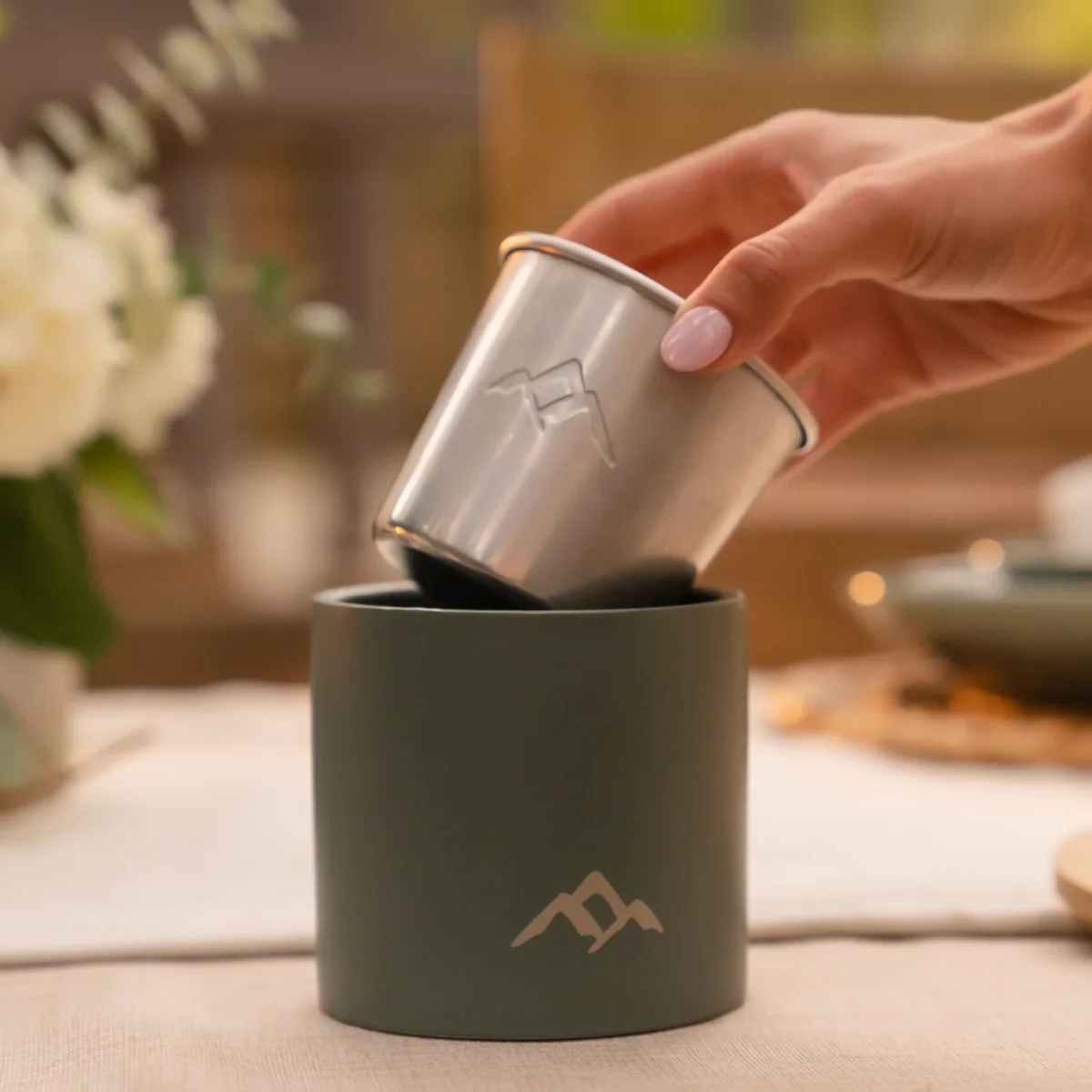
Made of: Organic coconut wax, cotton wicks, & essential oil
Burn time: 30 hours
This one from Murphy’s Naturals contains an inviting combination of rosemary, peppermint, and lemongrass oils that can ward off bites for up to 30 hours.
They’re made in the USA from 100% natural soy and beeswax. There are no petroleum, dyes, or synthetic fragrance.
They have a refillable mosquito repellant candle now, too!
Plus, 2% of all sales from Murphy’s Naturals go back to communities working to better people and the planet.
Cliganic
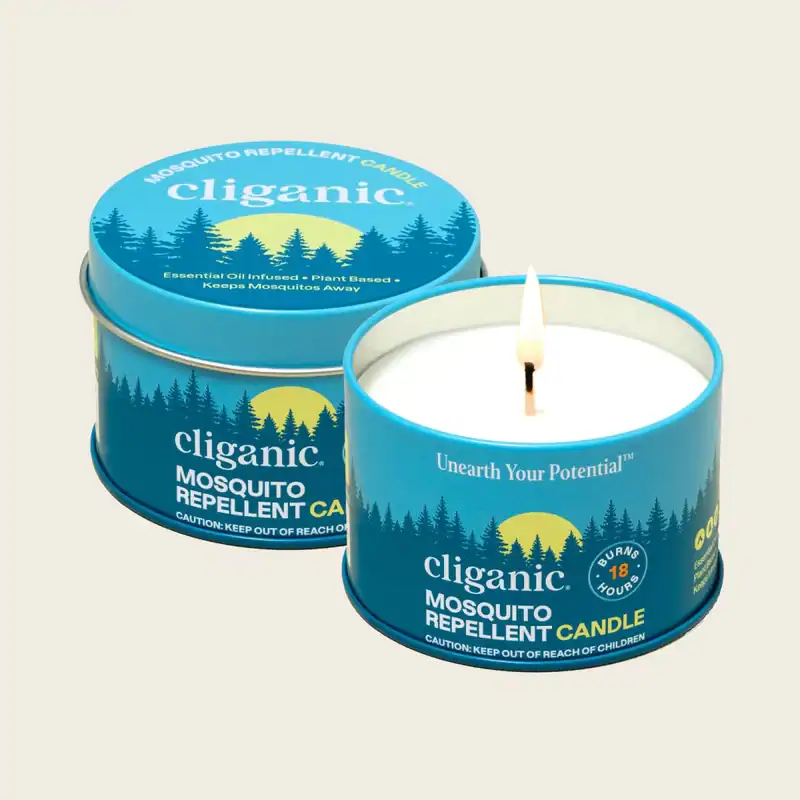
Made of: Soy and beeswax, oils of: rosemary, peppermint, citronella, lemongrass, and cedarwood.
Burn time: Up to 40 hours
These candles are formulated with not only citronella but other plant oils that help to repel bugs while also giving off a more pleasant scent. (So this one might be good if you don’t love the smell of citronella!)
Zax Beeswax
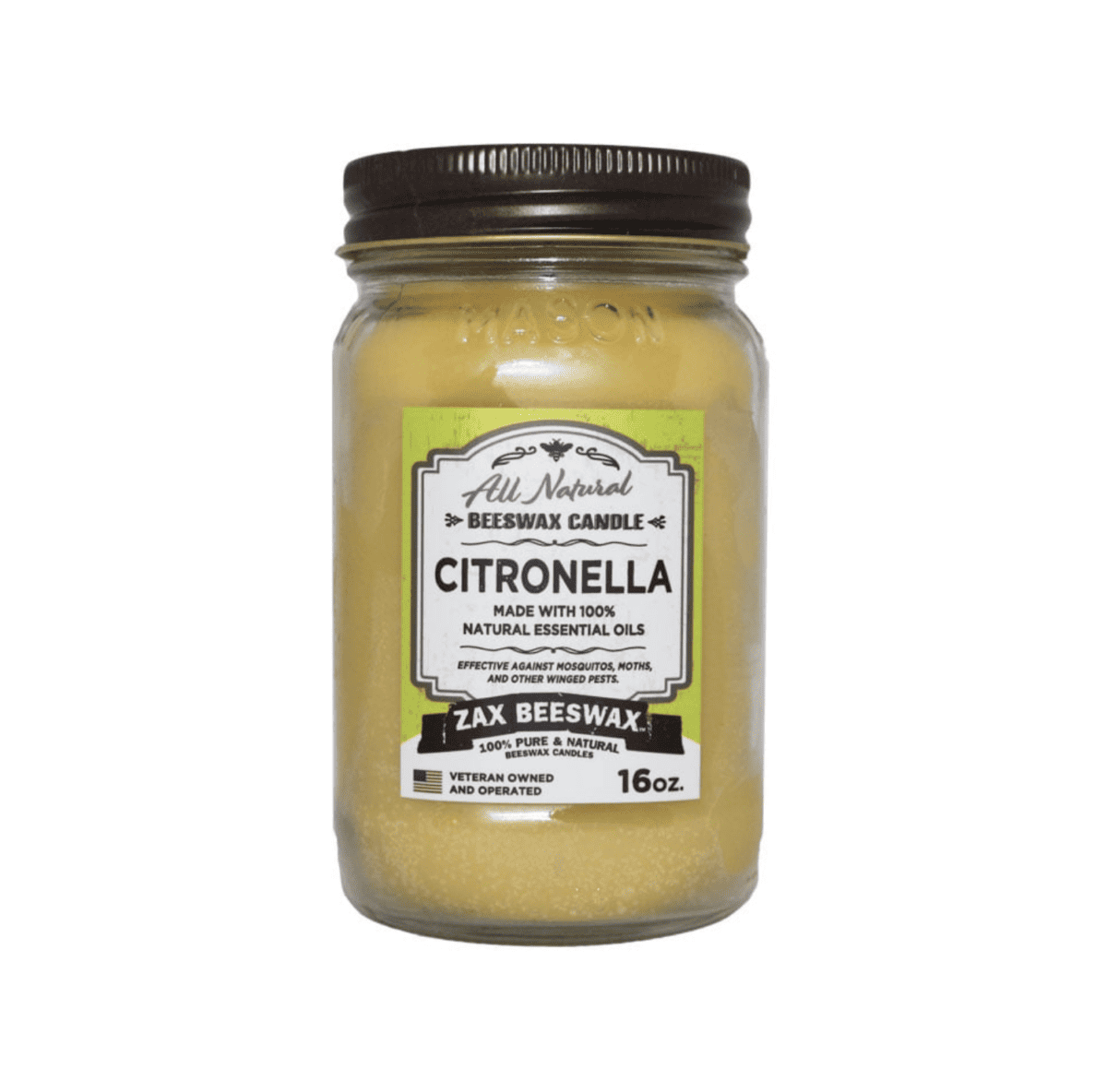
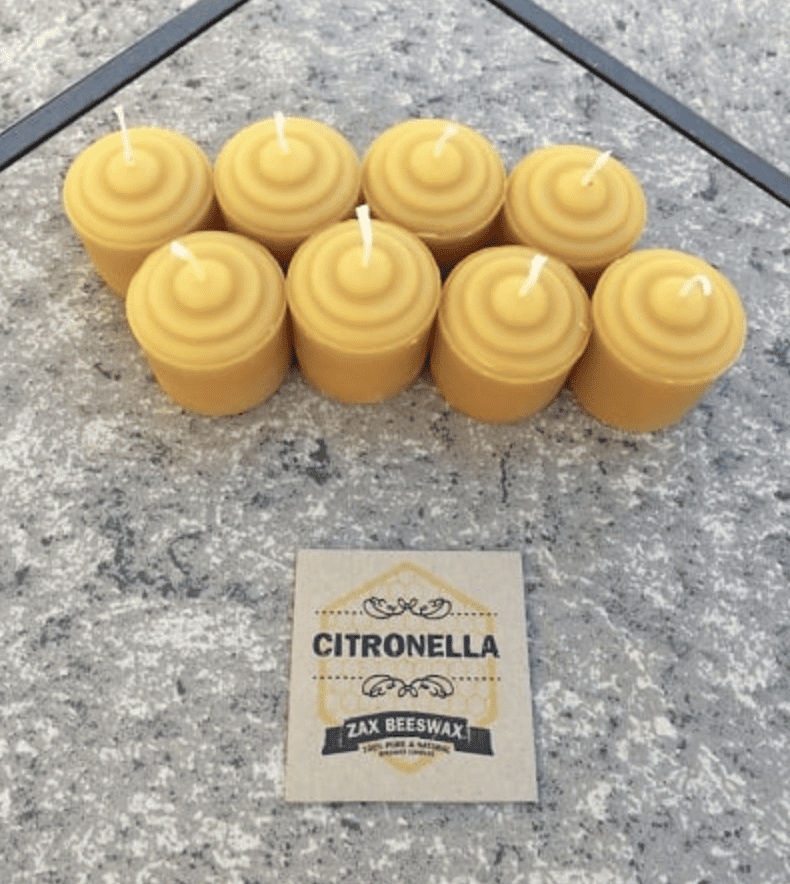
Made of: Beeswax, coconut wax
Burn time: 8-100 hours
Zax Beeswax candles are made either out of 100% beeswax or out of a blend of beeswax and coconut wax. They source their beeswax from several small, family-owned apiaries. The wax is then combined with natural, therapeutic grade lemongrass and lemon citrus essential oils.
They have mason jar candles as well as a couple of different mini-votive packs.
They say their candles are safe to burn indoors, too.
Even More Brands to Choose From
- Earth Easy: They have citronella tea light candles that are made in the USA out of beeswax and essential oils.
- Lady May: This one is made in the USA out of locally-sourced ingredients. It uses tallow, beeswax, and citronella oil.
- Or here’s a DIY option!
Are Citronella Candles Toxic?
Citronella is a natural oil that’s sourced from plants, but not everything natural is non-toxic… So how safe is citronella actually?
First, let’s talk about citronella as it applies to insect repellent sprays specifically.
The EU banned the sale of insecticides containing citronella in 2006. Canada has been back and forth on citronella: they recommended a phase-out in 2004, banned it in insect repellents in 2012, then reversed the ban in 2015.
(These bans do NOT apply to other uses of citronella though, like for candles.)
These bans are a bit controversial and mysterious, if I’m being honest, but they seem to be due to a combination of the fact that citronella isn’t as effective as DEET and the fact that there is not enough robust safety data on it.
The main concern seems to be regarding methyleugenol, which is one of the compounds in citronella oil. It has been found to cause liver tumors in rats when consumed in large doses. And while this should absolutely be studied more, it’s not super concerning to me personally at this time because:
- This does not apply to skin application. (They fed it to the rats.)
- Geraniol, another major component of citronella oil, has been found to reduce the growth of some cancers. So while methyleugenol by itself may come with some risks, there doesn’t seem to be concern when the whole plant oil is used. (Although, again, I do think we could use more robust data on this.)
There is currently no evidence of endocrine-disruption capabilities.
The primary concern with citronella is skin and eye irritation. For some people, it can cause skin allergies with prolonged or frequent exposure. Citronellol, which is the naturally occurring active scent ingredient, is on the EU’s list of allergenic fragrances, which means that there are certain concentration limits and that citronella products must be labeled properly. Obviously, if you have certain sensitivities or allergies, you’ll want to proceed with caution or avoid it.
Most of this information has to do with citronella when it’s used as an insect repellent spray. In candle form, there is even less concern. Yes, you may inhale small amounts from the burning of the candle, but it’s going to be even less than if you’re applying it directly onto your body as a spray.
All of that said, follow your gut! If you want to take the precautionary approach and avoid citronella out of caution, go for it.
Let’s Talk Effectiveness.
Citronella candles can be effective at helping to reduce mosquito bites, especially in small, outdoor areas with minimal wind. Citronella oil works by masking the scents (like carbon dioxide and body odors) that attract mosquitoes in the first place. When burned in a candle, it creates a barrier of scent that can make it harder for mosquitoes to find you.
That said, they’re not a silver bullet. There are a lot of factors that effect how well a citronella candle will or won’t work. Sometimes they work best when used alongside other repellents and when placed strategically (such as around the perimeter of a patio or seating area).
Here are some other bug-protection methods you may want to include:
- Wearing long sleeves and pants
- Using non-toxic insect repellent on exposed skin, especially when you’re in a bug-heavy area where a candle might not cut it
- Eliminating standing water where mosquitoes breed
Keep in mind that certain mosquito-borne illnesses such as Dengue Fever, Zika, and West Nile can be very serious. Your risk may be higher depending on where you’re located. Even though the chemicals in bug repellants can be toxic themselves, you need to weigh the risks and benefits, as there may be times when a stronger repellant is necessary.
RELATED: Non-toxic & natural bug sprays & insect repellents (member-exclusive guide)
What Else Is In Your Citronella Candle?
In addition to citronella, you’ll want to consider what else is in your candle. What is the wax made out of? Are there added fragrances in addition to the citronella?
In general, you’ll want to skip the paraffin wax and instead choose healthier options like soy, coconut, beeswax, or even tallow.
You’ll also want to look for brands that are actually transparent about the fragrances they use. Because of what’s become known as the “fragrance loophole” in US law, companies are not actually required to list all of the fragrance ingredients in things like candles, perfume, personal care & cleaning products, and more.
There are actually over 3,500 different chemicals that can be “hidden” under the label of “fragrance.” While many of these ingredients are perfectly safe, some of them are hormone disruptive and/or carcinogenic.
If you want to dive deeper into the world of non-toxic candles in general, you can check out our main candle guide.
How to Use Citronella Candles Properly
First and foremost, not all citronella candles are the same. They come in various sizes, from small votives to large outdoor citronella candles, so make sure to find the one that meets your needs.
Choose a candle that is appropriate for the size of the area you want to protect. A general rule of thumb is to use one medium-sized candle for every 10-12 square feet of space.
Place your candles strategically around the area you want to protect, such as on a patio table, near the entrance to your home, or along the perimeter of your backyard. This will help to create a barrier that can keep mosquitoes and other insects at bay.
It’s best to light citronella candles early, before mosquitoes and other insects become too active. It’s easier to keep them out than it is to get rid of them once they start swarming.
Is It Safe to Burn Citronella Indoors?
Burning large citronella candles indoors is generally not recommended, as the smoke and fumes can irritate the respiratory system and eyes, especially for people with allergies or sensitivities. Small citronella candles can be used indoors; just make sure there’s adequate ventilation to dissipate the fumes.
Keep in mind that citronella tends to have a stronger scent than other natural scents you might be more likely to burn inside. If you don’t have any sensitivities, you can always try it. Just pay close attention to any symptoms that may arise, including in pets.
Or, if you want to use citronella indoors, you can try using citronella oil in a diffuser or a room spray instead of burning candles. This will still help to repel mosquitoes and other insects without the potential hazards of burning candles indoors.
Getting covered in itchy bug bites and having to deal with the skin-irritating ingredients in most bug-repellant sprays can both be annoying options. So, the next time you need an ally to help repel various pesky insects, simply light up your favorite organic citronella candles from our list above.
Related: