
I almost never use hand sanitizer.
If my hands are dirty, I’d much rather wash them with soap and water, for several reasons:
- Washing with soap & water more effective than using hand sanitizer.
- I’ve always felt weird about putting something additional on my hands in order to “clean” them. Okay, sure, it might kill germs. But it’s not like it washes away common environmental contaminants like pesticides, PAHs from car exhaust, or whatever else might be on my hands from walking around in the world.
- Perhaps most importantly, the overuse of sanitizers and disinfectants is contributing to global antibiotic resistance and it disrupts my healthy skin microbiome and robs me of the opportunity to build up immune system as well.
That said…
I know that not everyone feels the same way I do about hand sanitizer.
I know that people with kids, folks with autoimmune conditions, and those who work in the medical field or who travel a lot might want some sanitizer in their arsenal.
There are just situations that do warrant hand sanitizer!
That’s why I picked out the safest brands for you. 😊
Because not all hand sanitizers are created equal. Not only do many of the popular brands use harsh pesticides as their active ingredient, but you also have to watch out for additives like phthalates and irritating preservatives.
This article will tell you exactly what you need to know about safer hand sanitizer options and some of the best organic and natural hand sanitizer brands.
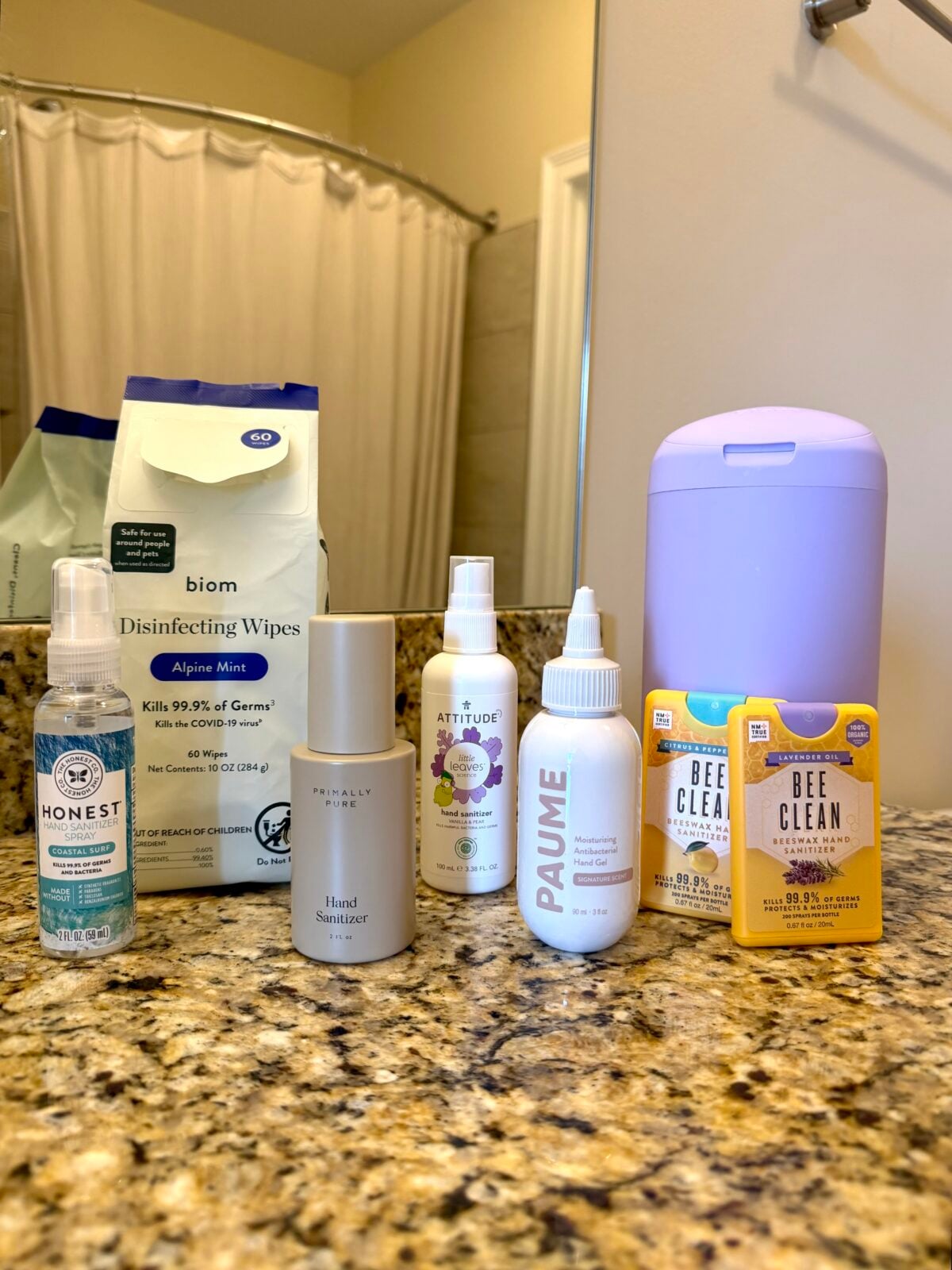
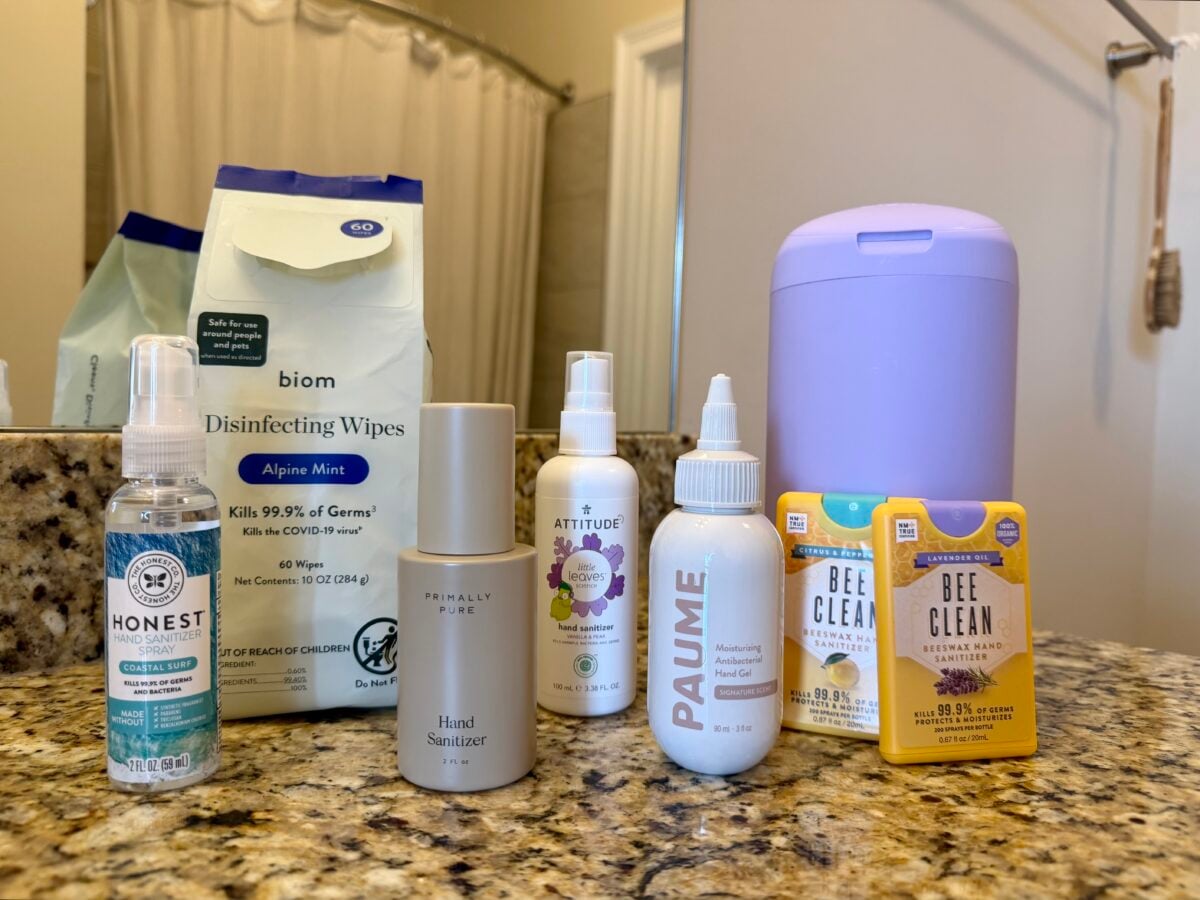
AT A GLANCE: My top picks for non-toxic hand sanitizer:
Best organic & low-plastic: Primally Pure
Most affordable option: Honest
For kids, try ATTITUDE (smells fruity!)
Best moisturizing and best gel (non-spray) option: Paume
For travel, check out Bee Clean
For disinfecting wipes, I like biom
Most minimal ingredients: Dr. Bronner’s
If you want an alcohol-free choice, use Force of Nature.
+ more recommendations below!
What this article covers:
- My Favorite Organic & Non-Toxic Hand Sanitizer Brands
- Primally Pure (best overall organic hand sanitizer)
- Honest (most affordable; best available in-store)
- ATTITUDE (best for kids)
- biom (best for disinfecting wipes)
- Paume (best moisturizing)
- Bee Clean (best for travel)
- Dr. Bronner’s
- Force of Nature (best alcohol-free)
- EO / everyone
- All Good
- (Easy!) DIY Non-Toxic Hand Sanitizer Recipes
- Cleaning vs. Disinfecting
- Other Cleaning Terms to Know
- Soap vs. Hand Sanitizer
- Are We Overusing Disinfectants?
- The Best & Worst of Sanitizers/Disinfectants
- Other Hand Sanitizer Ingredients to Avoid
- Safer Hand Sanitizer Ingredients to Look for Instead
- Hand Sanitizer & BPA (Be Careful With Receipts!)
- Just-Okay / Not-Great Hand Sanitizer Brands
This guide contains product recommendations, and we may receive compensation through affiliate links or editorial fees. As always, we only make recommendations that are genuine!
My Favorite Organic & Non-Toxic Hand Sanitizer Brands
I know you’re probably here to shop, so I’m going to give you my list of the best non-toxic and organic hand sanitizer brands first. To learn more about what ingredients to look for (and avoid) in natural hand sanitizers, scroll down.
Primally Pure (best overall organic hand sanitizer)
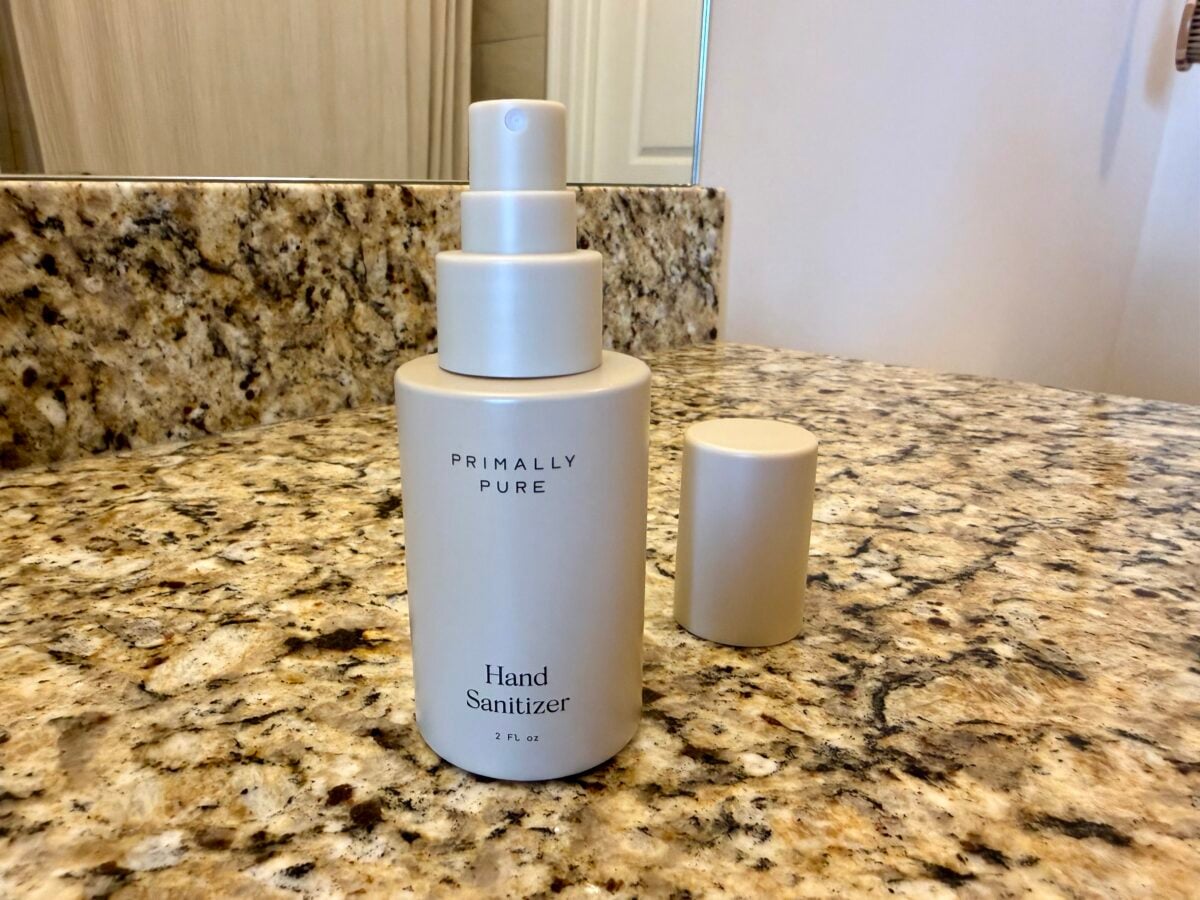
Active Ingredient: Alcohol
Organic? Yes
Type: Spray
This one isn’t cheap, but if you want something organic, low-plastic (it comes in a glass bottle), and kind of luxe, then it’s worth checking out.
Primally Pure carries two different versions of hand sanitizer.
The “Immune Boosting” version, which has a stronger smell and comes with several different types of antimicrobial essential oils (including thyme, eucalyptus, and tea tree). Their regular version has a much lighter smell and comes with fewer (and less intense) essential oils like lavender, peppermint, and rosemary.
I personally have only tried the Regular version, and I like it. The scent is nice but NOT overpowering at all. It might actually be the least-strong smell of all of the brands listed here, making it a good option for fragrance-sensitive folks.
In addition to the grape alcohol, which doubles as both a sanitizer as well as a natural preservative, these formulations also contain aloe vera and glycerin, which help to prevent your hands from becoming all dried out.
Although it doesn’t come with a third-party certification, all of the ingredients used are organic. They’re either wildcrafted or sourced from small family farms and then hand-formulated in California. At $16 for a bottle, this is one of the best non-toxic hand sanitizers if you’re looking for something more luxurious.
Plus, these hand sanitizers come in a glass jar to decrease plastic use and potential BPA exposure.
(Use code THEFILTERY for 10% off.)
Honest (most affordable; best available in-store)
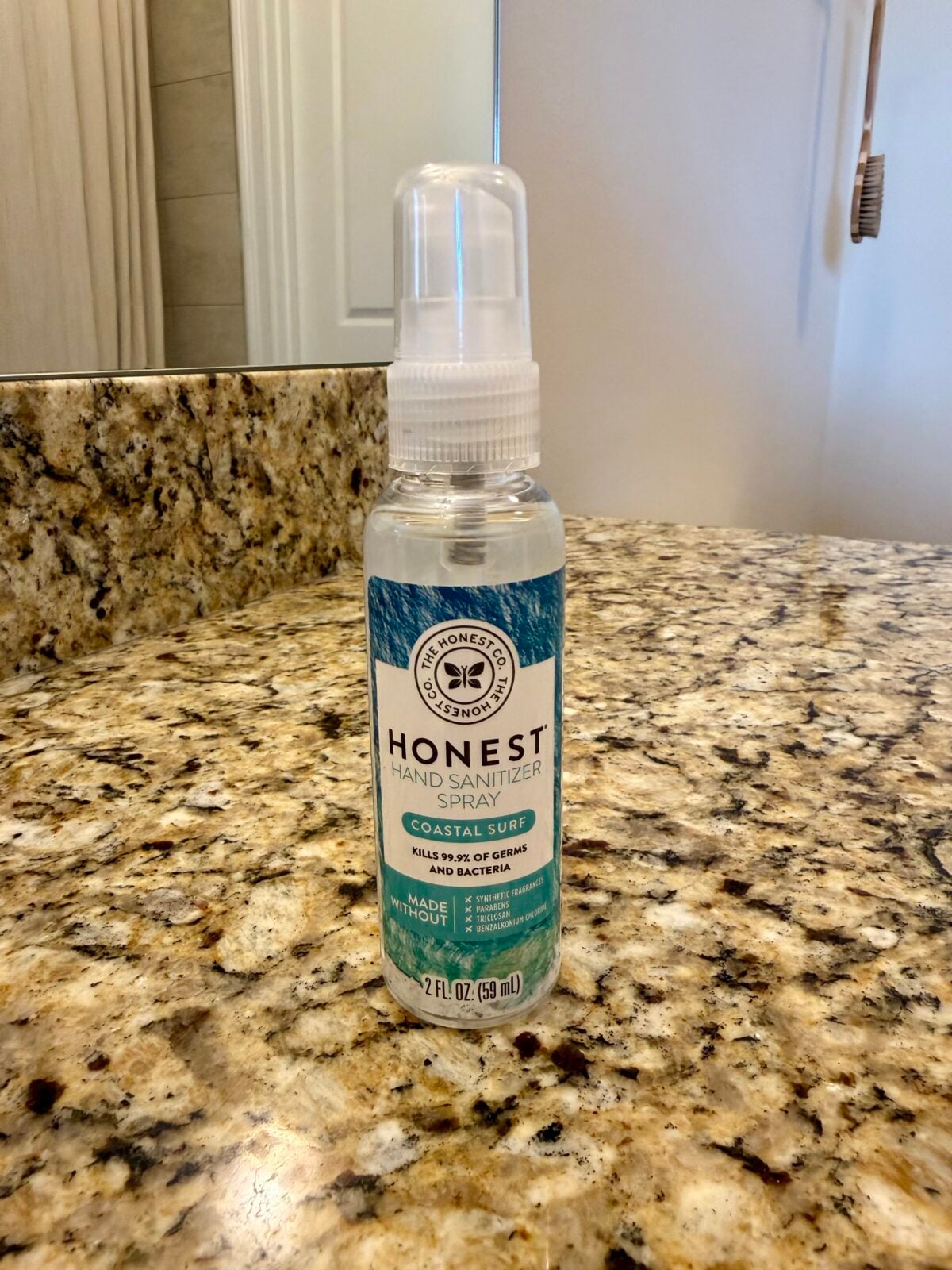
Active Ingredient: Alcohol
Organic? No
Type: Spray, gel, and wipes
This is one of the best natural hand sanitizer options that is available at retailers like Target, Meijer, and more.
I tried the Coastal Surf spray and I actually really like the smell. It’s different than the others, which tend to be heavy either on the lavender or the citrus. This one gives ‘summer’ vibes. It’s no overpowering for me either.
They have a lot of different kinds to choose from, too: sprays, gels, and wipes that come in a variety of sizes and scents. The wipes can be used both on hands as well as hard surfaces.
In addition to the active ingredient of alcohol, they also include glycerin, aloe vera, and various natural oils. We recommend the fragrance free/free & clear versions first, followed by the lavender ones, and then the others.
To take a deeper dive into the Honest brand as a whole, click here.
ATTITUDE (best for kids)
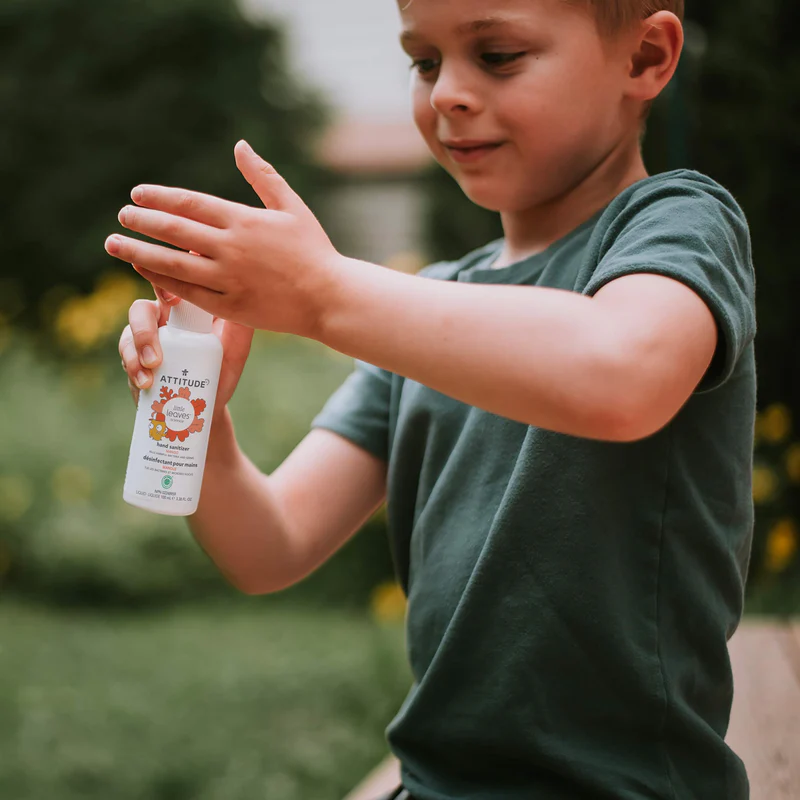

Active Ingredient: Ethyl alcohol
Organic? No
Type: Spray
If you really love scented products, you will love ATTITUDE. In terms of hand sanitizer, they have several different scents to choose from. It’s one of the best natural hand sanitizers for kids because of their fun scents.
Their ingredient lists are pretty short and come with various essential oils, depending on which scent you choose. Standard scents include Lemon, Orange, and Olive. Their “Little Leaves” collection is formulated using scents that tend to be less bothersome for little ones, including Vanilla & Pear, Mango, Watermelon & Coco.
I’ve been using the Vanilla & Pear one and I really like the smell – it’s nice and sweet, but not too overpowering!
ATTITUDE’s products are made in Canada and come with several different third-party certifications, including EWG Verified (for ingredient safety), ECOLOGO (for environmental sustainability), and PETA (vegan & cruelty-free).
ATTITUDE has also told us that their bottles are free from BPA and other bisphenols.
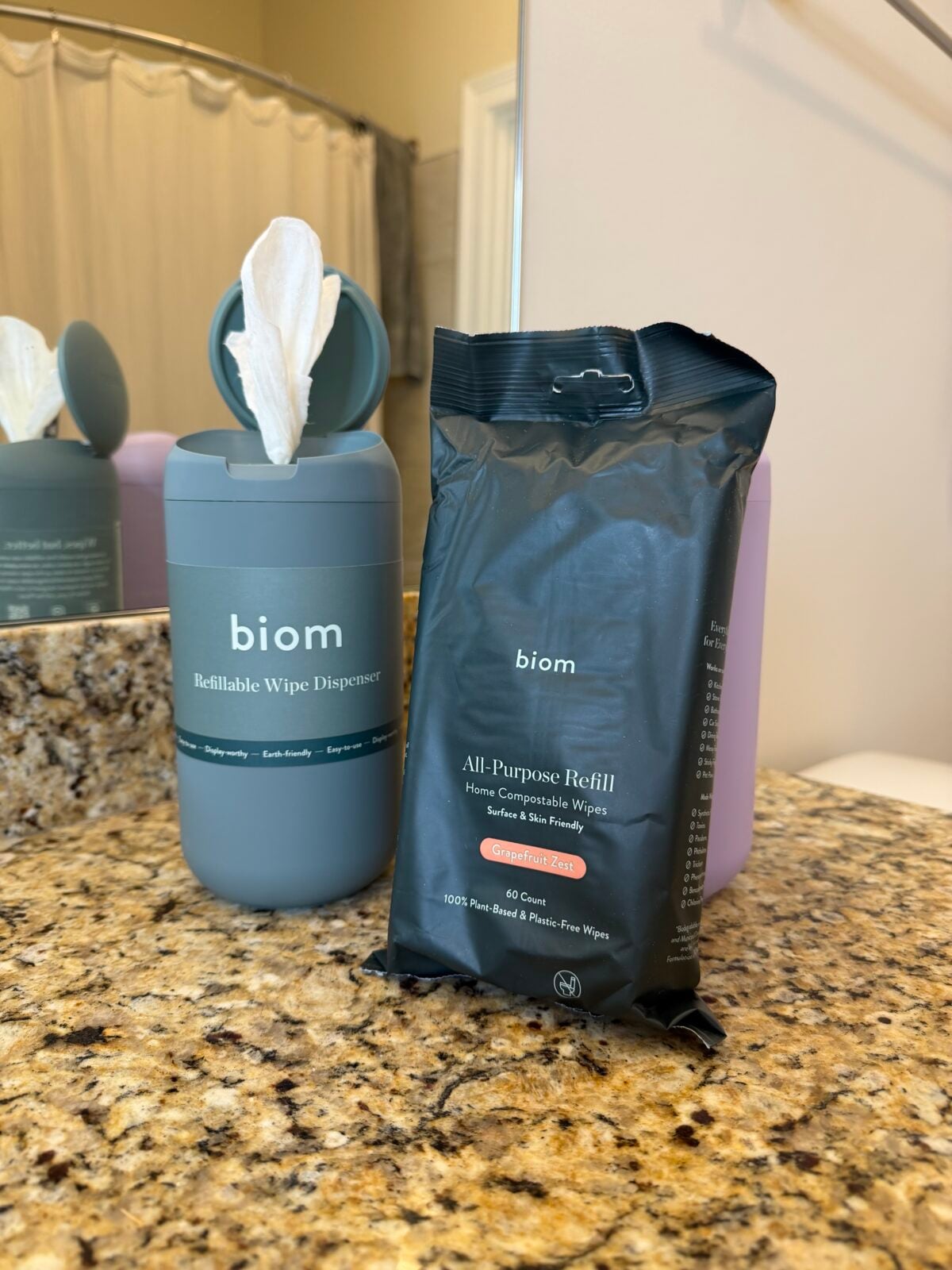
biom (best for disinfecting wipes)
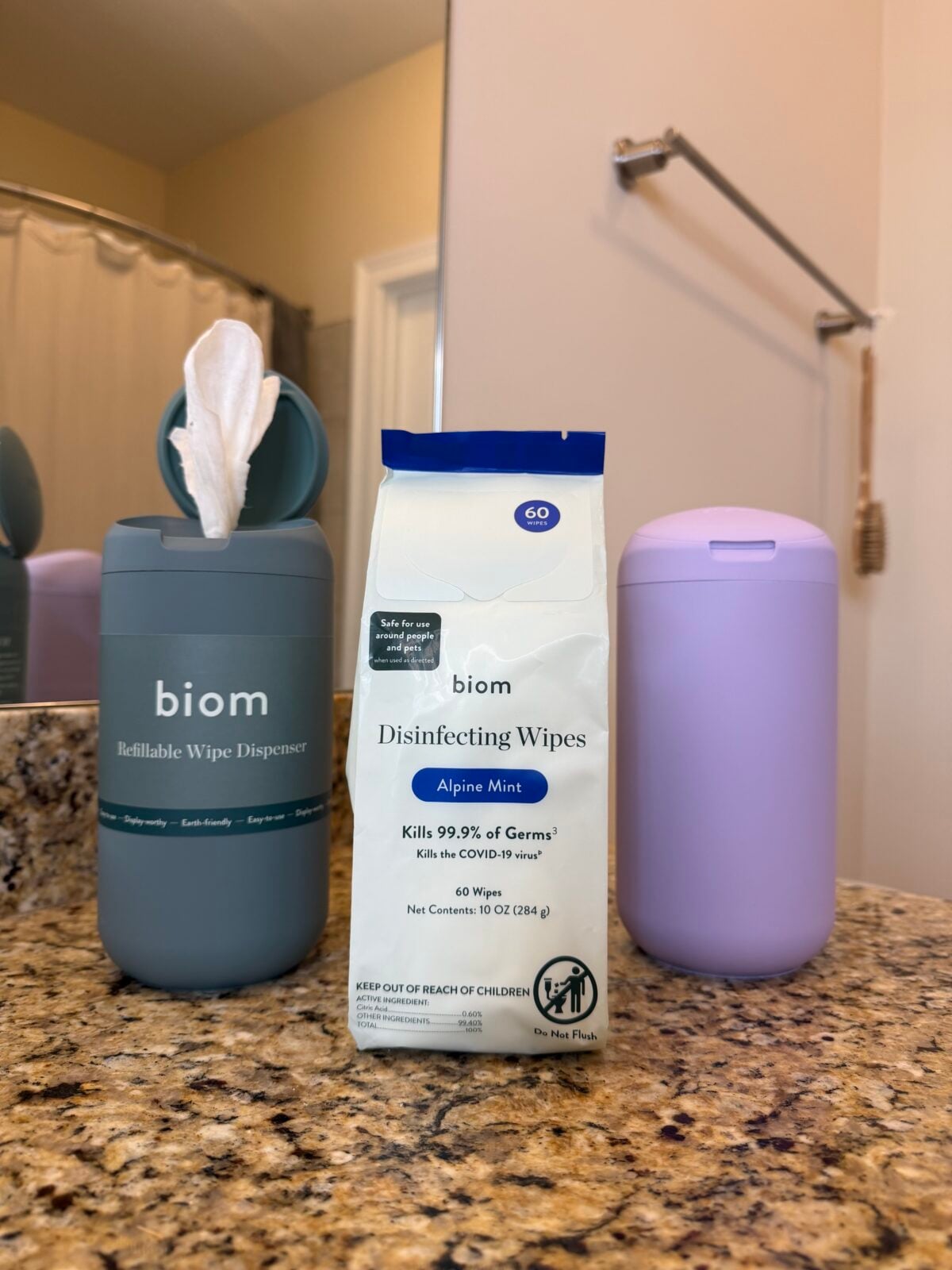
Active Ingredient: Citric acid
Organic? No
Type: Wipes
I like biom’s wipes for several reasons:
- They have options for different purposes: not just hand sanitizing and regular disinfecting wipes but also all-purpose cleaning (which are going to be less harsh than the disinfecting ones), flushable, baby wipes, hand sanitizing, and even body wipes
- It’s so functional. They have a really handy refillable dispenser, which is not only convenient (especially if you have babies or pets) but also looks nice on your counter! They have a lot of different colors to choose from.
- The wipe itself is made from either plant-based viscose or cellulose (depending on the specific wipe—some are flushable and some are compostable).
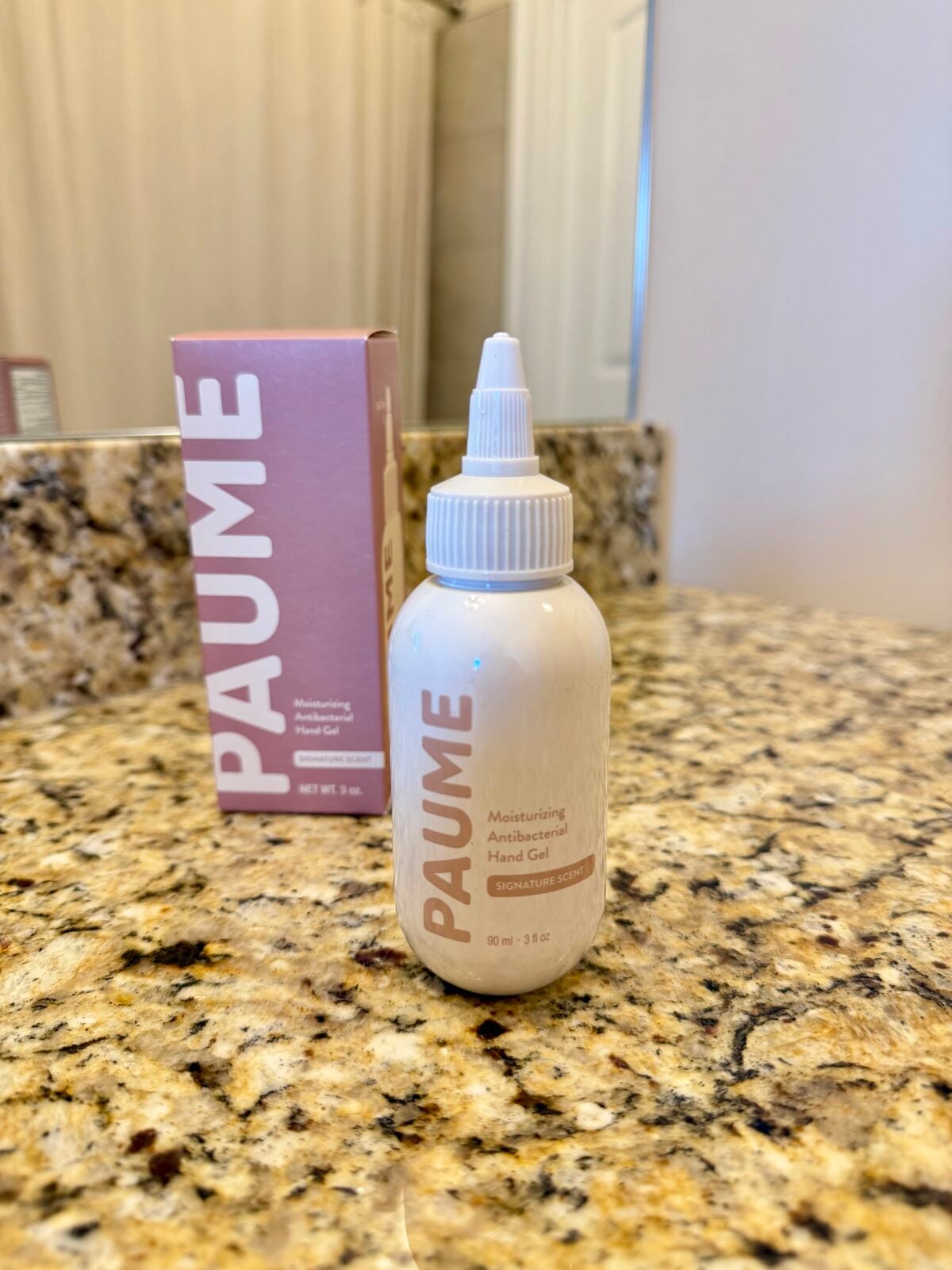
Paume (best moisturizing)
Active Ingredient: Alcohol
Organic? Contains some organic ingredients
Type: Gel
This is my pick for the best non-toxic hand sanitizer that is least likely to dry out your skin! In my experience, it does live up to the “moisturizing” claims—my hands are noticeably softer after using it.
It’s also one of the only non-spray options.
I’d put the scent strength at moderate. It’s not as overpowering as your typical Purell, but it’s stronger than some of the other non-toxic hand sanitizer brands listed here. The scent itself is pretty good. Kind of citrus-y.
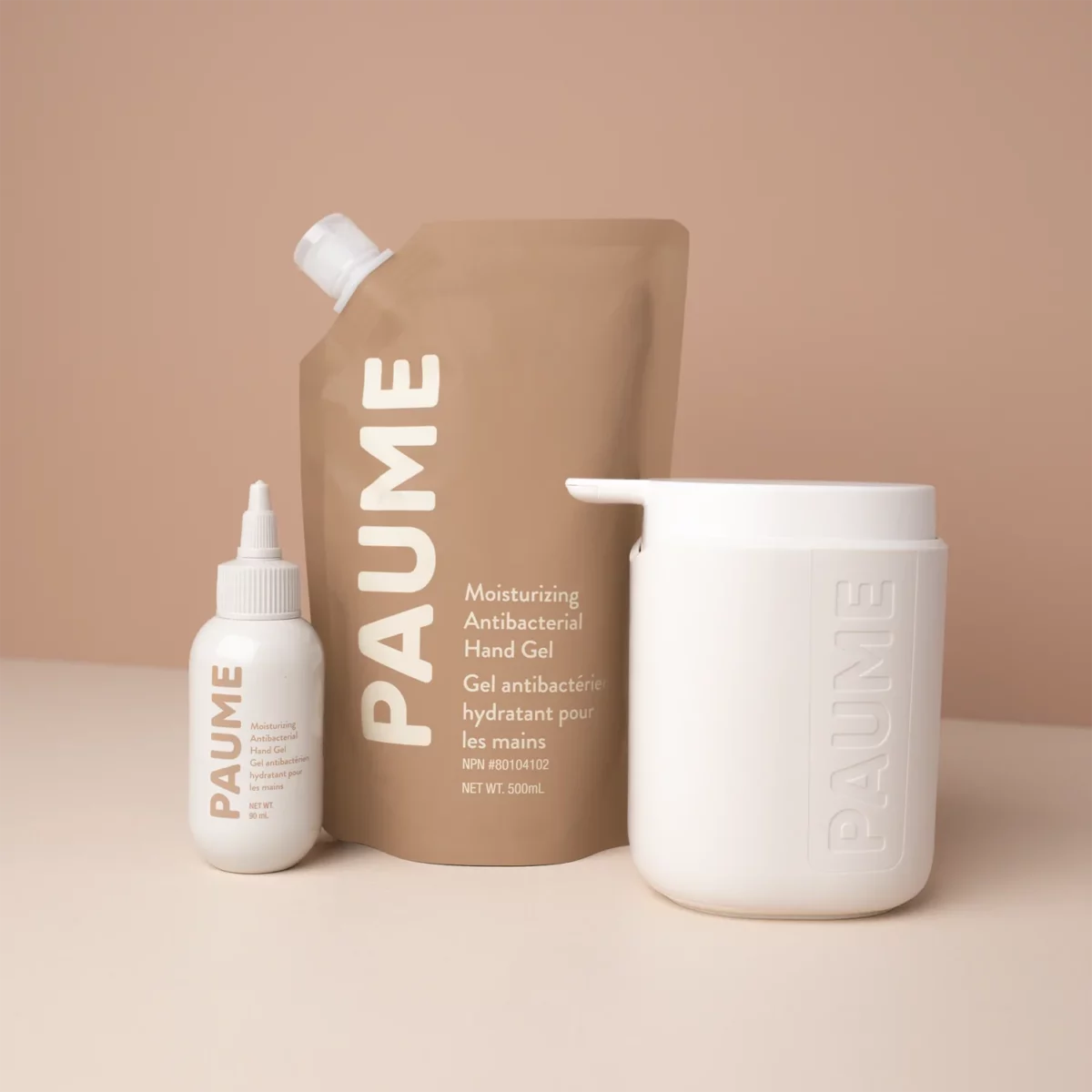
It’s also a good choice for the home because they have a larger pump dispenser that looks nice on the countertop, on the diaper changing table, or in the bathroom. (Plus you can use it one-handed, which makes it great for parents.)
But they also have a travel-sized bottle, a refill pouch, and a few other hand care products like a balm and hand soap.
In addition to the alcohol, they use other natural and healthy ingredients like witch hazel, moisturizing aloe vera, and organic essential oils. Although it’s not a plastic-free brand, they do offset their plastic to make everything plastic-neutral. It’s also vegan and Leaping Bunny Certified to be cruelty-free.
Bee Clean (best for travel)
Active Ingredient: Alcohol
Organic? Some organic ingredients, but not all. (It’s kind of annoying because it says “100% organic” on the bottle, but that really only applies to the alcohol and oils, not the entire product.
Type: Spray
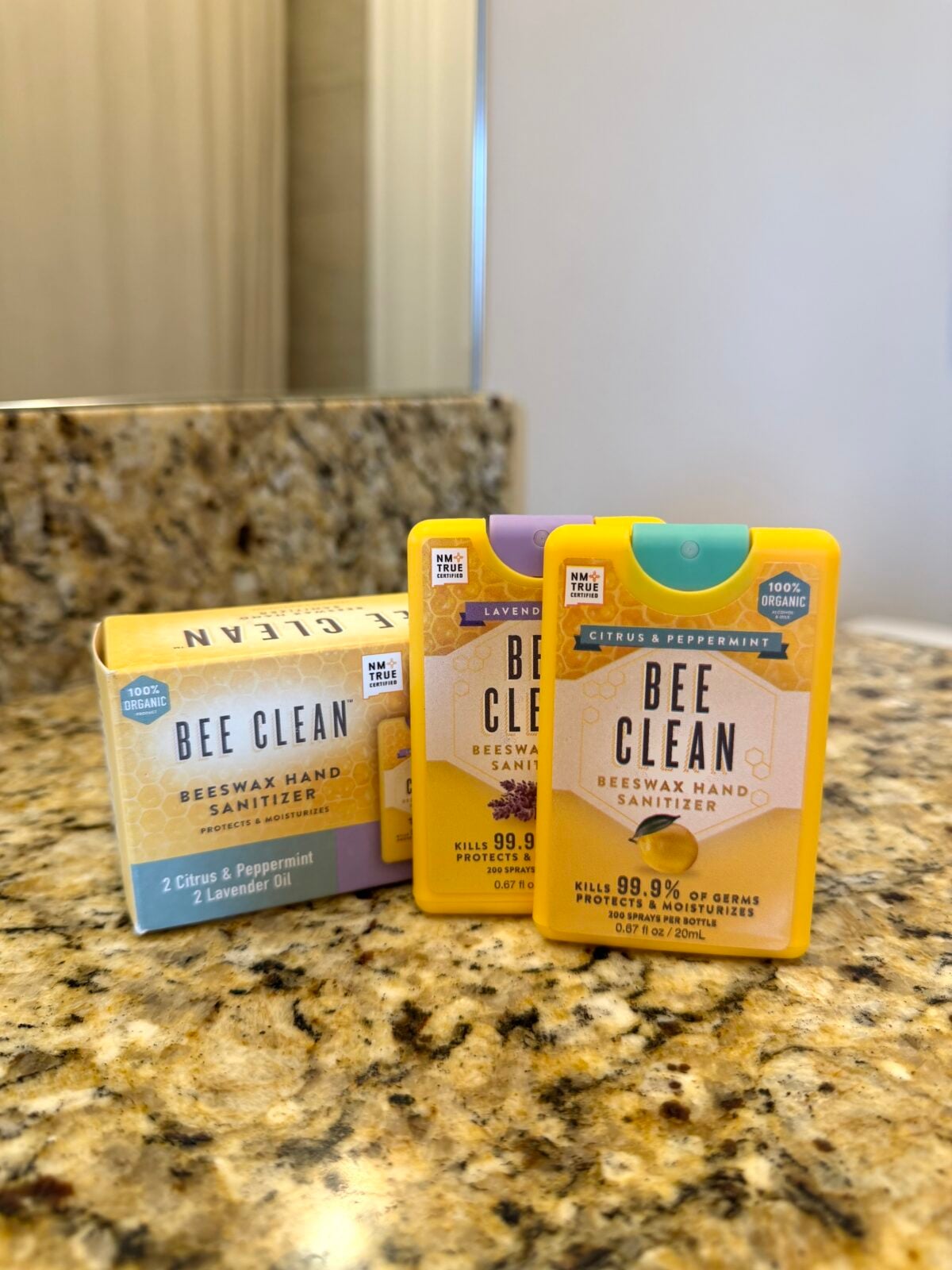
This one is definitely not the lowest-plastic option, buuuut it is convenient if you need something to stick in your pocket or small purse.
It’s available in two scents: Citrus & Peppermint or Lavender. I like the smell of both, though I would choose the Lavender over the Citrus and Peppermint (just personal preference). They’re refreshing without being overpowering.
It’s also got several different moisturizing ingredients like apricot and avocado oil and beeswax, so it’s pretty good at not drying out your hands.
Dr. Bronner’s
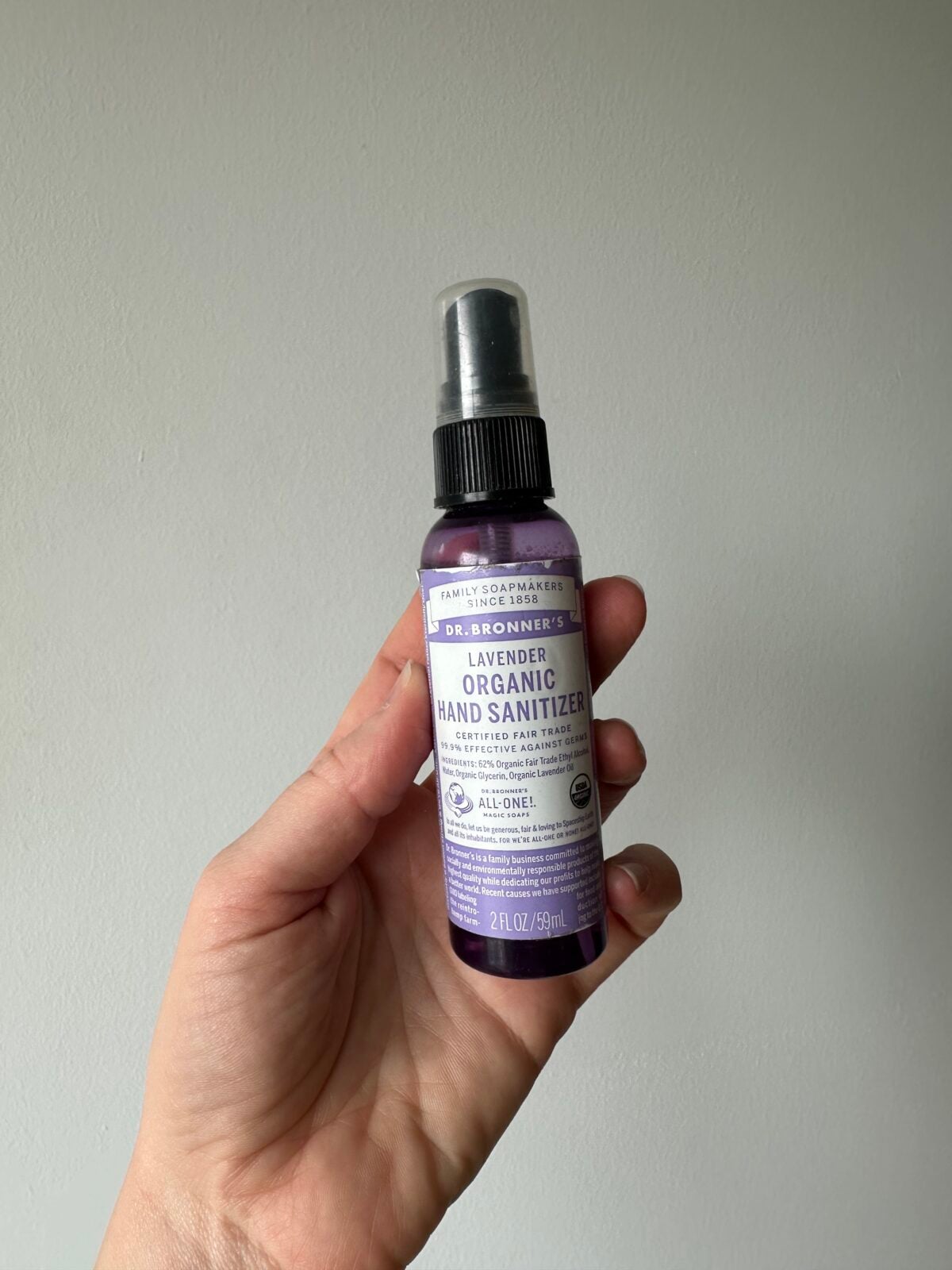
Active Ingredient: Alcohol
Organic? Yes, USDA and OTCO certified
Type: Spray
This natural hand sanitizer is made with only three ingredients: organic alcohol, organic glycerin, and organic essential oil (either lavender or peppermint).
It has the most certifications of any of the brands listed here: Fair For Life (fair trade), USDA Organic, Oregon Tilth Certified Organic, Leaping Bunny Cruelty-Free and Certified Vegan, and Non-GMO Project Verified.
It’s not low-plastic (comes in a regular plastic spray bottle), but overall, I do think this is a great affordable option. It’s also relatively easy to find from certain retailers, including Thrive Market or Whole Foods.
I personally prefer the Lavender scent, but both are nice! I’d say the scent strength for this one is moderate. Not super subtle, but not too strong either.
Force of Nature (best alcohol-free)

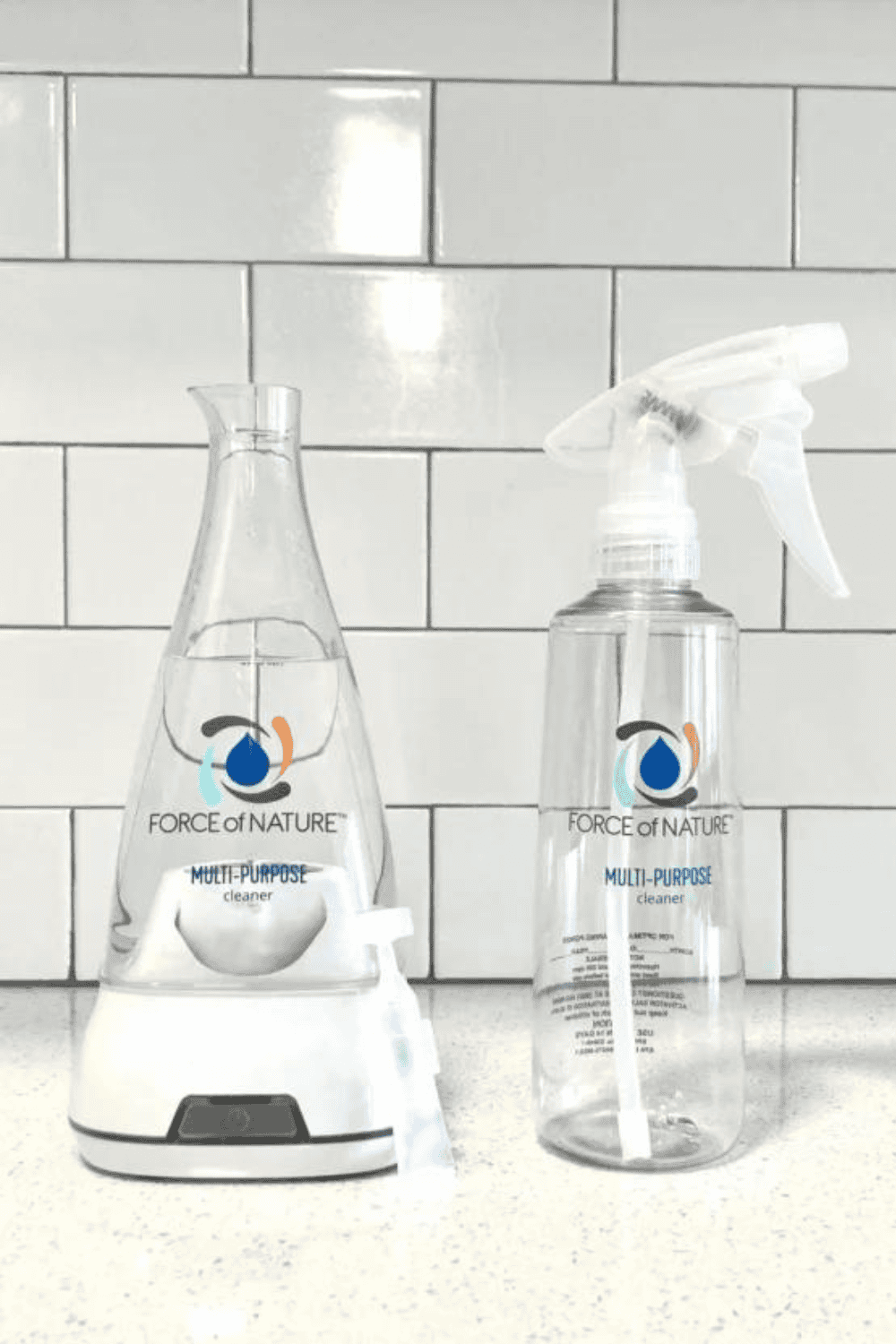
Active Ingredient: Hypochlorous acid
Organic? No
Type: Spray
There aren’t very many options for truly non-toxic alcohol-free hand sanitizers, but Force of Nature is a great choice. It uses only two ingredients—hypochlorous acid and sodium hydroxide—and combines them with water and electricity to create a powerful disinfectant and cleaner.
(This kind of cleaner has been used in medical settings for a long time and Force of Nature is one of the first companies to find a way to bring it to people’s homes.)
The only significant downside to Force of Nature is that you have to replenish it after two weeks. So if you do use it as a hand sanitizer, you may want to just fill up your travel bottle halfway so it doesn’t have to go to waste.
Read my full review of Force of Nature here or use the code THEFILTERY20 for 20% off bundles.
EO / everyone
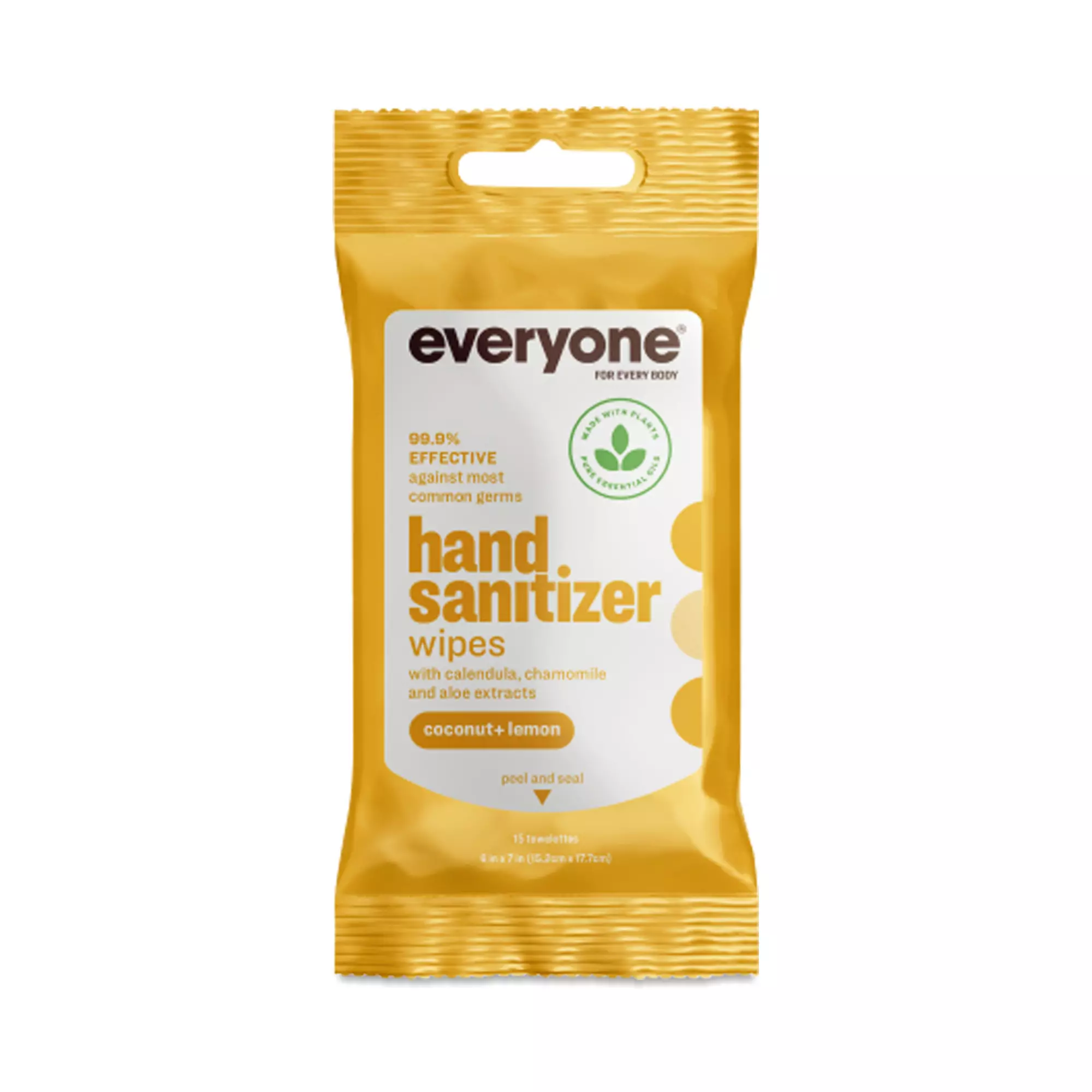
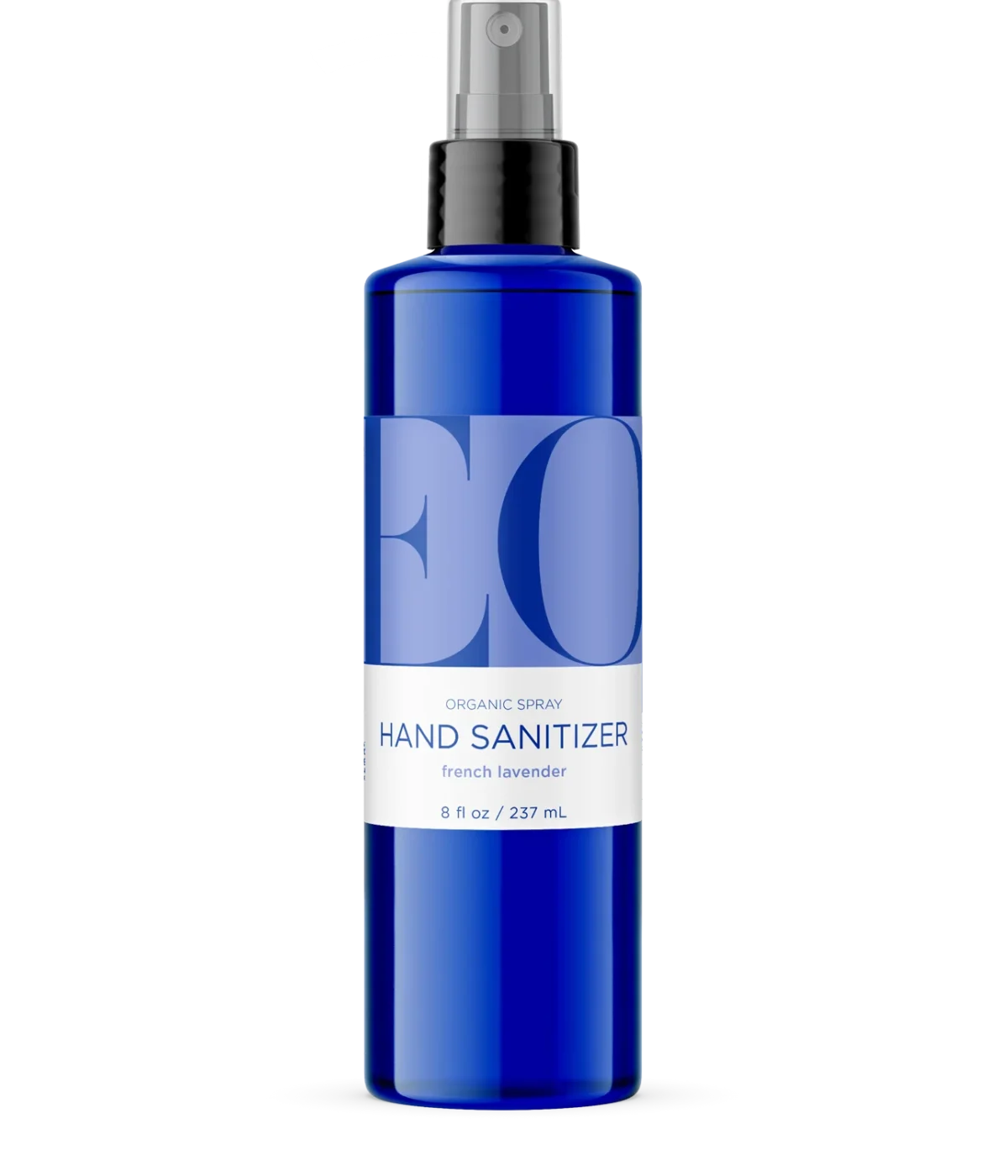
Active Ingredient: Alcohol
Organic? Contains some organic ingredients
Type: Spray, Gel, & Spray
EO and everyone are two sister brands that exist under the EO Products umbrella company. Between the two brands, they have a selection of different cleansing and sanitizing wipes, sprays, and gels that come in various scents and sizes.
Ingredients mostly just consist of alcohol, glycerin, and plant-based oils (which vary depending on the scent). Although they don’t come with any third-party organic certifications, many of the ingredients they use are organic.
EO told me that their bottles do not contain any added BPA and that they are made with 100% recycled plastic. (Unfortunately, however, it’s almost impossible to tell whether recycled plastic contains things like bisphenols or phthalates because we don’t know where the original plastic came from or how it was made.)
All Good
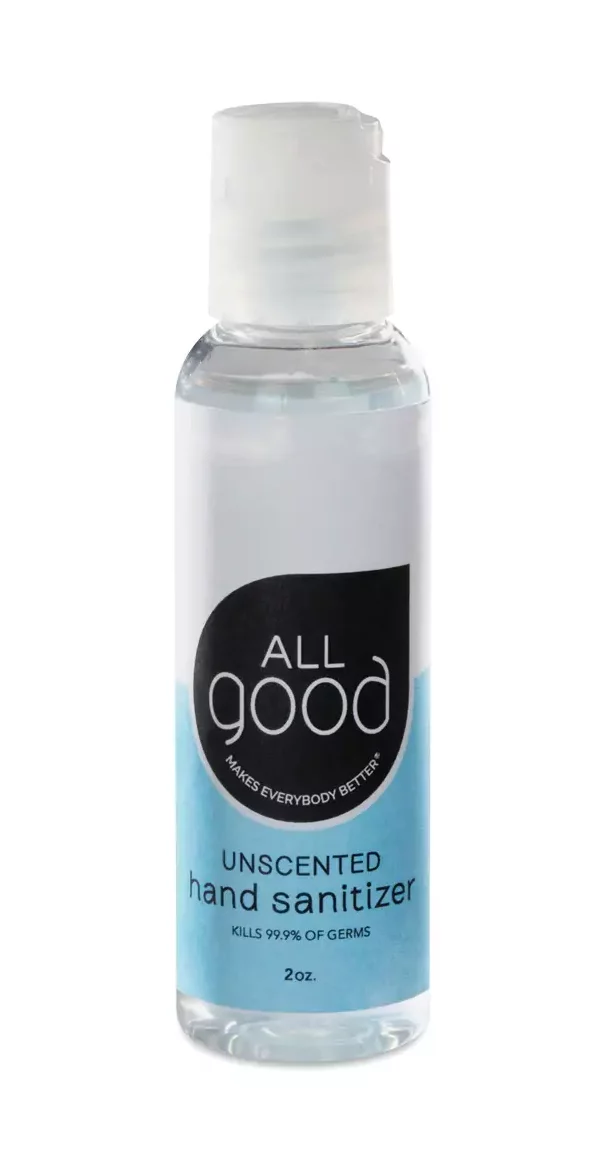

Active Ingredient: Alcohol
Organic? No
Type: Spray and Gel
All Good’s hand sanitizers come with a relatively short ingredient list, which includes alcohol, glycerin, and a few essential oils (including thyme).
All Good’s company comes with various third-party labels, including B Corp, 1% for the Planet, Leaping Bunny, and Climate Neutral. We’ve also confirmed with All Good that their bottles are free from BPA and other bisphenols.
(Easy!) DIY Non-Toxic Hand Sanitizer Recipes
If you prefer to do things the DIY-way or you’re just in a bind and need to make something out of what you already have at home, here are a few ideas:
- In a bind, you can use 60-95% rubbing alcohol by itself. (I don’t recommend this for long-term use, though, because it will probably dry out your skin.)
- In a spray bottle, mix 2/3 cup of rubbing alcohol, 1/3 cup of aloe vera, and 10 drops of essential oils of your choice (optional). Shake the closed bottle to mix it all together.
- Alternatively, you can use 2/3 cup of rubbing alcohol, 1/3 cup of coconut oil (instead of aloe vera), and 10 drops of essential oils of your choice.
Cleaning vs. Disinfecting
There are a few different terms to keep in mind when we talk about hand sanitizers, disinfectants, hand soaps, and general all-purpose cleaners. The first thing is the difference between cleaning and disinfecting. They’re not the same thing!
This is how the CDC defines the difference:
- Cleaning doesn’t necessarily kill germs; rather, it lowers the risk of infection by removing them from the surface and washing them away.
- Disinfecting actually kills germs, viruses, and bacteria. Disinfecting doesn’t necessarily clean away germs or dirt, but it lowers the risk of illness by killing them off.
So you can clean, you can disinfect, or you can do both. When you put hand sanitizer on your hands, you’re killing germs without actually cleaning them. When you wash your hands, you’re washing the germs away.
Other Cleaning Terms to Know
There are some other similar terms that are worth being familiar with so that you know what you’re buying. The two main things that differentiate these terms are a) where they are used (on living or non-living surfaces) and b) what they kill.
Disinfectant: Kills microorganisms like bacteria and viruses on non-living surfaces (like countertops). Products labeled for disinfection are not meant to be used on skin. They’re not meant to be ingested or inhaled.
Antiseptic: Kills microorganisms like bacteria and viruses on living surfaces (like your skin). Hand sanitizers and hand soaps are classified as antiseptics.
Antibacterial: Antibacterial products are specifically aimed at killing bacteria. You’ll often see the label “antibacterial” on hand soaps. Antibacterial soaps fall under the umbrella of antiseptic products. There is no evidence that antibacterial soaps are any better than plain soap (and that they may even do more damage in the long run), but we’ll get to that in a minute.
Antimicrobial: Whereas antibacterial products kill bacteria, antimicrobials can kill a wider array of microbes, including things like mold, mildew, fungi, viruses, and bacteria.
Sanitizer: To sanitize actually just means to “lower the number of germs on a surface to a safe level.” This can either be through cleaning or disinfecting.
The term “sanitizer” gets confusing, though, because it actually means different things depending on whether it’s being used on a living or non-living surface. “Sanitizers” used on non-living surfaces are regulated as pesticides by the EPA, whereas “hand sanitizers” are regulated by the FDA.
Obviously, for the sake of this article, we’ll be referring to the type of sanitizer that can be used on skin and is regulated by the FDA.
By the way, speaking of cleaning and disinfecting: if you’re also looking for non-toxic all-purpose cleaners for the surfaces in your home, check out this article.
Soap vs. Hand Sanitizer
When cleaning your hands, the CDC recommends that washing your hands with soap and water (for at least 20 seconds) should always be your first choice. It’s the most effective option, not only for getting rid of things like germs, bacteria, and viruses, but also other potential toxins like heavy metals and pesticides (for which hand sanitizer can do basically nothing).
Additionally, hand sanitizers may not be as effective when hands are greasy or dirty, which is another reason to wash them instead.
Hand sanitizer should only be used when soap and water are not available.
Are We Overusing Disinfectants?
You may have heard that our overuse of disinfectants (as well as antibiotics and pesticides) are creating “superbugs” which have evolved to resist those disinfectants and antibiotics. This has the potential to cause serious long-term harm if it means we lose our ability to get rid of these pathogens.
Disinfectants and antibiotics have saved countless lives, but they should probably not be used so liberally. Here are some easy tips to consider:
- Using regular soap (not the antibacterial kind) and water is your first choice; hand sanitizer is your second.
- Use discretion when using disinfectants. For example, you may choose to disinfect surfaces when someone in your home is sick, and then stop using them when everyone is healthy again.
- If and when you do use disinfectants, use the safer kinds. (We’ll get to this next.)
- Consider the other ingredients in your cleaning products as well, such as fragrances and preservatives. (We’ll get to this in a minute as well.)
- Always follow the directions on the label.
In short: you don’t necessarily have to totally discontinue using disinfectants and sanitizers—there is certainly an appropriate time and place for them. But decreasing our reliance on them and using them less frequently will likely be better in the long run.
The Best & Worst of Sanitizers/Disinfectants
The next thing to be aware of is the fact that not all disinfection chemicals are the same. Here are the safer and not-so-safe active ingredients to be aware of when picking out your hand sanitizer:
The Safest Sanitizers:
1. Alcohol
Perhaps the most well-known and widely used disinfectant, you’ll find alcohol used in many different hand sanitizer brands. It will kill most bacteria and viruses. It may be listed as ethanol, ethyl alcohol, isopropyl alcohol, or isopropanol.
(Methanol and 1-propanol—two other types of alcohol—are not permitted in these products because of their toxicity. In fact, the FDA has a running list of hand sanitizers that have been found to be contaminated with these types of alcohol, along with other toxins like benzene.)
You’ll want to look for sanitizers that include anywhere from 60-95% alcohol, and you need to use enough that it stays wet on your hands for about 30 seconds.
2. Hypochlorous Acid
Hypochlorous acid (HOCl) is a safe disinfectant that’s been used in hospitals and medical settings for a long time. It’s actually the disinfection ingredient used in Force of Nature all-purpose cleaner, which you can read more about here. In fact, Force of Nature sells mini spray bottles that you can throw in your purse or diaper bag and use as a sanitizer on-the-go.
3. Hydrogen Peroxide
Hydrogen peroxide is another effective disinfectant that will kill most things, but you have to be more careful with it. It should never be mixed with bleach or vinegar, and you should keep it away from heat and sunlight. You should also only use it in small amounts (like 3% concentration for hand sanitizer).
4. Certain Essential Oils
Certain plant-based essential oils have natural antibacterial properties. Thymol is probably the most common one, and there are a number of cleaning products using thymol that have been approved by the EPA.
Citric acid is another plant-based oil that’s approved by the EPA as a disinfectant.
Keep in mind that even though these are natural ingredients, they can still irritate the nose, eyes, and lungs of some people (and especially at high concentrations).
Additionally, just because something contains essential oils as the active ingredient doesn’t automatically mean that all of the other ingredients in the product are perfectly safe. Beware of greenwashing.
What about vinegar?
Vinegar is a favorite household cleaning product used by many people. Even though it’s great at cleaning and may have some ability to kill certain types of germs, it’s not as effective as the other active ingredients listed here. It’s not recommended for hand sanitizer.
Sanitizers to Avoid:
1. Quats
Quaternary ammonium chlorides, a.k.a. quats, are extremely common in disinfecting and sanitizing products. They are registered with the EPA as pesticides and they come with many potential problems, including lung and skin irritation (like dermatitis and asthma) as well as reproductive harm and infertility.
Quats are a class of chemicals, so they can look like many different things on an ingredient label. They usually have “…onium chloride” in the name. For example, benzalkonium chloride (the active ingredient in Wet Ones wipes).
2. Sodium Hypochlorite (Chlorine/Bleach)
You won’t find this ingredient in hand sanitizers, but you will find it in other home disinfection products, so it’s worth being aware of. Chlorine is a known toxin to humans and wildlife that can irritate the skin and respiratory tract, and create various carcinogenic byproducts.
Other Hand Sanitizer Ingredients to Avoid
Besides the active ingredient, there are other potentially problematic ingredients that are commonly found in hand sanitizers. These ingredients are also common in other cleaning and personal care products. This isn’t an exhaustive list, but these are some of the harsh chemicals you’ll most likely find in conventional hand sanitizers:
1. Undisclosed Fragrance
Just like so many other consumer products, hand sanitizers come with the word “fragrance” or “parfum” on their ingredient label. Because of a loophole in disclosure regulations, manufacturers can legally “hide” almost 4,000 different ingredients under the word “fragrance” without actually telling consumers what those ingredients are.
While some are perfectly safe, other ingredients include phthalates, other endocrine disruptors, allergens, and more.
It can be difficult to avoid “fragrance,” especially when shopping in stores. However, when you can, try to avoid products with “fragrance” listed in the ingredient list and/or make sure the company provides their full ingredients online.
You can read more about this issue here.
2. Certain Preservatives
Preservatives like methylisothiazolinone are commonly used in personal care products—even some of the ones labeled as “natural.” Many of these preservatives are irritants, and some (like parabens) are even endocrine disruptors. They’re not necessary for hand sanitizers.
3. Dyes
Most dyes are synthetics that are derived from petroleum. There is certainly a spectrum in terms of how potentially toxic a colorant is (and how much safety information we even have), so it depends on the kind and color being used.
But when it comes to hand sanitizer, they’re just unnecessary. No one needs their hand sanitizer to be blue or green; it’s just one more ingredient to wonder and worry about. You can just skip the colored sanitizers.
4. Triclosan
This ingredient used to be very common in disinfection products but has since been mostly banned. But if you have any old sanitizers with this ingredient or find any bottles overseas containing it, steer clear.
What About the Wipes?
Wipes are difficult because you have to wonder about what the fabric is made of too. Many conventional cleaning wipes are made using synthetic materials, which will break down into microplastics and end up in our ecosystems and food supplies.
A ‘better’ alternative involves using rayon fabric wipes, which is what EO uses. But this really isn’t a perfect solution either because the process of making rayon is (usually) toxic to workers and surrounding communities. We haven’t found a good sanitizing wipe made from a truly all-natural material, but we’ll be sure to update you if and when we do.
Safer Hand Sanitizer Ingredients to Look for Instead
Generally, hand sanitizer ingredient lists don’t need to be very long. You basically need:
- an antiseptic ingredient (like alcohol),
- some sort of conditioning agent to help prevent the alcohol from totally drying out your hands,
- and a few scents to balance out the strong alcohol smell.
Instead of things like propylene glycol, many of the brands below use moisturizing agents like glycerin, aloe vera, or hyaluronic acid. (P.S. You can also check out this article with our favorite non-toxic lotion brands to help keep your hands from drying out!)
In general, essential oils are better for fragrance (just be aware that certain ones, such as lemon and lime, are allergens for some people).
For gels, there’s usually a thickener added. Aloe is a great thickener because it doubles as a moisturizer. Guar and xanthan gum are good ones, too.
Can Hand Sanitizer Be Certified Organic?
Yes. You’ll notice that a couple of the products listed here are certified organic and others aren’t. Some brands use some organically-grown ingredients, but not enough to warrant an organic label for the entire product. Sometimes companies choose not to obtain a certification from a third-party label because of how costly it can be for a small business.
Just remember that just because something has an organic label doesn’t automatically mean it’s non-toxic, and just because something is not organic doesn’t mean it’s automatically unsafe or unhealthy.
Hand Sanitizer & BPA (Be Careful With Receipts!)
There’s one more thing to bear in mind when it comes to hand sanitizer use, and that’s the fact that using hand sanitizer can increase skin absorption of toxic BPA and other bisphenols.
Many people grab a pump of hand sanitizer at the grocery store, which is understandable considering grocery carts are kinda disgusting. But then they grab their receipt, which is most likely covered in high concentrations of BPA, BPS, or BPF (unless they’re shopping at one of the few stores that have removed bisphenols from their receipts, like Costco, Target, or CVS!).
(Bisphenols are used on thermal paper like receipts, labels, and tickets as a part of the heat-activated printing process.)
Handling receipts right after applying hand sanitizer has actually been found to significantly increase BPA absorption compared to handling receipts normally (without the hand sani).
So basically: if and when you do use hand sanitizer, get rid of your receipt first!
This also leaves a question about the bottles hand sanitizers come in… Do they contain bisphenols? Well, that’s one of the reasons why Primally Pure is our top pick: it comes in a glass bottle, which is naturally bisphenol-free.
As for the other brands, I’ve reached out to companies to ask whether their bottles are free from all bisphenols and notated which ones answered me. In the meantime, this is another reason for not over-using hand sanitizer and just using it when you really need to.
Just-Okay / Not-Great Hand Sanitizer Brands
Here are some more brands I investigated which I can’t fully recommend:
Babyganics: Babyganics’ alcohol-free hand sanitizer contains benzalkonium chloride as its active ingredient, which can cause severe skin, eye, and respiratory irritation and allergies. It’s not suitable for anyone with allergies, sensitive skin, or skin conditions like eczema.
Mrs. Meyer’s: Not terrible, but contains several not-great fragrance ingredients.
Puracy: Puracy carries a gel sanitizer that comes in several different sizes. The only concern with this one that it contains “natural fragrance” without actually listing what that is.
Purell: Unfortunately, Purell’s line of hand sanitizers are filled with problematic ingredients, including quats, fragrances, dyes, and more. Their Purell “Naturals” option, however, is actually pretty good. The only ingredient of potential concern is aminomethyl propanol, which is considered an irritant, is potentially toxic to wildlife, and can come with certain contamination concerns.
Touchland: This is a relatively eco-friendly brand that has nice branding and comes in a nice pocket-friendly bottle shape. However, we only recommend the unscented version because the others contain undisclosed fragrance ingredients.
If you found this helpful and would like to get notified about new guides, stay up to date on environmental toxin headlines, and get more content delivered to your inbox once a week, sign up for Filtered Fridays!
The Filtery has been an independently owned & run small business from the very beginning—and we’d like to keep it that way! If you want to back accessible, human-created, and well-researched content on reducing toxins in your home, consider supporting us!