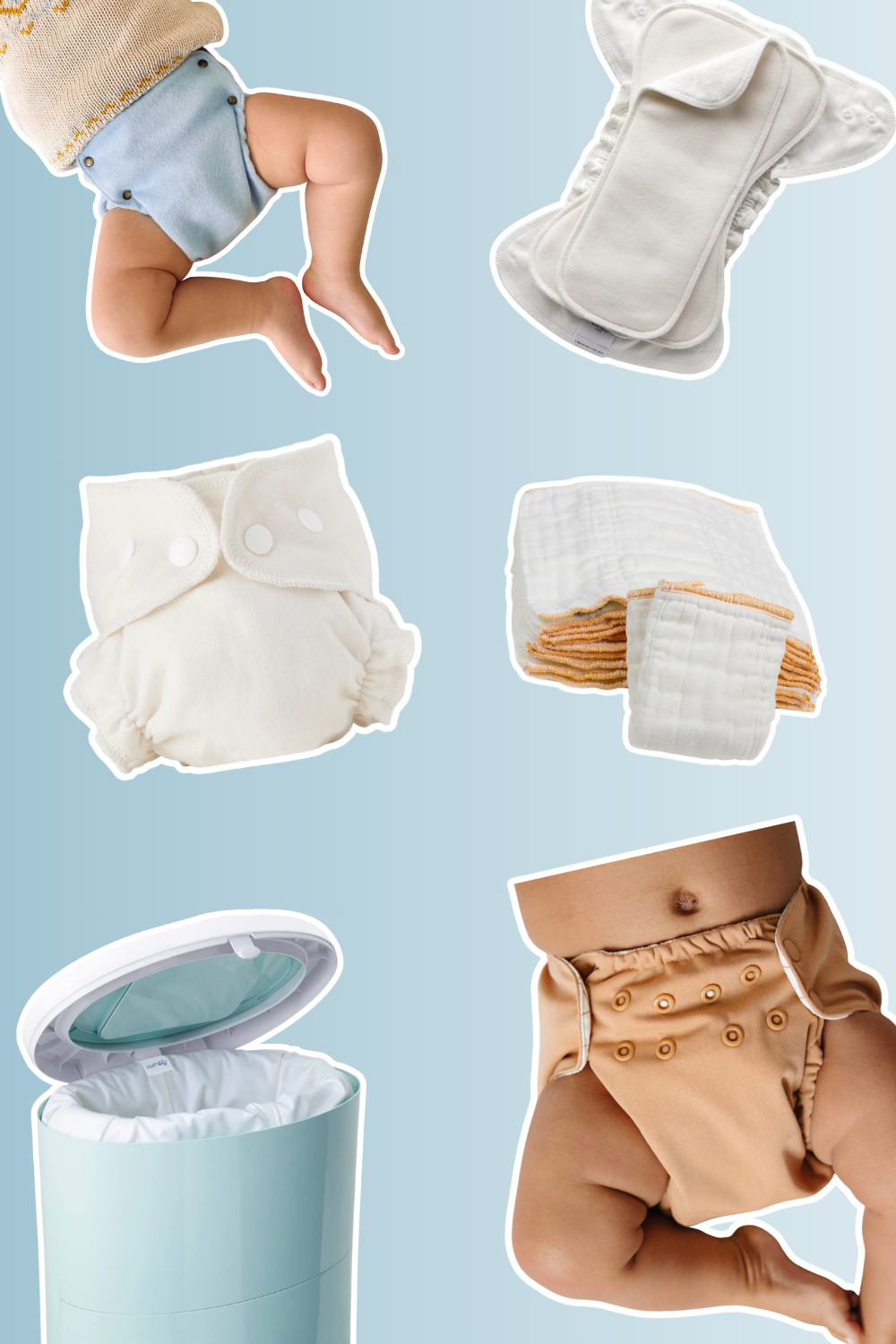

As an expectant parent, one of the most essential questions you have to answer before Baby’s arrival is how you will choose to diaper: cloth, disposable, or both? And if cloth is part of that equation, the next question is just as important… Which cloth diapers (and their accompanying accessories) should you choose?
I’ve been cloth-diapering for nearly two years, I’ve done a ton of research into different brands and materials, and I’m now passing along everything I’ve learned to you. I’ve tried a bunch of different organic cloth diaper brands and I’ve narrowed down my favorites here.
Whether you plan to cloth diaper 100% of the time or part-time, this list is for you.
Note: While there are several kinds of cloth diapers on the market—such as all-in-ones and one-size-fits-all—this article primarily discusses fitted diapers, as they are the most user-friendly for beginners and offer the most organic options.
Related guides:
What this review covers:
- What to look for in an organic, non-toxic cloth diaper
- My Favorite Non-Toxic Cloth Diapers
- First: Absorbent Inner Diapers
- Synthetic Diaper Covers
- Wool Diaper Covers
- Absorbent Inserts
- Dry Liners
- Disposable Poop Liners (Optional)
- Diaper Pail Liners
- Portable Wet Bags
- My Favorite Non-Toxic Laundry Supplies for Cloth Diapering
- Disposable vs. cloth diapers (pros & cons)
This guide contains product recommendations, and we may receive compensation through affiliate links or editorial fees. As always, we only make recommendations that are genuine!
What to look for in an organic, non-toxic cloth diaper
Most parents (myself included) are trying to reduce the number of toxic chemicals their babies are being exposed to on a daily basis. But what actually makes a cloth diaper non-toxic?
While there are numerous cloth diaper brands on the market these days, not all reusable diapers are created equal. In fact, many of the more economical brands use some form of synthetic materials such as polyester (AKA plastic) on the innermost parts of the diaper… you know, the part that sits on your baby’s most sensitive skin all day, every day. While these diapers may be more cost-effective, the use of synthetics automatically disqualifies them from this list.
How to Choose the Best Materials
Fitted cloth diapers consist of two parts:
- an absorbent inner diaper that catches urine and poop
- and a waterproof outer layer that prevents leakage and keeps your baby’s adorable outfit clean.
The best non-toxic diapers will consist of natural fiber inner layers. GOTS certified and/or OEKO-TEX STANDARD 100 certified organic cotton, hemp, or wool are the safest materials to touch your baby’s most sensitive areas for prolonged periods.
Some diaper brands offer separate waterproof outer covers made of polyester. As these aren’t making contact with a child’s most sensitive areas, these are fine to use, especially considering that all-natural covers simply can’t be waterproof.
However, there are wool diaper cover options if you prefer to avoid all synthetics. (They’re obviously just not going to be as effective at preventing leakage.)
Let’s break down the best materials and certifications found in my picks for the best cloth diapers.
Organic Cotton & GOTS Certification
Organic cotton is one of the best choices for a cloth diaper because it is:
- Highly absorbent
- Soft and breathable
- One of the safest fabrics, produced using fewer pesticides and processed without heavy chemicals
- Better for the environment as a whole
When organic cotton fabric is Global Organic Textile Standard (GOTS) certified, it not only meets the criteria to be certified organic, but ensures that the entire supply chain process–from harvesting to production–meets specific third-party standards. This label ensures a finished product is free from harmful substances and produced under ethical working conditions.
TPU vs. PUL
In order for a diaper to be truly leak-free, the absorbent inner diaper is usually paired with a synthetic cloth diaper outer that is lined with a waterproof laminate. There is sometimes confusion over which of these laminates is the safest. If an item is labeled TPU, it is thermally-bonded, whereas PUL may be either chemically-bonded or thermally-bonded.
TPU is therefore the safest option for diaper covers, especially when it is OEKO-TEX STANDARD 100 certified.
(If you want to learn more about the nuance here, our waterproof mattress protector guide will take you more in-depth.)
Wool
If you’re not comfortable with your child wearing any synthetic materials, wool diaper covers and liners are great alternatives. Wool is naturally:
- Moisture-wicking, which can help prevent diaper leaks
- Temperature-regulating, which makes it suitable for all seasons
- Anti-microbial, so you don’t need to wash it nearly as often as other diaper covers
Additionally, most wool diaper covers and liners are made from Merino wool, which is known for its softness, so you usually don’t need to worry about your baby feeling itchy. Be aware that most covers need to be lanolized, so if you or your child have a lanolin allergy, this may not be a good option.
OEKO-TEX STANDARD 100
An item that is certified OEKO-TEX STANDARD 100 has passed rigorous testing for over 1,000 harmful substances. Unlike other tests that may only test individual parts of an item, OEKO-TEX tests the final product as a whole, down to every thread and button.
While some items on this list may be made from synthetic materials (therefore not “organic”), this designation assures the consumer that the product is free from (or low in) things like intentionally-added PFAS, extractible lead, releasable formaldehyde, and more.
What About Bamboo?
While bamboo is often considered a sustainable natural resource, bamboo fabrics unfortunately must undergo intense chemical treatments in order to be spun and softened enough to use as diapers. For the purposes of this article, bamboo reusable diapers will not be included.
And now on to the diapers!
My Favorite Non-Toxic Cloth Diapers
First: Absorbent Inner Diapers
Here are my favorite options for best organic diaper “inners.”
Best Overall: Esembly Inners
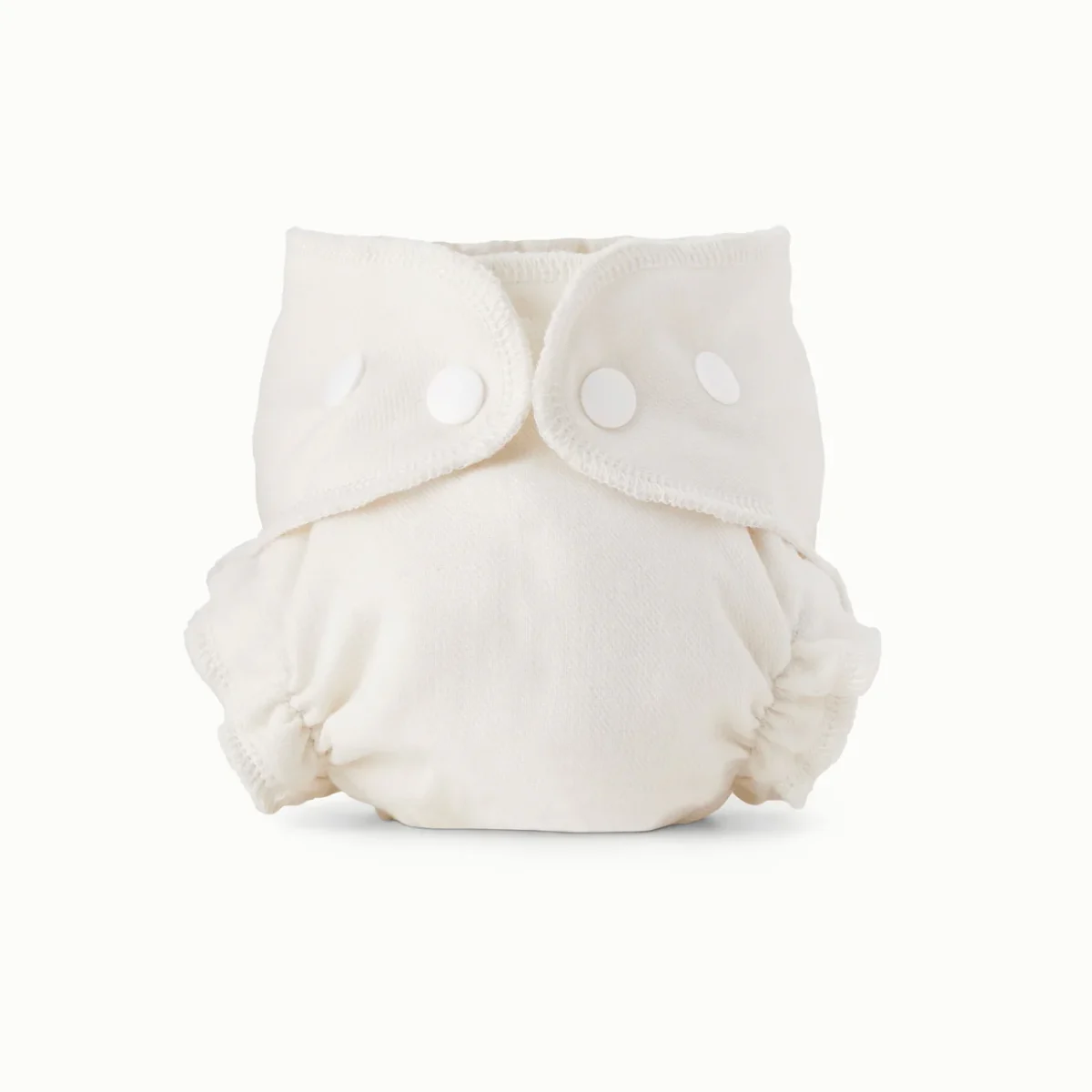
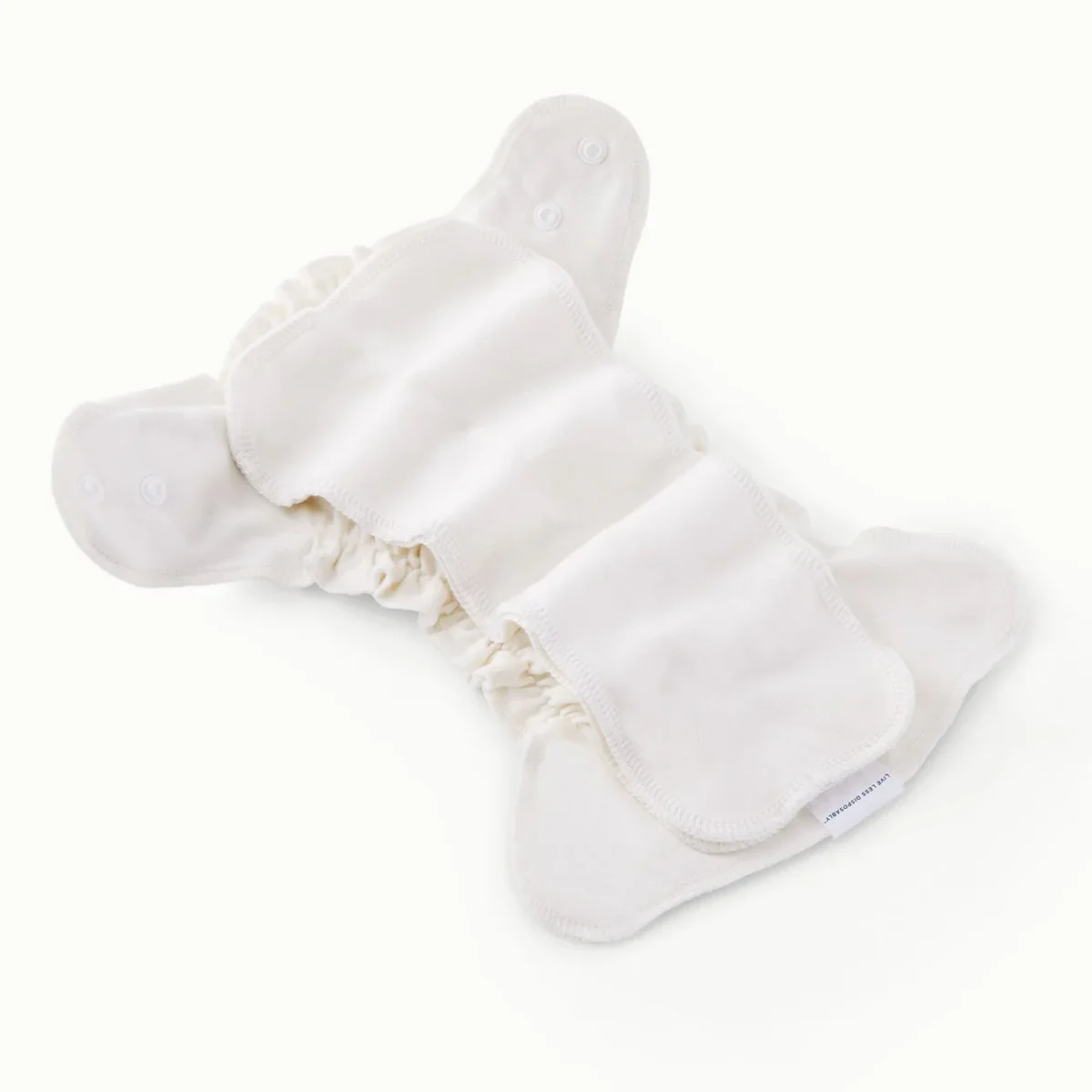
If you’re looking for the best place to get everything you need at once, Esembly is my top pick for the best organic cloth diapers and accessories.
- Materials: 100% organic cotton*
- OEKO-TEX STANDARD 100 certified
- Cost
- $38.50 for a pack of three Size 1 Inners
- $44.50 for a pack of three Size 2 Inners
- Amount Needed
- 24 – 32 Inners in Size 1 (7-17 lbs)
- If part-time, start with 24; if full-time, you’ll want 30-32.
- 21 – 27 Inners in Size 2 (18-35 lbs)
- If part-time, start with 24; if full-time, you’ll want 27.
- 24 – 32 Inners in Size 1 (7-17 lbs)
- Bonus Points
- The leg ruffles may be tucked in on skinny thighs to prevent leaks, which means you can begin using them with a newborn!
*I reached out to Esembly about whether their cotton is GOTS certified. This was their response: “Happily, the organic cotton we use to make our Inners, Wipe-Ups, and Overnighters is – and always has been – certified GOTS organic! The factory that cuts and sews the cotton into our diapers is currently undergoing the GOTS certification process. So while our cotton is certified organic, we cannot claim GOTS until every single place where the cotton travels before showing up on your door is certified as well.”
P.S. Our link will get you 20% off.
Best Budget Option: Cloth-eez Prefold Diapers
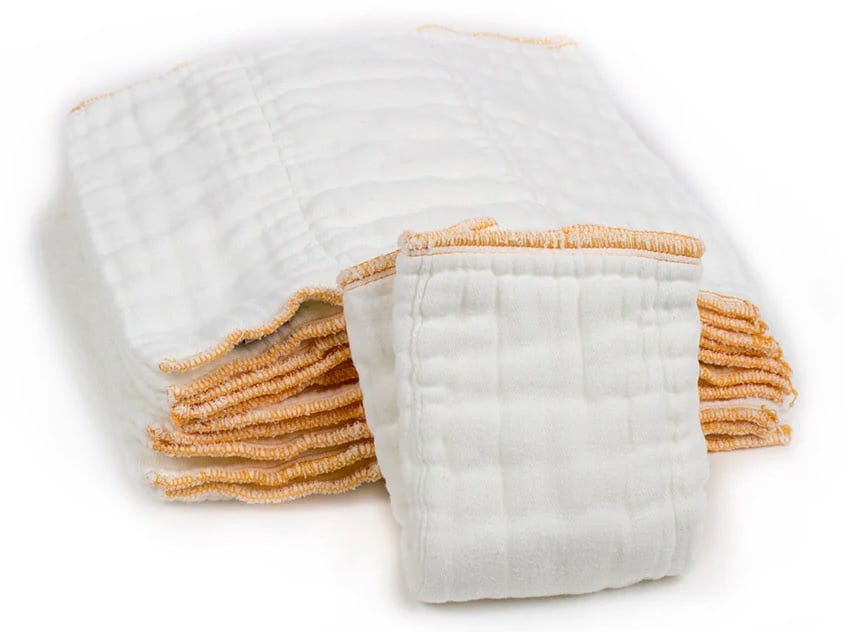
- Materials: 100% unbleached organic cotton
- OEKO-TEX STANDARD 100
- Amount Needed: Refer to the recommendations on the listing as sizing/needs are variable
- Cost: Starting at $3.33 per diaper
Note: Prefolds are flat, rectangular cloths that must be folded before putting on your child and being secured with an outer diaper cover. They are not as user-friendly as snap-on style inners, but they are just as absorbent and functional. If you are looking to save money on your diaper stash, they are absolutely worth trying!
Synthetic Diaper Covers
My #1 pick for synthetic diaper covers is Esembly, as it is the only diaper brand I’ve been able to find whose outer diapers are OEKO-TEX STANDARD 100 certified.
Best Overall: Esembly Outers
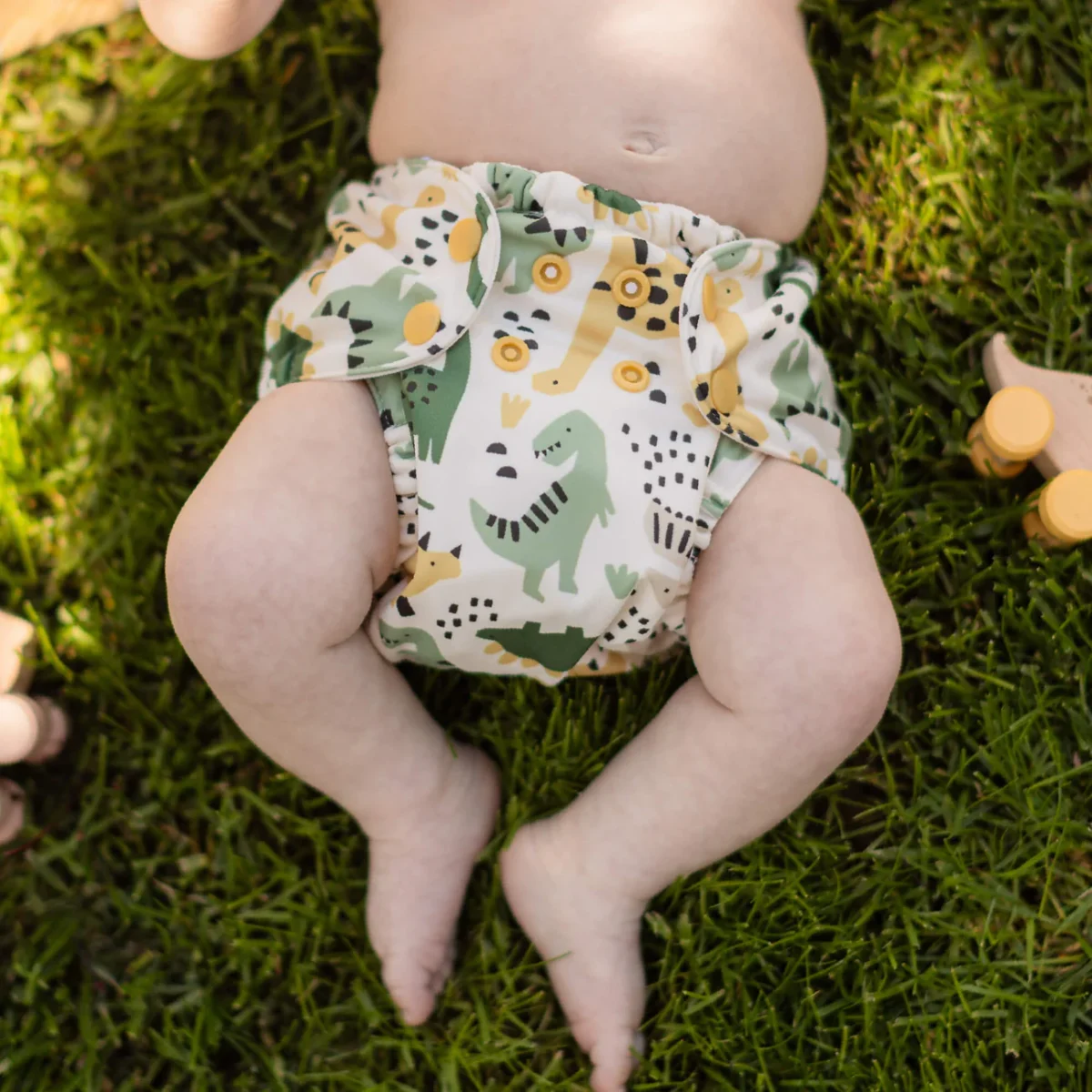
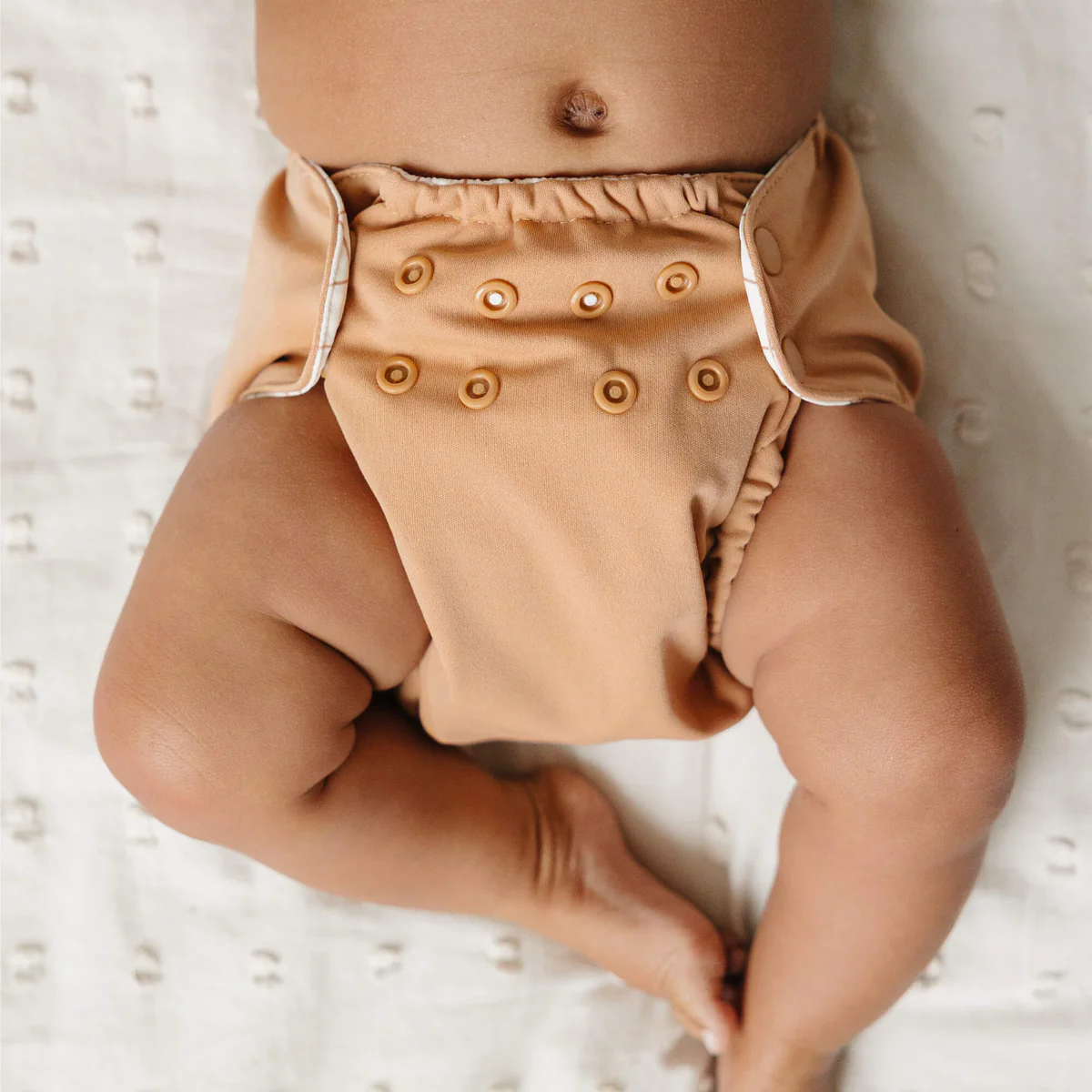
- Materials: Polyester TPU (made from 100% recycled water bottles)
- OEKO-TEX STANDARD 100 certified
- Independently tested to meet both US and EU Standards for Food Safety
- Amount Needed:
- 6 Outers in Size 1 (7-17 lbs)
- 5-7 Outers in Size 2 (18-35 lbs)
- Cost: $18.50 each
- Bonus Points: Esembly Outers can double as a swim diaper!
Note: As your child eats solids, their poops may soil the Outers more frequently. You may want more Size 2 Outers on hand for this reason. (Plus they’re so cute!)
Wool Diaper Covers
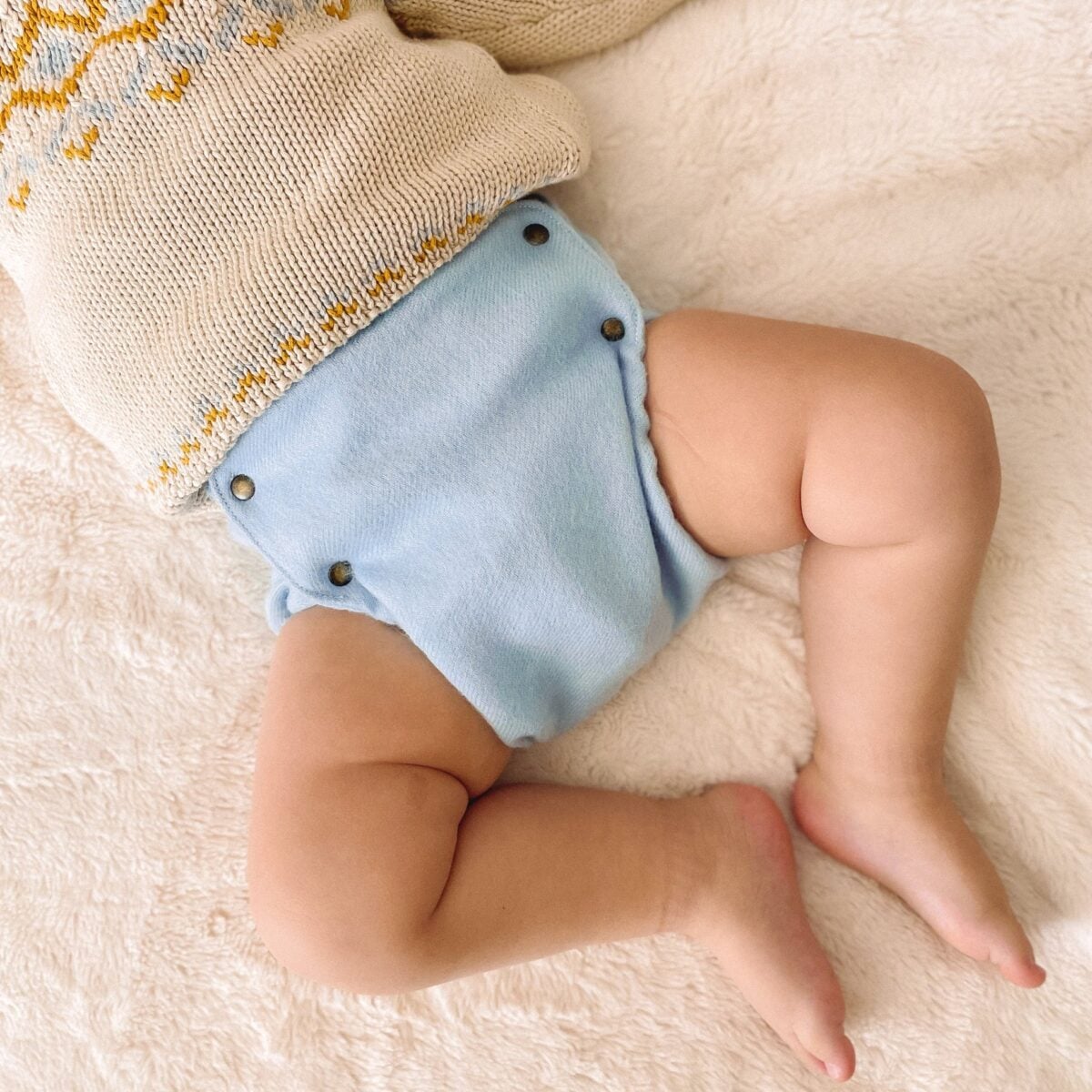
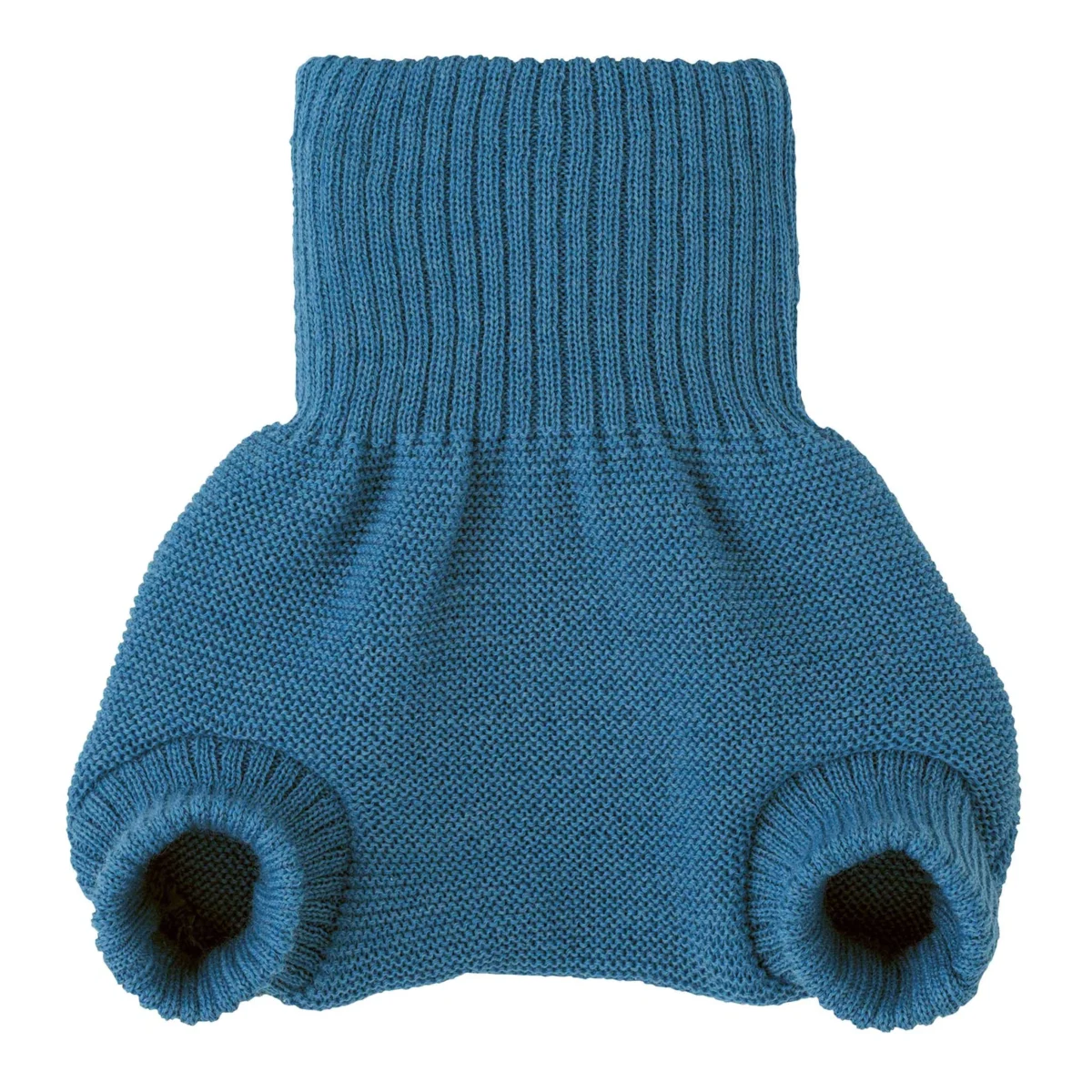
If you prefer a 100% plastic-free diaper option, wool diaper covers are your best bet. Bear in mind that, while wool covers do not need to be washed as frequently as synthetics, they do typically need to be hand-washed in wool-specific detergent, air-dried, and regularly lanolized.
They are also more fitted than synthetic outers with expanding snaps, meaning you will need to purchase more sizes as your child grows. But if you are willing to invest in them, they will serve you well for years to come.
Here are my top picks for wool diaper covers:
Best Snap-less: Disana Wool Pull-on Cover
- Material: 100% Merino wool
- Style: Pull-on style
- Amount Needed: 3+ (refer to the brand’s recommendations on the listing)
- Cost: $42.95 each
- Bonus Points: Made in Germany
Best Budget: Babee Greens Wool Shorties
- Materials: 100% Merino wool
- Style: Pull-on style
- Amount Needed: 3+ (refer to the brand’s recommendations on the listing)
- Cost: $28.95 each
- Bonus Points: Made in the USA from upcycled sweaters, which is a great way to reduce textile waste!
Most Luxe: Lunapaca Alpaca Diaper Cover
- 100% alpaca wool
- Available in both undyed or dyed with non-toxic, eco-friendly dyes
- Style: Snap closures
- Amount Needed: 3+ (refer to the brand’s recommendations on the listing)
- Cost: $98 each
- Made in the USA
Absorbent Inserts
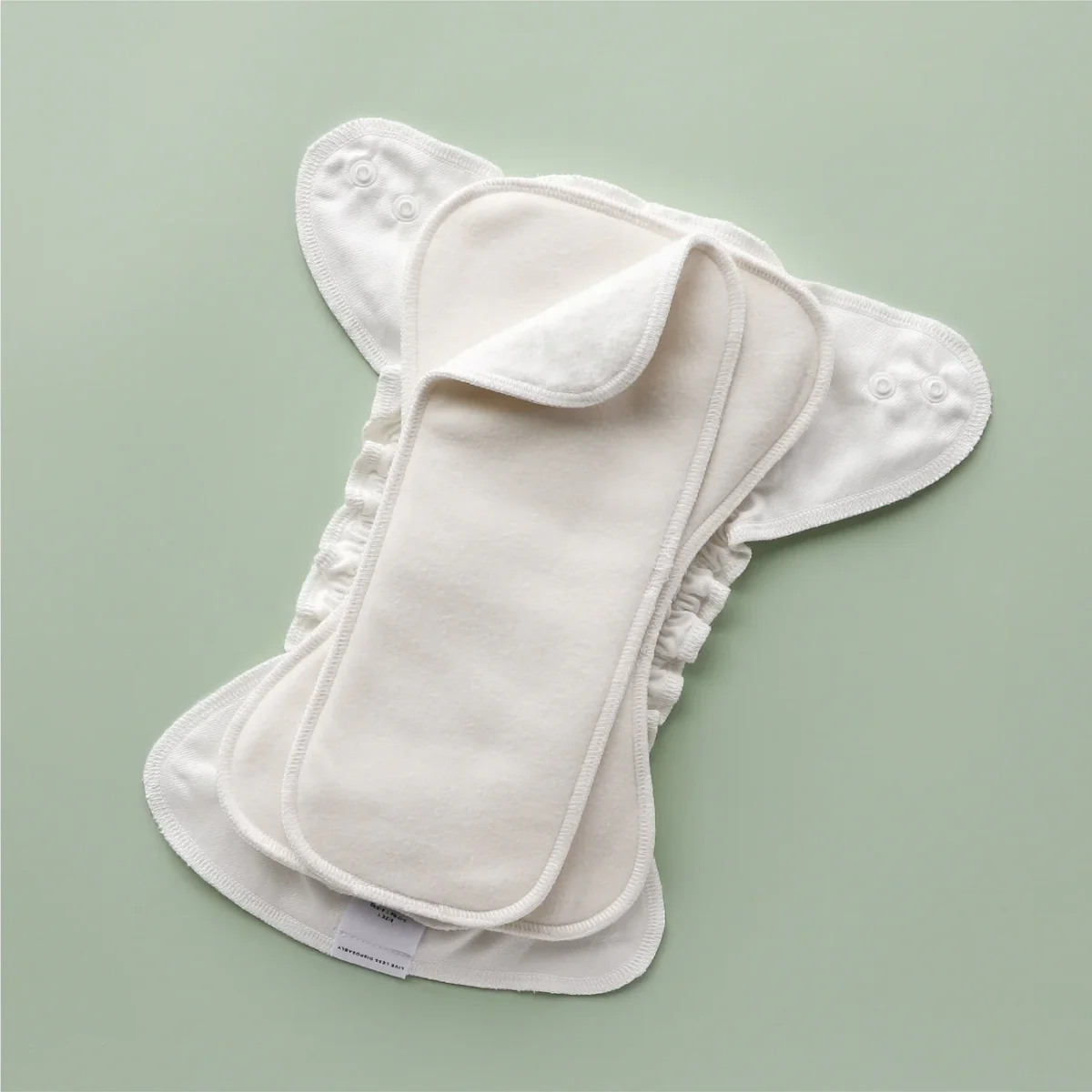
When your child is sleeping 6+ hours overnight, you will need absorbency-boosting inserts for your diapers. What is great about these inserts is that you can customize for your child’s needs. You can layer one or two inside the inner diaper for the exact amount of absorbency needed.
Best Overall: Thirsties 100% Organic Cotton Doublers
- Materials: 100% organic cotton
- Amount Needed: 6+
- Cost: $9.55 for a set of 3
- Bonus: Made in the USA
Note: Make sure you buy the standard 100% organic cotton doublers, not the “stay dry” version which contains polyester fleece. If you plan to pair these with Esembly diapers, Thirsties’ “Newborn” Doublers fit with Esembly Size 1 Inners, and Thirsties’ “Small” Doublers would work best with Esembly Size 2 Inners.
Best Custom Fit: Esembly Ultra Overnighters
- Materials: 45% organic cotton & 55% hemp, topped with polyester fleece
- OEKO-TEX STANDARD 100 certified
- Cost:
- Size 1: $17.50 for a set of 2 (one contour, one booster)
- Size 2: $21 for a set of 2 (one contour, one booster)
- Amount Needed: 6+ (3 contours and 3 boosters to start)
Note: Esembly doesn’t currently offer a polyester-free version. While polyester fleece is effective at preventing diaper rash, there are alternate options. I recommend using Thirsties Doublers and then adding either wool or polyester dry liners as needed.
Shop Esembly | Find them on Amazon | Order from Grove
Dry Liners
Dry liners sit at the top-most layer of your child’s diaper and function to keep your child’s skin from developing a rash from sitting in a wet diaper. These may not be necessary when diapering a younger baby as they require frequent changes, but dry liners become very useful for older babies and toddlers who may go longer periods of time sitting in a wet diaper, especially overnight.
Keep in mind that any of the following stay-dry liners (wool or polyester) may also function as reusable poop liners. (More on poop liners below.)
Best Natural Fiber Option: Babee Greens Wool Diaper Liners
- Materials: 100% ultrafine Merino wool
- OEKO-TEX 100 certified
- Cost: $6.50 per liner
- Note: Babee Greens offers factory seconds at $5 each
- Amount Needed: 6+ (depends on need)
- Bonus Points: Made in the USA
Best Budget Option: Esembly Stay-Dry Liners
- Materials: Polyester fleece
- OEKO-TEX STANDARD 100 certified
- Cost: $12 for a pack of 12
- Amount Needed: 12-24 (depending on need)
Note: From my experience, these liners are very effective at preventing diaper rash. As they are more affordable and require less maintenance than wool, I used them when needed—usually as reusable poop liners for shorter periods during the day. However, I still preferred to use wool liners for longer periods of time, such as overnight diapers.
Shop Esembly’s Liners | Shop on Amazon | Get them from Target
Disposable Poop Liners (Optional)
Once your child begins eating 2+ meals a day (and therefore no longer has water-soluble poops), it is necessary to “plop” solid poops directly into the toilet before laundering.
Disposable poop liners are not necessary for cloth diapering, as most solid poops can plop directly from the cloth diaper on their own, but having a disposable liner is convenient if you are in public or aren’t near a toilet.
That being said, any of the reusable wool or polyester dry liners (listed above) may also function as reusable poop liners—simply remove the liner, plop the poop, and wash with the rest of your diaper laundry.
Best 100% Cotton Option: Charlie Banana 100% Cotton Disposable Liners
- Materials: 100% cotton
- Cost: $21.95 for 100
- Amount Needed: Depends on need
My review: This product is unique in that it is the only 100% cotton disposable poop liner on the market. When testing this product, however, my child developed a rash, which went away upon discontinuing use. I theorize this was because the liner didn’t effectively wick moisture away from my child’s skin. Be aware this is a possible risk, especially if your child has sensitive skin. However, most reviewers of this product appear to have no issues with rashes, which is why it is still recommended.
More Affordable Option: Esembly Tossers
- Materials: 100% bamboo viscose
- Cost: $12 for 100 liners
- Amount Needed: Depends on need
My take: As I mentioned above, I don’t really recommend bamboo viscose if you can avoid it.
When I contacted Esembly directly about whether their Tossers have any safety certifications, this was their response: “We have been reassured by the manufacturer that they have sourced a bamboo viscose that is organic and chemical-free. It does not have the certifications you listed [OEKO-TEX STANDARD 100, MADE SAFE, GOTS for organic bamboo], but we have had our Tossers independently tested to confirm that they are free of phthalates, chlorine, formaldehyde, heavy metals, and microbes. They also passed REACH-SVHC [Substances of Very High Concern] testing as well.”
This response gives reason to believe that Esembly’s Tossers could be held to a higher standard than most of the cheaper bamboo diaper liners found online. Admittedly, it appears to be a bit of a marketing red herring, as I’m not convinced most of the “free of” items listed would typically be found in bamboo liners to begin with.
I would personally recommend primarily using a wool or polyester dry liner for the majority of the time, while only occasionally using the bamboo liners when needed (such as changing poopy diapers in public).
That being said, if using bamboo liners helps you continue cloth diapering once solids are introduced, they are still absolutely worth using! I would trust Esembly’s liners over any of the cheaper bamboo liners brands found online; Esembly has numerous safety checks for their products, while cheaper liners are unlikely to have any.
Shop the Tossers | Find on Amazon | Order from Grove
Diaper Pail Liners
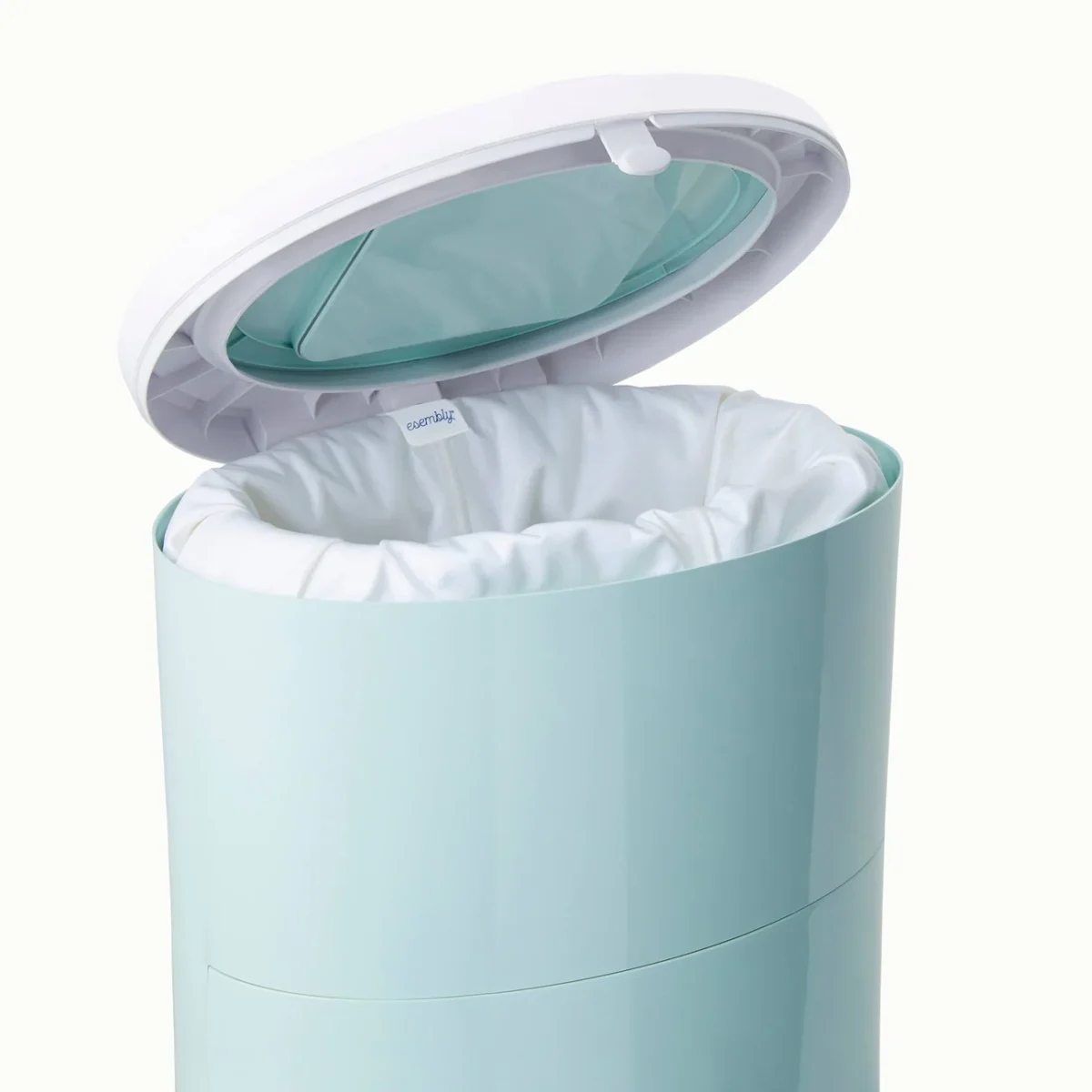
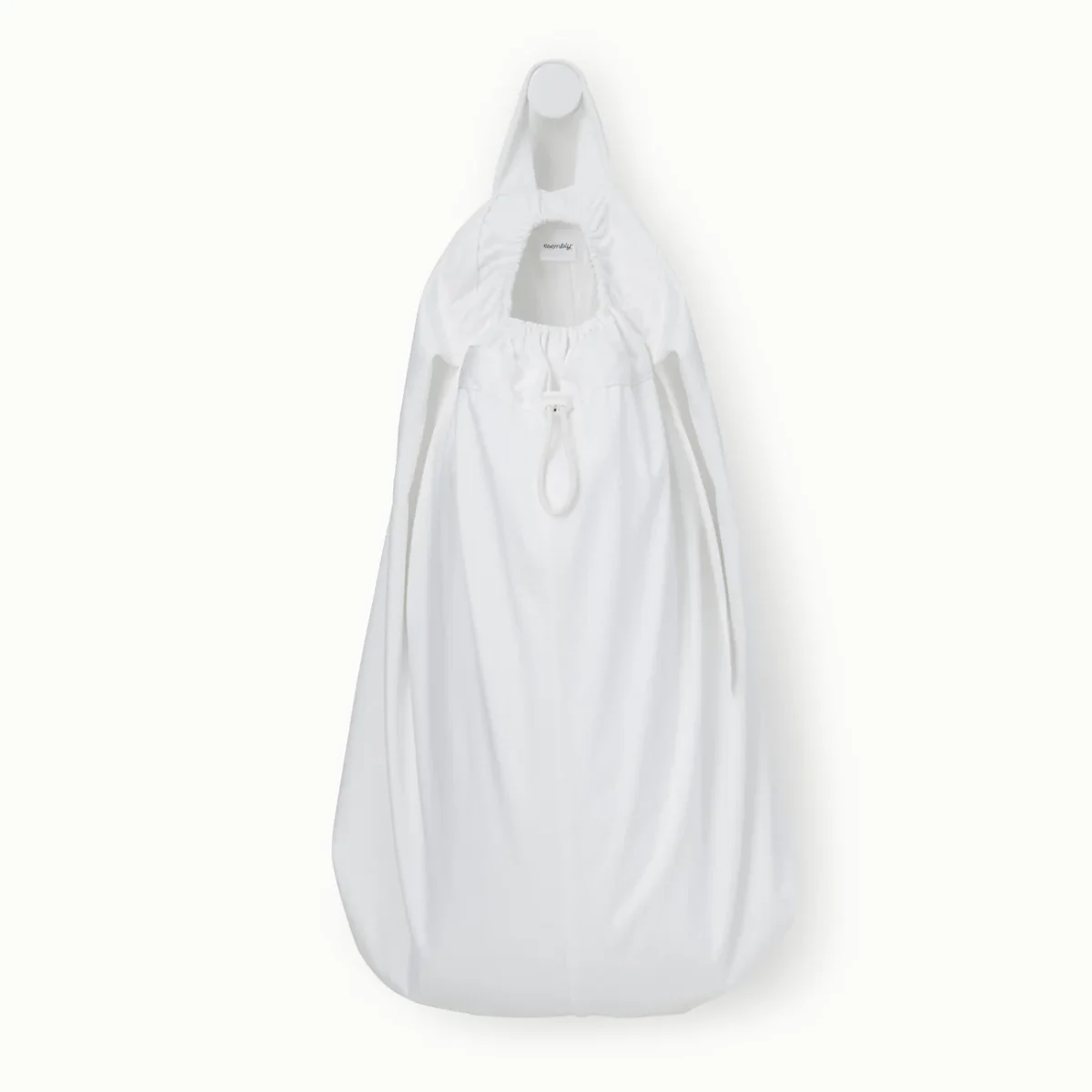
Diaper pail liners are large wet bags that store used cloth diapers until wash day. There are lots of brands that offer pail liners that will function similarly; it really comes down to your personal preference. Ones that are lined with TPU instead of PUL are usually the safer bet.
Keep in mind, it’s important to never overstuff pail liners or store cloth diapers in plastic bags as they will breed bacteria and mold. Cloth diapers need enough air circulation to keep from molding.
Here are my favorite pail liner options!
Best Overall: Esembly Pail Pouch
- Materials: Polyester TPU
- OEKO-TEX STANDARD 100 certified
- Cost: $29.50
- Amount Needed: 2+
- Bonus Points: This pouch is especially convenient for hanging on a hook behind a door and for travel. No pail required!
Order from Amazon | Shop at Target
Best Budget: Thirsties Simple Pail Liner
- Materials: Polyester TPU
- Cost: $19.35
- Amount Needed: 2+
Portable Wet Bags
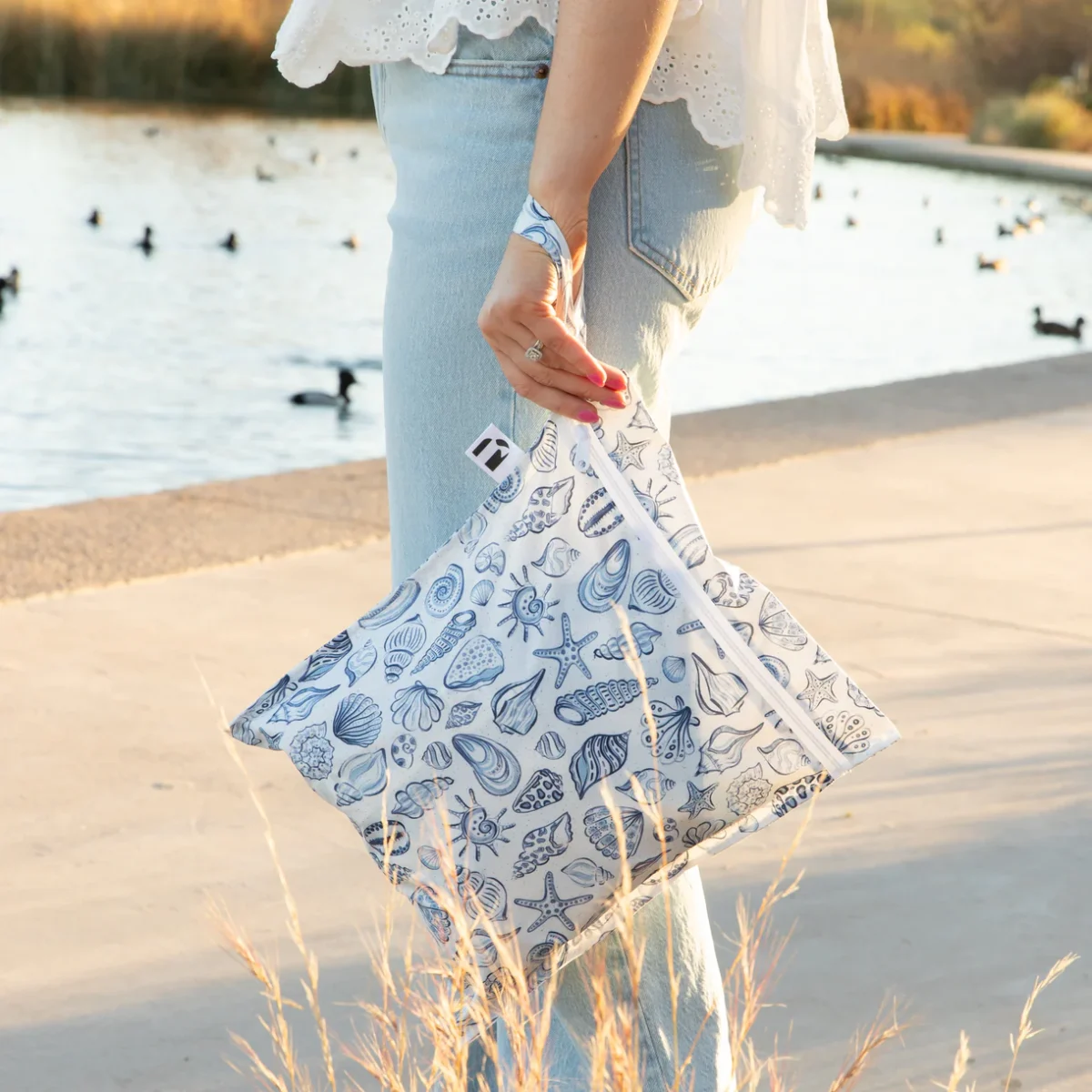
If you plan to change cloth diapers outside of the house at any point, wet bags are an absolute necessity; they keep soiled diapers safely contained until they can be deposited in the diaper pail at home.
There are numerous brands, sizes, and styles of wet bags to choose from online; what you choose comes down to personal preference. Again, TPU is generally better than PUL.
As an added bonus, wet bags are extremely versatile, even after you are finished cloth diapering. They can be used for dirty shoes, wet swimsuits and towels, pee-soaked pants during potty training—really anything that’s messy!
Here are some TPU options that I’ve used and liked:
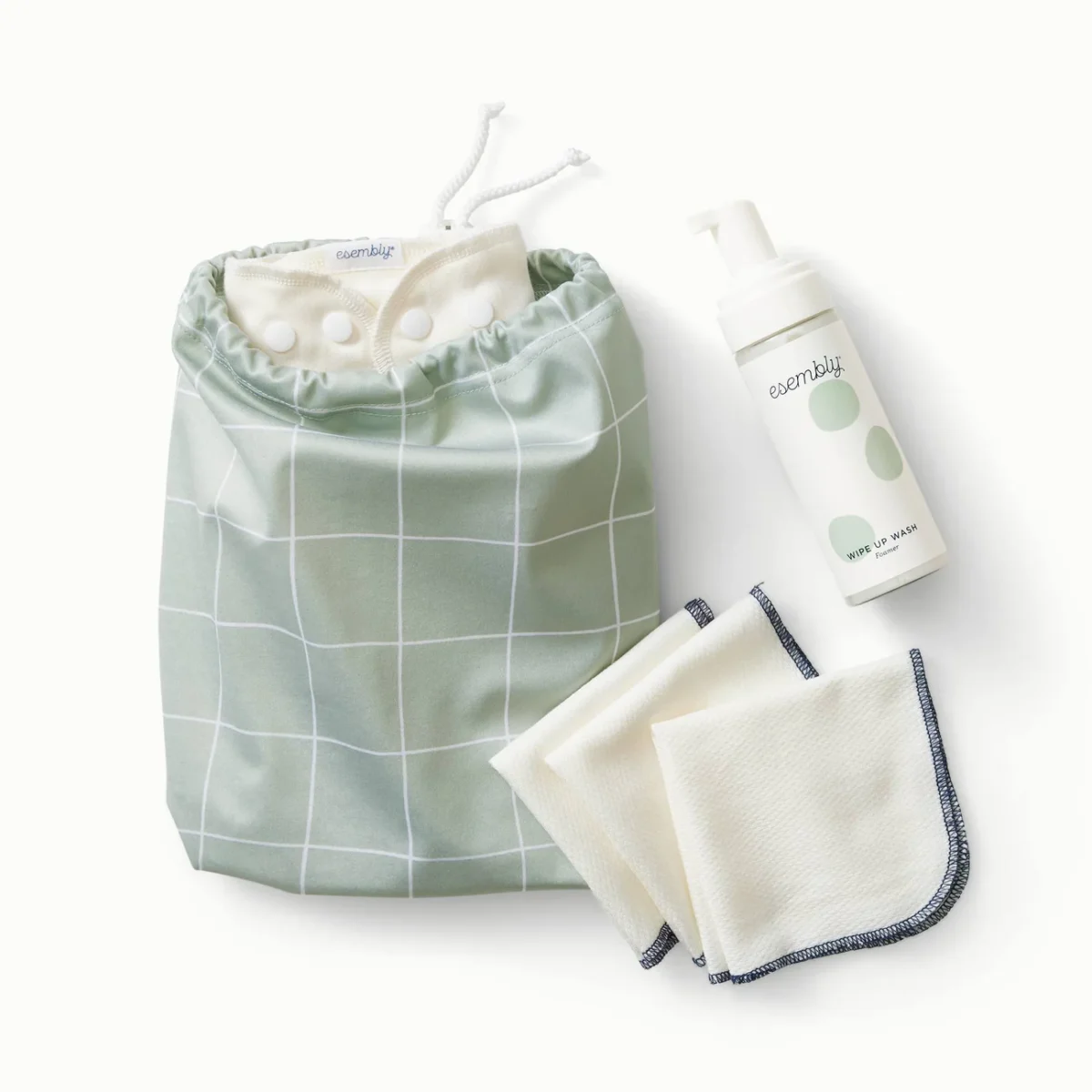
Drawstring Style: Esembly Ditty Bags
- Materials: Polyester TPU
- OEKO-TEX STANDARD 100 certified
- Style: Drawstring
- Capacity: 3-4 diapers
- Cost: $18 for a set of two
- How Many: 2+ (One for clean diapers, one for dirty)
Find these on Amazon | Shop at Grove
Zipper Style: Bumkins Wet Bag
- Materials: Polyester TPU
- Style: Zipper
- Capacity: 6+ diapers
- Cost: $11.95 for one
- How Many: 2+ (One for clean diapers, one for dirty)
Largest Capacity: Thirsties Deluxe Wet Bag
- Materials: Polyester TPU
- Style: Zipper
- Capacity: 8+ diapers
- Cost: $11.95 for one
- How Many: 2+ (One for clean diapers, one for dirty)
- Bonus: Made in the USA
My Favorite Non-Toxic Laundry Supplies for Cloth Diapering
Once you’ve selected your preferred brands of organic diapers, it’s imperative to also plan what to wash them in. You can have the best non-toxic cloth diapers on the market, but if you aren’t properly washing them in a safe detergent, they won’t be very functional.
I highly recommend studying the wash routine explained on Esembly’s website before buying your diapers. Additionally, if you own Esembly diapers, do not hesitate to email Esembly directly about your laundering questions. They have truly exceptional customer care and will even write a custom wash routine for your specific laundry machine, water hardness, and detergent! The blog Cloth Diapers for Beginners also has useful wash routine resources.
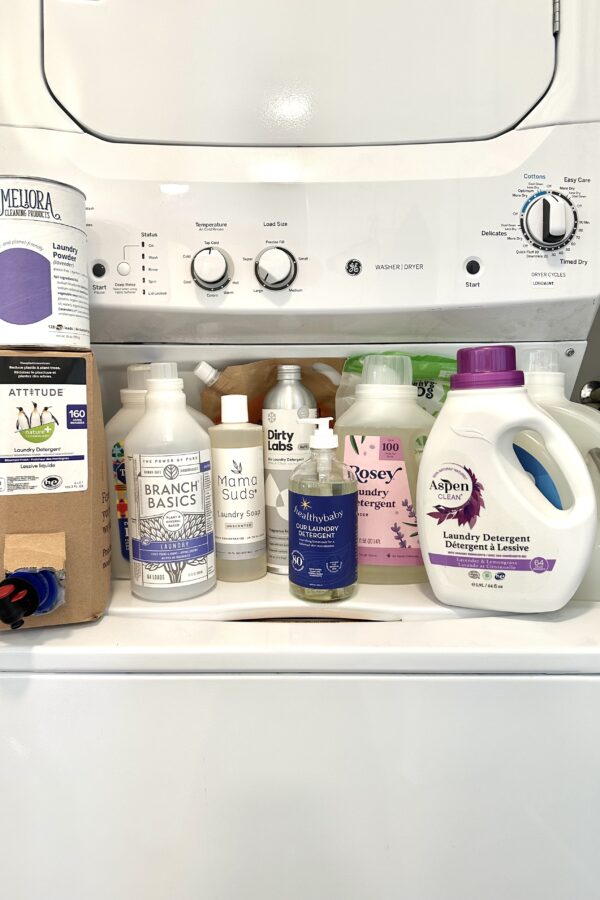
Non-Toxic Laundry Detergent
Here you may refer to The Filtery’s laundry detergent guide and choose what would best fit your family’s needs/budget. Just make sure it’s a real detergent containing surfactants (not a laundry powder or sheet) that’s fragrance-free with no added fabric softeners.
My personal favorite pick: Attitude Unscented Laundry Detergent
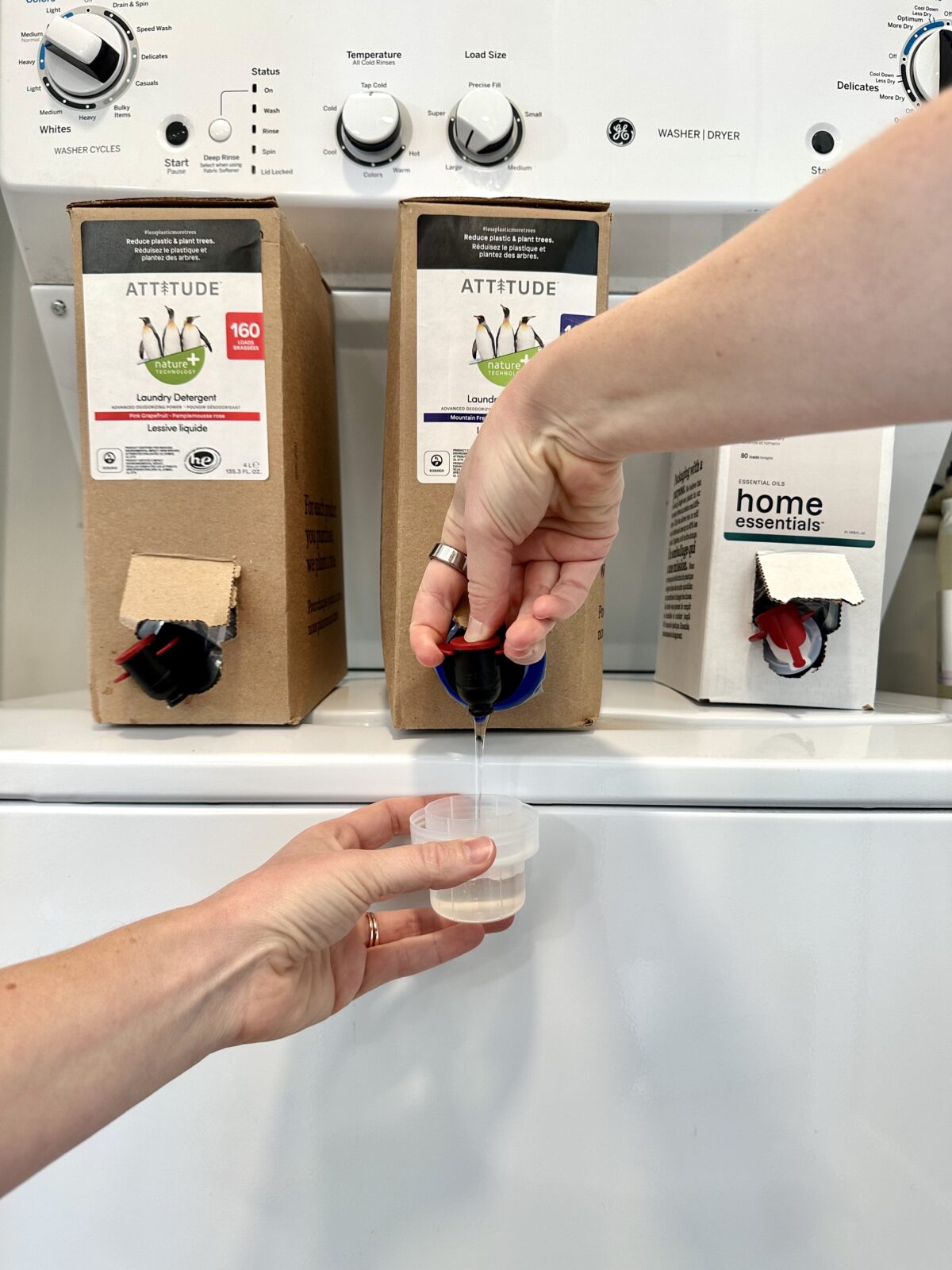
- Certifications: EWG Verified
- Cost: $36.01 for 135.2 fl oz
- Bonus: Attitude explains the adjusted detergent measurements if you have hard water which is super convenient!
For a Deeper Clean: Esembly Agitators
These ensure that the diapers get really clean in the wash. They are ideal for washers that do not have agitators.
- Materials: 100% silicone
- Cost: $17.50 for a set of 4
- Amount Needed: 1 set
Note: Beware that cheaper “laundry jacks” on Amazon are often made with PVC, which is toxic; you do not want to wash those with your baby’s diapers!
Disposable vs. cloth diapers (pros & cons)
There are of course pros and cons to using both kinds of diapers, and everyone has to make the best decision for them and their family. Many parents are even mixing it up; for example, using cloth diapers at home and then disposables when they’re at daycare, on vacation, or just on-the-go.
Here are some things to consider as you decide what’s best for you:
Disposable Diapers
- More synthetic material (and just more ingredients in general to worry about)
- Less cost upfront, but more expensive over time
- Less washing
- More wasteful
- Better for on-the-go
Reusable Cloth Diapers
- Less ingredients to worry about in general and more organic material available (you can actually have 100% organic cotton fabric against your baby’s skin)
- More upfront cost, but less cost over time
- More laundry
- Less waste to the landfill
- Not always great for on-the-go, babysitters, etc.
Cloth diapering can feel overwhelming at first, but I hope this guide made it feel a little less so. Once you gather the supplies needed and study up on the wash routine, you’ll find that it is very doable! Remember, nothing in low-tox living has to be “all or nothing”—do what works best for your family in the season you’re in, and don’t stress about the rest. Enjoy your sweet baby. You’ve got this!