Subscribe to our weekly email newsletter. →

I’ll be honest: I’m very hesitant to share this new product with you.
I’m NOT one to promote detox teas & protocols. You won’t see me talking about coffee enemas or chelation therapy. The only real “detox” I’ve done was when I was very sick from mold exposure, and it was under the care and direction of a doctor.
Instead of detox regimens, my approach is more like this:
- Avoid what you can first. Instead of consuming toxic chemicals and then putting ourselves through potentially harmful (and/or unproven) fasts and weird protocols, I think we should start by avoiding those toxic chemicals in the first place.
- Support the detoxification systems you already have. We are always detoxing through our breath, bowels, and sweat. So simple things like eating enough fiber and probiotic rich foods can go a long way in eliminating toxicants.
Allllll that being said, if there are some gentle, low-risk things we can do to further support our bodies when it comes to the exposures we can’t avoid…
I’m here for it.
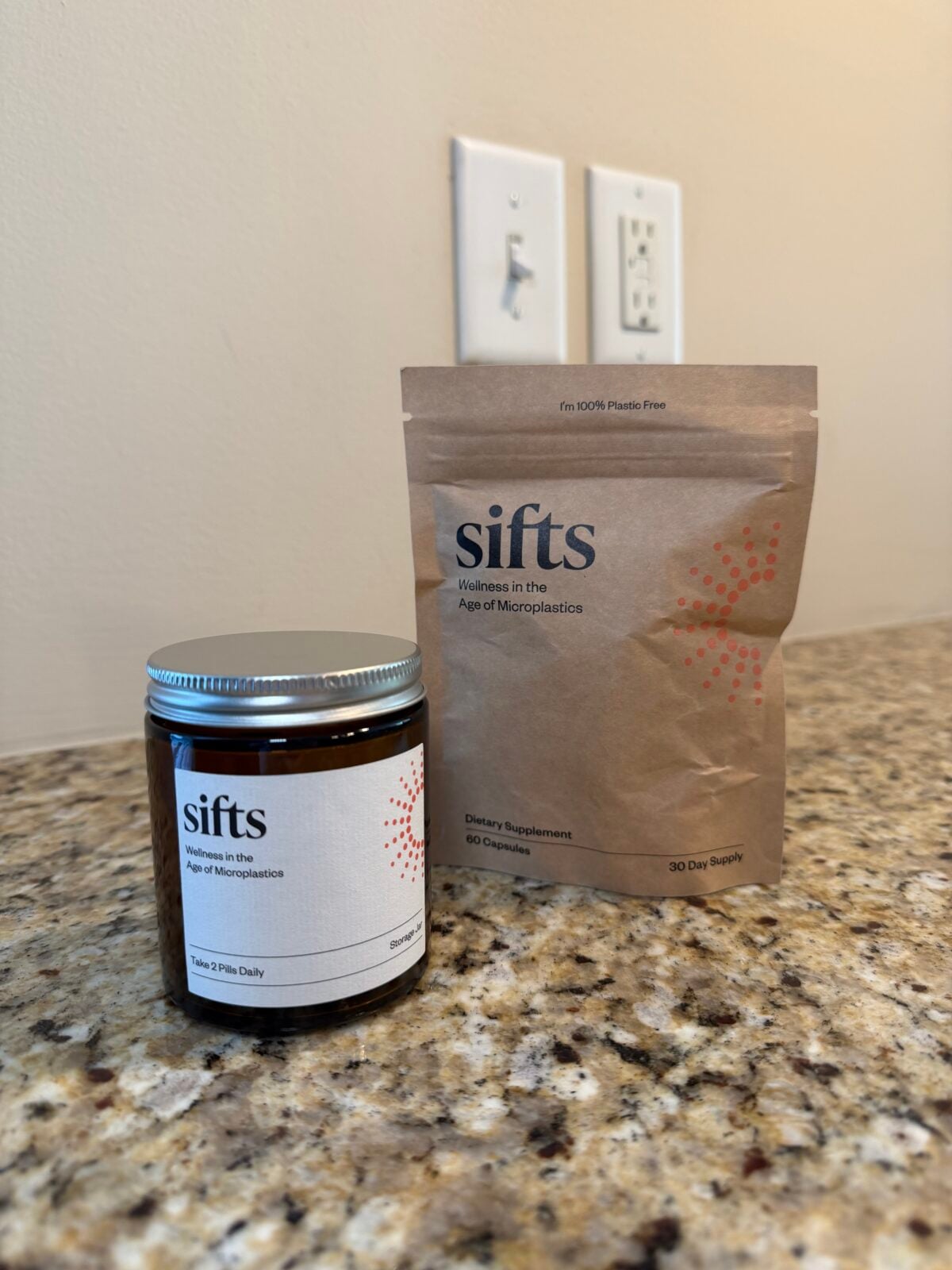
I recently came across Sifts, which makes a daily supplement that’s “designed to target the microplastics you can’t avoid.”
I wanted to find out if their formulation was more science or snake oil.
This guide contains product recommendations, and we may receive compensation through affiliate links or editorial fees. As always, we only make recommendations that are genuine!
Here’s what we’re working with:
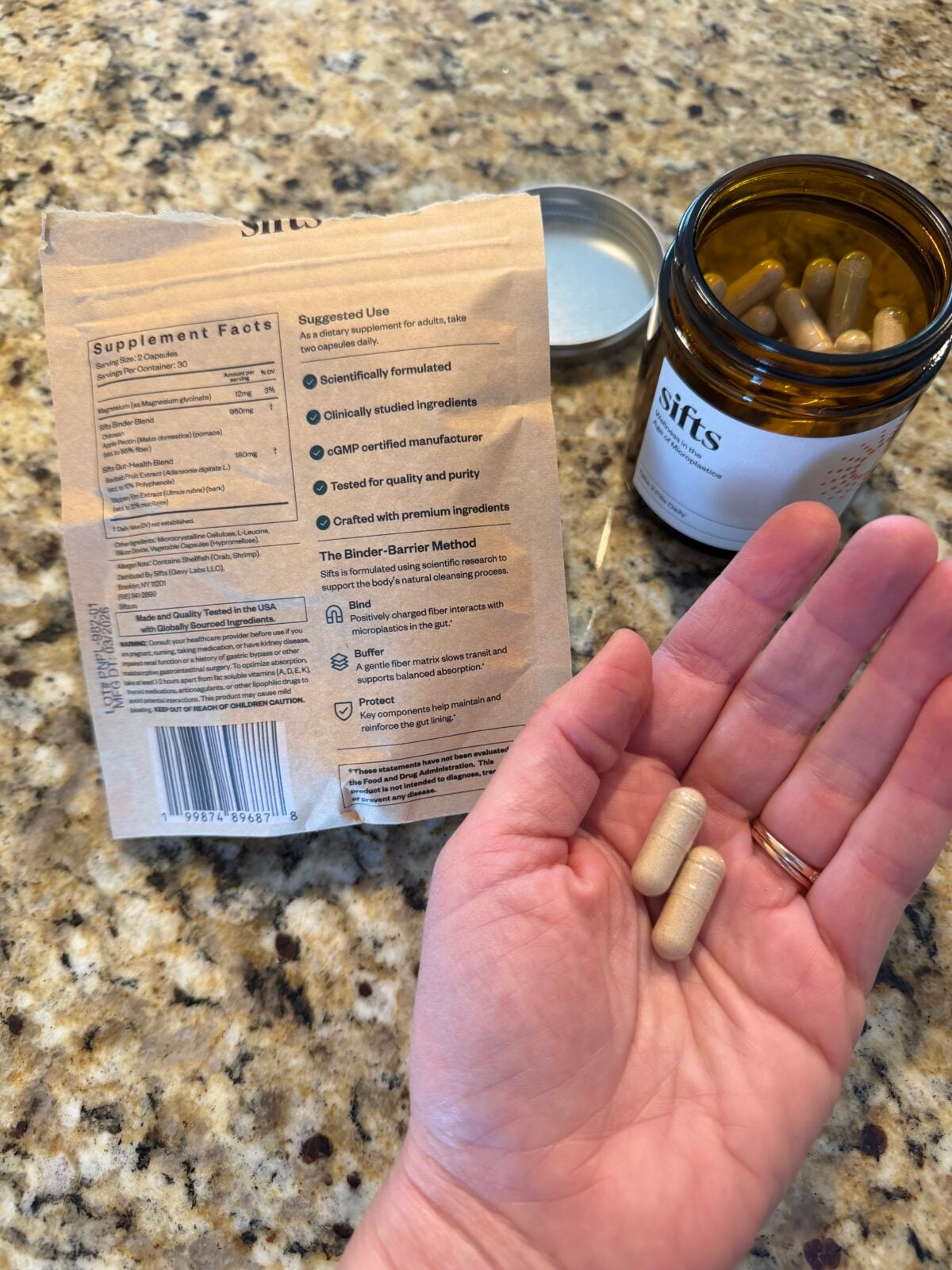
- Magnesium glycinate: This is an easy one because we already know that bowel movements are the primary way microplastics are excreted from the body. Magnesium helps with that. (Worth noting that there’s only 12mg in a serving of Sifts, which is very low. But again, this is for gentle daily support – it’s not meant to be like a clinical laxative.)
- Chitosan: This is part of the “binder” part of the formulation. Microplastics basically “stick” to it so that they can then be excreted. While there isn’t a ton of data on how chitosan works on microplastic detox specifically, the research we have so far is promising. For example, in one (very) small human study, participants who took chitosan for 15 days had 26.3% less microplastic in their blood, while the placebo group showed no significant change.
- Chitosan has historically been used as a binder in other contexts, like for cholesterol reduction. But, the data here is mixed; clinical evidence shows modest capacity for lowering cholesterol, but some of it is conflicting.
- Apple pectin: This ingredient is added to help with fiber, flow, and overall gut microbiome support. I couldn’t find any human research on microplastic & apple pectin specifically, but there is an interesting study where they used apple pectin (combined with iron ions) in a water supply and it removed 95% of nanoplastics! Obviously, that may or may not be transferable to actually eating apple pectin. As I mentioned before, fiber is just generally good for removing many toxicants from the body.
- Baobab fruit extract: This is added for the antioxidants and prebiotic fiber. So rather than helping with “detox” (there’s no direct research on microplastics that I could find), it’s meant to help counteract some of the potential negative effects of microplastic exposure (like oxidative stress).
- Slippery elm: Similar to the apple pectin, there isn’t any direct human research on microplastics, but this is added to help create a sort of “gel matrix” that particles can get stuck to and then excreted, instead of being absorbed into the blood stream.
When I reached out to Sifts to ask them for more information, they did tell me that they are working with the University of New Mexico and the HHS’s new STOMP program in order to continue building on the clinical human research we currently have on microplastic exposure and detox.
I appreciate that because we all know that microplastics are a huge problem, but we’re still lacking in strong data about how we can actually get them OUT of our bodies.
Now for the testing.
Supplements are pretty unregulated, so I asked Sifts what they do for testing & quality assurance. We want to know that what’s on the label is actually what’s in the supplement.
- They sent me a recent COA, which showed heavy metal content (lead, arsenic, cadmium, and mercury), as well as magnesium content. There was a detectable level of lead (0.28µg), but that’s to be expected in anything that has plants in it (the apple pectin, baobab, and slippery elm). That is 56% below CA’s Prop 65 limit and is roughly the same amount of lead you’ll get from a few bites of a baked sweet potato. The other three metals were non-detect and the magnesium was 13.13mg, which is good for label accuracy.
- They also told me they test at the ingredient level as well, saying they work with FDA-registered manufacturing partners for quality control throughout the whole production process.
My experience taking it & my overall thoughts
I took Sifts for a month and I didn’t notice any difference in how I felt.
But I didn’t expect to.
For one, the negative health risks of microplastics come from long-term exposure; we’re not talking about acute symptoms here.
And two, this supplement is meant to the GENTLE.
The levels of magnesium, fiber, and binders are low, but I think that’s the point. This is not meant to be a super strong & powerful detox; it’s meant to be one piece of a healthy lifestyle.
It’s like getting your steps in. One walk is not going to prevent diabetes. But daily walks over many years might, especially when you combine it with other things like eating healthy.
Other than that, I appreciated how transparent the Sifts team was with all of my questions and scepticisms. They sent me the COA (which not all companies will do) and they answered all my questions.
They also don’t appear to be making extravagant claims or overstating the existing data, while at the same time they are focused on building on the clinical testing and validation side of things.
A few final considerations:
- This is not suitable for people with shellfish allergies (the chitosan is shellfish-derived).
- It should be taken away from food. (This goes for pretty much all binders, like charcoal. That’s because it can bind to beneficial things like vitamins and minerals and remove those from your body before they get a chance to absorb.)