Subscribe to our weekly email newsletter. →

Rugs can change the entire feel of a space… but they can also introduce unwanted chemicals into your home. Between stain-resistant coatings (which usually mean toxic PFAS!) and plastic fibers, it’s surprisingly easy for something soft and cozy to become a hidden source of VOCs, PFAS, microplastics, and other pollutants.
If you’re trying to build a healthier home, it’s worth considering natural rugs.
The catch? Not all “eco-friendly” rugs are created equal, and a lot of marketing language in this space is borderline greenwash-y.
Below, I’ll break down what actually matters and give you my recommended brands so you can shop confidently for non-toxic rugs for your home.
What this guide covers:
- 8+ Rug Brands That Use Healthier & More Natural Materials
- CICIL (Made in the USA)
- Lorena Canals (Mostly Machine Washable)
- Nestig (Non-Toxic Nursery Rugs)
- The Citizenry
- Obakki
- Green Design Center
- Loomy
- Novica
- Even MORE Natural Rugs To Choose From!
- What About a Non-Toxic Rug Pad?
- What to Look For in a Non-Toxic Rug (and What to Avoid)
- Do You NEED a Machine-Washable Rug or Not?
- Non-Toxic Rug Cleaners & Rug Maintenance Basics
 Join Thousands of Subscribers Reducing Toxic Chemicals
This guide contains product recommendations and we may receive compensation if you purchase through certain links. As always, we only make recommendations that are genuine!
I know you’re probably here to shop, so I’ll get straight to the recommended brands first. If you want to learn more about what exactly to look for (and what to avoid), scroll down.
8+ Rug Brands That Use Healthier & More Natural Materials
CICIL (Made in the USA)
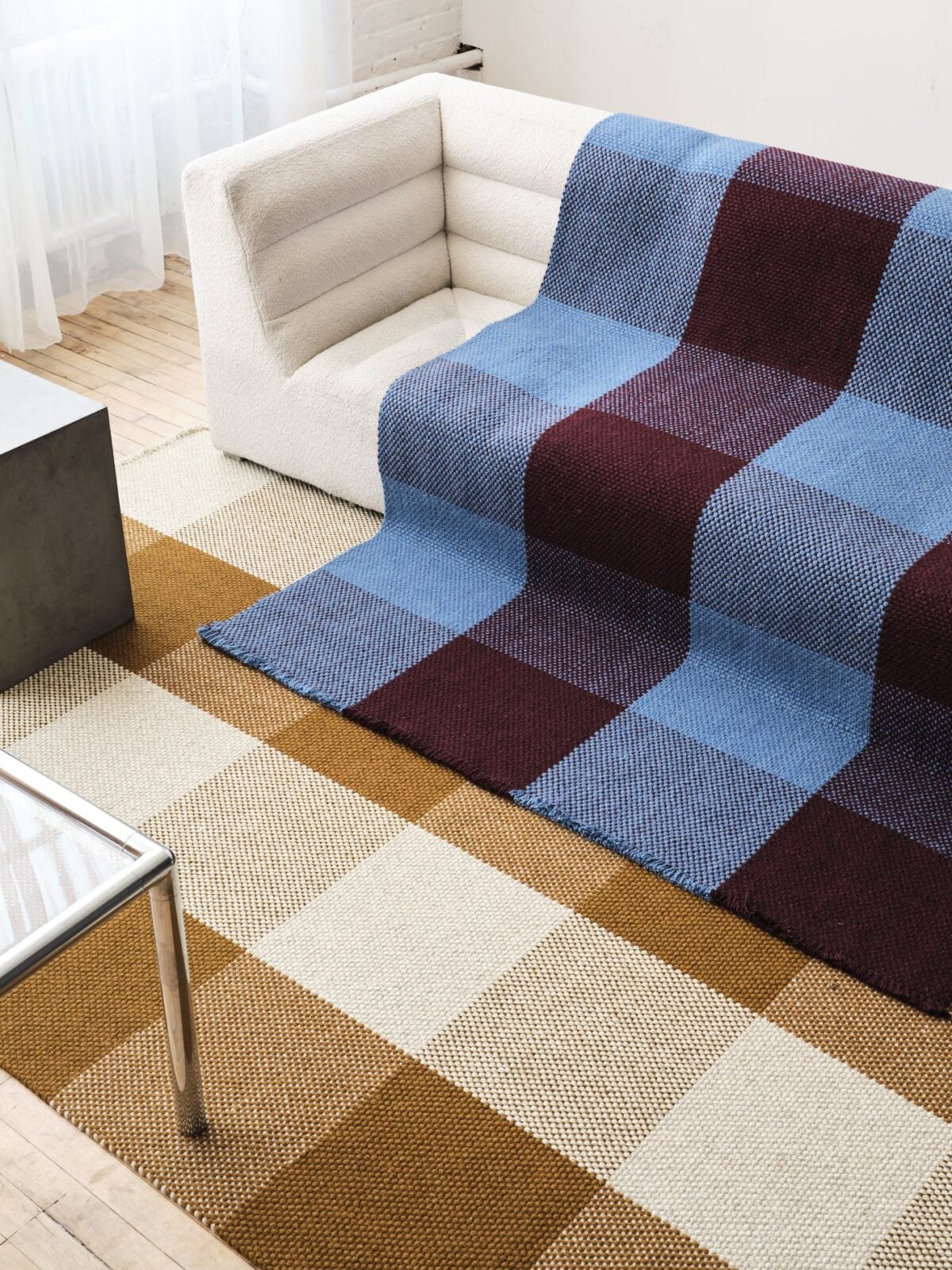
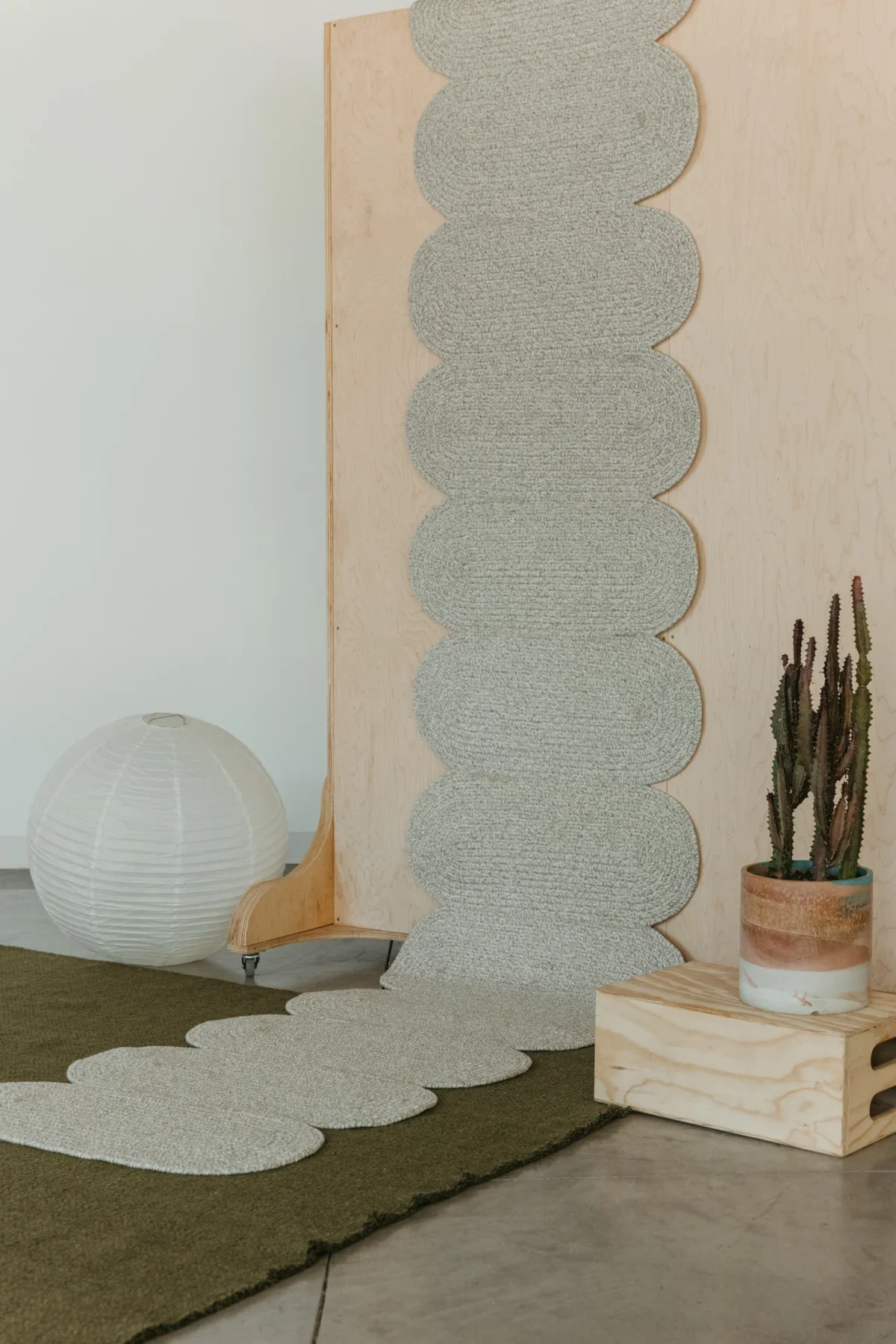
Materials: Wool and jute
Price Range: $179 – 2,739
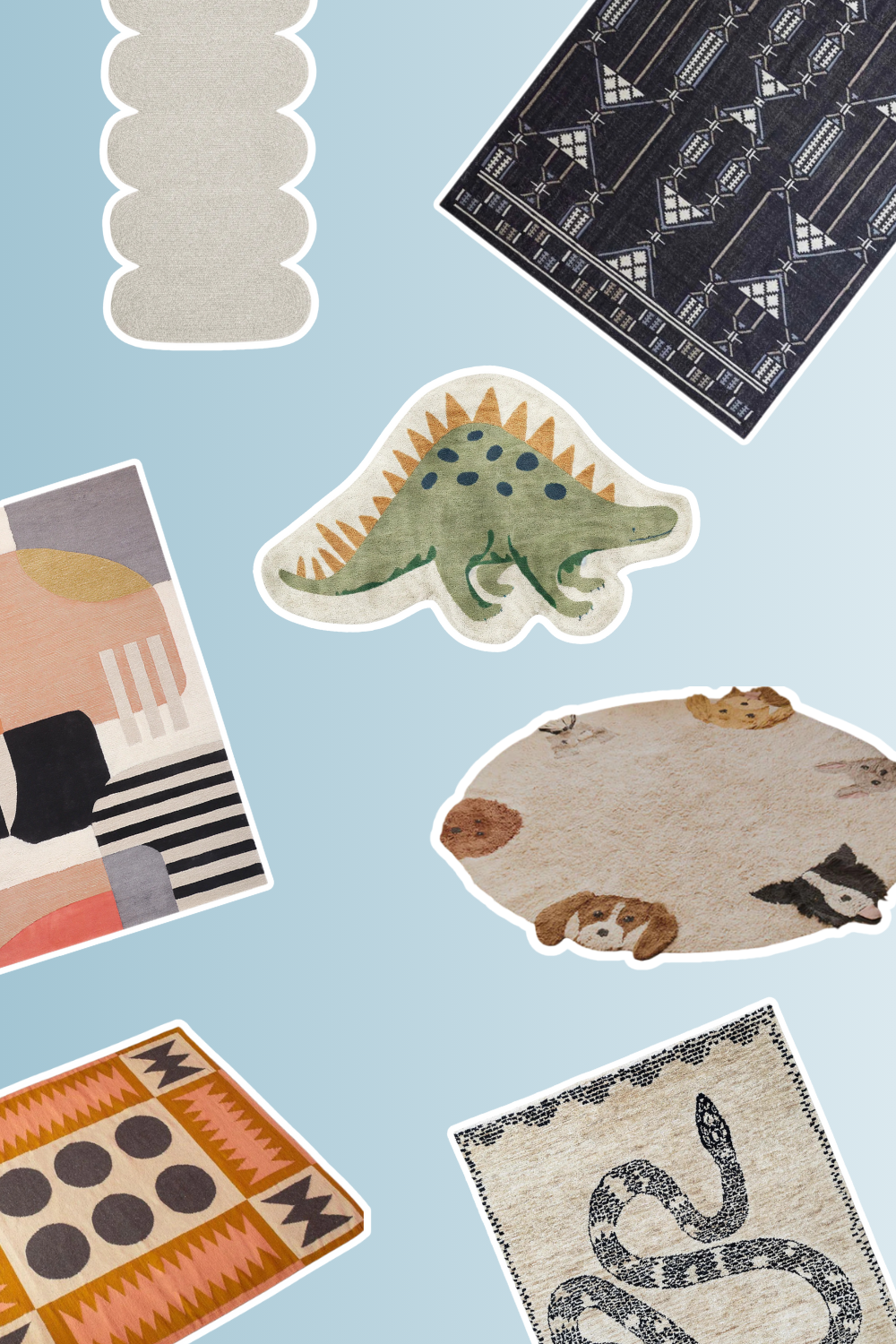
Types: Area rugs, runners, various shapes (square, oval, scallop, bean, arch)
Machine Washable? No
Rug Pad? Yes: Recycled Fiber Felt + Natural Rubber
This is one of the only places to find non-toxic area rugs that are made in the USA!
CICIL’s rugs are made by hand in North Carolina and Georgia. Their East Coast Wool supply chain is sourced directly from farmers and shearers in the Northeast and spans just 1000 miles from farm to floor.
The wool is braided around a natural jute core for stability (and the jute is sourced from deadstock, which would normally go to the landfill).
Each rug is sewn with 100% cotton thread and they don’t use any synthetic materials or toxic finishes, making for a fully natural and biodegradable rug!
I also like how you can shop by shape, color, or style. They have some fun curvy rugs!
Lorena Canals (Mostly Machine Washable)
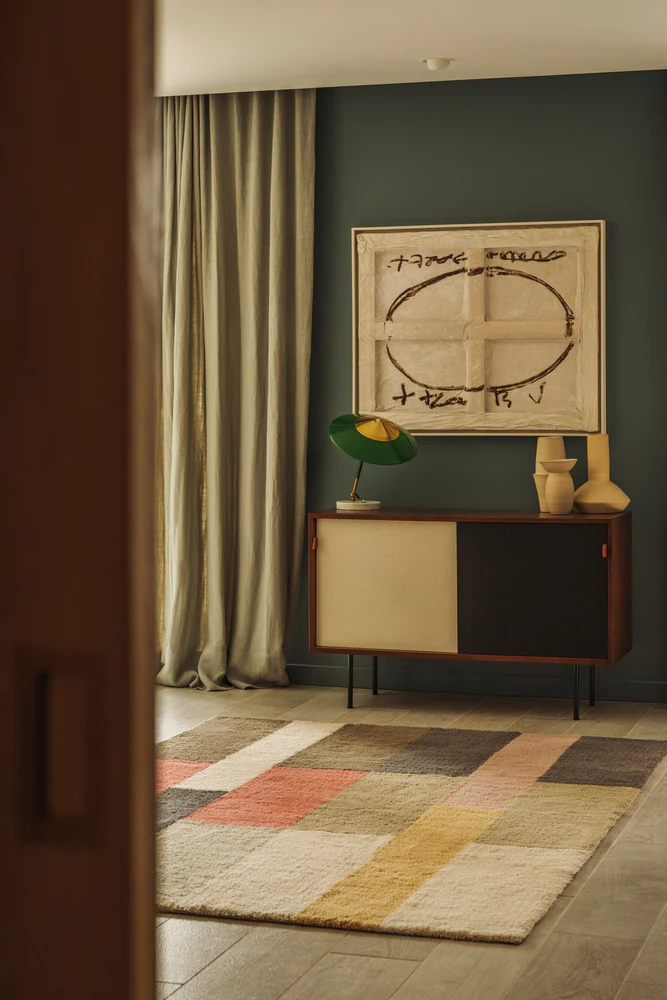
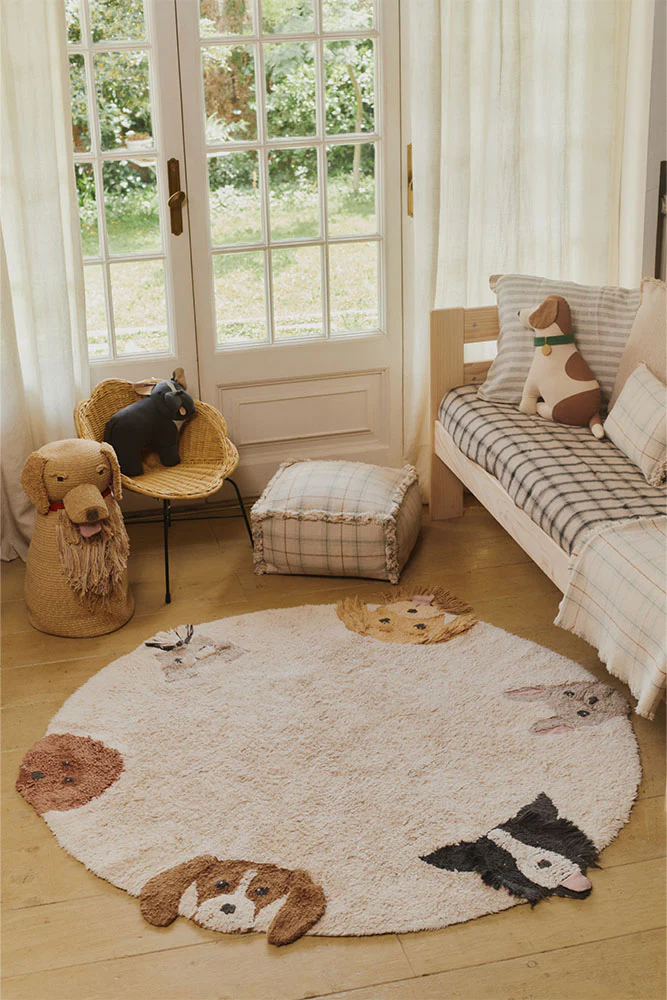
Materials: Mostly cotton and wool
Price Range: $109 (mini) – $2,100 (artist collaboration area rug)
Types: Small rugs, area rugs, runners, kids’ rugs (fun shapes!), bath mats
Machine Washable? Yes, many of them are! Check the details on the specific rug you’re looking at though, because some of them are not washable.
Rug Pad? They do have a non-slip underlay, but it’s unfortunately made of PVC, so I recommend using a different one.
If you ask me, Lorena Canals is one of the best places to get natural area rugs that are the best of all the worlds: made from natural materials, beautiful designs, lots to choose from, and machine-washable.
They’re reasonably priced too, for what you get.
All of their pieces are handmade by artisans (mostly in India, although they have started developing relationships with some other co-ops around the world) and colored using non-toxic dyes (many of which are OEKO-TEX and/or GOTS certified).
Their dyeing process (which uses “cone-dyeing” instead of “piece-dyeing”) also saves 75% of water. Additionally, they have a Rugcycled collection, which is where they make products out of their own factory’s leftovers.
In addition to rugs, they’ve also started carrying related products like throw pillows, table linens, and baskets.
While the majority of their materials are natural, check the details on the specific products because they do use some recycled PET and GRS certified recycled polyester fill for their baskets, toys, and playmats.
Nestig (Non-Toxic Nursery Rugs)
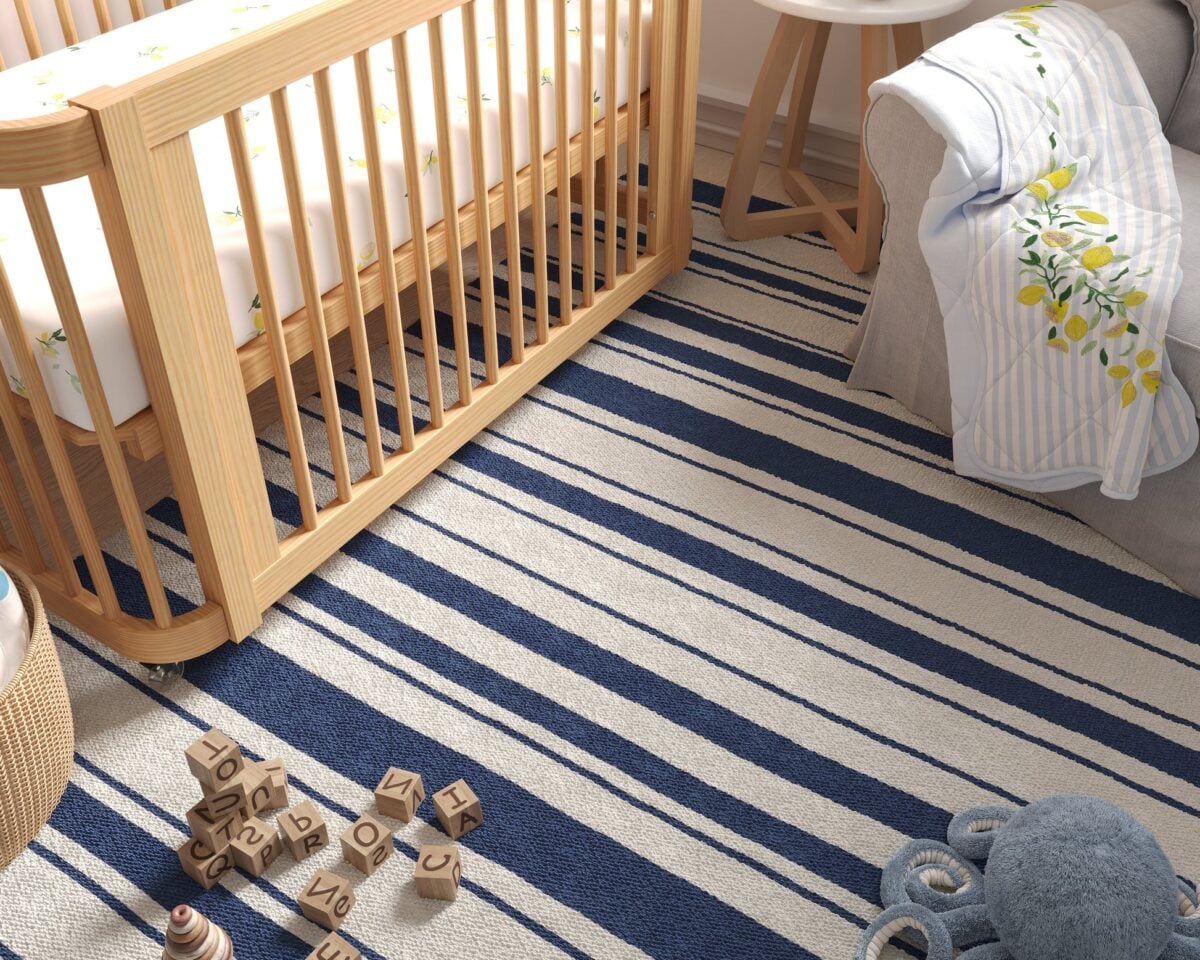
Materials: Mostly cotton
Price Range: $399 – $1,199
Types: Area rugs and kids’ rugs
Machine Washable: Both. They have a collection of non-machine-washable area rugs and a collection of washable rugs.
Rug Pad? No, they do not carry any of their own.
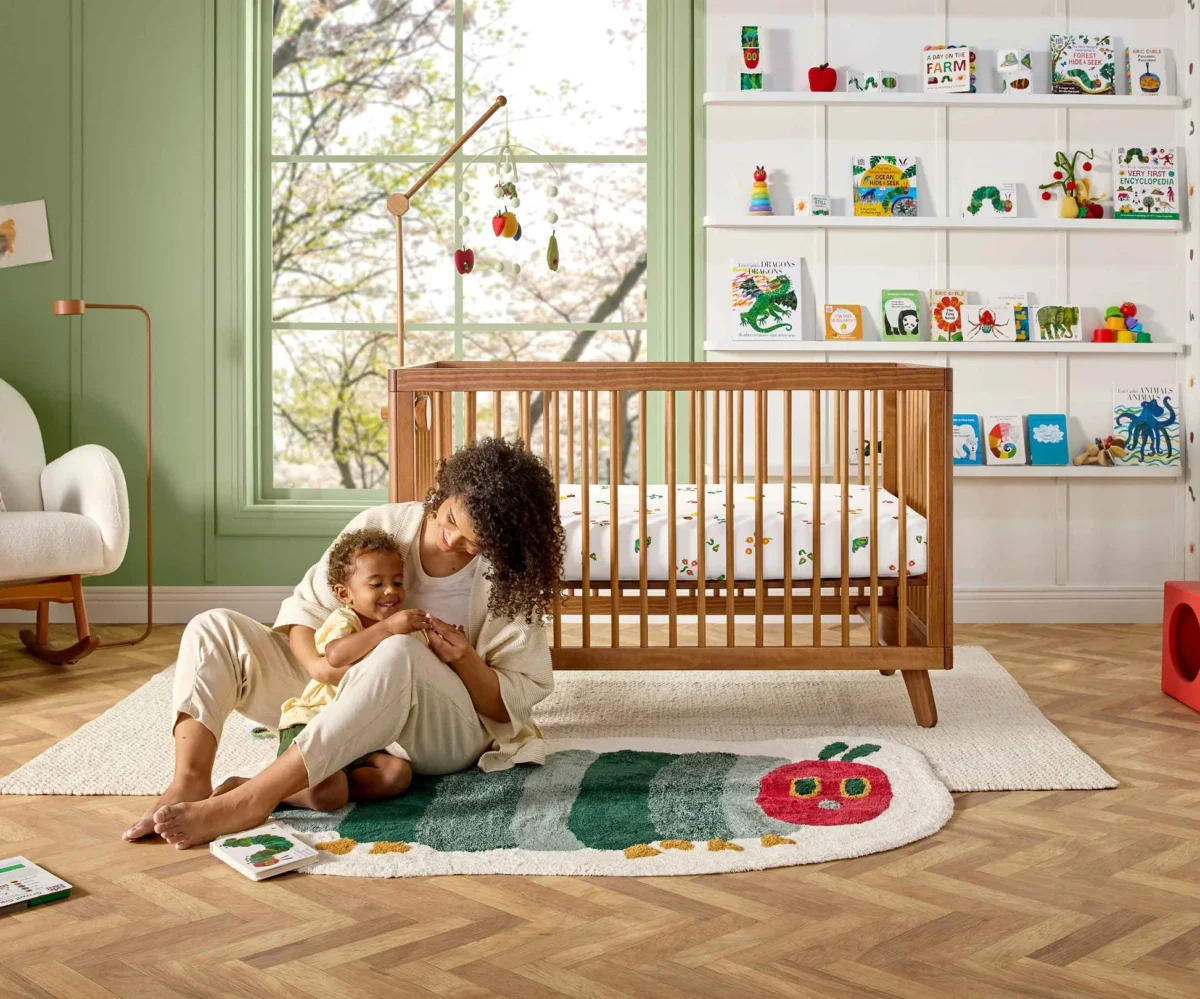
I’m mildly obsessed with their collection of washable kids’ rugs—I mean, they are so cute! Rainbows. The Very Hungry Caterpillar. Construction trucks. Seashells. Richard Scary!
Pretty much all of the rugs (the washable and non-washable ones) are made in Brazil out of 100% cotton and non-toxic dyes.
The Citizenry
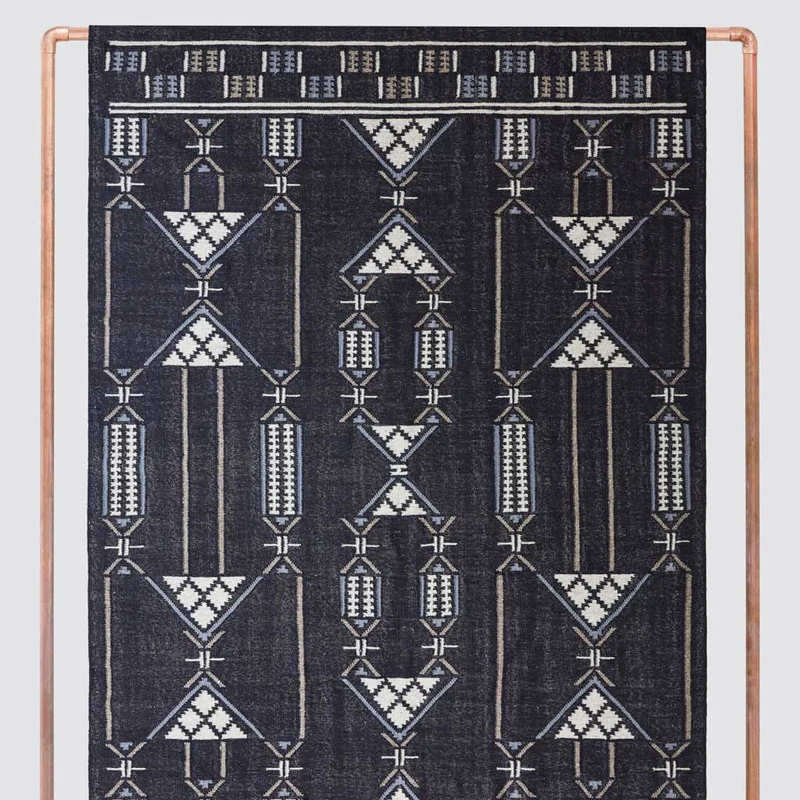
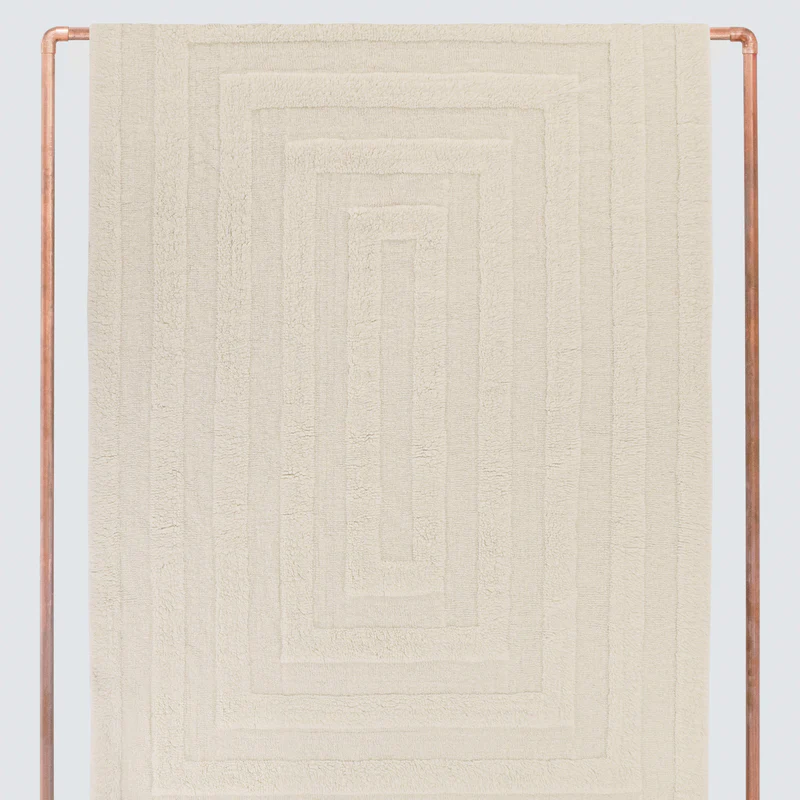
Materials: Mostly New Zealand wool and natural jute. Some silk.
Price Range: $279 – $2,799
Types: Mostly area rugs of various sizes. Also runners and smaller circle rugs
Machine washable? Most of them are not, but they do have a small machine washable collection
Rug Pad? Yes, they have one that is made of natural felt and natural rubber.
The Citizenry has a gorgeous collection of rugs, some of which have more minimalistic and solid-colored designs, and others that have ornate patterns and colors that pay homage to the place where they are made.
The main material they use is wool (mostly sourced from New Zealand), but if you want a vegan/plant-based option, they have natural jute rugs as well.
On each product page, you can get more information about the weavers who made the rug, whether they are from India or Afghanistan.
Every rug is OEKO-TEX certified, meaning it’s been verified to be free from a long list of potentially toxic chemicals. They use only all-natural plant dyes, with zero synthetic colorants. The rugs are made to order in small batches to reduce waste.
They also have a bunch of other home goods, from wooden furniture to organic cotton bedding and bath towels, and more.
Note that some of the shipping times are long and they have received some customer complaints about the rugs taking a long time to get to them. Take note of that when you order.
Obakki
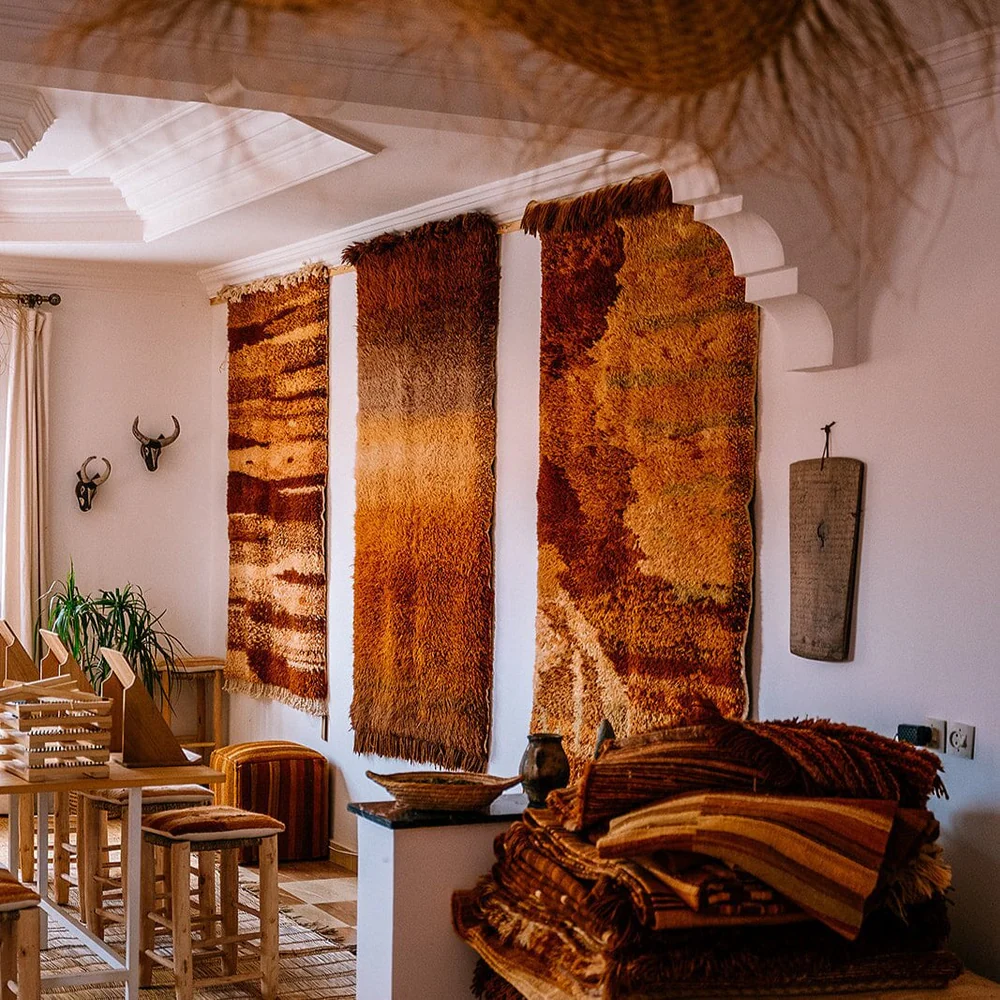
Materials: Wool
Price Range: $468 – $5,213
Types: Mostly rectangular area rugs
Machine Washable? No
Rug Pad? No, they do not appear to carry any of their own at this time.
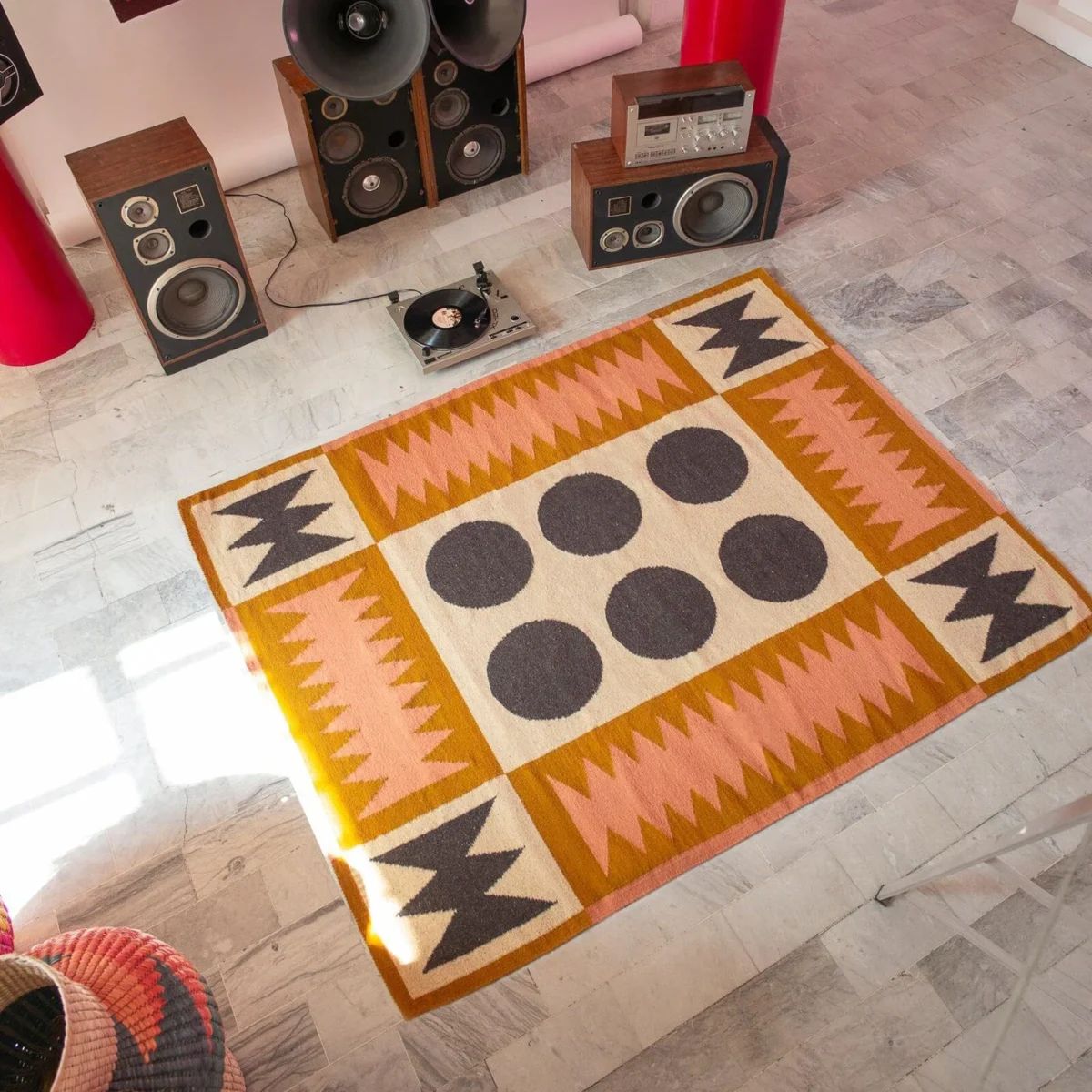
I love Obakki’s collection—they have some of the best non-toxic rugs! They are so beautiful, whether you’re looking for a natural ombré vibe or a colorful block print.
Obakki is a retailer, so they source from several different places, including Mexico, Morocco, and Karoo (a region in South Africa). They use all natural materials, and some of them are even dyed using henna.
Like a lot of the other brands listed here, these rugs are made to order and have a several-week lead time, so keep that in mind when you’re ordering.
Green Design Center
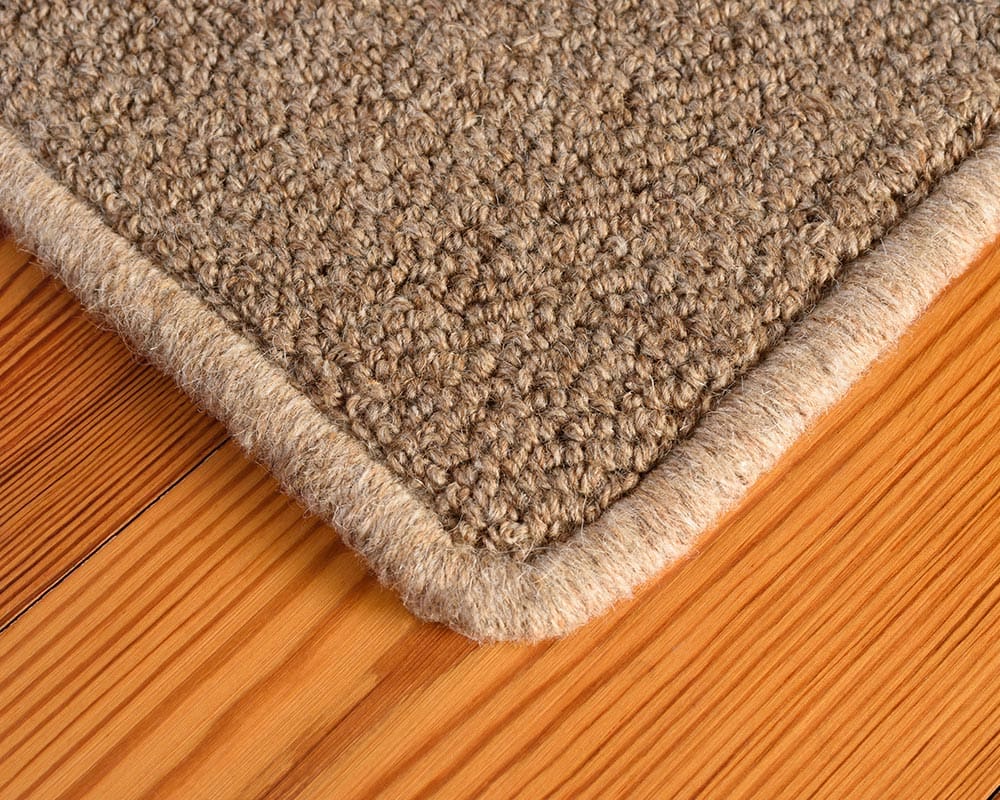
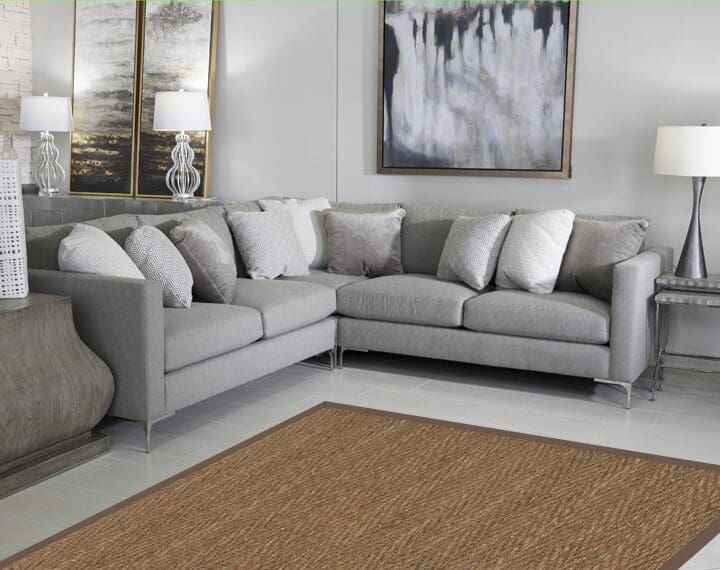
Materials: Wool or seagrass (with cotton/hemp backing)
Price Range: $27.50 per sq. yd. – $1,870
Types: Area rugs and carpeting
Machine Washable? No
Rug Pad? Yes, they have a Natural Wool Non-Slip Rug Pad and a Natural Rubber Rug Gripper
The Green Design Center is an online store and consultancy run by Andy Pace, who has been helping people with chemical sensitivities build healthier homes for a long time now. (I actually had Andy on my members-only podcast to talk about myths and misconceptions around ‘off-gassing’ in the home.)
They carry a bunch of necessities for building a low-tox home, including paints & stains, air purification, flooring, and carpet & rugs.
Earth Weave, Nature’s Carpet, and DMI Seagrass are the main options they carry for rugs and carpeting. You can get completely undyed and untreated rugs, to minimize your exposure to any dyes or other processing chemicals that may have been used.
Most of the rugs they carry are made to order, to there is a long-ish lead time. But, you can order samples of a lot of them, in case that’s helpful for your situation!
Loomy
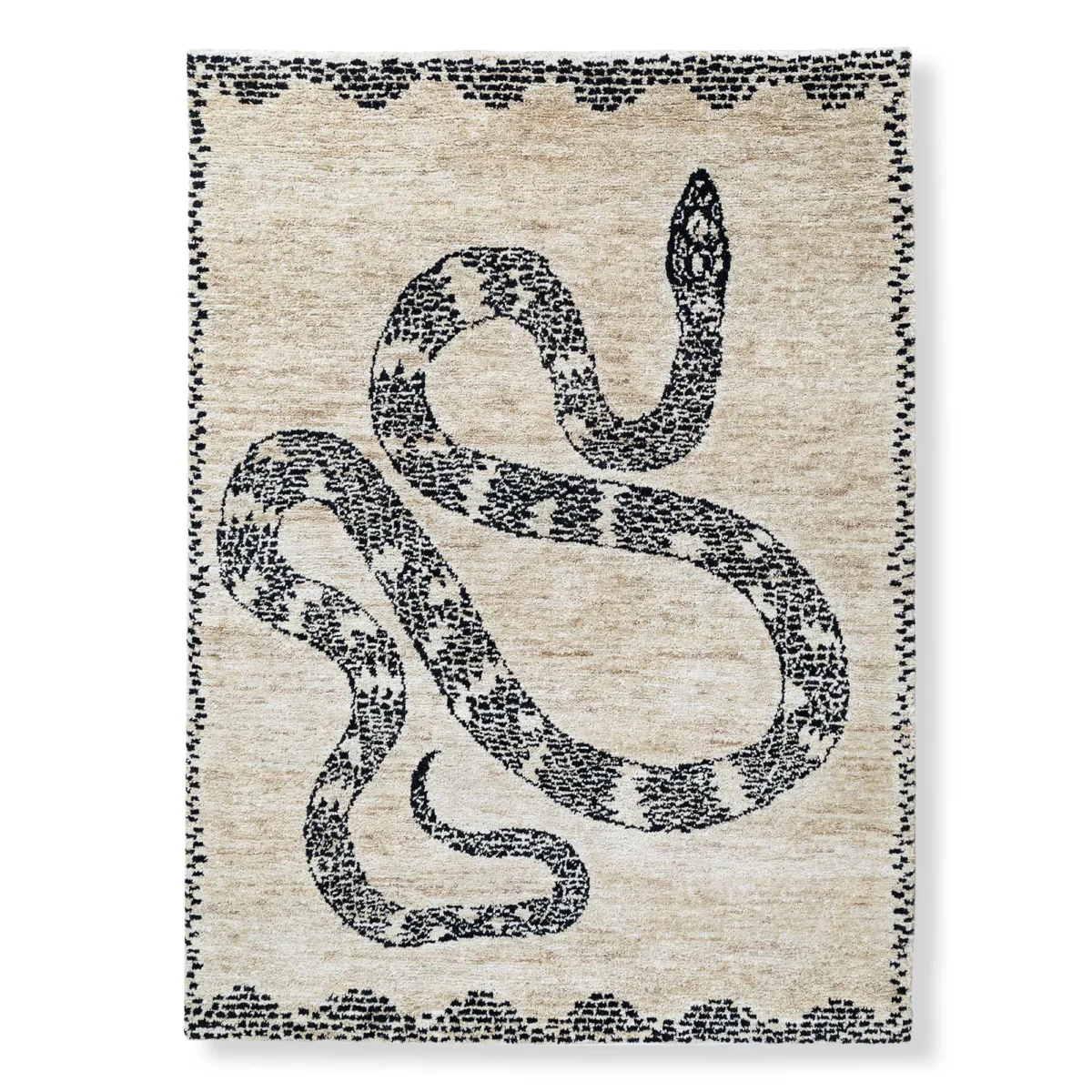
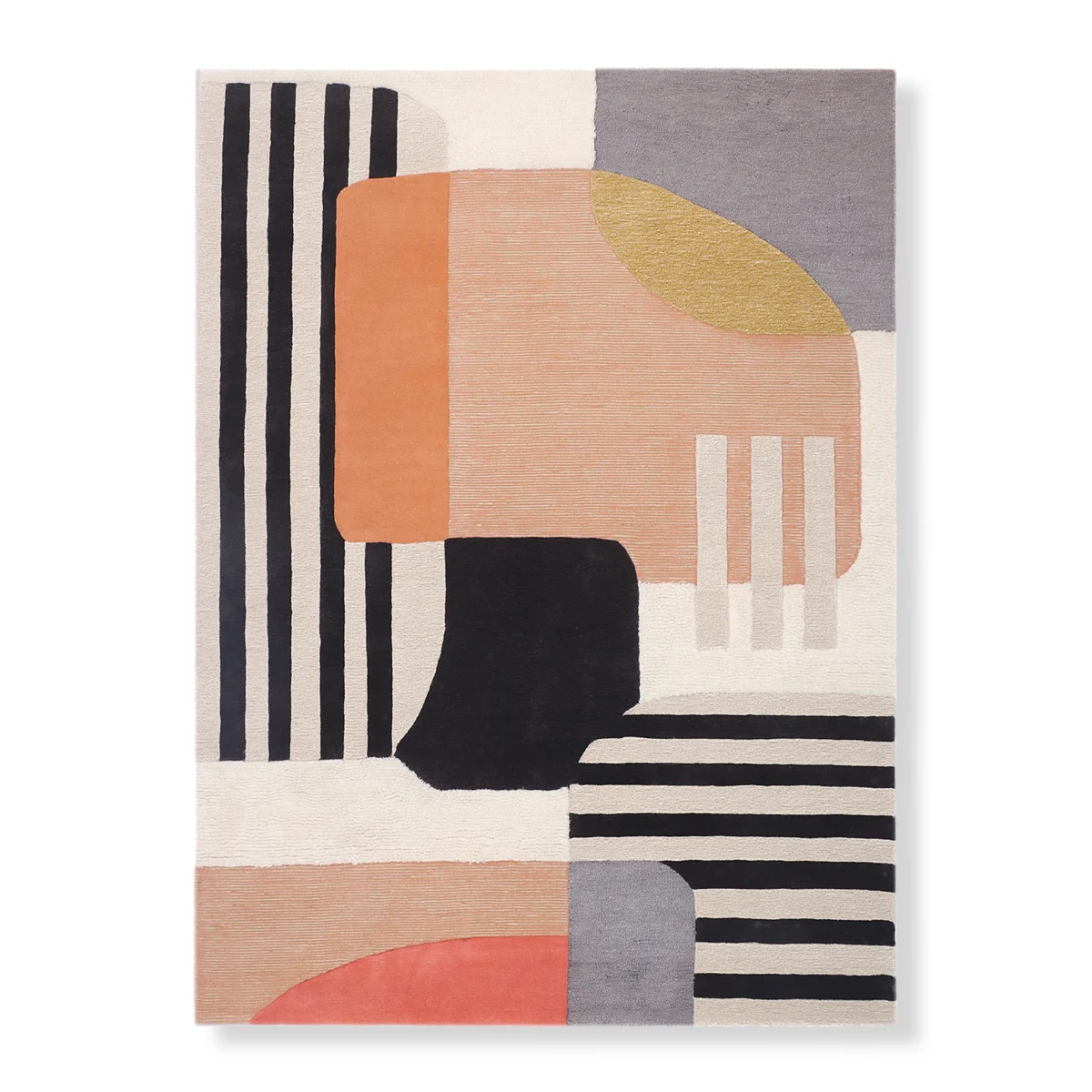
Materials: Wool, jute, cotton, hemp, and/or sisal
Price Range: $198 – $7,598
Types: Area rugs, accent rugs, and runners
Machine Washable? No
Rug Pad? Yes, they have a recycled felt & natural rubber one, a 100% natural rubber gripper one, and a round version.
Not all of Loomy’s rugs are natural, but they do have a pretty good natural collection—all of these rugs are 100% biodegradable at the end of their life.
You can choose between a bunch of different sizes and patterns. They have fun snakes and colorful prints, as well as more solid-colored & minimalistic textures.
Novica
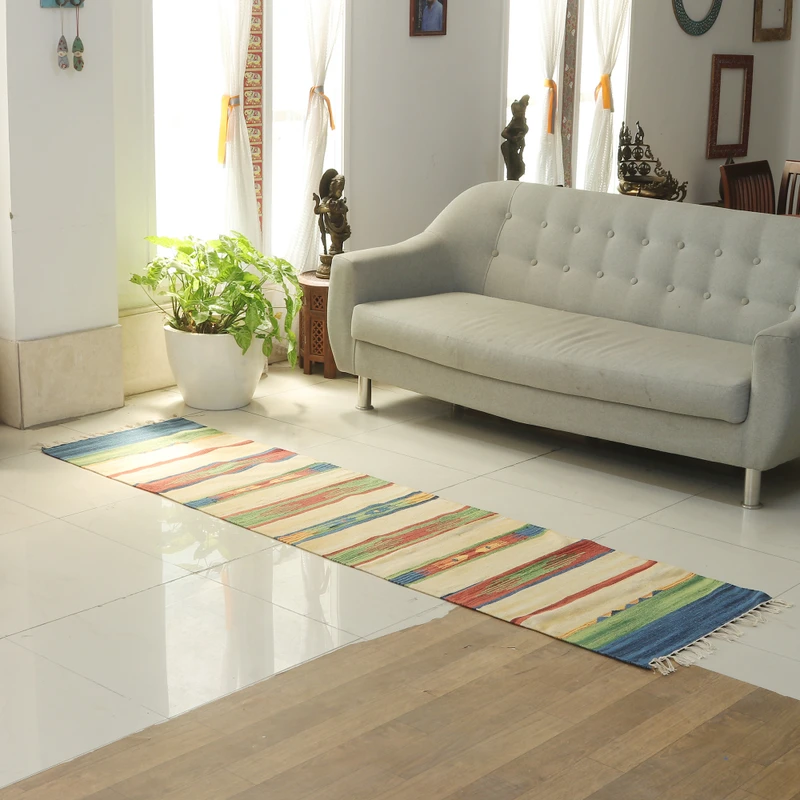
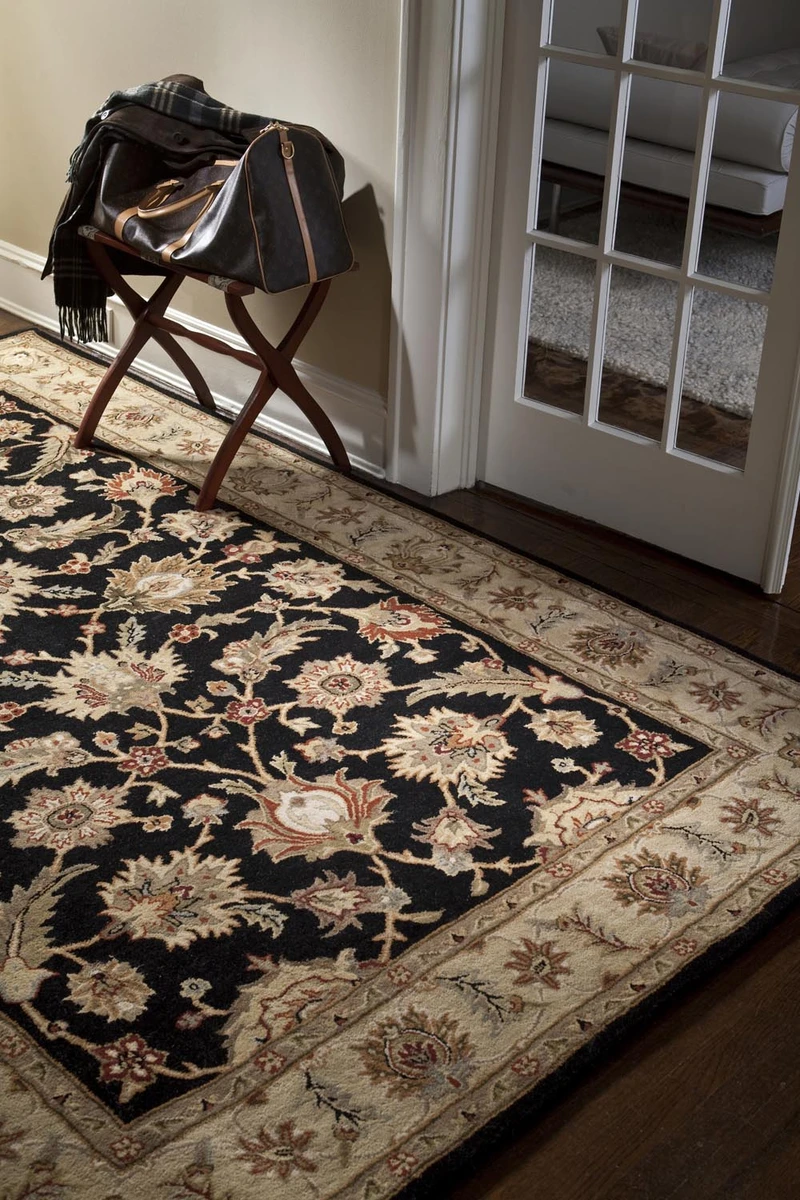
Materials: Mostly wool, cotton, and jute (although they do carry a few polyester and rayon options too, so be sure to check the details before buying)
Price Range: $50 – $11,370
Types: Area rugs, runners, circle rugs
Machine Washable? Some are and some are not.
Rug Pad? No, they do not appear to carry their own at this time.
Novica calls itself an “impact marketplace”—their mission is essentially to connect fair trade artisans from around the world with conscious consumers who want to buy their crafts.
They carry a lot of different rugs and they make it really easy to filter according to what you’re looking for: material, size, shape, where it’s made, color, pattern, or theme.
Note that some of them are made out of synthetic material such as polyester, so be sure to check.
Even MORE Natural Rugs To Choose From!
There are actually a lot more all-natural, organic, and non-toxic rug brands than you might think! Here’s a list of more companies to shop from:
Archive New York: These Zapotec rugs are hand-woven in Teotitlán del Valle, outside of Oaxaca. The folks in this rug-making town have been passing down traditional rug-making techniques for generations! The rugs are made using 100% natural wool and hand-dyed.
Armadillo: This brand makes natural rugs out of wool, jute, and silk. This is the most expensive brand on the list, with prices around $10K. They take part in Living Future’s Declare initiative, which means each piece comes with a label that tells you exactly what is in the product, down to the specific dye ingredients. This makes Armadillo the most transparent brand on this list. Not machine washable.
Ferm Living: They have a variety of rugs that come in various shapes, sizes, and colors. While many of them are made from cotton, wool, and jute, they also use recycled PET (plastic) for some of their rugs too, so be sure to check before buying. They are not machine washable.
FHYGGE: This Barcelona-based brand is available on Etsy. It’s founded and run by an artist and graphic designer. They offer a wide variety of rugs, from rectangular area rugs to round rugs, kids’ rugs, runners, bath mats, door mats, and more. The majority are made of cotton, wool, and jute, but they do use some synthetics too. Some of them can be washed in the washing machine.
Hook & Loom: They do use primarily cotton and wool for their rugs, but some of them are mixed with polyester, so be sure to check. They advertise their rugs are completely dye-free, but a lot of the cotton they use comes from recycled textiles, meaning they do still contain dye (it’s just that the Hook & Loom team does not add more dye when they make the recycled fibers into rugs). They have a lot to choose from. Some of them are machine washable and some are not.
Kiliim: These gorgeous cotton and wool rugs come with manual silk screen-printed patterns that are inspired by various traditional cultures from around the world. They are made in Fowwa, a small village situated along the lush Nile Delta. Not machine washable.
Leah Singh: This designer-led brand works directly with artisans in villages across India to create beautiful rugs made of natural cotton, wool, and jute. Not machine washable.
Mumo Toronto: Most of these rugs are made out of wool or cotton, designed in Canada, and made in Egypt. They carry a wide range of patterns and colors to choose from! They are not machine-washable.
Nordic Knots: This Scandinavian-inspired brand offers area rugs and kids’ rugs that are mostly made of materials like wool, mohair, and jute. Check the details though, because some of them use synthetics like nylon as well (mostly from their plush and performance collections). They are Goodweave certified as well, which verifies that there is no child labor involved. Not machine washable.
Organic Weave: They have a lot of different organic rugs to choose from, most of which are made out of organic cotton and/or organic wool. In addition the wide variety of colors and patterns, they also offer custom-made options. They are Goodweave certified, meaning no forced or child labor is used in production. Most of them are not machine washable.
Pottery Barn: They have a collection of natural rugs that are hand-woven and stitched in India out of a combination of jute, cotton, wool, and/or rayon. They come in various shapes, sizes, and patterns. They are not machine-washable.
Quince: They carry a variety of rugs, some that are all-natural (wool, jute) and some that are not (polyester, polypropylene, faux fur). I would avoid the “stain-resistant” “performance” rugs because they may contain PFAS. These are some of the most affordable rugs on this list. Most of them are not machine washable.
Revival: They have a lot of rugs to choose from. Some of them are made of all-natural materials like wool, jute, cotton, and/or natural latex, and others are made from 100% plastic (like polyester or polypropylene). They have a mix of minimalistic designs and fun patterns. Some are machine-washable and others are not.
Urban Natural: Here’s yet another good place to find natural rugs — just make sure you filter by material to find the natural ones. They mostly use wool and cotton. They are made in India and are not machine washable.
West Elm: As you might imagine, West Elm carries a wide variety of rugs, some of which are natural and some that are not. But, they do make it easy to sort by material, so you can choose wool, TENCEL, jute, and/or cotton. Most of them do not appear to be machine-washable.
Willaby: This is a great place to find organic machine-washable rugs. Some of their rugs are completely dye-free, while others are dyed with non-toxic colors. They use 100% GOTS certified cotton. These are made in the USA as well (designed in Georgia and woven in Ohio).
Is Ruggable Non-Toxic?
Ruggable is probably one of the most popular washable rug brands out there. They have so many different designs to choose from, and their washability and kid/pet-friendliness is one of their main selling points.
The first thing you might want to know is that Ruggable does not have any all-natural rugs. They’re almost all made from polyester (aka plastic).
I will say that Ruggable rugs are PFAS-free, though. They are ‘stain resistant’, but the thing that makes them so is an internal polyurethane barrier that prevents liquid from seeping through the bottom layer of the rug cover.
So, while Ruggable is definitely not at the top of my recommended list, if you really need or want a rug that is both machine-washable and stain-resistant, then Ruggable isn’t the worst option either.
What About a Non-Toxic Rug Pad?
You don’t necessarily need a rug pad. They are optional.
That said, here are some reasons why you might want one:
- Adds grip and prevents the rug from slipping around (depending on what type of flooring you have).
- Adds airflow (which can prevent thinks like mold and mildew).
- Adds padding (which can just be more comfortable on the feet and body).
Ideally, you’ll want to skip the PVC and other plastics and look for natural felt and/or natural rubber instead.
What to Look For in a Non-Toxic Rug (and What to Avoid)
Alright, now let’s talk specifics about what to look for in a non-toxic rug and how I chose the recommended brands I did.
1. Start with safer, plastic-free fibers: Natural fibers (mostly wool, cotton, jute, and sisal) are recommended because they don’t require the same plasticizers and additives that come with many synthetic options.
Most rugs and carpets are made with synthetic fibers like nylon, polypropylene, and polyester. This is all just plastic.
This can lead to more microplastics in your house, which you’ll end up breathing in. In fact, it’s estimated that carpeting can double the amount of microplastics in the home!
Here are the most commonly-used materials in the best natural rugs and why you might want to choose each one:
Wool: It has natural stain-resistant properties due to lanolin and the fiber’s scaly structure, is naturally flame-resistant, and is durable and odor-resistant.
Cotton: It is breathable and soft, can more easily be machine-washable, and can be more affordable.
Jute: It has a soft, earthy texture, is made from a fast-growing plant fiber, and works best in dry, low-to-medium-traffic spaces.
Sisal: It is extremely strong and durable for high-traffic areas, made from natural agave fibers, and offers a firm, textured feel.
You can look for third-party certifications that test the finished product for harmful substances, like OEKO-TEX Standard 100, or that verify organic fiber and restricted processing chemistry, like GOTS for cotton. These certifications are not the end-all-be-all, but they can be helpful.
2. Watch the backing and adhesives: Many area rugs use synthetic latex (SBR) backings and adhesive systems that can be sources of VOCs like 4-PCH and styrene. It’s part of what creates the classic “new carpet smell”.
If you’re sensitive, look for rugs and pads with verified low-emissions claims, and consider airing it out in a ventilated space before use.
Alternatively, you can look for rugs that either do not have a backing or use something like natural latex. (Many of the natural rug brands listed above do not come with a backing.)
3. Avoid PFAS-based stain guards. “Stain-resistant,” “water-repellent,” “Scotchgard™,” and similar claims often signal that toxic PFAS have been added to make the carpet or rug stain-resistant.
If you see these types of claims, don’t hesitate to reach out to the brand and ask them:
a) If there are any intentionally-added PFAS used at all.
b) If there are not, then what makes the rug stain resistant?
4. Pick better rug pads: Skip PVC pads (often the grippy “waffle” kind) because flexible vinyl can contain phthalate plasticizers that migrate to dust and contribute to indoor exposure. (PVC is one of the most toxic types of plastic.)
Choose natural rubber and/or felt instead, and look for low-emission claims where possible.
Do You NEED a Machine-Washable Rug or Not?
The short answer: not necessarily.
Machine-washable rugs are convenient, but they’re not automatically “better,” and they do come with trade-offs. It really depends on your lifestyle, sensitivities, and how you use the space.
✅ Benefits of Machine-Washable Rugs:
- Easy cleaning. Great for high-traffic areas, pets, and kids. Being able to toss a rug in the washing machine can prevent stains from setting and reduce dust, dander, and pollen buildup.
- Helpful for mold-sensitive folks. If you’re dealing with mold illness or CIRS, washable rugs can help because you can clean them more thoroughly and more often. Rugs can trap moisture, dust, and microbial particles, and washing removes what vacuuming can’t.
⚠️ Potential Downsides of Machine-Washable Rugs:
- Most washable rugs are plastic. Many machine-washable rugs are made with synthetic fibers (like polyester or nylon), which shed microplastics into your air and into the waterways when they are washed. As you can see from the list above, there are not a ton of all-natural washable rugs currently on the market.
- Not as plush or durable. Most washable rugs are thin so they fit in the machine. If you love a dense wool pile or a hand-woven texture, washable styles won’t give you the same feel or longevity.
- Drying is key. Anything that takes a long time to dry can still be a mold risk, especially in humid environments. You still want to fully dry washable rugs before putting them back down. (This is another reason why they’re often thinner.)
So… Which Is Best for YOU?
If you have kids, pets, or CIRS/mold sensitivity, a machine-washable rug can make life easier and help control dust and potential microbial buildup.
If you don’t fall into those categories and prefer a more natural, long-lasting, thicker, and/or more textured look, a traditional rug made from natural fibers might be the better fit.
There’s no one “right” answer here: it’s about choosing what supports both your lifestyle and your health needs.
Non-Toxic Rug Cleaners & Rug Maintenance Basics
First and foremost: Always follow the care instructions given for your specific rug. Rugs can be made out of various materials and dyes, and certain types of cleaners can potentially damage them. So always follow the manufacturer’s instructions.
Second, here are some basic maintenance tips for non-machine-washable rugs:
- Vacuum regularly (ideally using a HEPA vacuum, if possible)
- You can also use baking soda as a rug deodorizer!
- Spot-clean as needed with safer cleaners and/or stain removers
- Consider sun-drying or airing out rugs occasionally (UV + airflow helps)
Here are some basic cleaning tips based on specific fibers:
- For Wool: Avoid high-alkaline cleaners, enzyme cleaners, and hydrogen peroxide. They can strip lanolin and damage the fiber. Use wool-safe or neutral-pH cleaners instead.
- For Jute, Sisal, and Seagrass: These fibers can brown or warp when wet, so they shouldn’t get overly saturated. Spot-clean only, and avoid liquid soaking.
My Recommended Brands for Non-Toxic Rug Cleaners:
Personally, I would start with a general all-purpose cleaner, stain remover, or DIY carpet cleaner first, to see if that works for you. If not, you can move on to try one of these stronger carpet cleaning products:
- AFM Carpet Shampoo
- Carpet Details Spot Cleaner for wool
- Puracy (I’m recommending this because it’s ‘clinical-grade,’ but it does contain a skin irritant—benzisothiazolinone—so be careful if you or someone in your home has sensitive skin.)
- Earthworm (Same thing—this one also contains benzisothiazolinone.)
- WoolClean, Spot Removal Kit: This is a 3-part kit. The first part is non-toxic and does not have an odor. The second and third parts do come with some ‘not-great’ ingredients, so I would only use those if you actually have to.
**If using any of these on wool, check the directions first!**
There you go! I hope this guide has helped you find a non-toxic rug that works for your home, family, and lifestyle. If there are any more brands you know of that aren’t included here, leave a comment below and we’ll check it out!
Be sure you’re signed up for our newsletter if you want to stay updated on more non-toxic shopping guides.