
Don’t you haaatttee it when I start out a guide by saying “Sorry, but a perfect option doesn’t exist!” 😆
This is one of those guides.
100% plastic-free band aids are not really a thing, unfortunately. Even if the majority of the bandage is made of natural or plant-based materials, there is usually an adhesive involved that contains at least some plastic…
BUT, that doesn’t mean that some bandages aren’t better than others! (And by ‘better’ I mean less toxic and lower-plastic.) As always, we’re shooting for progress over perfection, right?!
So, for this guide, I’ve researched the best PFAS-free and non-toxic band aids that I personally feel best using.
If you know of any other mostly-natural band aid brands that I’m missing, let me know in the comments!
What this guide includes:
What’s the Deal With PFAS In Band Aids??
PFAS are those toxic “forever chemicals” that everyone is talking about these days. You can find out more about them (and the health concerns they come with) here.
The reason you might be concerned about PFAS in bandages specifically is because of the fact that you’re putting them on open wounds, where they can be absorbed directly into the body and bloodstream.
Back in 2024, independent testing from Mamavation and Environmental Health News (EHN) found indications of PFAS in 65% (26 out of 40) of the bandages they tested. They tested a variety of brands, including THE Band‑Aid band, CVS, Equate, and others.
So far, this is the only instance of independent PFAS testing on band aids that I’ve been able to find.
I will say that the levels of organic fluorine (which is what’s used to indicate PFAS could be present) found were not crazy high for many of the brands. The levels were between between 11 and 328 parts per million (ppm). In general, I honestly don’t worry too much about anything under 100 ppm. (PFAS testing is a tricky thing! If you’re curious to learn more about why this type of testing is not an exact science, check out episode 14 of the Toxin Tidbits podcast.)
Why are there PFAS in band aids? Well, there are a few potential reasons:
- PFAS could be added intentionally in order to increase water-resistance and/or prevent blood from soaking through the fabric part.
- PFAS could end up in the final product via contamination. This can occur when companies don’t mean to add PFAS to their products, but end up there on accident, via the manufacturing process. For example, if a machine is lubricated using PFAS and then those chemicals wipe off of the machine and onto the product during production.
What About the Plastic?
These days, we’re not just trying to reduce PFAS; we’re trying to cut back on plastics and other toxicants of various kinds.
Most conventional band aids are made out of all-plastic. These can include:
- polyethylene
- polyurethane
- PVC (the worst kind, which can release toxic phthalates and dioxins)
- glues & adhesives that contain at least some plastic (and the specific ingredients are almost always undisclosed, unfortunately)
Those with a latex allergy will of course want to watch out for natural rubber and latex in bandages as well.
At least some of these microplastics can be absorbed through the skin. Research has shown that very small microplastics (<4 nm) can be absorbed through undamaged skin, but that larger particles (<45 nm) can penetrate damaged skin.
That means the cut or scrape you’re putting the band aid on is more likely to absorb microplastics (and the toxic chemicals they come with) into your body.
On top of that, there’s the environmental impact as well. Band aids aren’t going to do the same amount of damage as all of the plastic water bottles and packaging that’s currently flooding the soil and waterways, but they’re still single-use products that contribute to microplastic pollution. Switching to plastic-free bandages (or low-plastic at least) might be a small thing, but small things add up, right!?
What to Look For in Non-Toxic Bandages
Here are some things you might want to look for in better bandages:
- PFAS‑free band aids: Keep in mind that companies are not required to tell you if PFAS are used in their products or not. So, looking for brands that are explicitly “PFAS-free” can help provide some transparency and assurance. I still reached out to the brands I researched and asked them how they ensure their bandages are PFAS-free. (For example, do they do regular third-party testing?)
- Bamboo is better: Bamboo fabric is not perfect (you can read more about that here), but I definitely believe it’s better than conventional, petroleum-based plastic. Bamboo is definitely the most common material used for the main fabric part of the natural bandages below, but wool is another option!
- Latex‑free and hypoallergenic adhesives: To minimize skin irritation (especially if you’re allergic, obviously!)
- Compostability: I’m very skeptical about this one, to be honest. Some of the brands below advertise their band aids as compostable, but I don’t see how they can be truly compostable while still using a plastic-based adhesive. I would prefer to see a third-party compostability verification (such as BPI), but I have yet to find a band aid that has that. That being said, I’ve still notated which brands say they are compostable and which ones don’t.
- Low-impact packaging: Compostable and/or refillable wrappers and containers can help cut down on single-use plastic too.
If You’re Looking for PFAS-Free, Non-Toxic, & Natural Band Aids, Theses Brands Are Your Best Bets
As I mentioned in the introduction, there isn’t really a “100% perfect” brand of non-toxic, natural band aid… But I researched a bunch of brands and picked out the best out of what’s available!
Unfortunately, this is definitely a category that lacks transparency, so I did email all of these brands to ask them for more information. I wanted to know more about what is actually in their adhesives, what initiatives they have in place to ensure any PFAS contamination is as low as possible, and more. I waited a couple of weeks, but still have not heard back from several of them. I will continue to update this article if and when I get more info!
Patch
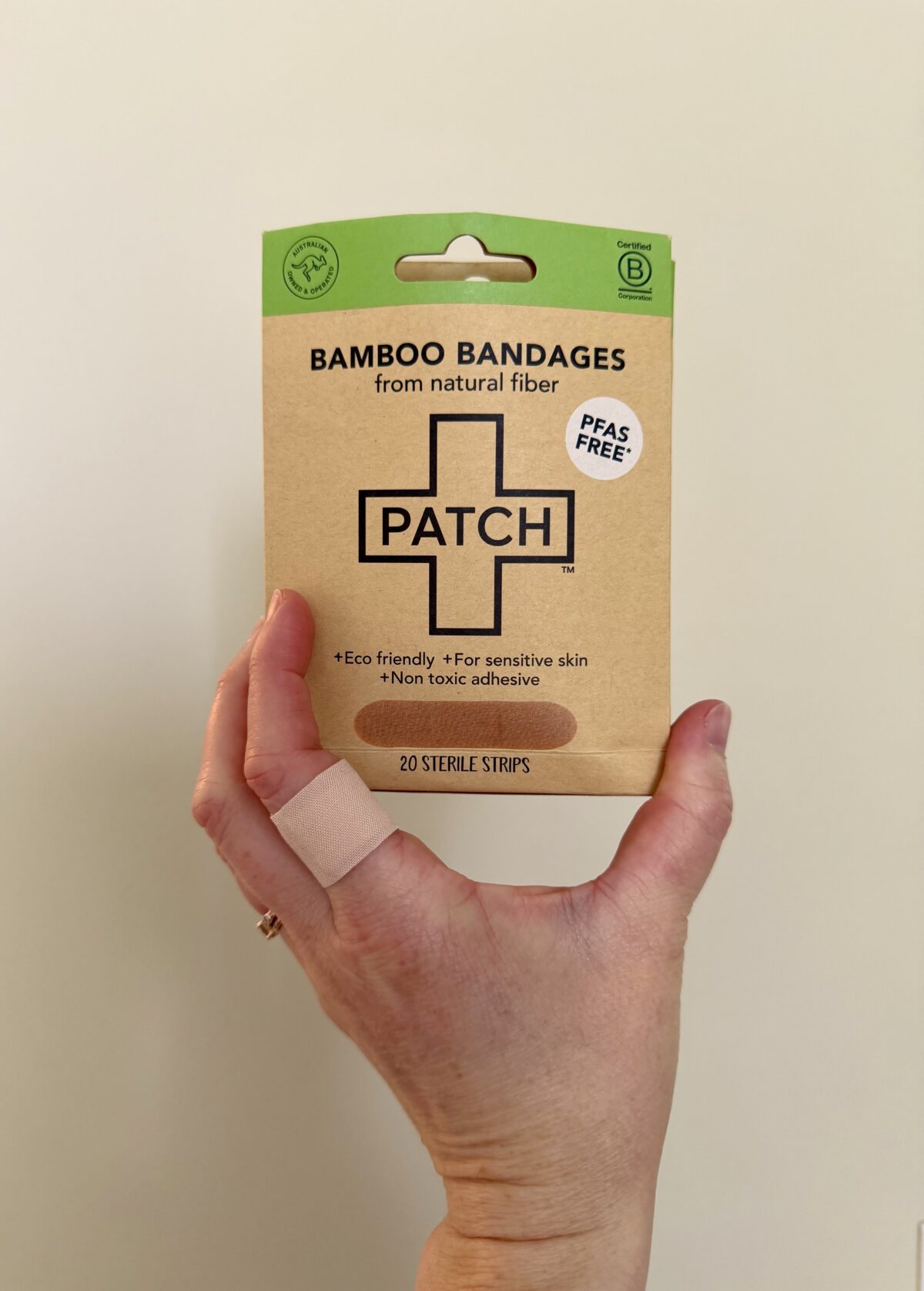

- Carries a wide range of sizes of bandages, first-aid kits, and body tape
- Plastic-free except for the adhesive
Patch’s band aids are made primarily of bamboo, which helps to keep the wound covered while also creating a breathable environment. Some of them come with a coconut oil infused pad, which gives it some natural antimicrobial and antibacterial properties as well.
Some of them have cute panda bears on them, but they also have regular tan ones, too.
On testing:
When I originally published this article, Patch’s website said their band aids were PFAS-free, but when I reached out to them to ask how they knew this (do they do regular testing?), they didn’t really give me a good answer.
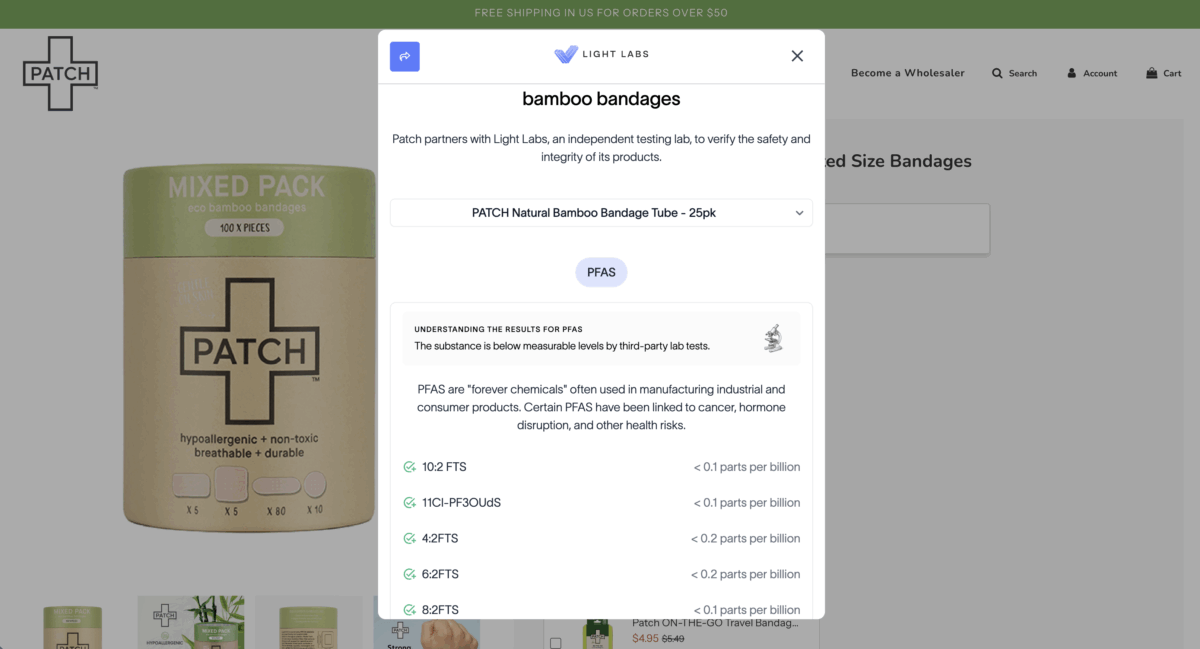
Now, however, I see that they’ve added test results to their product page so that consumers can see for themselves. You can scroll through to see the different types of PFAS they tested for, what the values were, and info about the ISO accredited lab that did the work.
They don’t have testing for all of their band aid varieties, and the test they have published here is a year old, but still… I’ll take it!
Unfortunately, these band aids are not compostable (I’m assuming because of the adhesive).
They’re free from latex and thimerosal (merthiolate/mercury).
My review:
I have used these band aids for a while now and I can say that they hold up just as well as your traditional Band-Aid brand ones. They’re flexible enough to bend well with your body’s joints, they have enough stickiness to get through a good amount of hand-washing, and they’re comfortable and don’t irritate my skin.
FEBU


- Carries a variety of sizes of bandaids in tan color
- Low-plastic, with the exception of the adhesive
FEBU (which stands for For Earth By Us) explicitly says their bandages are PFAS-free. It’s my understanding that they are free from intentionally-added PFAS, so I’ve reached out to them to ask if they also periodically test for contamination. (I wasn’t able to find this information on their website.) They did test non-detect for indications of PFAS in the Mamavation testing.
Like Patch, the main fabric part of the band aid is made from bamboo and they use a “Pressure-Sensitive Adhesive” for the sticky part. They say their band aid has “zero plastics,” but I’ve emailed them to ask what the adhesive is actually made out of.
They say their bandages are compostable as well, but they do not have a third-party certification for that. (Ideally, you’ll want to look for something like the BPI label.) I asked FEBU about this as well because I have doubts that the band aid is truly compostable if the adhesive contains synthetic material.
They are latex-free.
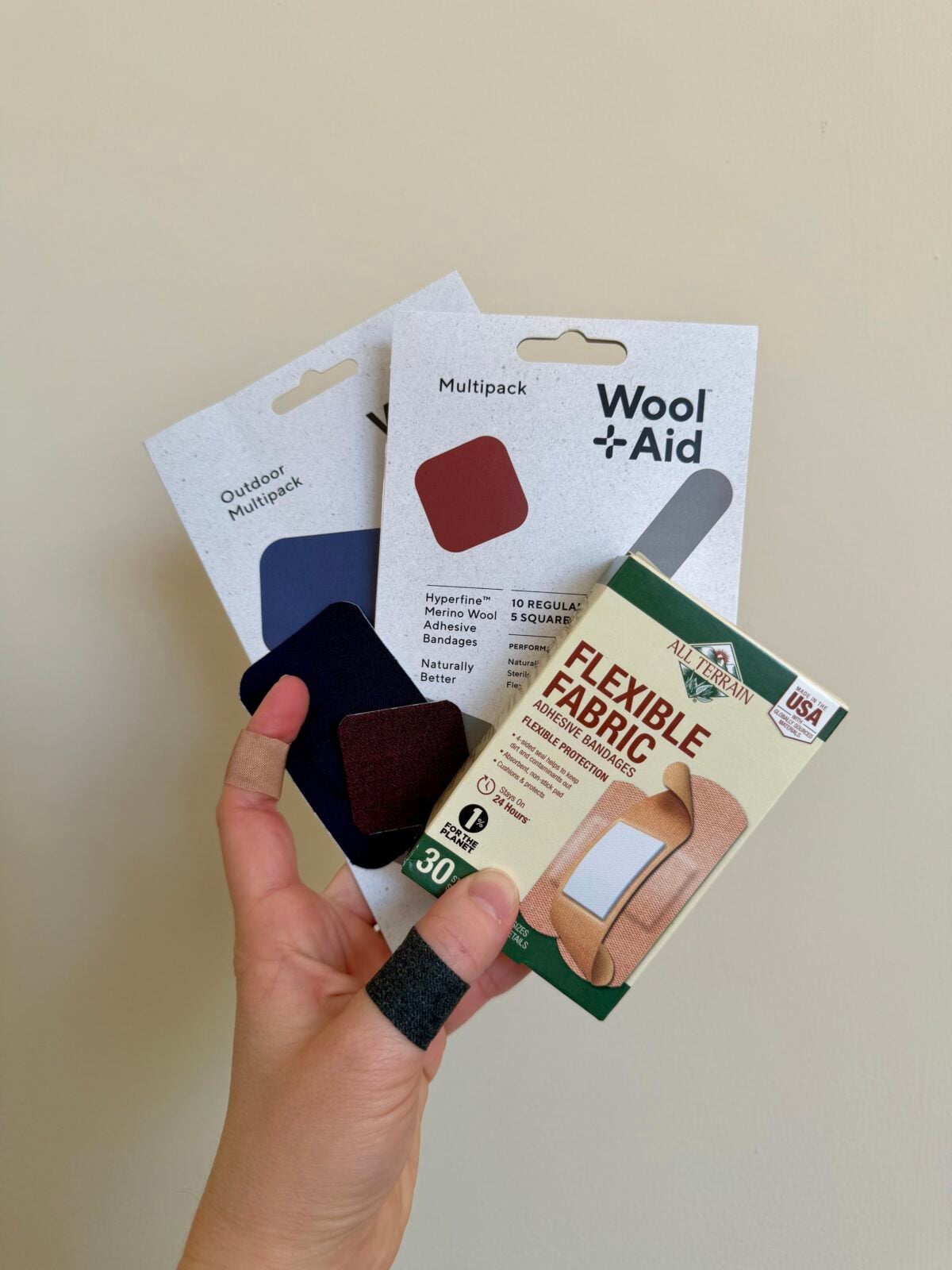
WoolAid
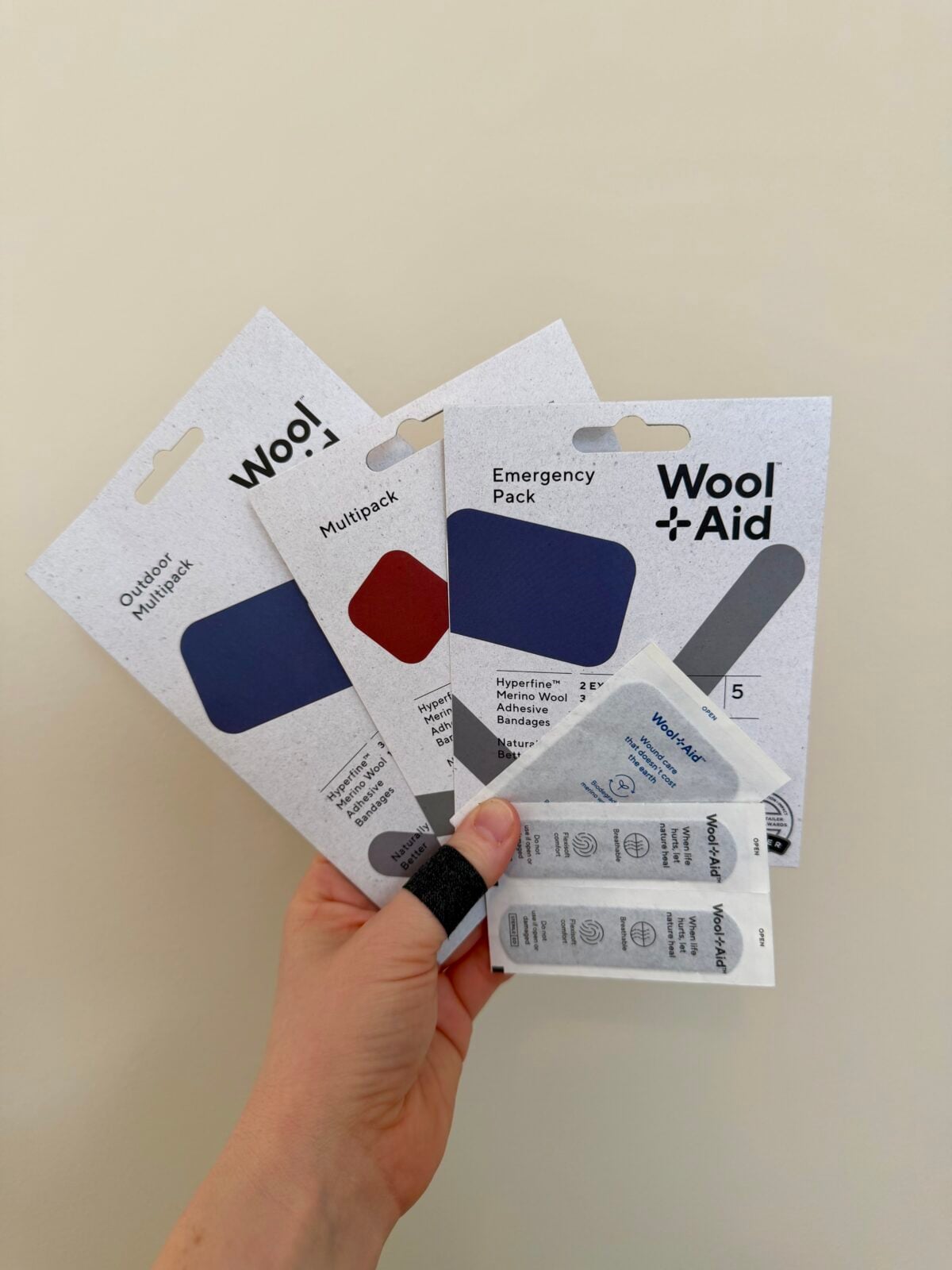
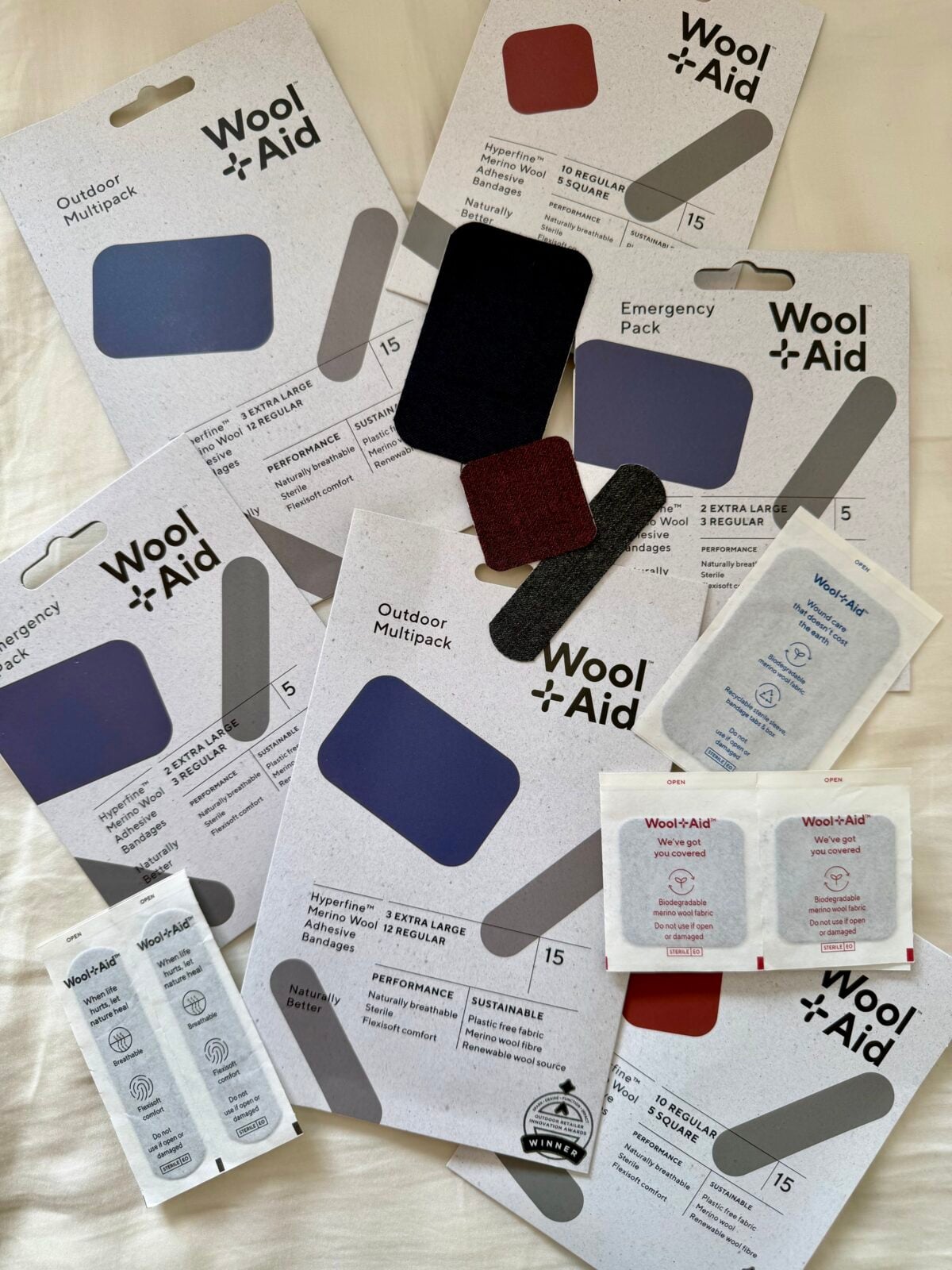
- Carries band aids in various sizes and solid colors
- Low-plastic with the exception of the adhesive
I really like the idea of using wool for bandaids because not only does it reduce plastic but wool also has a lot of natural ‘performance’ properties. It’s semi-water-resistant without having to use PFAS, flexible, breathable, antimicrobial, odor-resistant, and fire/frost resistant. (In other words: this brand is great for hikers and adventurers!)
The fabric of the band aid itself is made of Merino wool, then they combine it with a “medical grade adhesive” and a “60% plant-derived wound pad.”
I’ve reached out to WoolAid to ask them more about potential PFAS testing. I also asked them for more information about biodegradability considering the synthetic adhesive.
Regarding latex, they say there is no latex in the bandage itself, but the sterile sleeve uses latex for sealing.
My Review:
I like these band aids. I find them to work just as well as conventional ones in terms of how long they stay on. They’re flexible and bend well with the skin (they have a fabric feel to them). I also like how they come in different shapes and sizes, including small squares and larger rectangles.
They don’t really have ‘skin colors’—it’s just dark gray, navy, and burgundy.
All things considered, I’d buy these again.
TruColour


- Carries a variety of sizes & shapes of band aids in four different skin tones (beige to dark brown)
- Primarily made of plastic
TruColour band aids are unfortunately made from plastic, but I wanted to include them here in part because they are one of the only brands here that actually offers skin-tone bandages for folks with darker skin.
TruColour says their band aids have “always been 100% PFAS-free.” They say they are lab-tested; however they don’t disclose any details about those tests or how often they occur. They were tested by the Mamavation investigation and were found non-detect for indications of PFAS.
They are latex-free.
Use code THEFILTERY10 for 10% off.
BioSwiss Trutone is another brand that offers bandages in a variety of different skin tones. They are made of plastic and they do not say anything explicit about being PFAS-free the way TruColour does, but they did not test positive for indications of PFAS in the Mamavation testing.
Welly


- Carries a very wide range of different patterns and sizes of bandages that are targeted toward kids
- Made almost entirely of plastic
Welly’s band-aids are made of polyester fabric, which means they are pretty much all plastic.
Welly does not say anything about PFAS on their website, but they did test non-detect for indications of PFAS in Mamavation’s testing.
I reached out to Welly to ask them more about whether or not they test their bandages regularly for PFAS, and here was their response:
“At Welly, we follow rigorous internal and external guidelines to ensure our products are safe and effective. We do not intentionally use PFAS materials in our bandages and to make sure that these chemicals are not present, our bandages are third-party tested for PFAS chemicals. Our testing has shown no PFAS chemicals present.”
if they do any testing for PFAS and will update this if and when I hear back from them!
They are latex-free.
All Better Co.


- Carries your standard size/shape of bandaid
- Made of bamboo fabric, plant-based pad, and medical-grade PSA glue
All Better Co. says these bandages are compostable (although they don’t come with a certification at the time of this publication).
I have not been able to find anything out about PFAS in these band aids. The company does not say anything on their website about the bandages bring free from intentionally-added PFAS, and I have not seen any other independent testing for these ones. I did reach out to them to ask for more information, but I haven’t heard back yet. I will update this if/when I do!
All Terrain
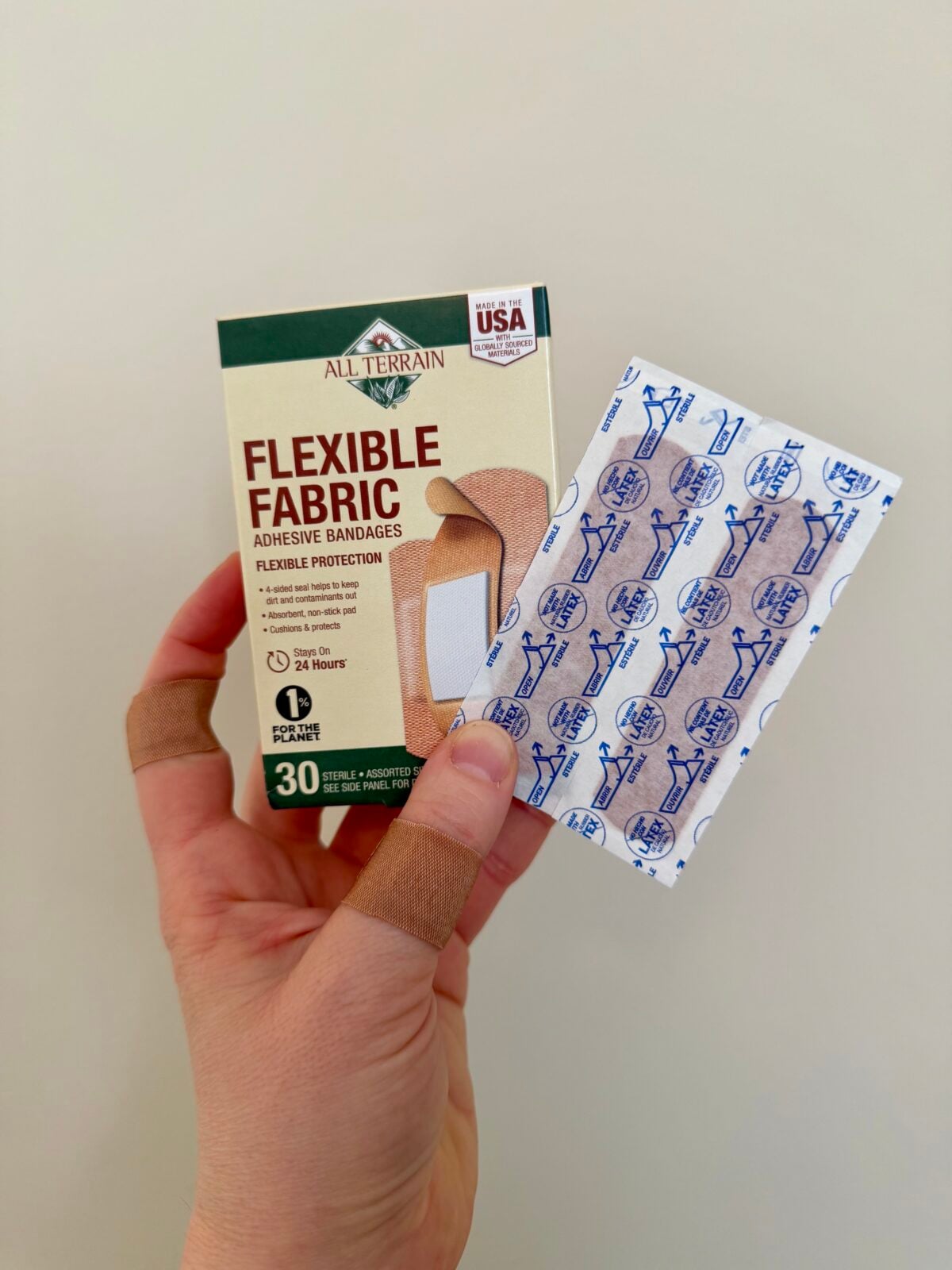

- Carries regular, sheer, and neon band aids
- They are not transparent about the materials they use]
All Terrain is a nature-focused brand that started out making non-toxic insect repellent. But for all of their environmentally-friendly branding, I really wish they were more transparent about WHAT their band aids are actually made of!
I have to assume they are mostly plastic, since they don’t say otherwise… They did, however, test non-detect for PFAS in the Mamavation testing.
These are free from latex and natural rubber.
My review:
I’ve tried their Flexible Fabric bandages, and they work well! They live up to their name—they’re flexible and bend well with my finger joints. In terms of stickiness, I’d say they last just as long as the regular Band Aid brand.
They do have different colors for kids as well as a sheer option, but for their ‘skin tone’ ones, they only have that tan color.
Overall, I’d buy these again.
I hope this guide has been helpful! If you have any follow-up questions, or if you know of an additional brand you think should be added, let me know in the comments below.