
Non-toxic insect repellent is a tough one. The risks of using a bug spray that doesn’t work are higher than with a lot of other categories.
If you try a natural mascara, for example, and it doesn’t work, no big deal. You’ll walk around with non-voluminous lashes and you might get some black flakes on your eyelids.
But the potential consequences of getting bit by a mosquito or tick are much higher.
That’s why I personally think choosing which insect repellent to use and when is more of a strategic decision.
You’ll want to consider things like:
- Location: Are you in an area with higher cases of West Nile, Zika, Lyme, dengue fever, or other bug-borne diseases? (Bear in mind, of course, that these things spread! So just because you weren’t in a “hot zone” five years ago doesn’t necessarily mean you aren’t now.)
- Individual susceptibility: Will they ever really figure out how some folks—like myself!—get bit constantly, while others seem to be immune?
- Medical history: If you already have Lyme or have had it in the past, you will probably want to be more stringent about your insect repellent.
- Frequency of use: Are you only using it every once in a while, or on a regular basis?
- Activity: Are you just sitting on the porch for an hour or are you doing a day-long hike in the deep woods? The repellent you choose for each of those activities might differ.
We're covering a lot in this guide!
- How Bug Spray Is Regulated
- Active Ingredients Approved for Registration
- Unregistered Active Ingredients
- Full Ingredient Disclosure is NOT Required for Insect Repellent
- Picaridin
- IR3535
- DEET
- Oil of Lemon Eucualyptus (OLE) and Its Derivative Para-menthane-diol (PMD)
- Citronella
- Other Plant & Essential Oils
- What About Permethrin-Treated Clothing?
- What About Insect Repellent Wristbands & Stickers?
- More Ways to Protect Yourself Against Bug Borne Diseases
This guide contains product recommendations and we may receive compensation if you purchase through certain links. As always, we only make recommendations that are genuine!
How Bug Spray Is Regulated
There are two basic categories that personal insect repellent sold in the U.S. can fall into: registered and unregistered.
Registered repellents use one of the EPA-approved active ingredients listed below and are registered with the EPA’s database.
Unregistered repellents have been evaluated by the EPA for safety, but not effectiveness. In other words, their active ingredients are approved as generally safe to use and are therefore approved to be sold in the U.S., but they cannot be registered in their database. Unregistered products usually contain a mix of plant-based and/or essential oils (like lemongrass, rosemary, etc.). The main reason they’re not approved for registration is that their bug repellent capabilities don’t last as long as the active ingredients in registered products.
Active Ingredients Approved for Registration
Registered active ingredients include:
- DEET
- Picaridin
- IR3535
- Oil of lemon eucalyptus (OLE). (This is NOT the same as pure, essential oil of lemon eucalyptus—we’ll get to that in a minute.)
- Para-menthane-diol (PMD), which is the active ingredient / synthetic version of OLE
- Citronella / citronella oil
(Catnip oil and 2-undecanone are also included in that list, but they aren’t really used very much.)
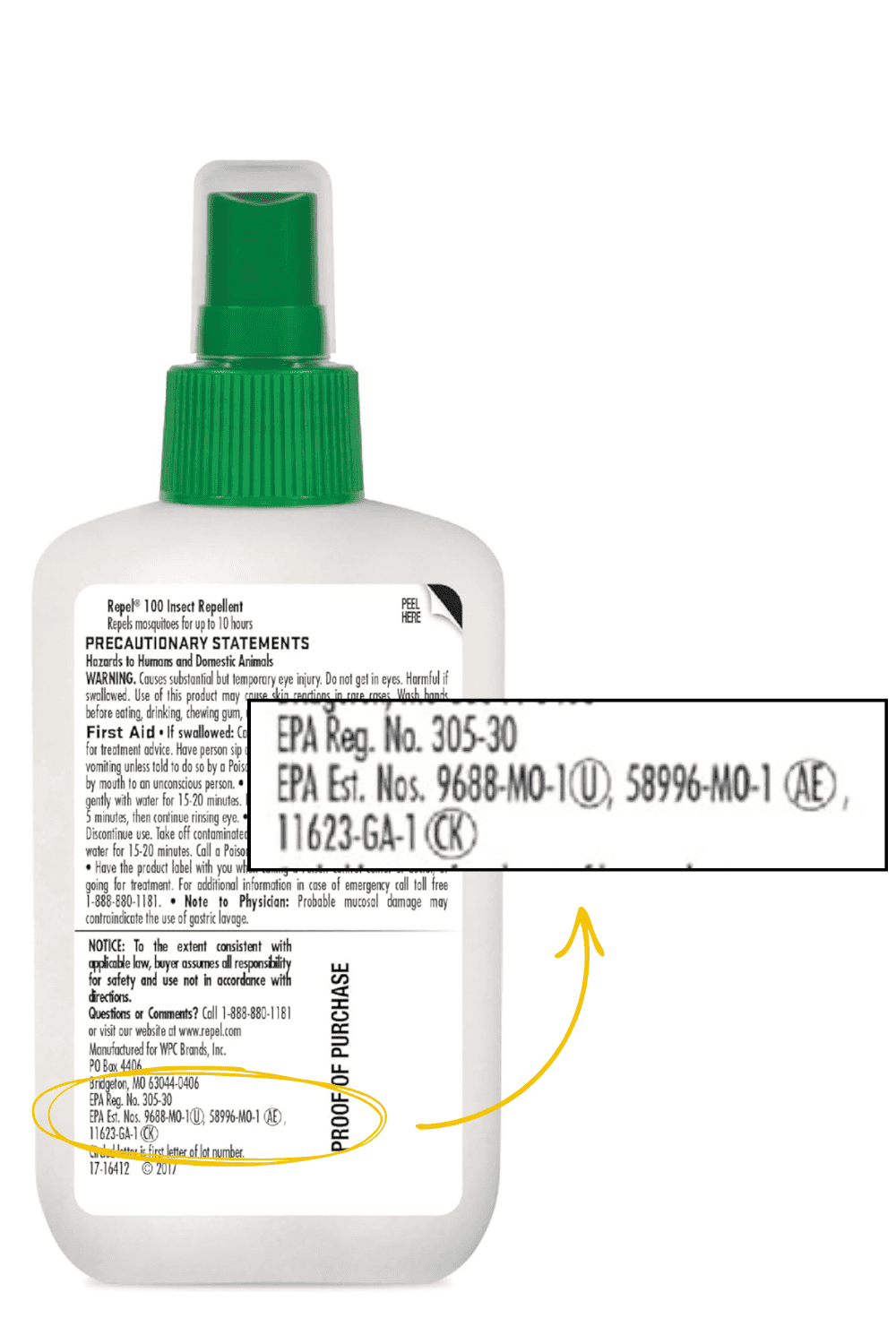
Bug sprays and lotions that use one of these as the active ingredient can be registered with the EPA and you can search for registered products in the EPA’s database. You can also find an EPA registration number on the back of registered products, like this Repel bug spray, for example:
It may be worth noting that the active ingredients listed above are also approved for use in insect repellents in Europe and Canada. (Citronella is the exception in Europe, and we’ll discuss that more later.)
In the E.U., insect repellents are regulated by Europe’s Biocidal Products Regulation (BPR). In Canada, they’re regulated by the Health Canada’s Pest Management Regulatory Agency (PMRA). Both of these work similarly to the EPA’s registration system.
I was not able to find any active ingredients that are approved for use in Europe but are not approved in the US.
There are some places that have restricted the concentration of some of these ingredients. For example, Canada banned the sale of bug sprays with DEET concentrations over 30%. (They also recommend that if used on children between the ages and 2 and 12, the concentration should only be 10% or less.)
Unregistered Active Ingredients
As I mentioned, the active ingredients listed below are approved for use in bug sprays but they do not qualify for EPA registration, mostly because they’re just don’t last as long.
Examples of unregistered active ingredients include:
- Lemongrass
- Rosemary
- Cedar
- Geranium
- Peppermint
- Cinnamon
- Citronella (yes, this one is used in some registered and some unregistered products in the US)
- Soybean
- and others
Full Ingredient Disclosure is NOT Required for Insect Repellent
While brands are required to label their products with the active ingredient and concentration, they are not required to publish the inactive ingredients (which is usually 80-90% of the formulation).
This is frustrating because I believe consumers deserve to know what’s in the products they spend their money on and put on their bodies. It doesn’t make a lot of sense to me that companies would be required to tell you what’s in their regular lotion, but not their bug spray lotion.
Many brands still label their inactive ingredients, which I appreciate, but many don’t. As you’ll see in a minute, this makes picking out the *perfect* bug spray a real problem!
Okay, now let’s go through each category of active ingredient.
Picaridin
For me, picaridin is a top choice.
It was approved in Europe and Australia in 1998, and it’s now the most popular active ingredient for insect repellent in Europe. It wasn’t approved for use in the United States until 2005.
It’s been shown to be just as effective as DEET at repelling mosquitos and ticks.
Picaridin is preferred by many is because:
- it is non-greasy & non-sticky
- it doesn’t have as strong of a scent as some of the other ones (like DEET)
- it’s safer than DEET and doesn’t come with as much risk of skin or respiratory irritation
- it also doesn’t harm fabrics and other materials the way DEET can
When it comes to acute toxicity, the risk to using picaridin-based insect repellents as directed is very low. Just like with every other active ingredient we’ll talk about here, there is potential for skin, eye, and respiratory irritation, but picaridin seems to have the least potential out of all of them.
One 2016 study looked at all of the calls to poison control between 2000 and 2015 and found that only one person ended up in the hospital for an acute reaction.
When it comes to chronic exposure, there seems to be little risk as well. For example, in animal studies, mice and rats did not develop cancer after picaridin was applied to their skin for two years. As of this time, there is no evidence that it could be endocrine-disruptive either.
However, I will say that the data is not as robust for picaridin as it is for DEET, so I do hope researchers continue evaluating its safety.
If you use Picaridin, you’ll want to look for a concentration of 20% and not more.
Now, the problem with picaridin in the U.S. is that there aren’t a TON of options, but the market is growing.
These are my top picks:
- Boogie Insect Repellent Lotion – Fragrance Free. 20% picaridin. Lotion. This is probably one of the best options, in my opinion. It’s legit fragrance-free (no hidden undisclosed “fragrance”) and you don’t have to worry about breathing in a spray. I’m not very worried about the other inactive ingredients (despite the fact that it was difficult to find them).
- Earthkind: 20% picaridin. Pump spray. It was difficult to find their inactive ingredients, so I reached out to ask. They told me it’s just ethanol, glycerin, and water. I’m happy with that.
- OFF! Clean Feel Spritz. 20% picaridin. Spray. This classic bug spray brand carries several different picaridin options. Their ingredients were difficult to find, but I finally found them here. Even though I’d usually recommend a gel option so that you don’t have to worry about inhalation, the inert ingredients of the pump spray are actually better when it comes to this brand, so that’s the one I’d prefer. (They’re all fragrance-free, though.)
- Grand Tongo Fragrance-Free. 20% picaridin. Spray. Their spray is made with ambient air instead of propellents like propane, so you don’t have to worry about the benzene contamination issue. It is fragrance-free. (They do have scented options as well.) The only potentially concerning ingredient in this one is polyethylene glycol, which is not great but I’m not too worried about that in the grand scheme of things.
These are my “okay” picks:
- Natrapel Picaridin Tick & Insect Repellent. 20% picaridin. Spray or wipes. While it contains very minimal ingredients, it does include polyethylene glycol (an ethoxylated ingredient) and undisclosed “fragrance.” I contacted them to ask for more info about their fragrance and whether or not it’s at least phthalate-free, but I haven’t heard back from them. They also carry OLE options and essential oil options. Their continuous spray is non-aerosol, so you probably don’t have to worry about benzene contamination on that one.
- Ranger Ready Picaridin Insect Repellent Spray – Scent Zero. 20% picaridin. Pump spray. This formula is pretty much identical to the one above—it does contain polyethylene glycol and undisclosed “fragrance.” I also reached out to them to ask for more information about their “fragrance” and whether or not it’s at least phthalate-free, but I haven’t heard back yet. (Note: be careful because some Ranger Ready varieties contain permethrin, which I do not recommend. More on that below.)
These are my least favorite picks, mostly because they don’t list their full ingredients and I have yet to get any further information from them:
- Sawyer: This is a disappointing one because Sawyer seems to be a well-liked brand and I like that they have a lotion option. However, they don’t publish their full ingredient list anywhere. When I emailed them to ask about it, they told me they can’t tell me because it’s “proprietary.”
- Proven: I wasn’t able to find the full ingredient list for this brand either. I emailed them to ask and will update if I ever get an answer.
IR3535
IR3535 is another active ingredient that has been used in Europe since the mid-1970s and got approved for use in the United States in 1999.
A 2014 evaluation of IR3535 by the European Chemicals Agency states:
“IR3535® is not carcinogenic, mutagenic or teratogenic. No indication or data for IR3535® are available that indicate potential endocrine disruptive properties.”
One of the biggest downsides to IR3535 is that it can be more irritating to the eyes compared to both picaridin and DEET.
Some research has shown IR3535 to be not as effective as DEET (basically that it doesn’t last as long), although the research on this does seem to be mixed.
Like DEET, IR3535 can damage fabrics, plastics, and other materials, so you’ll want to be mindful of where you apply it.
You’ll want to look for 20% concentration or less.
There aren’t a ton of options for IR3535 available in the U.S. at this time either. Here are some of them (and why I don’t really recommend them):
- Avon Skin So Soft Bug Guard Plus IR3535® Expedition™ Aerosol Spray SPF 28: 19.7% IR3535. Aerosol spray. This is the only one I could find that actually lists all of the ingredients. It is fragrance-free, which is good. But I still wouldn’t strongly recommend it since a) it’s an aerosol, b) it uses several sunscreen ingredients I would not recommend. (More on the sunscreen + bug spray issue below.)
- Repel. 20% IR3535. Aersol spray. This one is labeled as “fragrance-free,” but it doesn’t list the full ingredients. Plus, I don’t usually recommend aerosol sprays if you can avoid it. I reached out to them as well to see if I could get more info about the inactive ingredients, but I haven’t heard back yet.
- Zevo On Body: 10-20% IR3535. Lotion or spray. Unfortunately, I wasn’t able to find their full ingredient list anywhere. I reached out to them for more information and they would not give it to me because it’s “proprietary.”
DEET
How toxic DEET can be is debated, but there’s no question that it comes with risks and is not as safe as picaridin.
DEET is neurotoxic in large doses, primarily with inhalation or oral exposure. DEET can cause seizures, uncoordinated movements, agitation, aggressive behavior, low blood pressure, and skin irritation—especially after long-term exposure.
I have not found any compelling evidence that DEET can cause cancer. There doesn’t seem to be any data at all about whether or not DEET might have endocrine-disrupting effects.
One thing I found surprising is that, in a 2002 study which looked at 20,764 reports of DEET-related calls to the poison control centers between 1993 to 1997, the infants and children actually experienced lower rates of adverse effects than teens or adults!
Since the safer and just-as-effective picaridin is available, I don’t really recommend DEET-based insect repellents most of the time, so I’m not going to list any here.
That said: If I’m in a situation where I’m in a tick-infested area and DEET is my only option, I will still choose a DEET-based insect repellent. Again, to me, the risks of contracting something like Lyme disease outweigh the risks of DEET exposure, especially when we’re talking about the short-term. For more long-term use, I hope I will be better prepared with something else, like picaridin.
If you do use DEET, look for concentrations of 30% or less.
Oil of Lemon Eucualyptus (OLE) and Its Derivative Para-menthane-diol (PMD)
OLE is the only natural insect repellent active ingredient that’s approved for registration with the EPA.
OLE is the most irritating to the eyes out of all the ingredients we’ve discussed so far. It’s also not recommended for use on children under 3 years old because it hasn’t been studied enough in babies and toddlers.
Of the research currently available, I have not found evidence or carcinogenicity, endocrine-disruption, or other longterm health effects.
It’s important to note that oil of lemon eucalyptus (OLE) is not the same thing as lemon eucalyptus essential oil, despite the fact that they sound very similar!
While both can come from the leaves of the lemon eucalyptus tree, OLE is an extract that primarily contains PMD, while the essential oil contains other chemical components too (such as citronellal).
PMD can also be made synthetically in a lab.
Some research has shown OLE and PMD to be less effective than DEET, and that you may need to apply it more frequently and potentially use a stronger concentration. But again, the research on this is mixed and seems to depend on which specific insects we’re trying to repel.
Like picaridin, it’s non-greasy, doesn’t smell bad, and doesn’t harm your fabrics and other materials.
You’ll want to look for 30-40% concentration for OLE and anywhere from 10-30% for PMD.
Here are some OLE/PMD options:
- Anthos Botanica. 30% OLE. Pump spray. This is a good one because the only inert ingredients are corn ethyl and distilled water.
- Murphy’s Mosquito & Tick Repellent: 30% OLE. Pump and aerosol spray. Murphy’s carries a variety of options (sprays, balms, wipes, candles, etc). Some of them (like the sprays) use OLE, while others (like the wipes and balm) use a blend of essential oils. Inert ingredients in the OLE ones include water and corn ethanol. I like that this one can often be found in big box stores.
- Natrapel: 30% OLE. Spray. I mentioned above that Natrapel carries picaridin, OLE, and essential oil options. While their picaridin options contain undisclosed fragrance, the OLE products only contain OLE, water, and alcohol.
- OFF! Botanicals. 9-10% PMD. Spray, wipes, and lotion. The inactive ingredients in these are not amazing, so this wouldn’t be my first choice, but they are at least all free from undisclosed “fragrance.”
- Repel and Cutter also carry PMD insect repellents, but unfortunately I wasn’t able to find the full ingredient lists for those.
Citronella
Citronella can be found in both registered and unregistered insect repellents in the U.S.
The EU banned the sale of insecticides containing citronella in 2006. Canada has been back and forth on citronella: they recommended a phase-out in 2004, banned it in insect repellents in 2012, then reversed the ban in 2015.
(These bans do NOT apply to other uses of citronella though, like for candles or perfumes.)
These bans are a bit controversial and mysterious, if I’m being honest, but they seem to be due to a combination of the fact that citronella isn’t as effective as DEET and the fact that there is not enough robust safety data on it.
The main concern seems to be regarding methyleugenol, which is one of the compounds in citronella oil. It has been found to cause liver tumors in rats when consumed in large doses. And while this should absolutely be studied more, it’s not super concerning to me personally at this time because:
- This does not apply to skin application.
- Geraniol, another major component of citronella oil, has been found to reduce the growth of some cancers. So while methyleugenol by itself may come with some risks, there doesn’t seem to be concern when the whole plant oil is used. (Although, again, I do think we could use more robust data on this.)
All of that said, follow your gut! If you want to take the precautionary approach and avoid citronella out of caution, go for it.
There is currently no evidence of endocrine-disruption capabilities.
The primary concern with citronella is skin and eye irritation. For some people, it can cause skin allergies with prolonged or frequent exposure.
I included the products that use citronella in the category below because many of them combine citronella with other plant oils.
Other Plant & Essential Oils
You’ll find that a lot of the natural insect repellents use some combination of the following plant / essential oils:
- Lemongrass
- Rosemary
- Cedar
- Geranium
- Peppermint
- Citronella
- Eucalyptus
- Cinnamon
- Soybean (soybean oil has been shown to have some insect repellent properties, so many natural bug sprays use it as a base)
- and others
These oils are allowed in bug sprays, but products that use these as their active ingredients cannot be registered with the EPA.
(The only two that are not allowed in insect repellents in Europe specifically are citronella and tea tree.)
The primary problem with these oils is that they are volatile, which means they evaporate quickly off the skin and therefore just don’t last as long as DEET, IR3535, picaridin, and OLE/PMD.
Some of these insect repellents need to be re-applied every 30-60 minutes. Not only is it less realistic that people are actually going to re-apply that often (and therefore may put themselves at higher risk for bites), but I don’t love the fact that this increases the sheer amount of repellent we’d get exposed to over the course of a day.
The other concern is that they have the potential to cause irritation and/or allergies after longterm use. (If you haven’t noticed the pattern yet, irritation is a risk with pretty much any type of bug spray.)
I don’t personally have any allergies or sensitivities to these oils, so I don’t have a problem using these natural options. If you or someone in your family has sensitive skin or known allergies to any of these oils, you’ll obviously want to be careful.
For me personally, my general approach is that I will use these more natural repellents for low-key evenings at home and when I don’t necessarily need something “heavy duty” and long-lasting. For me, it’s not just about the active ingredients but also the fact that most of the brands below are much more transparent about their inactive ingredients as well.
But then, if I go camping or on a long, deep woods hike, or if I’m traveling in an area where the risk of bug borne illness is higher, I will switch to one of the options above (preferably picaridin).
This is the approach I take, but you’ll have to figure out what works for you!
All of that said, here are some of the natural insect repellents that are worth checking out. As you’ll see, there are a lot more options in this category and it was much easier to find brands that actually publish their full ingredient list.
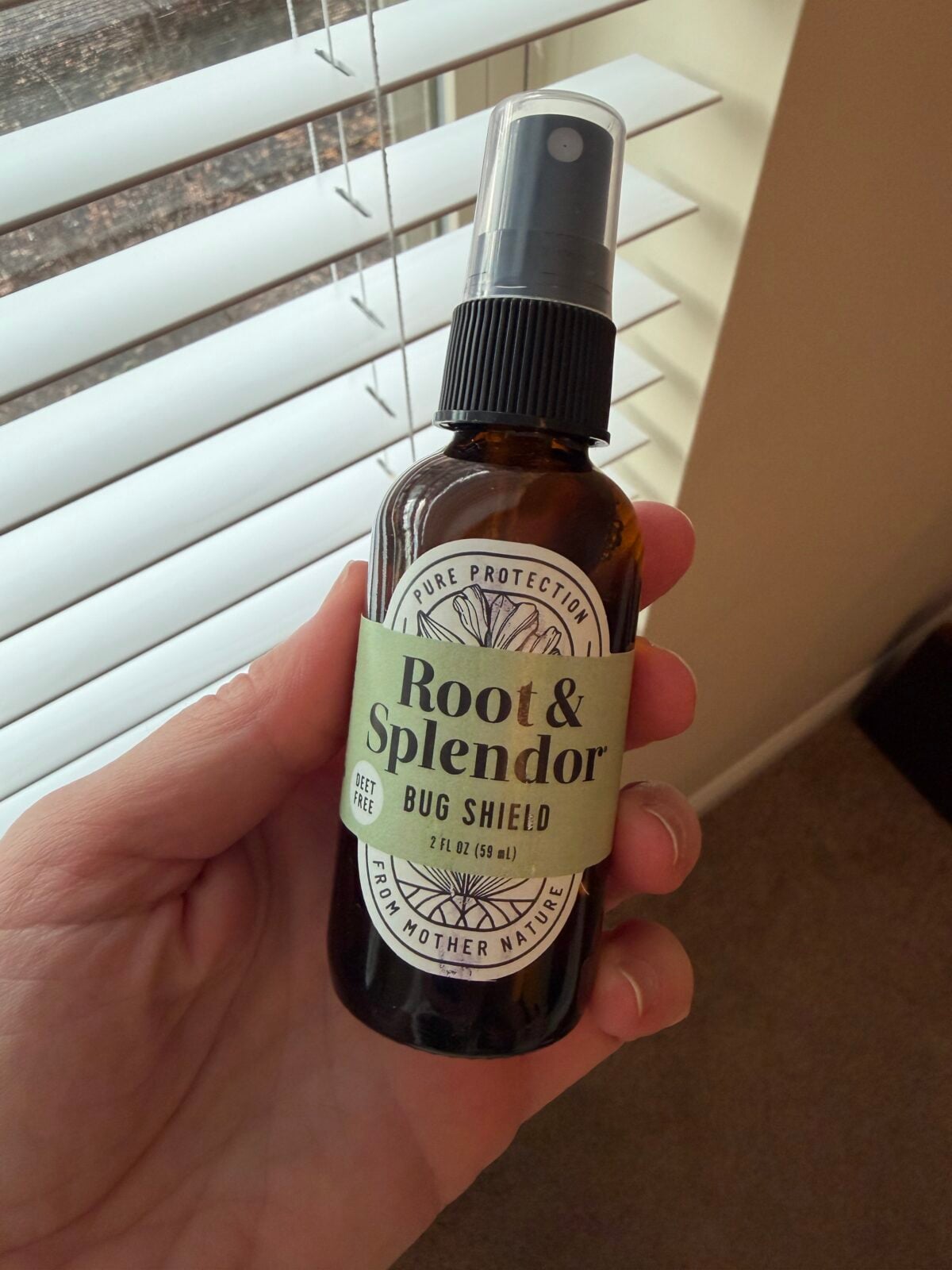
- Root & Splendor: This non-toxic bug spray uses only vegetable glycerin, distilled water, and a blend of bug-repelling essential oils (eucalyptus, peppermint, lemongrass, clove, lavandin grosso, melaleuca, cedarwood, and citronella). You can get it in a small 2 oz spray bottle (good for travel), a 4 oz spray bottle, or a 16 oz refill.
- Badger Balm: I like this one because not only is it available in stores like Target, but it also uses mostly organic ingredients and is available in multiple forms (aluminum bottle spray, stick, and tin balm). It uses a blend of different plant oils like rosemary, citronella, lemongrass, etc.
- Primally Pure: Here’s another one that uses mostly organic ingredients. They use a blend of basically every natural oil that has been shown to have some sort of bug repelling capability. (Citronella, lemongrass, rosemary, etc.) [Here’s our full Primally Pure review!] Use code THEFILTERY for 10% off.
- Kate McLeod: Known for her natural lotion bars, Kate McCleod makes a natural insect repellent that doubles as a moisturizer. It’s available in a stone or stick form. It uses essential oils like geranium, cedarwood, rosemary, peppermint, citronella, and lemongrass.
- Nantucket Spider: This one also uses an essential oil blend and the only inert ingredients are water and glycerin. They have pump sprays in various sizes and strengths.
- Young Living Insect Repellent: Here’s another one that uses a blend of a bunch of different plant and essential oils. I like that this one is a lotion, so you don’t have to worry about inhaling it.
- Heretic: This perfume brand has a non-toxic bug spray that uses all natural essential oils, including cinnamon, eucalyptus, clove, rosemary, thyme, and others. They also use organic non-GMO sugarcane alcohol for the base.
- 3 Moms Organic Tick Repellent: Here’s yet another good option that includes a mix of essential oils, combined with minimal and safe inert ingredients (white vinegar, water, vanillin, and glycerin).
- Kosmatology: I like this one because it’s a balm, so you don’t have to worry about inhaling the spray. It uses a combination of rosemary, thyme, clove, cinnamon, and rose geranium for the active ingredients. All of the inactive ingredients are natural and they disclose them all on the product page. It’s also the only insect repellent that’s MADE SAFE certified at this time. Unfortunately, it’s sold out at the time of this writing!
- Murphy’s Mosquito & Tick Repellent: As I mentioned before, Murphy’s carries some OLE options and some essential oil options. Their Balm, Balm Stick, and Wipes utilize essential oils.
- Lemongrass Farms: If you want a continuous spray option, this one is worth checking out. It’s a non-aerosol spray. They use essential oils like geranium, lemongrass, peppermint, and cedarwood. They have a regular one, an option for kids, and a fly spray.
- All Terrain: They have a few different options for a pump spray insect repellent or adults & kids using oils like soybean, citronella, peppermint, cedarwood, lemongrass, and geranium.
- Bug Soother: Here’s another brand that uses a blend of plant & essential oils, with their inert ingredients mostly consisting of water, vanillin, glycerin, castor oil, lecithin, and vitamin E. They have sprays, wipes, and balms available.
- Natrapel: Once again, Natrapel carries picaridin, OLE, and essential oil options. The essential oil spray comes in an aluminum bottle and uses a blend of essential oils that includes rosemary, cedarwood, and thyme (among others). The only inactive ingredients are soybean oil, glycerin, and vanillin.
- Sidebalm: This is an insect repellent stick that’s made of castor oil, clove, geraniol, cedarwood, rosemary, peppermint, beeswax, and carnauba wax.
Insect Repellents & Babies/Children
The EPA/CDC say that DEET, picaridin, and IR3535 are safe for pregnant folks and children when used as directed. (I personally would not use DEET on little ones unless I absolutely have to, but that’s just me.)
They also say that OLE and PMD should not be used on children under 3 years old due to a lack of safety data.
Europe’s ECHA says that DEET and picaridin should not be used on children under 2 years old.
And as I mentioned previously, Canada recommends that if DEET is used on children between the ages and 2 and 12, the concentration should only be 10% or less.
Remember to always check the instructions for specific products and to do a spot test before using to make sure your child isn’t allergic or sensitive to a specific product.
What About Permethrin-Treated Clothing?
You may notice that you can buy clothing treated with permethrin as another way to repel insects.
I’m not a big fan of this.
For one, permethrin is in a different category than everything we’ve talked about so far. It’s an actual insecticide, whereas the other chemicals listed here are repellents.
Permethrin has been shown to be much more toxic compared to the other chemicals we’ve discussed. It can cause acute symptoms such as irritation, itching, and burning, and if it’s breathed in, it can cause everything from nose/lung irritation, difficulty breathing, headaches, dizziness, nausea, and vomiting. It’s also a neurotoxin.
The EPA has said that permethrin is “likely to be carcinogenic to humans” if ingested. It has also been shown to cause other long-term effects like liver and kidney damage when animals ingested low doses for 90 days. It can be very toxic to aquatic life as well.
One 2019 study followed people over a 14 year period and found that people with higher exposure to pyrethroids had an increased risk of dying from heart disease. (This, of course, is a correlation and not a causation, but it shows that caution is warranted.)
Regarding endocrine-disruption, the verdict is still out. Some studies have shown it could have endocrine-disrupting capabilities, while others have not. However, it has been added to the EPA’s tier 1 screening list (which basically means they intend to take a closer look at it at some point) because it is suspected to potentially be an endocrine-disruptor.
Research has found permethrin in the urine of workers who wear treated clothing, which means that it can absorb from clothing and into skin. (Although, in at least one study, the levels in urine were low.)
That permethrin also washes out of clothes relatively quickly. Another 2019 study found a significant reduction (50–90%) in the amount of permethrin on clothing after just 16 washes. So not only is your clothing becoming less effective at repelling bugs, but it’s also contributing to overall permethrin pollution in the water as you wash those chemicals down the drain with each load of laundry.
The other thing about permethrin is that it is bioaccumulative, which means it continues building up in the environment over time. The other chemicals we’ve talked about here are not bioaccumulative. That essentially means that if we were to completely stop using DEET tomorrow, it would be gone from the environment relatively quickly, whereas permethrin would stick around for years, continuing to cause negative effects on environmental health. This is why I personally believe we need to be even more careful about the way we use bioaccumulative chemicals.
Permethrin is not completely banned in Europe or Canada, but there are restrictions on it because of its toxicity. In Europe and the UK, it’s still approved for veterinary purposes but was banned for use on food crops in 2000/2002.
In Canada, permethrin is still allowed on crops. Permethrin-treated clothing is not allowed for children under 16. They also say that adults wearing permethrin-treated clothing should avoid prolonged contact with children (like holding them).
Again, because of the long-term health risks of bug-borne disease, I’m not against exceptions being made for folks to wear permethrin-treated clothing if it’s really truly needed. But I personally think it should be an absolute last resort and that it should be avoided if possible.
As a last little side note, it may be worth noting for cat owners that permethrin has been shown to be even more toxic to cats than it is for people and dogs. Never use a tick treatment on your cat that was meant for a dog, and vice versa.
What About Insect Repellent Wristbands & Stickers?
Long story short: insect repellent bracelets and stickers don’t really work.
One 2017 study found the bracelets had no significant effect in repelling mosquitoes and a 2013 study on stickers found similar results.
In 2016, the FTC actually fined one bracelet company $300,000 for deceptive marketing.
You could potentially use wristbands and/or stickers as an extra layer of protection in addition to a spray or lotion, but I would not rely on them as your only source of insect repellent.
More Ways to Protect Yourself Against Bug Borne Diseases
Remember that even the most effective insect repellent is not 100% protective against bug bites and illness.
So, here are even more things you can do to protect yourself and your family not only from bug bites and diseases but also from potential adverse effects of bug spray:
- Always read the directions and use your insect repellent as directed. There is a very wide range of how often bug spray needs to be reapplied, so make sure you pay attention to whether you need to reapply every 2 hours, every 8 hours, or whatever.
- When using an insect repellent for the first time, do a patch test first to make sure your skin does not react to it—especially if you tend to have allergies or sensitivities.
- Don’t use bug spray on irritated or damaged skin. Use physical barriers like bandaids and/or clothing instead.
- Skip the aerosol spray when possible. Because of the propellents used (propane, butane, etc.), aerosol sprays can be contaminated with benzene, which is a known carcinogen.
- Or, just skip the spray completely. Using a lotion or balm can not only allow you to cover your skin more thoroughly, but you also don’t have to worry about breathing in the bug spray. (Of course, you can’t use lotion or balm on your clothing, so I still think there are situations where spray makes sense.) Balms and lotions also tend to last a bit longer than spray.
- Use clothing. Wear tall socks, long sleeves, high collars, bandanas, hats, etc. Tuck your pants into your socks when walking through tall grass.
- Wear light-colored clothing so that it’s easier to see bugs.
- Avoid spraying bug spray directly on the face. Instead, spray it onto your hands and then wipe it on your face. Wash your hands after applying it. You want the bug spray on your skin, NOT in your mouth and lungs.
- In general, avoid using products that combine sunscreen and bug spray. Sunscreen generally needs to be applied more often than bug spray. You don’t want to end up using too much bug spray or not enough sunscreen. If you’re using DEET, it’s recommended that you apply the sunscreen first, then the bug spray, then re-apply the sunscreen as needed.
- Use physical barriers like nets. You can get nets to go over your head, your bed, your tent, your stroller, your porch, etc. These are especially great for chemically-sensitive folks who have a really hard time tolerating bug sprays of any kind.
- ALWAYS check yourself, kids, and pets for ticks after being in the woods (or even just outside at all, depending on where you live). Here is a more thorough guide on checking for and removing ticks. Using a lint roller over your skin and a loofah in the shower are some other little tricks that can help you get rid of ticks before they dig in.
- Get rid of standing water around your home, which is a breeding ground for mosquitos.
- Be extra careful during warmer months, when bugs are most active.
- Do NOT buy agricultural-grade permethrin and try to dilute it, unless that is literally a part of your job and you’ve been trained in how to do it with every safety measure in place. (I saw this as a suggestion on Reddit and I cannot discourage this strongly enough.)
- If you need to use insect repellent regularly for long periods of time, consider rotating the active chemicals.
I hope this guide has helped you decide which insect repellent to use and when! If you have any other questions that weren’t answered here, let me know in the comments.