
Best Risewell option for the most sensitive teeth: PRO Flavorless
Best for kids: Cake Batter (regular for less-cavity-prone kids or PRO for more-cavity-prone)
Best for general adult use: Wild Mint
I’ve tried a lot of different non-toxic toothpaste brands over the years.
But for this review, I’m diving deep into Risewell specifically. I’ve used just about every product they have to offer, and I’m going to tell you:
- my pros & cons
- which products I recommend and which ones I don’t
- how Risewell compares to similar brands like Boka & Fygg
- and more.
Here's what I'm covering in this review:
- Risewell Basics
- Hydroxyapatite as a fluoride replacement
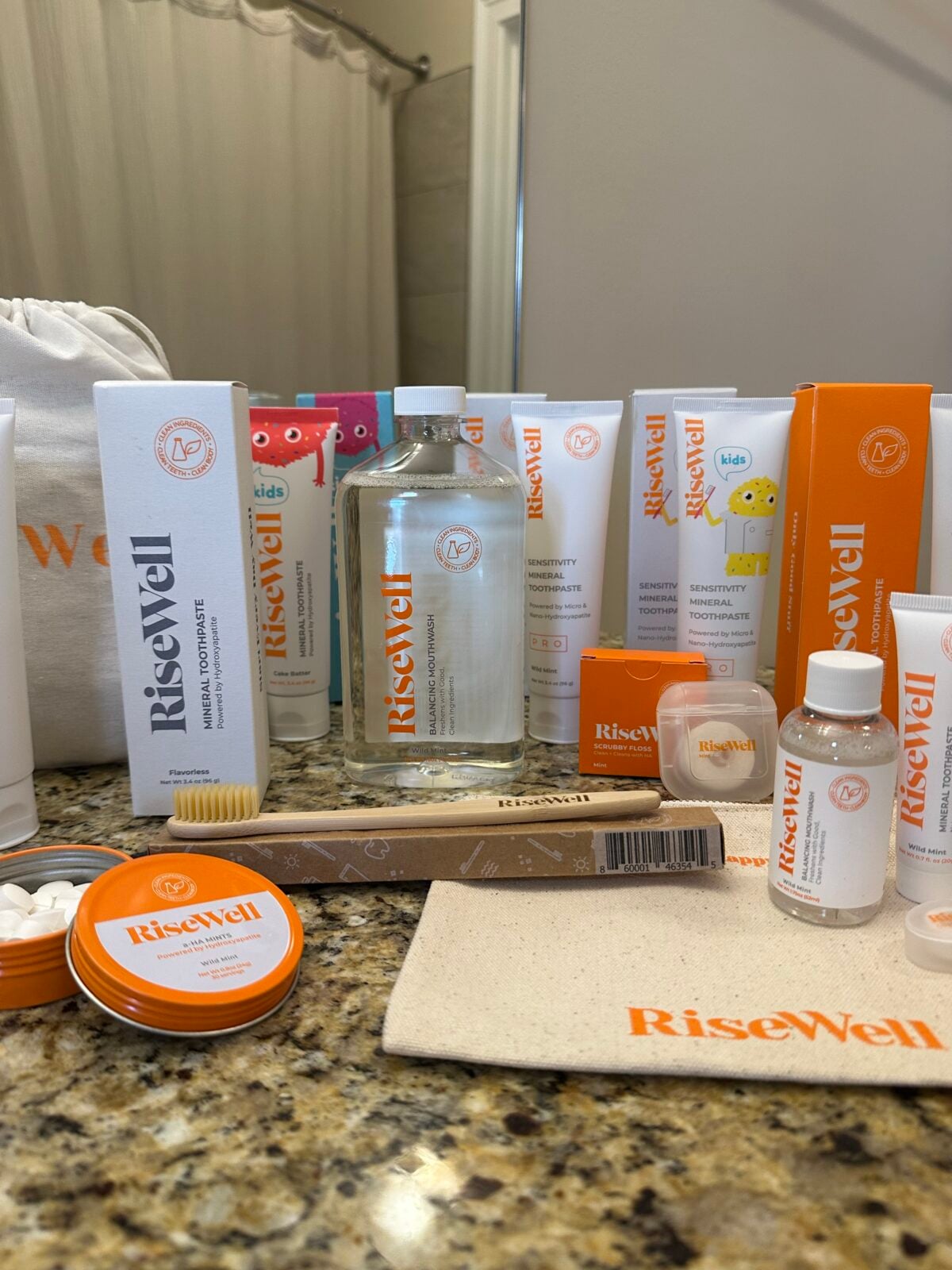
- Risewell Toothpaste Review
- My thoughts on Risewell’s mouthwash
- The Mints!
- Skip the floss
- And the toothbrush
- Travel-sized pack
- Melo hand soap: Risewell’s new little sister
- Wait, didn’t Risewell get sued or something?
- What’s the deal with lead in toothpaste?
- Risewell vs. Boka vs. Fygg
- Risewell pros & cons in a nutshell:
This review is not sponsored and all recommendations are genuine (as always!). We may receive a commission if you buy from certain links, at no extra cost to you.
Risewell Basics
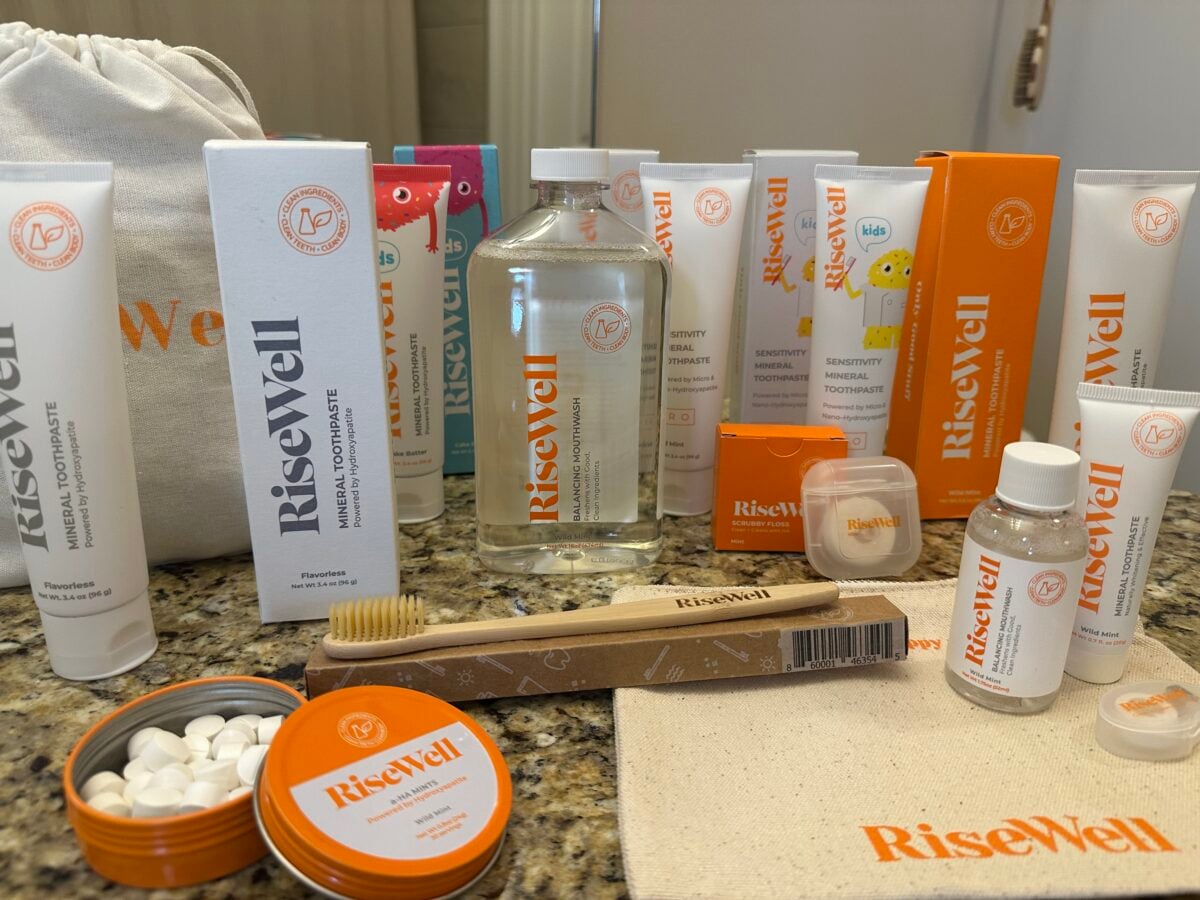
What the brand carries:
- Toothpaste. They have a lot of different options:
- adults & kids
- flavored and flavorless
- regular, “PRO” (which has more anticavity power – more on that below), and varnish
- mouthwash
- floss
- mints
- toothbrushes
- travel kits
Price: $12 for a tube of regular toothpaste (before discounts or subscriptions)
Vegan / Cruelty-Free? Yes
Made in the USA: Yes
Other stuff!
- Gluten-free
- Fluoride-free (they use hydroxyapatite for remineralization instead)
The best place to buy Risewell is their website (where you can use code THEFILTERY10 for 10% off), but you can also get Risewell from Amazon, Walmart, or The Swell Score.
By the way, if after reading this review you decide that Risewell is NOT for you (or if you just want to check out other options), then here are a bunch of other non-toxic toothpaste brands we’ve tried.
Hydroxyapatite as a fluoride replacement
Risewell uses hydroxyapatite (HAP) instead of fluoride to fight cavities and help with teeth sensitivity.
I won’t dive too deep into the hydroxyapatite here because I have an entire deep dive into the topic here.
But here’s the summary:
- HAP has been found to be just as effective as fluoride in preventing cavities, but much safer.
- HAP toothpaste was actually developed by NASA in the 1970s. It’s been used in consumer toothpaste in certain places, like Japan, since the 80s. It’s only become more popular in the United States in the last decade.
- The safety and effectiveness of HAP depends on the specific size and shape of the particles. Micro-HAP (larger particles) is safer, but less effective at remineralization. Nano-HAP is more controversial in terms of safety, but it’s more effective at preventing cavities and helping with sensitivity. Some forms of nano-HAP are less safe than others.
- After extensive review, the EU’s SCCS approved a very specific type of nano-HAP as safe for oral care cosmetics. It’s called nanoXIM and it’s manufactured by FLUIDINOVA, a company based in Portugal. This is the specific kind of nano-HAP Risewell uses in their PRO toothpaste. For this reason, I’m confident in using Risewell as a non-toxic toothpaste.
Risewell Toothpaste Review
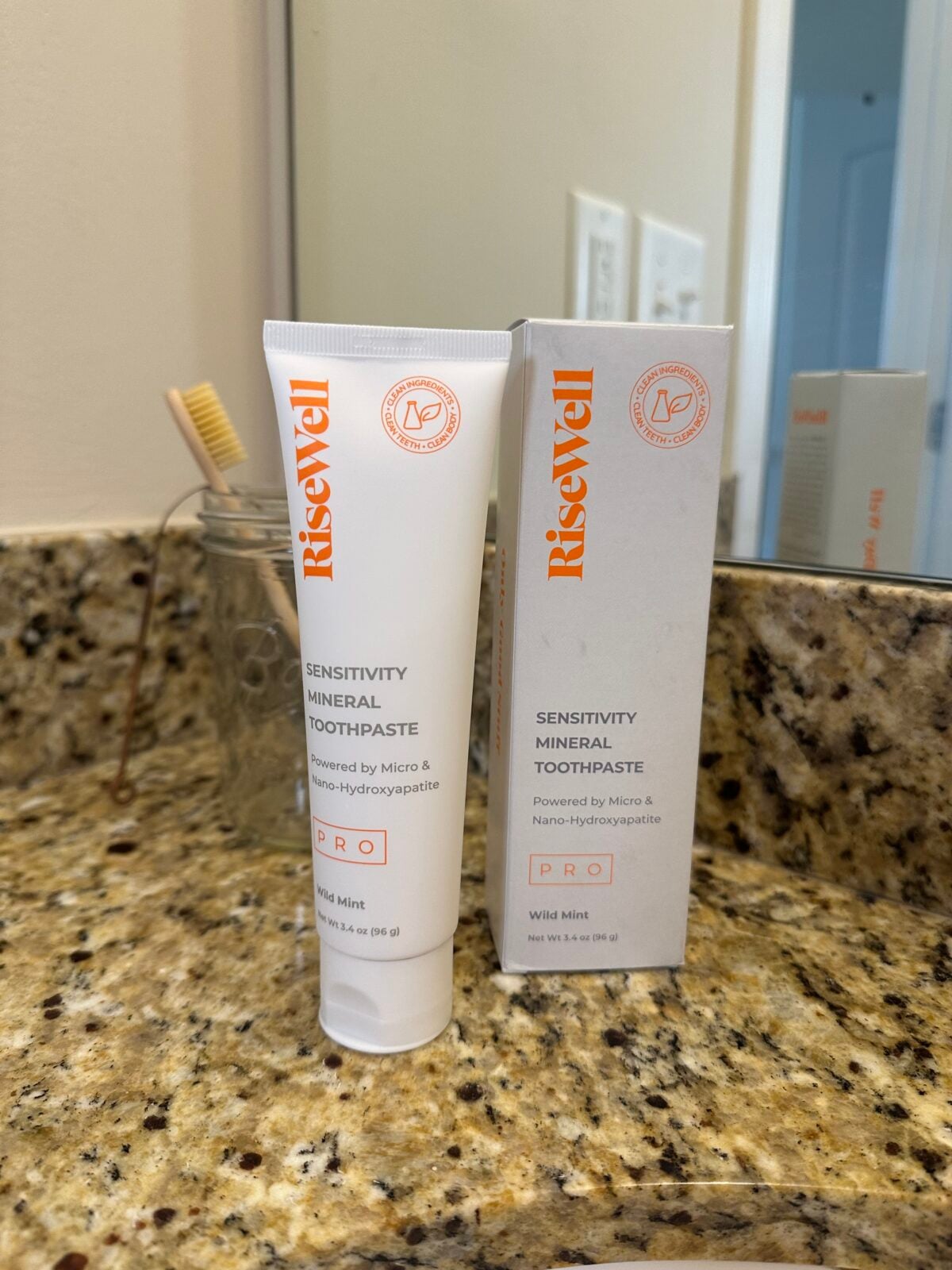
Risewell has several different types of toothpastes to choose from, so let me give you the basic rundown of the differences so you can decide which one might be best for you:
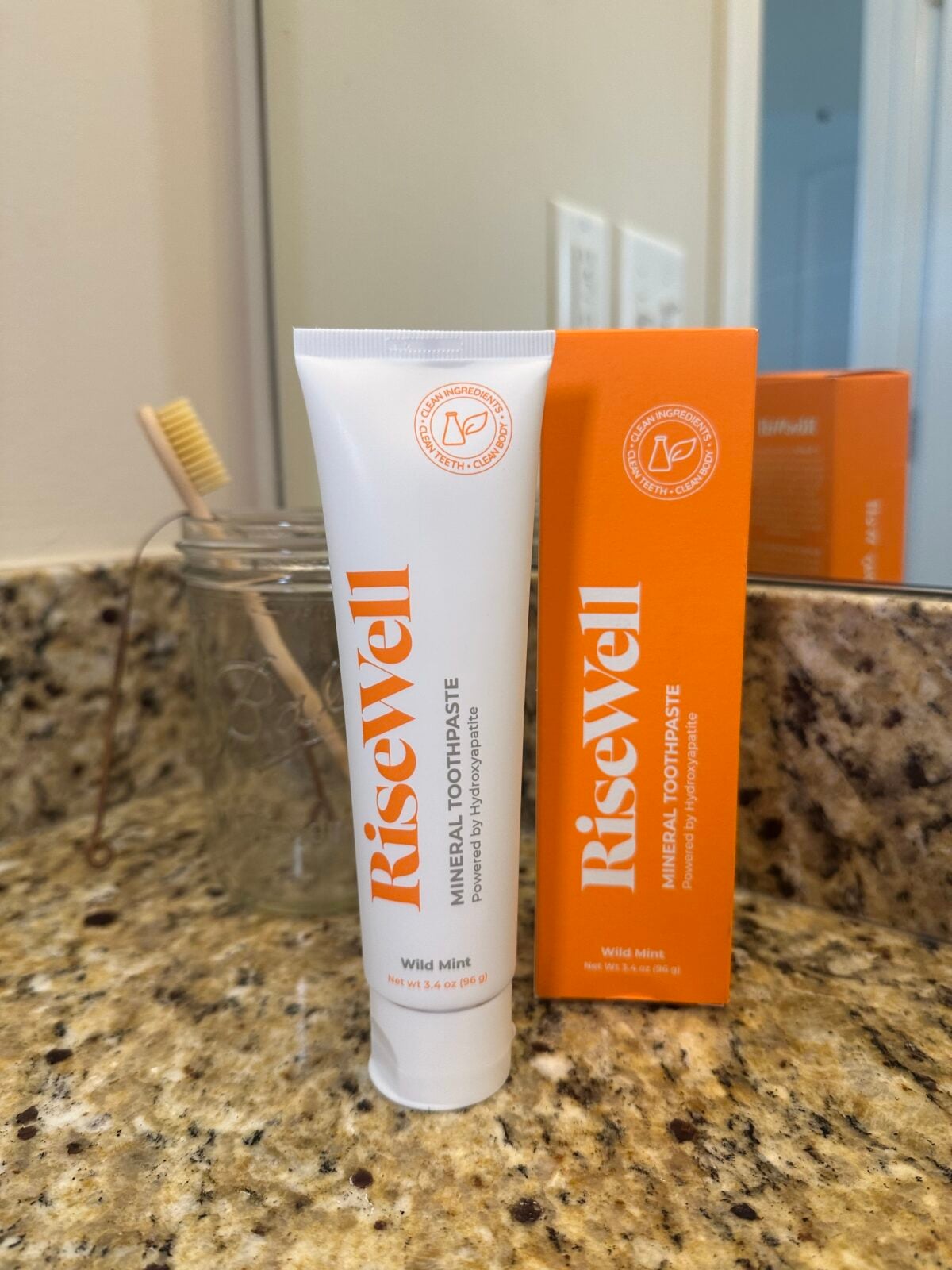
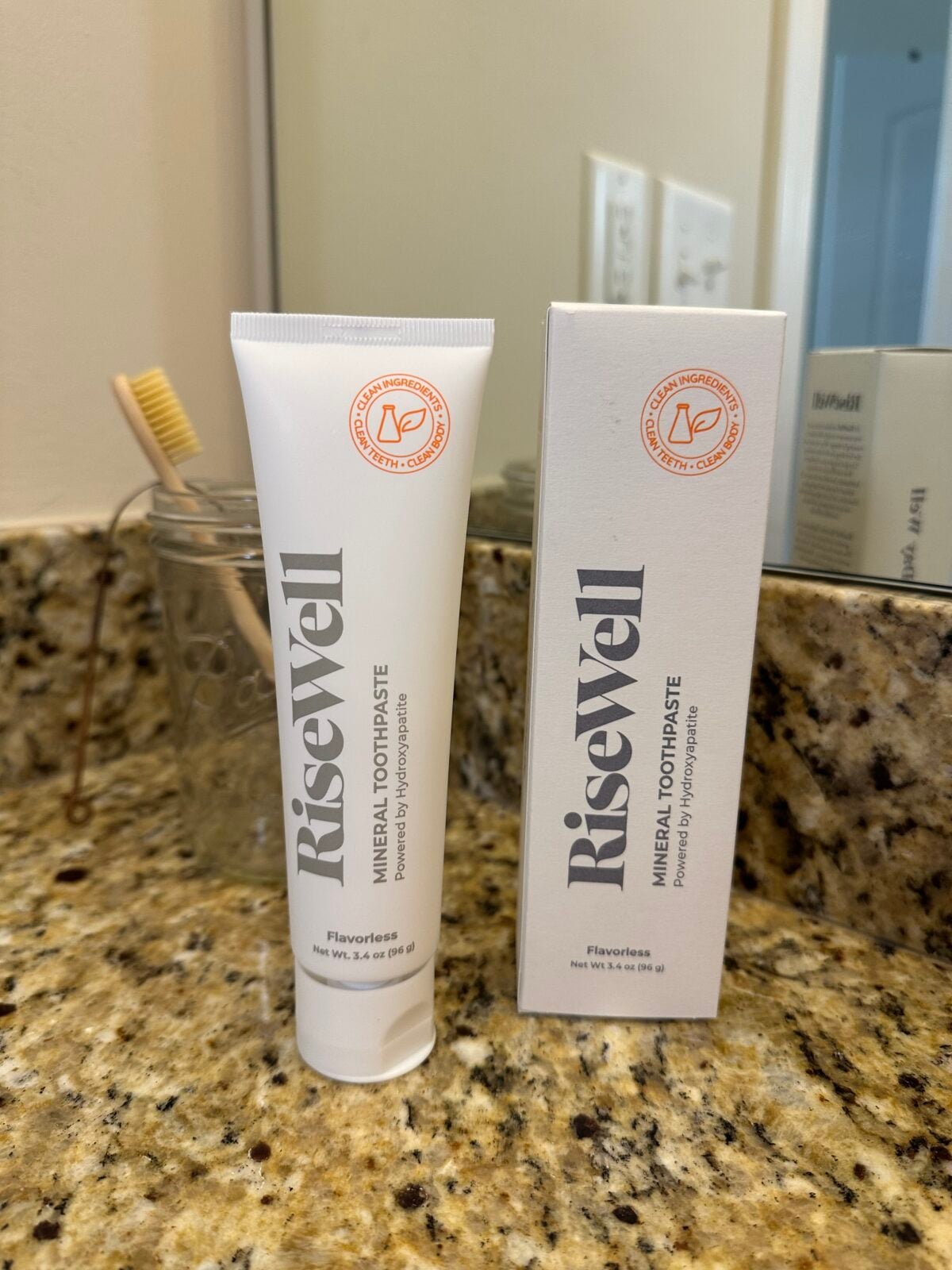
- Mineral Toothpaste: This is the ‘regular’ toothpaste that comes in Wild Mint or Flavorless. It uses micro-hydroxyapatite.
- Kids’ Toothpaste: This is the same as the regular Mineral Toothpaste, but in Cake Batter flavor!
- PRO Toothpaste: This one combined micro (10%) AND nano-HAP (5%) to give you even more cavity-fighting power. The PRO option comes in Wild Mint, Flavorless, and Cake Batter. If you have sensitive teeth or are cavity-prone, you might want to go with the PRO line.
- Varnish: This is a clinical-strength varnish that you can get for your home if you want to. It also comes in Wild Mint or Cake Batter. This is the ‘strongest’ option, and can be used as a toothpaste replacement or as a supplement/addition to your regular toothpaste.
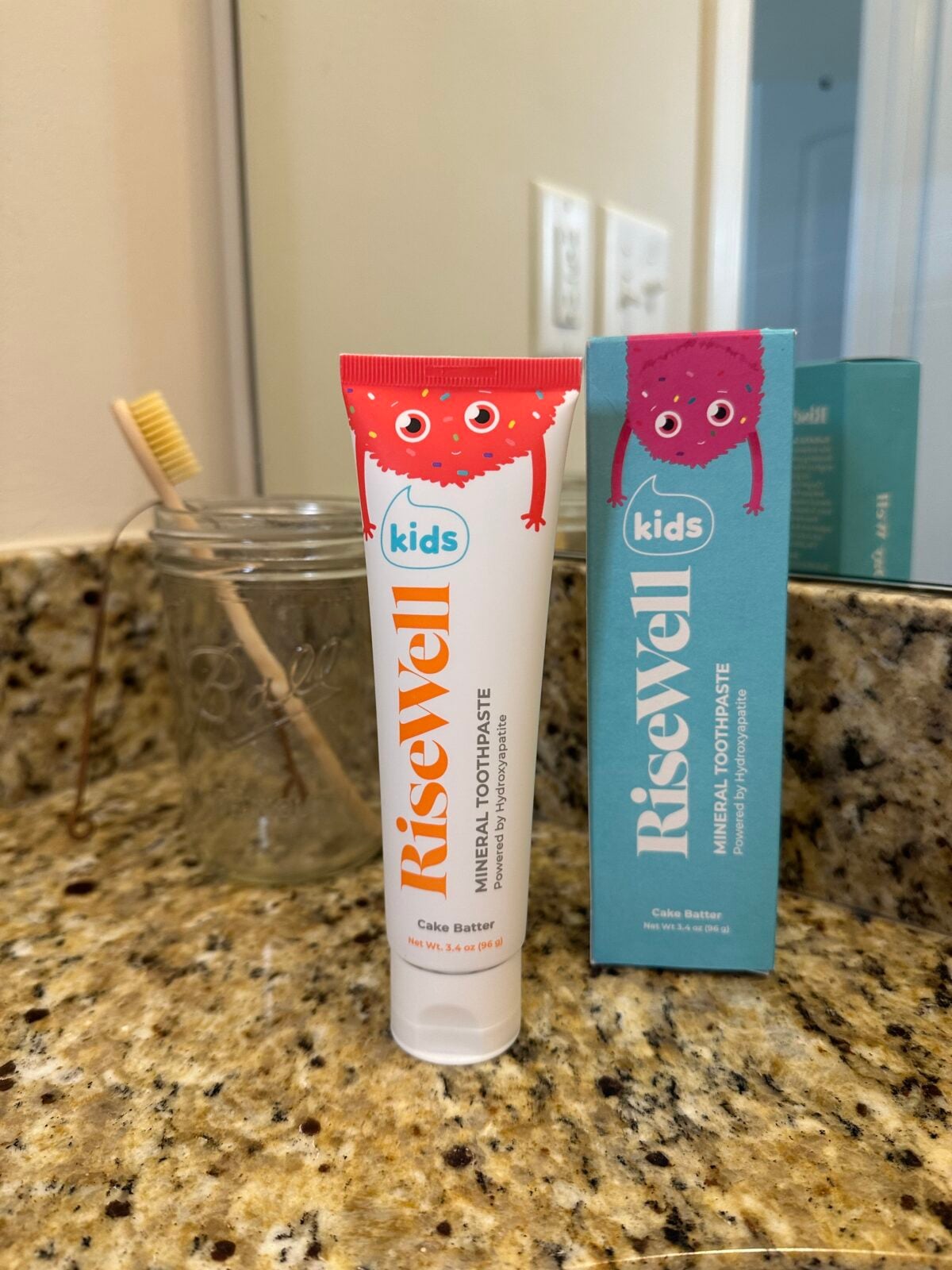
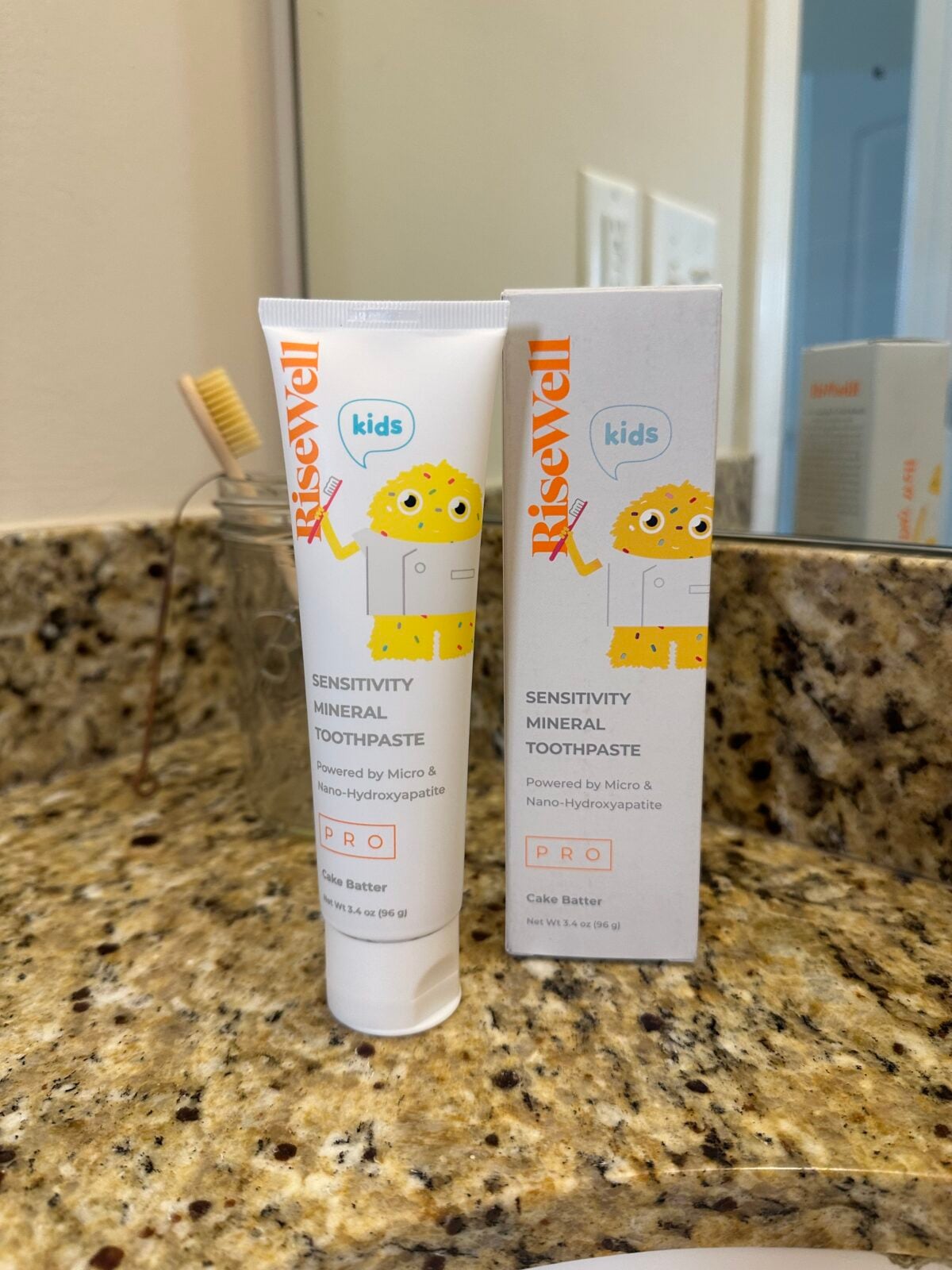
Formulation:
All of Risewell’s toothpastes are made without sodium lauryl sulfate (SLS), artificial dyes, or “natural flavors.”
In addition to the HAP, they use other mouth-healthy ingredients like xylitol, erythritol, tea tree, plus silica and calcium carbonate (for plaque-scrubbing power).
They also use other essential or plant oils for taste, and they incorporate stevia for sweetener. The kids’ cake batter option is flavored with vanilla planifolia fruit extract.
Some holistic dentists say that toothpastes that are heavy on the essential oils can actually do harm than good by throwing off the proper balance of a healthy oral microbiome. If that’s something you are worried about, then just go with one of Risewell’s Flavorless options!
Flavor:
There are only 3 Risewell flavors to choose from:
- Wild Mint: This one is my personal favorite. It’s refreshing, but not super overpowering like Crest Scope I used to use back in the day. This is just kind of your typical toothpaste.
- Cake Batter: This is the kids’ flavor, but adults can totally use it too. It honestly just tastes like vanilla, but it’s good! I have multiple friends whose kids have used the Risewell Kids’ Cake Batter toothpaste for years now and theirs kids love it. I haven’t yet heard of a kid not liking this one.
- Flavorless: I wasn’t really sure what to expect from this one, but turns out I like this one too! It’s not truly flavorless because it has stevia, which means there is still a sweetness to it. But it doesn’t come with any of the mint oils, so it’s a much more mild taste.
The regular and PRO come in all three flavors. The varnish comes in Wild Mint or Cake Batter (but not Flavorless).
Foaminess & texture:
All of the Risewell varieties have essentially the same amount of foaming action.
And I’d put them all as “moderate.” They don’t foam as much as most conventional toothpastes like Colgate (it’s usually SLS that makes the foam), but they’re foamier than some of the other non-toxic toothpaste brands on the market.
Toothpaste does NOT have to foam in order for it to work; this is just something we’ve gotten used to. I personally don’t care about my toothpaste foaming. That said, I get that some people do care. My husband is one of those people; he’s just particular about textures. He has rejected other natural toothpastes that don’t foam enough, but he likes the Risewell!
In terms of the texture when it comes out of the tube: it’s pretty normal. It’s just a regular paste like you’re used to with the store-bought brands. I think this is another thing that makes it a good ‘normie-friendly’ option. Some people don’t want to deal with toothpaste tablets or powders, and I get that. There’s no learning curve in switching from conventional toothpaste to Risewell.
My thoughts on Risewell’s mouthwash
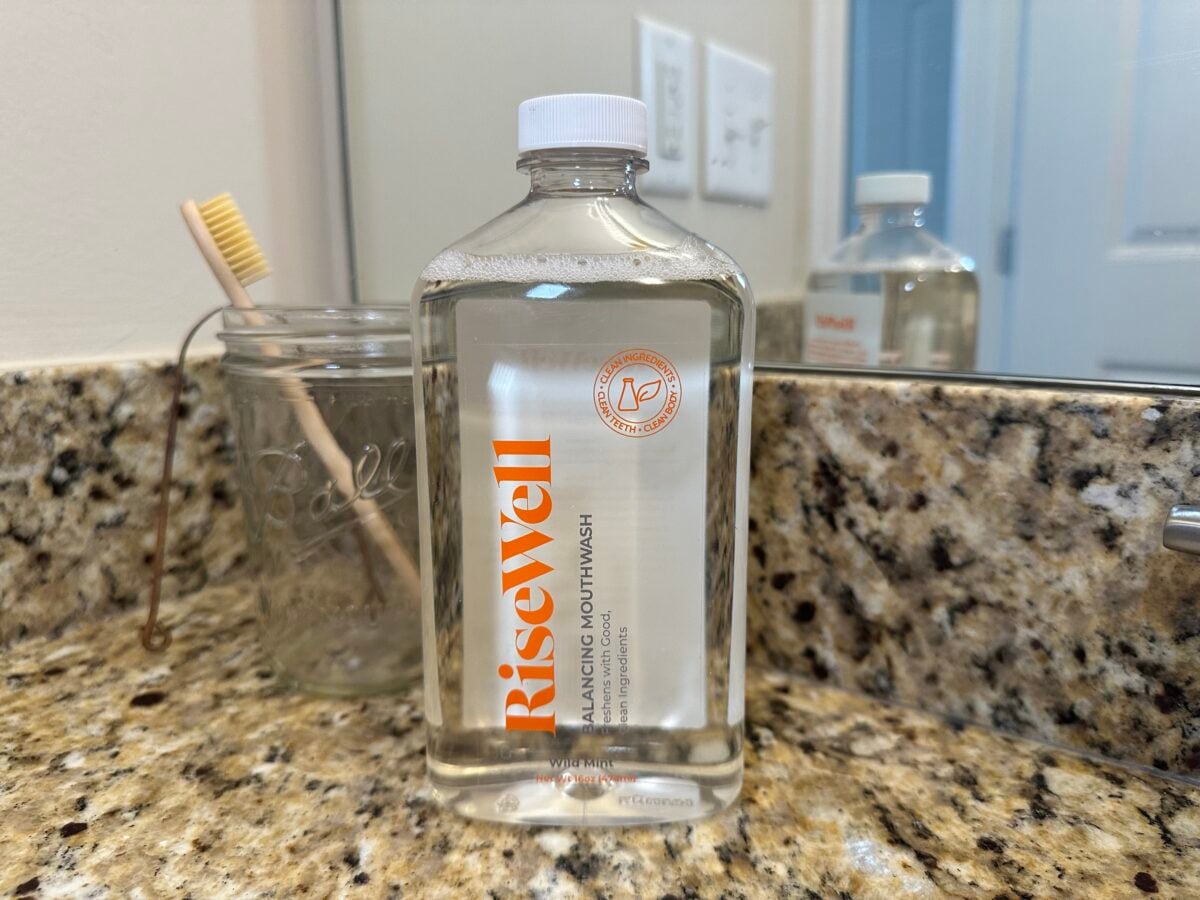
I really like the mouthwash itself. I’m not usually a huge fan of mouthwash in general because it can be so harsh, and it’s also just not necessary. I don’t use it every day, but I do use it sometimes, when extra breath-freshening assistance is needed.
I like the flavor of this one. I think it’s got a good balance—strong enough to really freshen your breath & leave you feeling refreshed, but it doesn’t burn like Listerine does!
Of course, the simplicity is always nice, too. Just take a sip, swish, and get on with your day. It’s great at what it does and you don’t have to worry about anything getting stuck in your teeth (the way you do with some of the mouthwash tablets).
The formulation is free from alcohol, fluoride, and unnecessary dyes. It doesn’t use any HAP, but it does contain xylitol to help with cavity-prevention. It also uses a lot of minty essential oils (as you might expect). So if you are sensitive to those, you might just want to skip the mouthwash.
My biggest complaint with this is that it comes in an all-plastic bottle. This is the biggest thing that will prevent me from re-buying it. I wish they would introduce a refill option or something.
The Mints!
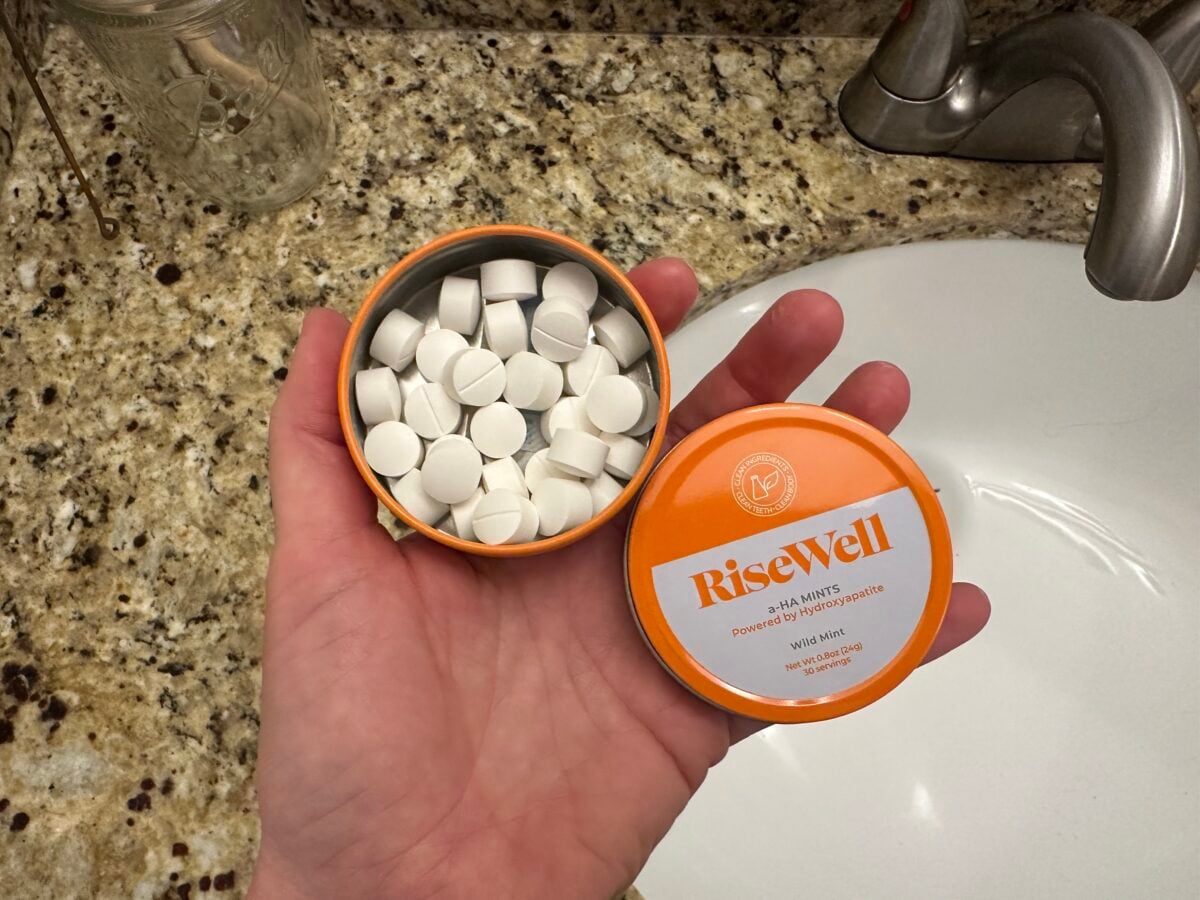
I’m not usually huge on mints, but these are nice! I think they’ve got a good amount of minty-ness—enough that they freshen your breath but not so overpowering that they make your eyes water.
Here’s the full ingredient list: Sorbitol, Xylitol, Hydroxyapatite, Calcium Carbonate, Microcrystalline Cellulose, Peppermint Essential Oil, Gum Arabic, Magnesium Stearate, Silica, Stevia
The xylitol starves the bacteria that causes bad breath and leads to cavities. And the silica and calcium carbonate act as natural “scrubbers” that help to clean the teeth without brushing.
I’m honestly not huge on mints. If I’m going to use something to freshen my breath, it’s more likely to be gum. That’s just personal preference/habit though. If you like mints, these would be a great option to stash in your bag, desk drawer, or whatever.
Skip the floss
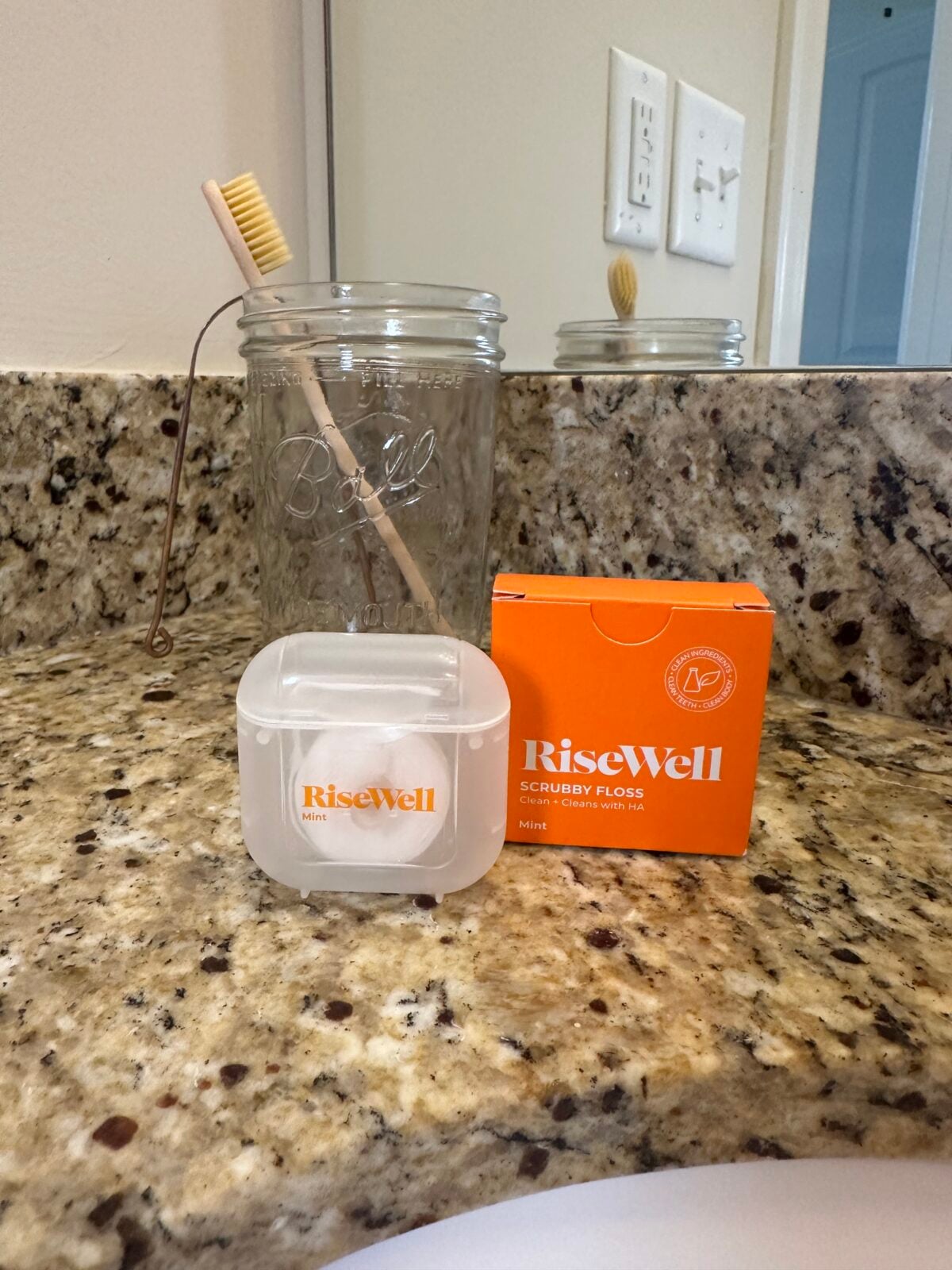
I don’t recommend this floss because it’s not plastic-free. Even though it’s not coated with PFAS (which is good), it still utilizes polyester for the actual floss part.
If you ask me, there’s no reason to be scraping plastic across your teeth when you could be using an all-natural option instead.
And the toothbrush
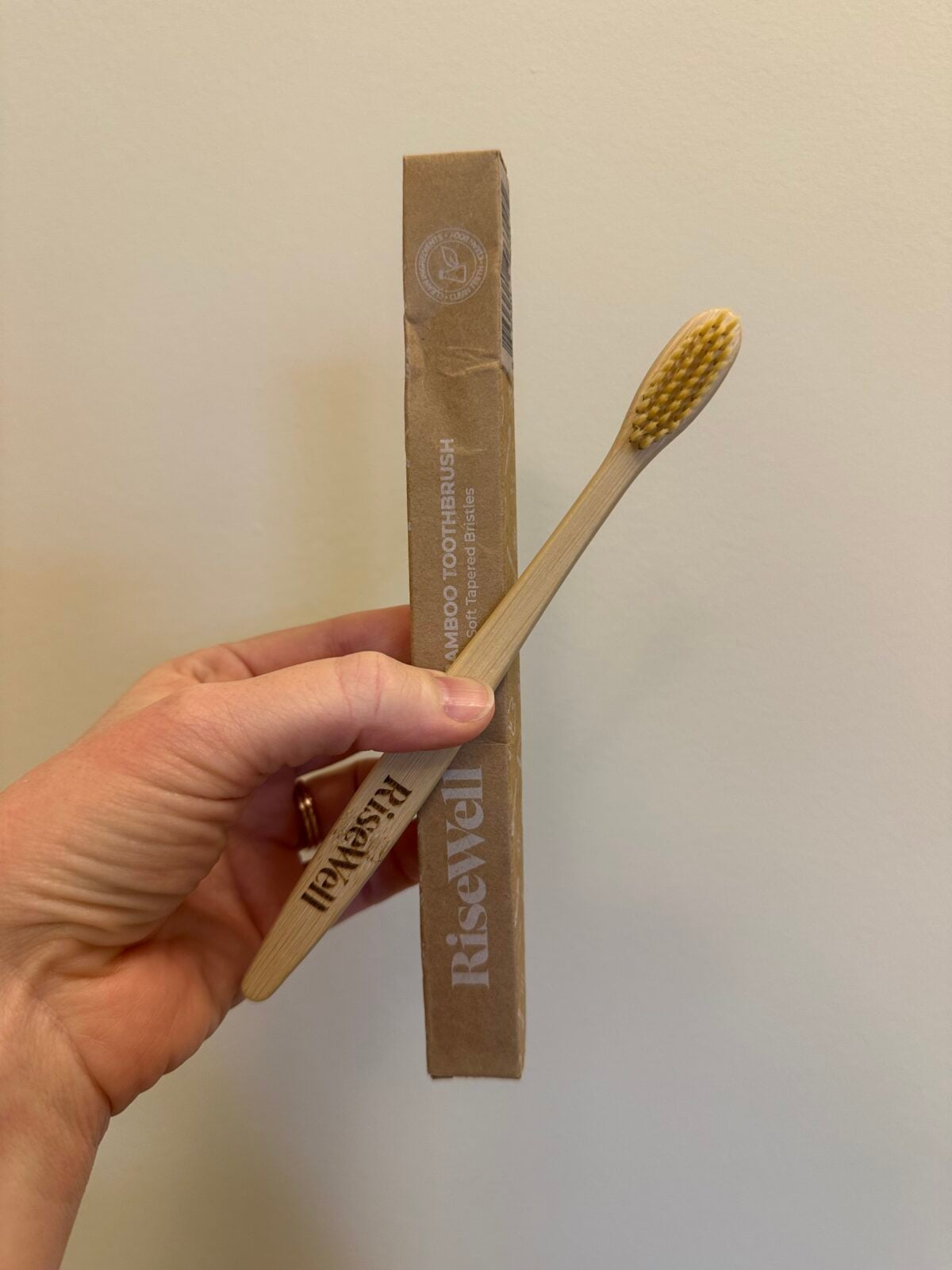
Similar deal as the floss. Even though the handle of the toothbrush is made of bamboo (which is good), the bristles are made of nylon (aka petroleum-based plastic). I’d recommend one of these instead.
Travel-sized pack
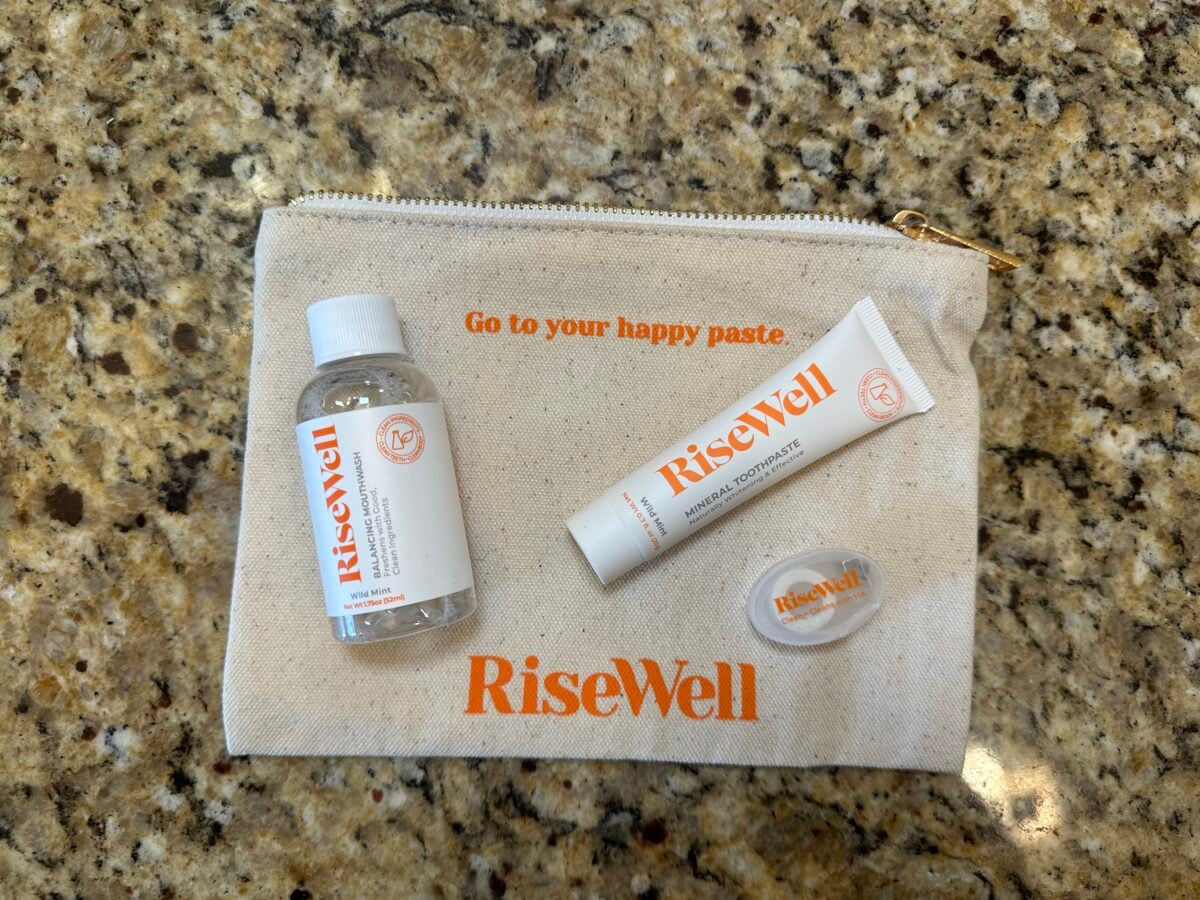
I travel a lot, so (despite the plastic!) I do appreciate the travel-sized toothpaste and mouthwash.
I try to avoid checking a bag when possible, which means I need to make sure my toothpaste tubes are below the 3.4 oz mark. They have TSA-friendly sizes for the Regular, Kids, & PRO toothpastes.
Melo hand soap: Risewell’s new little sister

The folks who brought you Risewell launched a new brand in 2025: it’s a hand soap!
The thing that sets it apart from other hand soap brands is the fact that it’s fermented. I’m starting to see more fermented skincare products, and while I’m not actually sure how effective they ACTUALLY are at encouraging a healthy microbiome, I do like that more attention is being paid to the importance of our microbiomes when it comes to overall health and resilience to environmental exposures.
Antibiotic/antimicrobial resistance is a real problem, and even the FDA says to skip the antibacterial soap. You could say that fermented soap is like the opposite of antibacterial soap!
In addition to helping encourage a healthy skin microbiome, Melo says their formulation can also help with things like soothing sensitive skin, and reducing discoloration and visible sun damage.
My Review:
It’s nice! It has a soft texture and it lathers well. It doesn’t leave my hands dried out after using it. It has a light, refreshing scent that’s not overpowering.
The only thing I really don’t like about it is that it comes in an all-plastic bottle and they don’t have any refill options available. At the time of this writing, this brand just launched, so I hope they add some plastic-reducing initiatives in the near future.
If you decide to try Melo, you can use the code THEFILTERY for 10% off.
Wait, didn’t Risewell get sued or something?
Yes, they did. And I’m not worried about it. Here’s the deal with the Risewell toothpaste lawsuit:
- In 2024, someone sued Risewell claiming they tested their kids’ toothpaste and found that it contained PFAS.
- The suit was voluntarily dropped very shortly after it was filed, with no reason or explanation given.
- We usually don’t get more information about what goes on behind the scenes in cases like these, but personally, I suspect the plaintiffs simply didn’t have a case.
- Risewell is one of the very few toothpaste brands that is thorough and transparent with their testing. And they have been for years, long before this lawsuit came about. Every batch of their toothpaste is tested for PFAS contamination, and they will share their test results with you. So if you already have a tube of Risewell, you can email them at hi@risewell.com and they will send you the lab results from that batch. You can also see their more general test results here.
- Also, it’s worth noting that there isn’t really a perfect PFAS detection test (that I’m aware of) yet, and the tests we do have are not perfect. There can be false positives. As far as I can tell, the plaintiffs in this suit only did one test on one tube of toothpaste. In my opinion, that doesn’t give enough merit to warrant a suit.
Fwiw, I personally approach these types of lawsuits on a case by case basis. In the U.S, anyone can sue a company for basically anything. A lawsuit does not automatically equate to guilt, so I usually like to see how things play out and what information arises out of the process.
In my opinion, the Risewell lawsuit was meritless and it does not change my opinion about the safety of the toothpaste.
What’s the deal with lead in toothpaste?
In recent years, there’s been an increase in concern about lead contamination in toothpaste—both natural & conventional brands. This contamination most likely comes from the minerals used, including:
- Bentonite clay (one of the most likely sources)
- Calcium carbonate
- Hydroxyapatite
Because these minerals are naturally-derived, they can be contaminated with trace amounts of heavy metals.
This is definitely a nuanced issue, but one worth thinking about (especially for kids). I’m not going to dive deep into this topic for this specific article, but here are a few high-level things to consider:
- Does the toothpaste brand in question test for heavy metal contamination, and is it CA Prop 65 compliant? (Prop 65 has some of the strictest standards in the world.)
- Is your child of the age where they are at risk of swallowing larger amounts of toothpaste? (If the toothpaste user is old enough to be spitting it out, the lead contamination is much less of a concern.)
[If you’d like to see a more in-depth deep dive into this topic, consider becoming a Filtery Supporter, where you can get priority topic request & voting privileges!]
Risewell vs. Boka vs. Fygg
These three brands are probably the top players in the hydroxyapatite oral care space.
I’ve used all three of them and I think they are all great options.
Here are the similarities and differences:
- They all use hydroxyapatite as their anti-cavity fluoride replacement. All three brands use the EU-approved HAP that comes from FLUIDINOVA. 👏
- All three have flavors for both adults & kids. (I personally like the tastes of all three brands!)
- Boka has the most flavors to choose from.
- Boka has the most ‘foaminess’ and therefore might be the best option for people just transitioning away from the Crests & Colgates of the world. Risewell has a medium amount of foaminess, and Fygg barely foams at all.
- They’re all three in the same general price point (~$12 for a tube).
- Fygg is the most focused on the oral microbiome. They skip some of the harsher essential oils that other brands use.
- Risewell is the only one with a Flavorless option at this time.
Risewell pros & cons in a nutshell:
Pros:
- Different options for different preferences: adults, kids, flavorless, micro & nano-HAP.
- Hydroxyapatite (HAP) provides a fluoride replacement that still helps prevent cavities.
- Thorough & transparent third-party testing for contaminants like PFAS, lead, and more.
- All the flavors taste good in my opinion. And the texture is good too; moderate amount of foaminess.
- No learning curve (like there is with toothpaste tablets or powders).
- Founded & formulated by a mom and and practicing dentist.
Cons:
- It’s not low-plastic.
- Pricey when compared to conventional toothpaste.
- The floss is PFAS-free but NOT plastic-free.
- Same with the toothbrush: the bristles are made of nylon.
What I’d buy again:
- Any/all of the toothpaste options
What I would not buy again:
- Mouthwash (unless they introduced a lower plastic / refillable option)
- Floss
- Toothbrush



I was using Boka for a while but then I learned they got bought out. Between your post about breaking down hydroxapatite and the top non-toxic toothpaste brands I ended up switching to Risewell. I’m 100% in agreement about the pros and cons of Risewell that you talk about here. And I feel like I was able to make a much more informed decision thanks to your posts. Thanks!!