
In a Nutshell:
There is little regulation over chemicals allowed in textiles. Bed sheets can contain a range of potentially toxic chemicals, including formaldehyde, antimicrobials, PFAS, and more.
When shopping for the best bedding brands, try to avoid terms like “wrinkle-resistant” or “stain-repellent.” These are clues that the sheets may have been treated with harsh chemicals.
For the best non-toxic bed sheets, look for materials like organic cotton, linen, and TENCEL.
The best AFFORDABLE organic sheets include:
The best COOLING non-toxic bedding brands include:
The best LUXURY organic bedding brands include:
- For 100% made in the USA sheets, go with:
- The best option for eczema or sensitive skin:
See below for even more info about the best organic bedding brands (+ some discount codes!).👇
Just like with your mattress and pillow, choosing non-toxic sheets is a great way to decrease the amount of toxic chemicals you’re absorbing as you sleep every night.
Considering how much time you spend in bed over the course of your life and the processes your body goes through during sleep (which are essential for optimal health!), non-toxic bedding and organic sheets are an important aspect of healthy sleep hygiene.
In this article, I’ll talk about why non-toxic bedding is important, what to look for in healthy bedding, and my recommended brands for the best organic cotton sheets.
What's included in this guide:
- My picks for the best non-toxic bedding & organic cotton sheets
- SIJO (best non-toxic cooling sheets)
- Naturepedic
- Verlee
- Savvy Rest
- Avocado
- AIZOME (best for acne-prone & sensitive skin)
- My Green Mattress
- Coyuchi
- Pact
- American Blossom Linens (made in the USA)
- Birch
- Buffy
- Parachute
- Even more organic sheets
- Bonus! My favorite organic/non-toxic weighted blanket
- What makes bedding toxic?
- Other potentially toxic chemicals found in bedding
- What to look for in chemical-free, non-toxic bedding
- Certifications to look for in non-toxic sheets
This guide contains product recommendations and we may receive compensation if you purchase through certain links. As always, we only make recommendations that are genuine!
I know you’re probably here to shop! But if you want to learn more about why these brands make my “best of” list (and what’s wrong with a lot of conventional bedding), read this part first.
My picks for the best non-toxic bedding & organic cotton sheets
SIJO (best non-toxic cooling sheets)
Price range: $80-$345
Materials: They offer a variety: TENCEL (eucalyptus), bamboo, cotton, and linen
My Review:
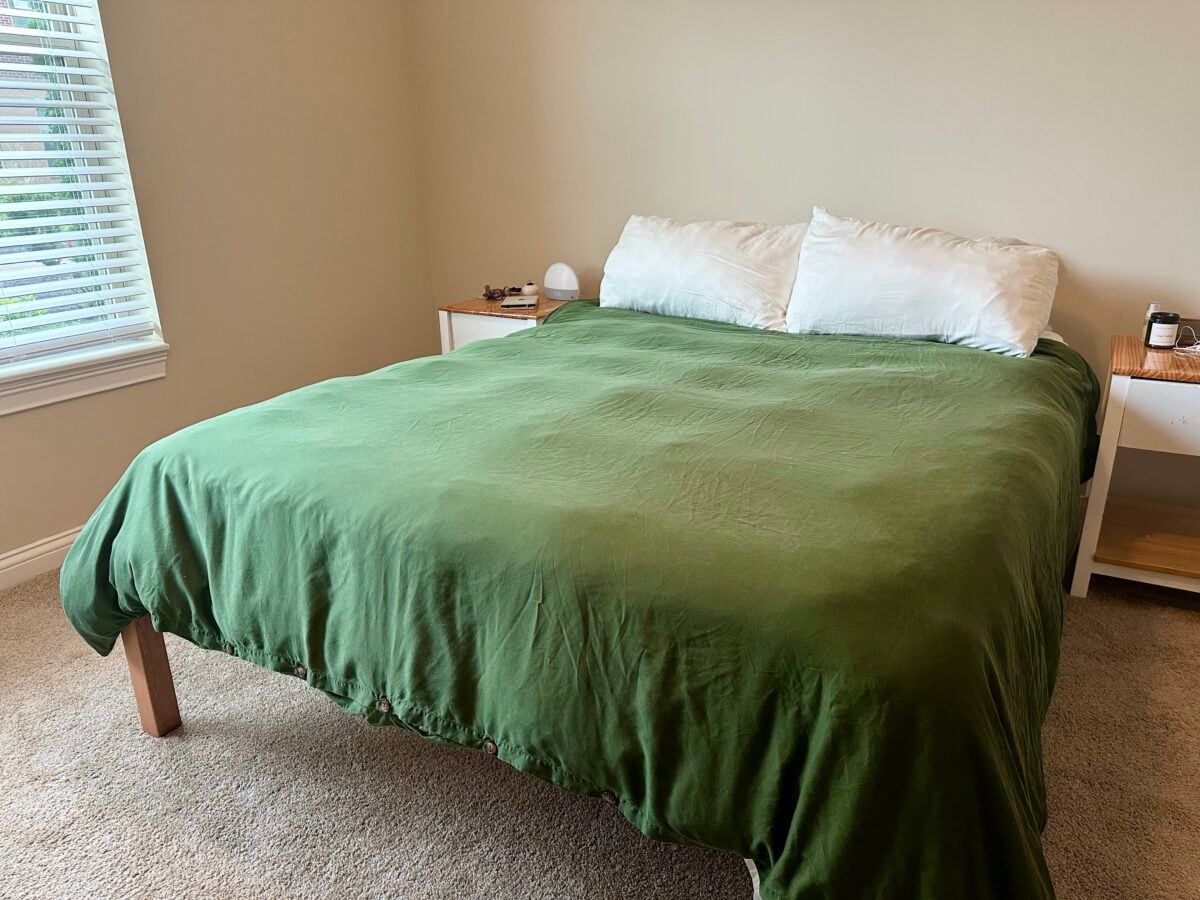
This is what I currently have on my bed, and I loooveee themmm.
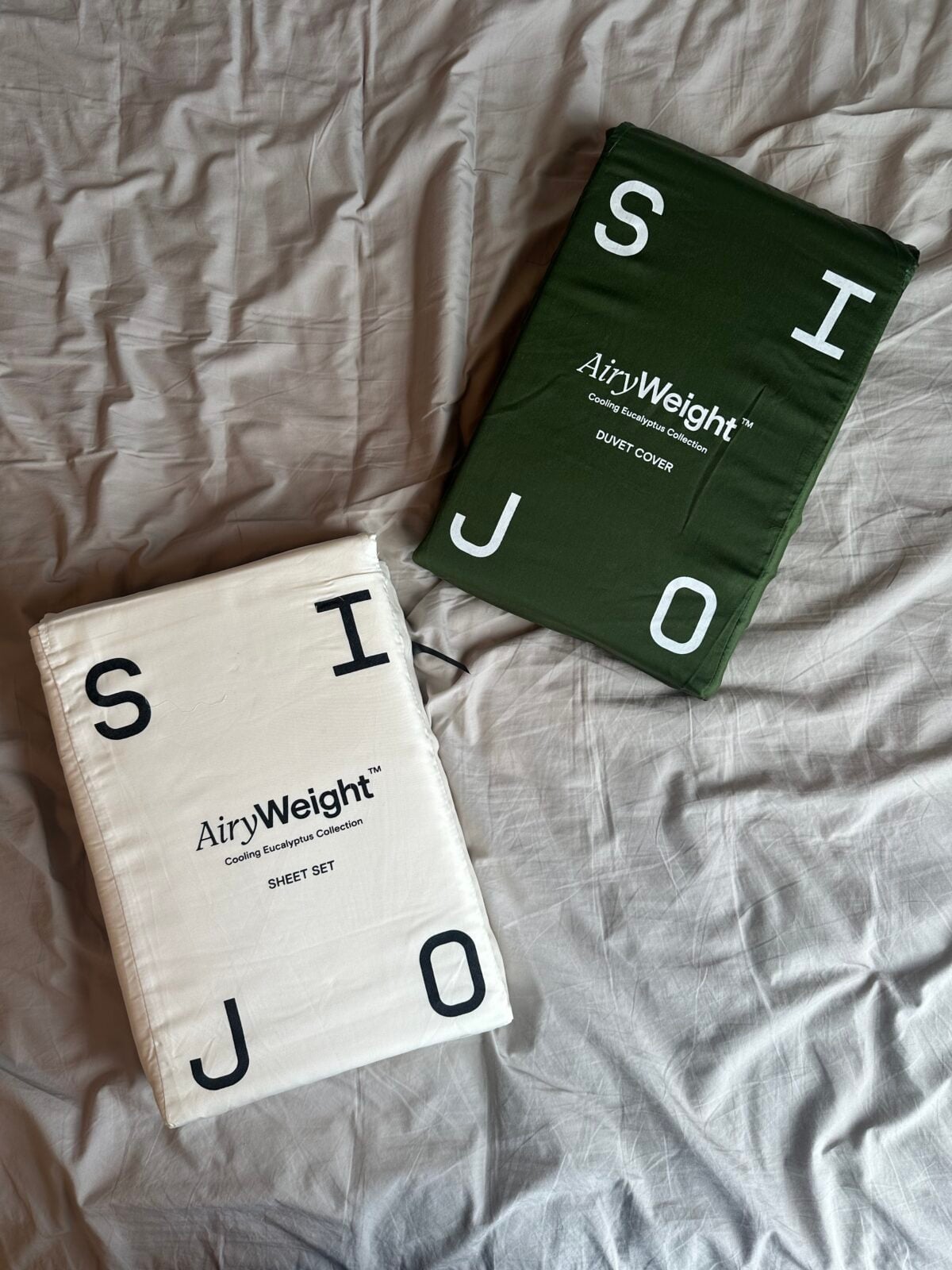
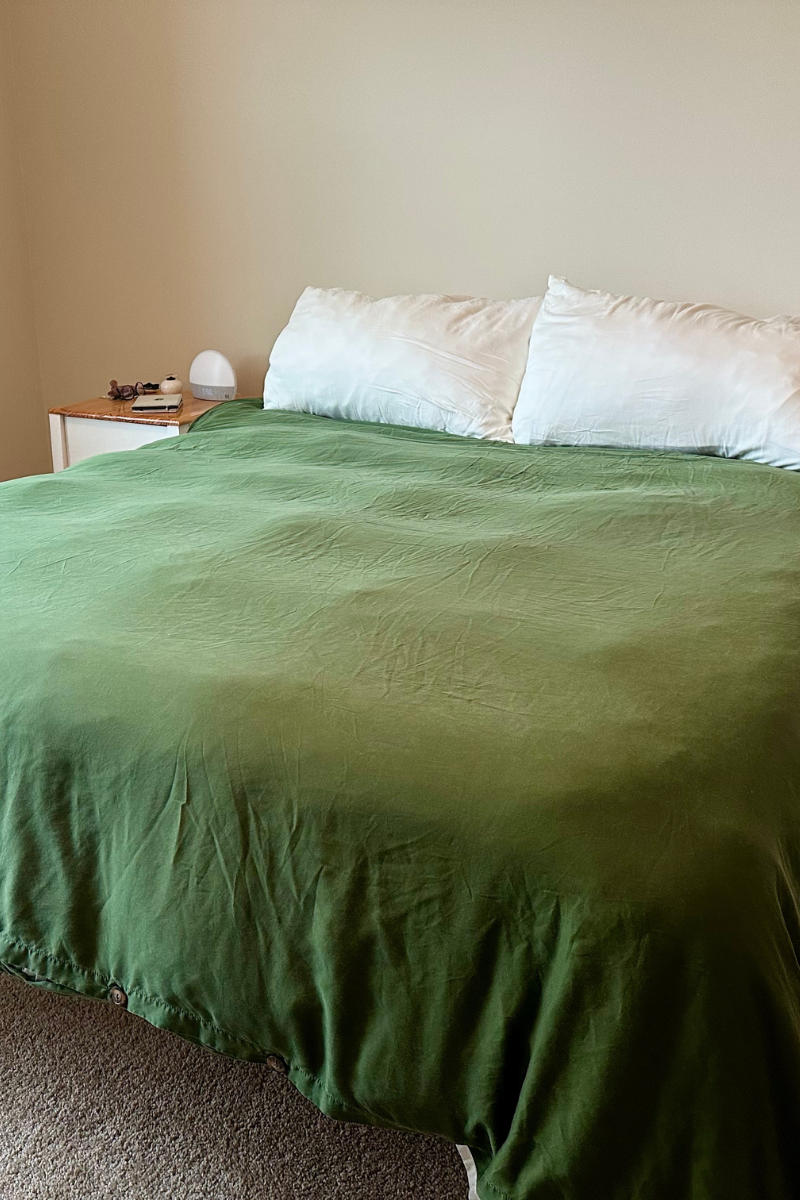
Specifically, I have the AiryWeight Sheet Set in Ivory and the AiryWeight Duvet Cover in Forest.
I originally bought them last summer because I wanted non-toxic cooling sheets, but I’ve ended up using them in the winter as well.
I specifically wanted TENCEL for a few reasons:
- it has a cooling effect and a silky smooth texture
- it is one of the best alternatives to synthetic fabrics. Unlike other types of rayon, TENCEL is produced with less toxic chemicals using a closed-loop manufacturing process (which means toxicants aren’t being dumped into the air & water). You can read more about this here if you’re curious.
- TENCEL is a ‘semi-synthetic.’ It’s sourced from plants (eucalyptus), but it goes through such heavy manufacturing processes that by the time it’s actually turned into a fabric, it’s not considered “natural” anymore.
I have only good things to say about these sheets. They give luxury and make me want to actually take my butt to bed instead of falling asleep on the couch. The fabric feels really smooth and soft against my skin, and I do think they help keep me cool at night.
Definitely recommend.
BUT, if you don’t want TENCEL and would rather go with something all-natural and organic like cotton or linen instead, they have that too! Take your pick between organic french linen, organic sateen cotton, or organic percale cotton.
Most of their sheets come with various third-party certifications, including GOTS, OEKO-TEX, and/or FSC.
Note that not everything SIJO makes is 100% natural. They do use some synthetics like polyester in a few of their products (like the mattress pads). So just be sure to check the details before buying to make sure you get what you want.
Naturepedic
Price range: $109-$699
Materials: Organic cotton (percale, sateen, or supima), and linen
Naturepedic has organic bed sheets for pretty much every size bed you could need, including cribs and kids’ beds.
They come with several certifications, including GOTS organic, MADE SAFE (one of my favorite third-party certifications for human safety), and Vegan.
My Review:
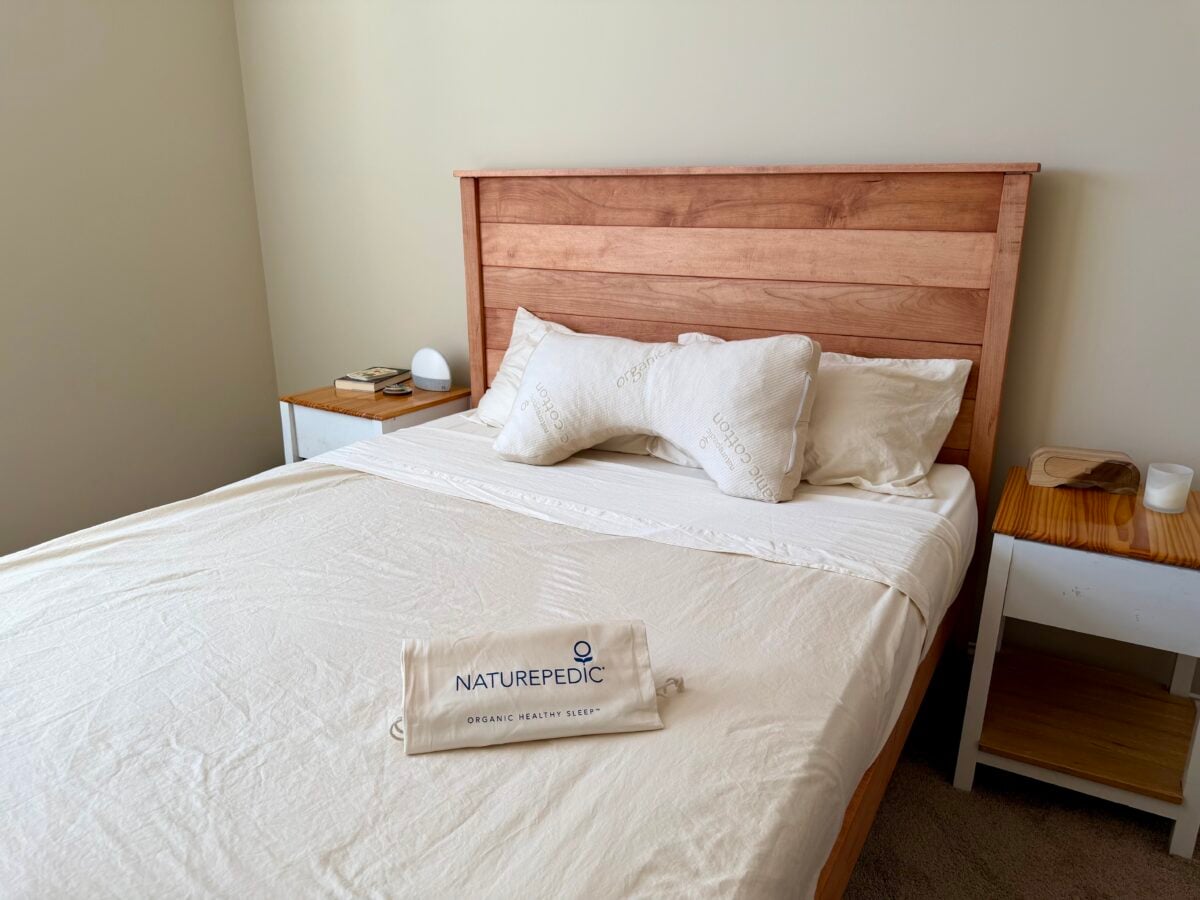
I have a set of their undyed sateen sheets. (They do come in a variety of other colors though.) They’re 400-thread count, which gives them a feel that’s soft and crisp, while not having that paper-y texture at all. They are plenty deep for a thick mattress if you have one.
I like that the pillow cases have the pockets to keep the pillows in.
Also, I like that Naturepedic’s products come with a lot of risk-free customer assurances—like a 100-night trial, a one-year warranty, and free returns.
Use the code thefiltery15 for 15% off your order.
Verlee
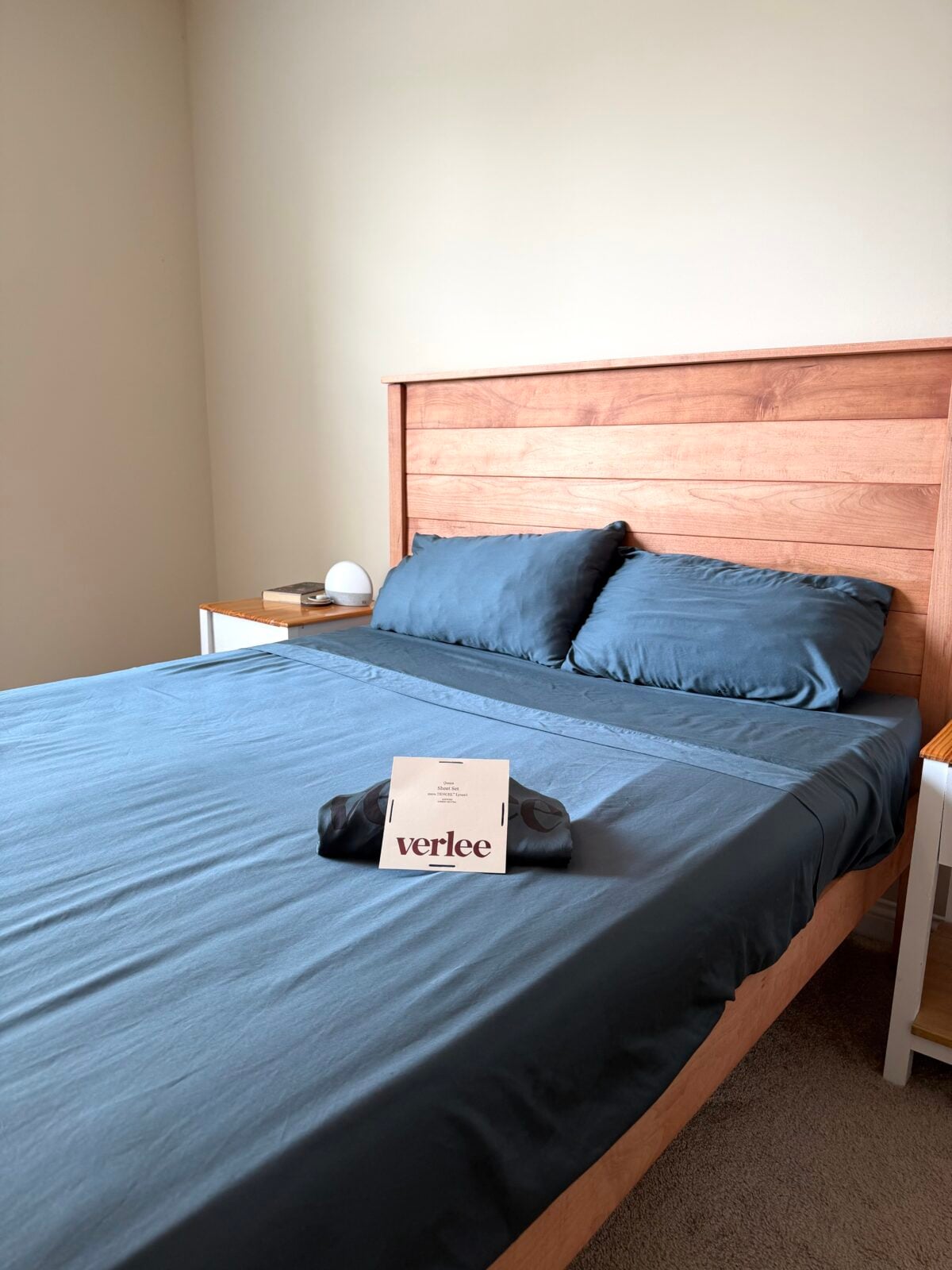
Price range: $95.00 – $150.00
Materials: TENCEL or organic cotton
My Review:
My husband and I have been sleeping on these for the last few weeks and we really like them. We got the TENCEL Sheets in Midnight Tide, in part because I prefer to sleep on TENCEL in the summertime and also because my husband likes those silkier textures. (TENCEL is not AS silky as actual silk, but it has a smoother feel than other options like cotton, linen, or hemp.)
I think the Midnight Tide color is really beautiful, too.
But if you’d prefer, you can get a 100% GOTS certified organic cotton set instead. That’s available in either percale and sateen.
And if you’re not sure which fabric you’d like best, they have something I don’t think I’ve seen from a bedding brand before: a Try-At-Home Sampler, which includes a pillowcase in all three fabrics. So you can sleep with them, decide which one you like best, and then order your full sheet set!
In addition to carrying a couple of third-party organic certifications, they’re also certified Woman Owned, a member of 1% For the Planet (just like The Filtery!), and they are committed to transparent and ethical supply chains. In fact, the founders are “third-generation textile people”—they grew up in the industry and have known some of their vendors for a long time.
They also carry duvet covers, blankets, bath towels, and bath rugs.
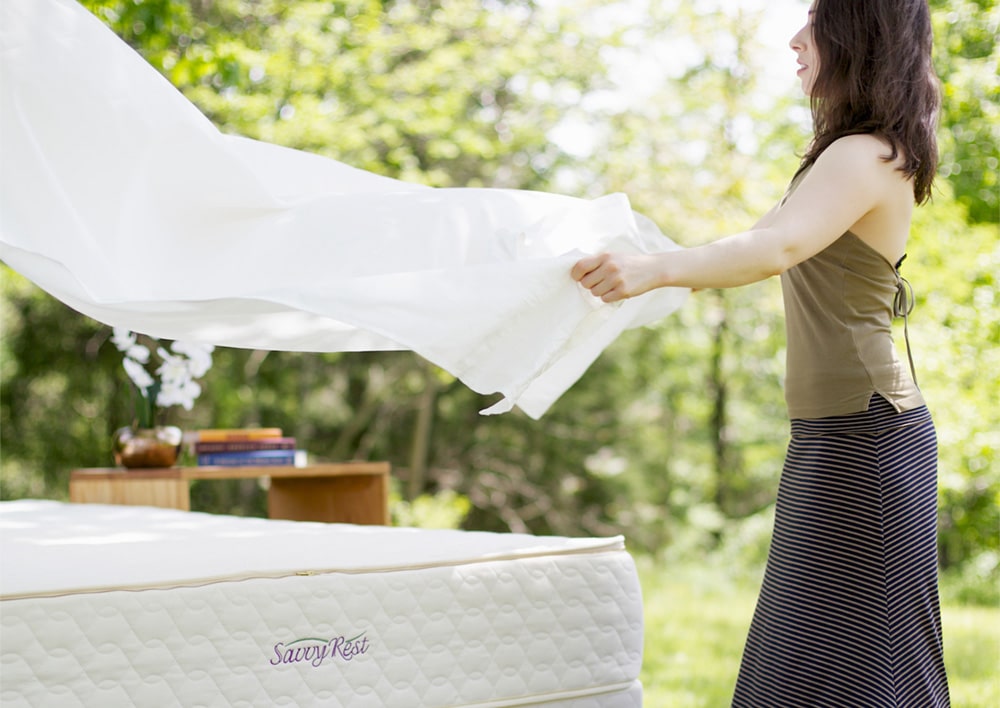
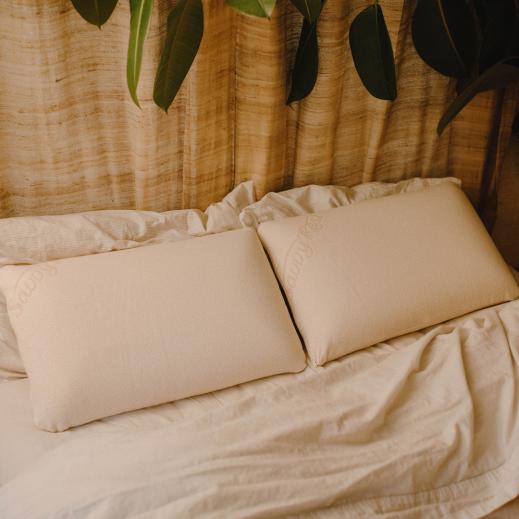
Savvy Rest
Price Range: $139-219
Materials: Organic cotton
Savvy Rest is a great brand for the best and made in the USA mattresses and other types of furniture, but they also offer some of the best organic bed sheets that are still affordable.
Their simple, 300 thread count organic sateen sheets are undyed and have a smooth texture that transitions over time to a cozy, brushed cotton feel. Each set comes with a fitted sheet, flat sheet, and two pillow cases.
I have quite a few different pieces from Savvy Rest at this point—including my mattress (which I love) and my bed frame!
Get 20% off with code THEFILTERY20.
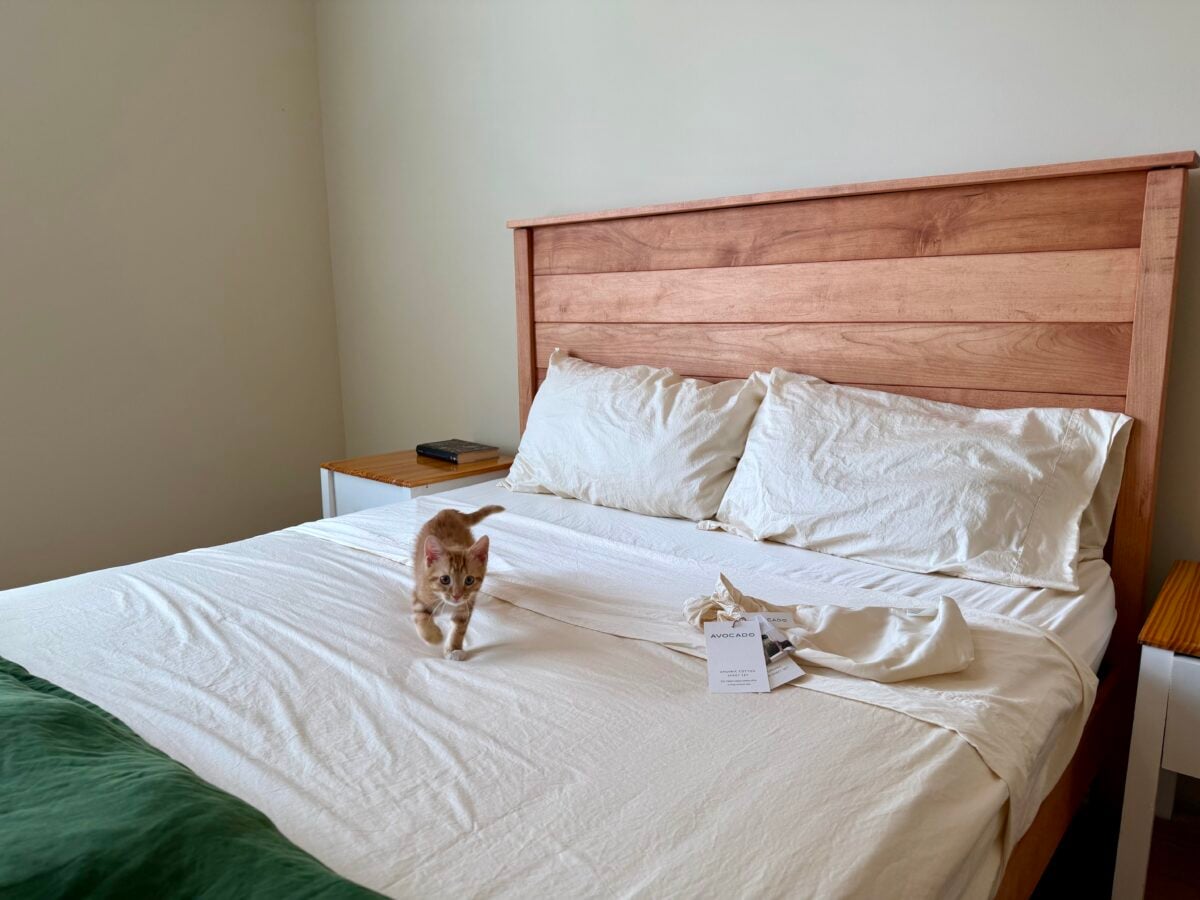
Avocado
Price Range: $99-549
Materials: Organic cotton, linen, hemp
In addition to their mattresses and pillows, this well-know green mattress brand also carry a collection of organic cotton, linen, and silk sheets, duvet inserts and covers, and throw blankets.
Their “eco-luxury” extra-long 1,000 thread count sheets have a super soft and satiny feel, but are also incredibly durable, so they’ll last you a long time. Avocado’s products come with a handful of third-party certifications, including GOTS organic, OEKO-TEX, and MADE SAFE.
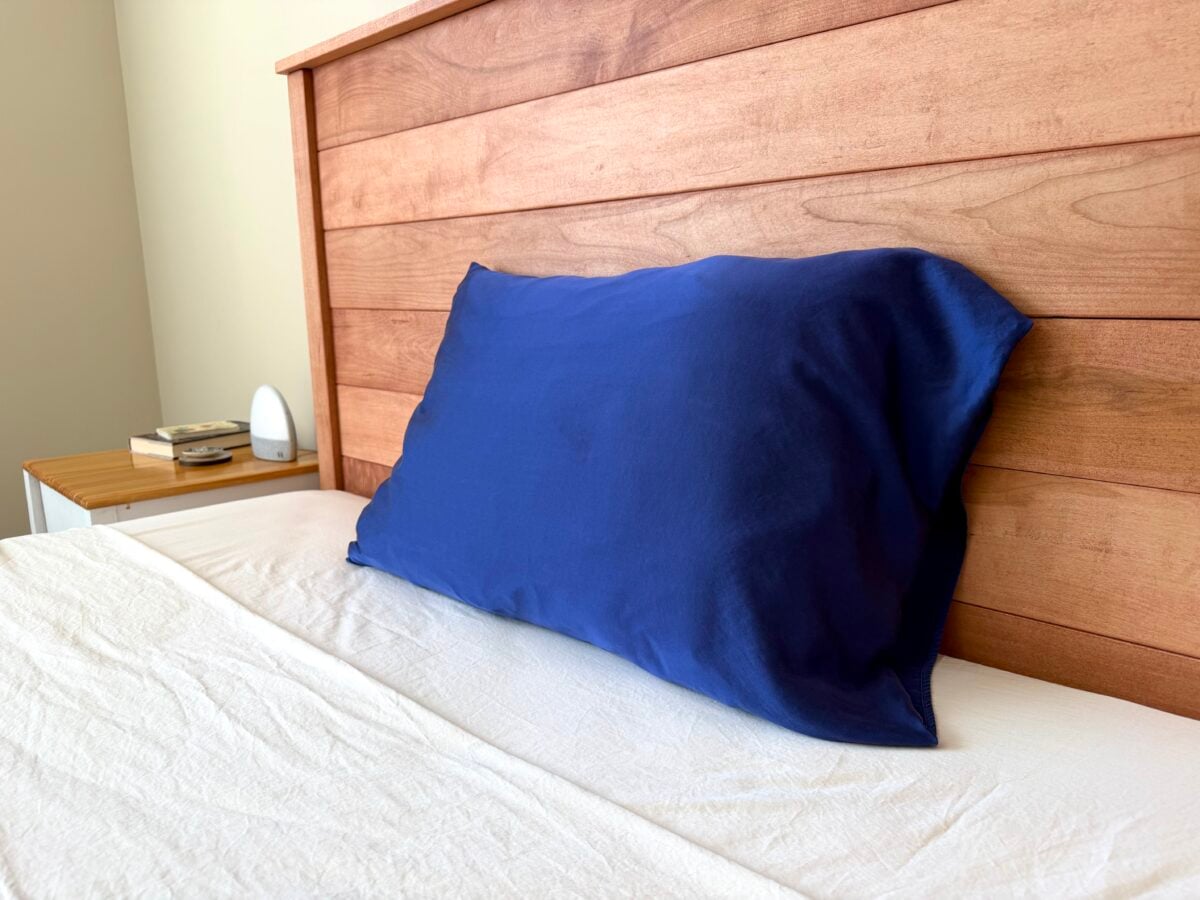
My review:
Their silk pillowcase (pictured right above) definitely gives luxury vibes—it’s about as soft & silky as you’d expect it to be! I know a lot of girlies like to sleep on silk pillowcases because it can help prevent new wrinkles and frizzy hair.
It’s made of 22-Momme Mulberry silk, which is one of the finest silks in the world. It also has an envelope enclosure to make sure your pillow stays inside.
They don’t have full silk bedding sets, but they do have an organic cotton sateen set (which is made of cotton but has a silkier texture than most cotton sheets), and then you can just upgrade your pillowcase to real silk if you want to do that.
I have one of their sheet sets and I like it! It’s 400-thread count and comes with both the GOTS and MADE SAFE certification. It’s available in standard or deep-pocket.
This is kind of random, but this is the only brand I’ve seen so far that labels the long side of the fitted sheet. It’s a small thing, but it saves me an extra seven seconds when I inevitably put the corner of the sheet on the wrong corner of the mattress!
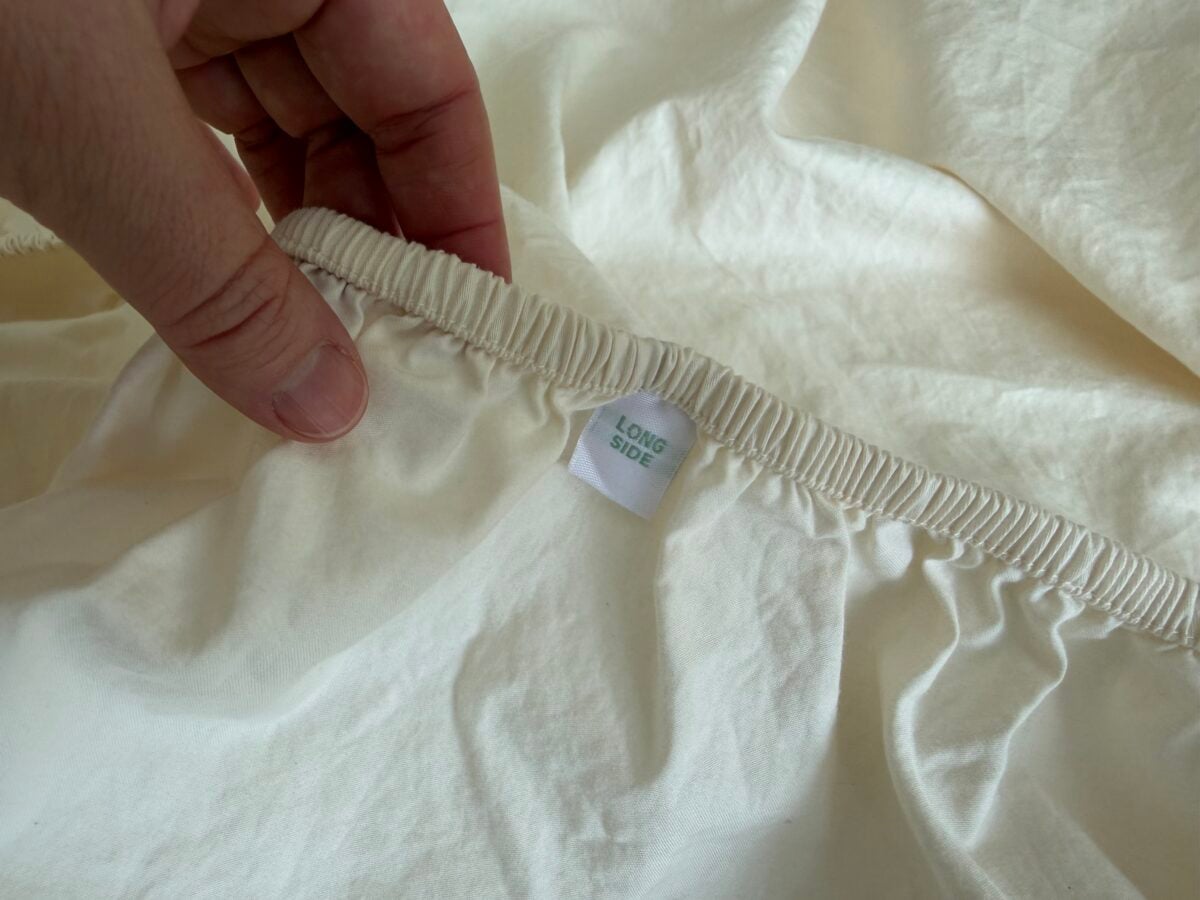
And it didn’t have any smell to it at all when I first opened it.
AIZOME (best for acne-prone & sensitive skin)
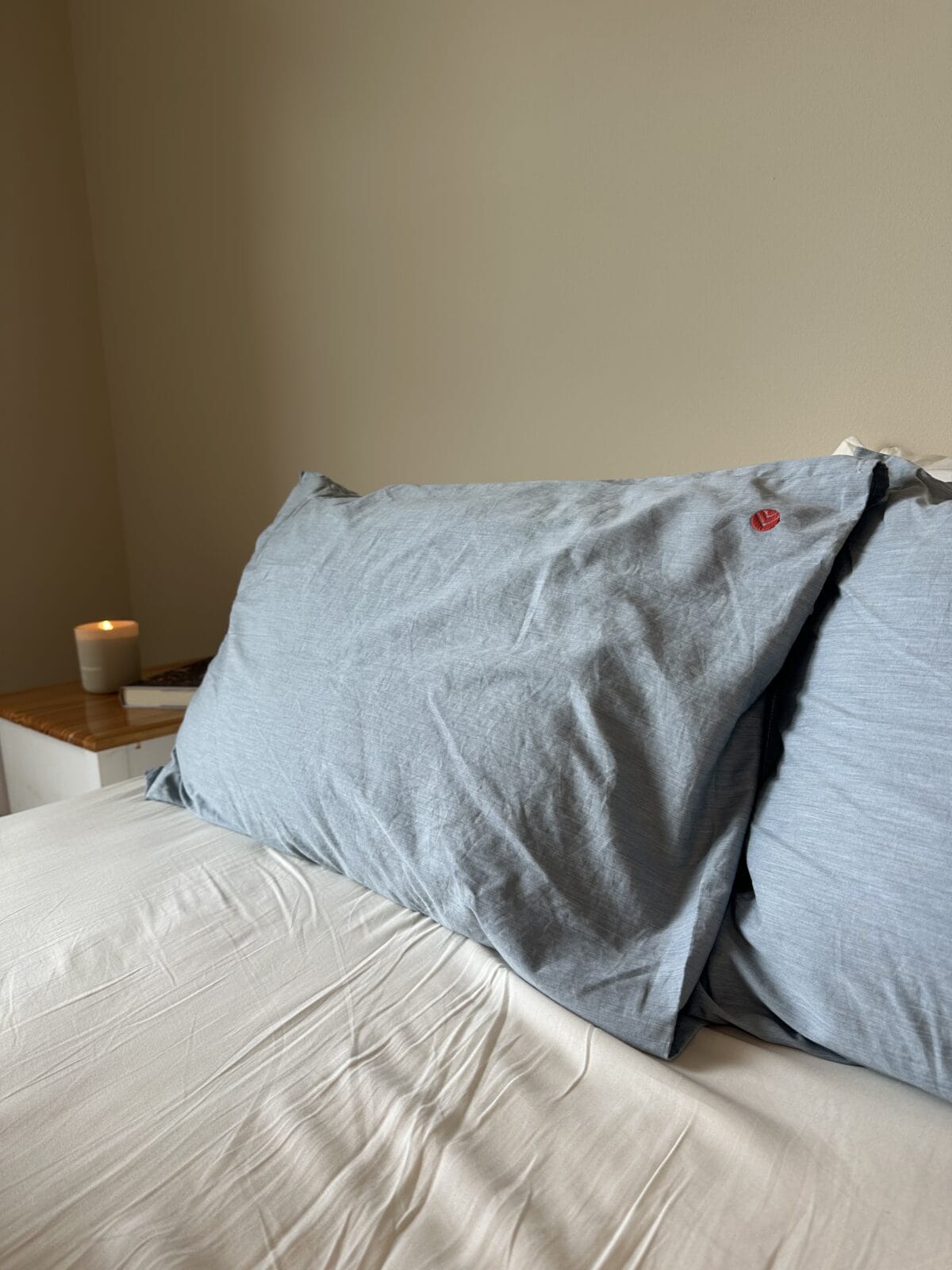

Materials: Organic cotton, plant dyes
If you (or someone in your family) has sensitive skin, eczema, acne, allergies, or are chemically-sensitive, you have to check out AIZOME!
My Review:
I have a set of their pillowcases, and I really like them! They aren’t cheap, but I think they are worth it if you have any of the conditions I just mentioned.
I can tell how high-quality they are just by the touch, and I can tell you I will be using these pillowcases for a long time.
Yes, they are made of 100% GOTS certified organic cotton, BUT they go beyond that.
They’re actually cleared as a FDA class 1 medical device because they aim to address and relieve common skin problems.
Here’s the thing that really sets them apart: They dye their bedding with medicinal plant dyes like indigo and madder, which have natural antibacterial properties. If you look at their internal antibacterial test results, their bedding performed better than the silver-impregnanted “antibacterial” bedding. (Silver is often used to give textiles antibacterial properties, but it comes with its own issues.)
It might go without saying, but bacteria on your pillowcase can cause or exacerbate all kinds of skin issues, from acne to inflammation, so preventing bacteria growth can be crucial in helping solve skin issues.
Additionally, they’ve got peer-reviewed research on the wound-healing properties of indigo, too. This study found that indigo was on par with the leading topical steroid, but with none of the side effects. So not only could their indigo-dyed pillowcase prevent skin issues from becoming worse, but it could also potentially help your skin heal faster!
One last thing I want to tell you about for now is how their bedding is dyed. They developed a patented AIZOME ULTRA™ technology that uses ultrasound to infuse the fabric with the plant’s color pigments and properties. Not only does this allow for a significant reduction of water and energy usage but I think it’s so cool that the “entire process is so clean that they can reclaim their wastewater as a skincare ingredient” (though so far, it’s only been used in experimental products).
This is kind of wild because the standard textile manufacturing process is usually pretty dirty. They’ve actually won several awards for this process.
Use code THEFILTERY10 for 15% off.
My Green Mattress
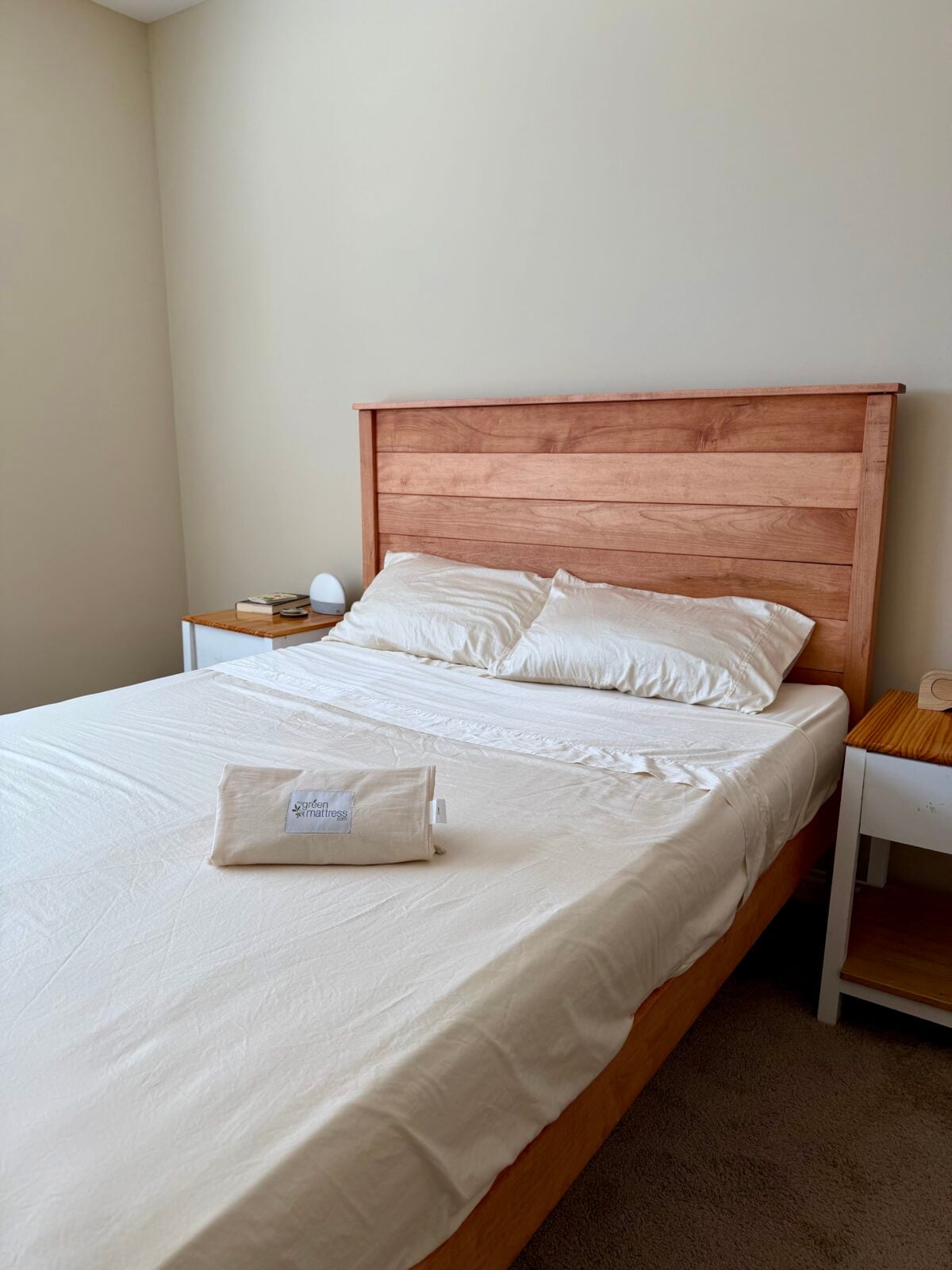
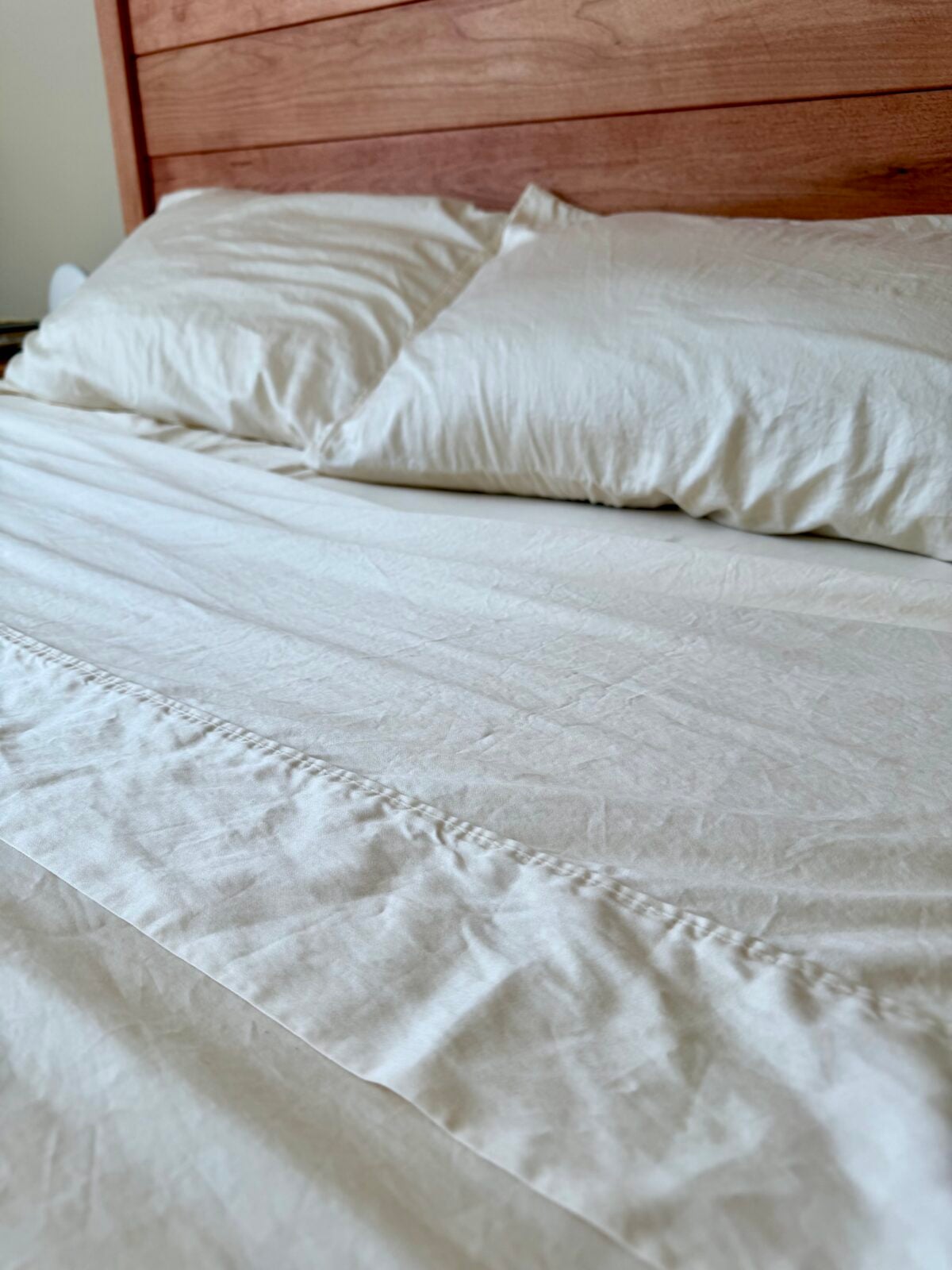
Price Range: $109 (before discounts)
Materials: Organic cotton
My Review:
I actually really love these sheets—they are some of my favorites among the organic cotton options. While they’re not as soft and silky as TENCEL, they are definitely silkier than most other 100% organic sheets I’ve tried. This is probably due at least in part because of the fact that they’re 600 thread count. You can kind of see in my photos above how they have a silky reflective sheen to them.
The fitted sheet is deep enough to fit a thick mattress. The only downside to this set is that the pillowcases don’t have the pocket to keep your pillows in!
They’re only available in two ‘colors’—natural or white. (I have the natural ones.) But they have pretty much every size you’d need, from crib to California king. They’re all 100% GOTS organic cotton.
Use the code THEFILTERY26HOLIDAY to get the current best price.
Coyuchi
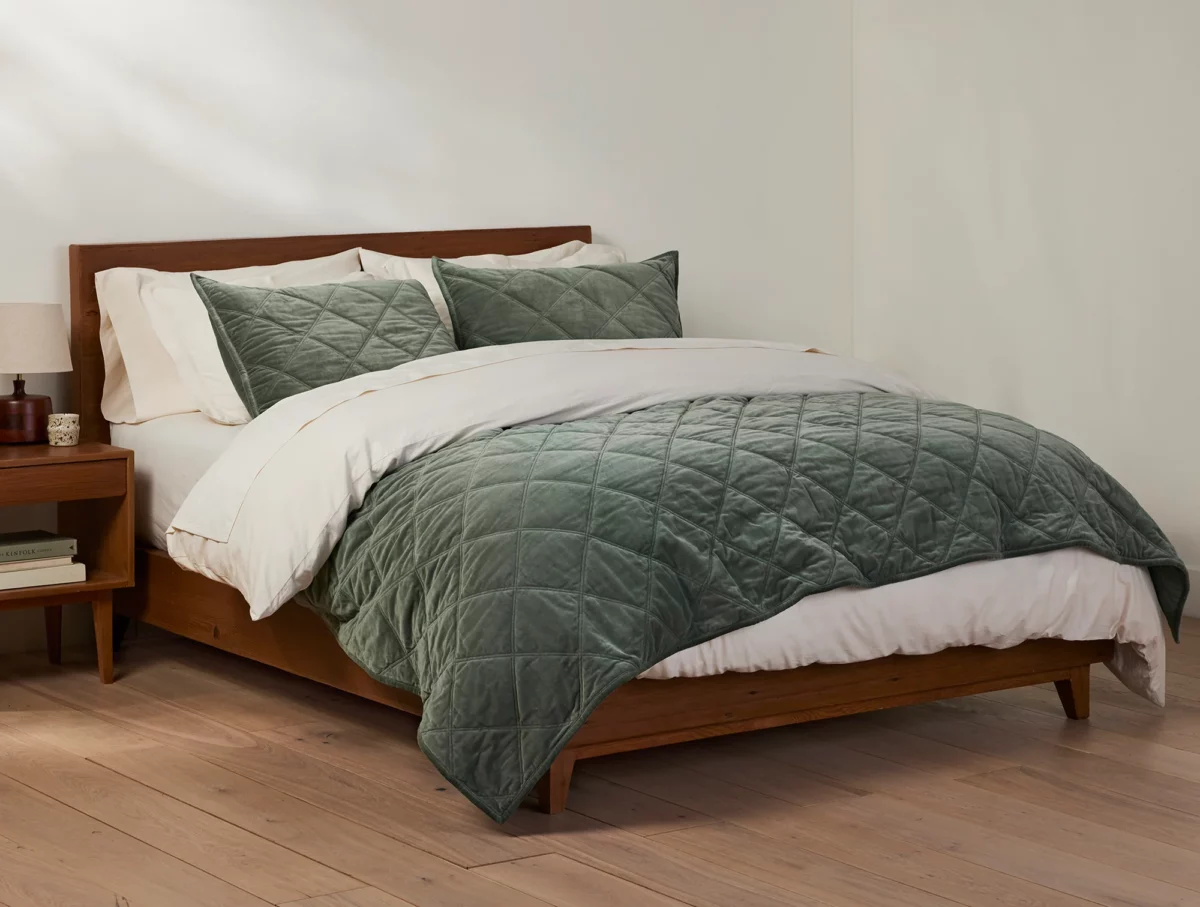
Price Range: $98 – $798
Materials: Organic cotton (percale, sateen, flannel, and jersey), natural linen
Coyuchi is a leader in organic, non-toxic bed and bath products; I love their collection.
Their organic sheets are completely free from all dyes and other potentially harmful chemicals. Depending on the specific product, they may come with one or several third-party certifications, including GOTS, MADESAFE, and others.
They have colored, patterned, and undyed options.
Even better, they partner with farms and mills to make sure everything is made ethically and sustainably, and are working to implement more circularity into their process. You can definitely feel good about sleeping in these sheets.
Pact
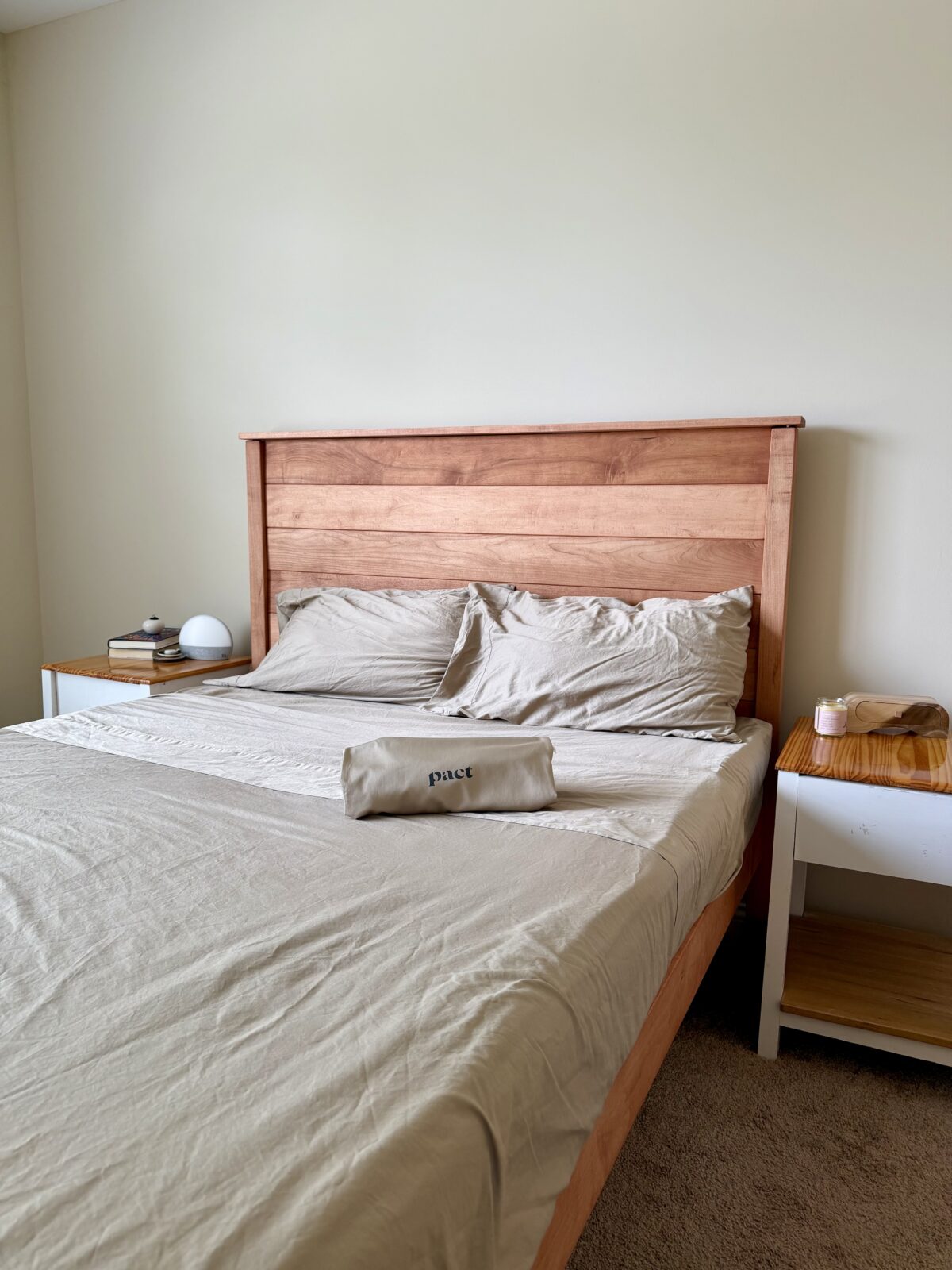
Price Range: $36 (on sale) – $160 (before discounts)
Materials: Organic cotton (percale, sateen, & jersey)
Pact started out with underwear and was one of the first companies to offer organic basics at a more accessible price point.
Now, they offer affordable, organic cotton sheets as well.
My review:
I really like these organic sheets. I got the sateen ones, so they have more of a silky feel. They call them “Organic Room Service” sheets, nodding to their luxe hotel vibe, and I would say that’s accurate. They definitely have a high-quality, luxurious feel to them. But they’re also lightweight and the silkiness makes them great for warmer weather.
These sheets did have a very slight smell to them when I first got them, but it was almost unnoticeable; I had to put my face right up to them to smell it. It went away as soon as I washed them once (which I do with basically every new fabric product I buy).
If the sateen is not for you though, they also have jersey cotton sets or cool-air percale, in addition to other bedding necessities like duvet covers and blankets.
They’re all made in Fair Trade certified factories out of GOTS certified organic cotton.
I’m happy with these sheets and would definitely buy them again.
Use the code THEFILTERY15 for 15% off full-priced items.
American Blossom Linens (made in the USA)
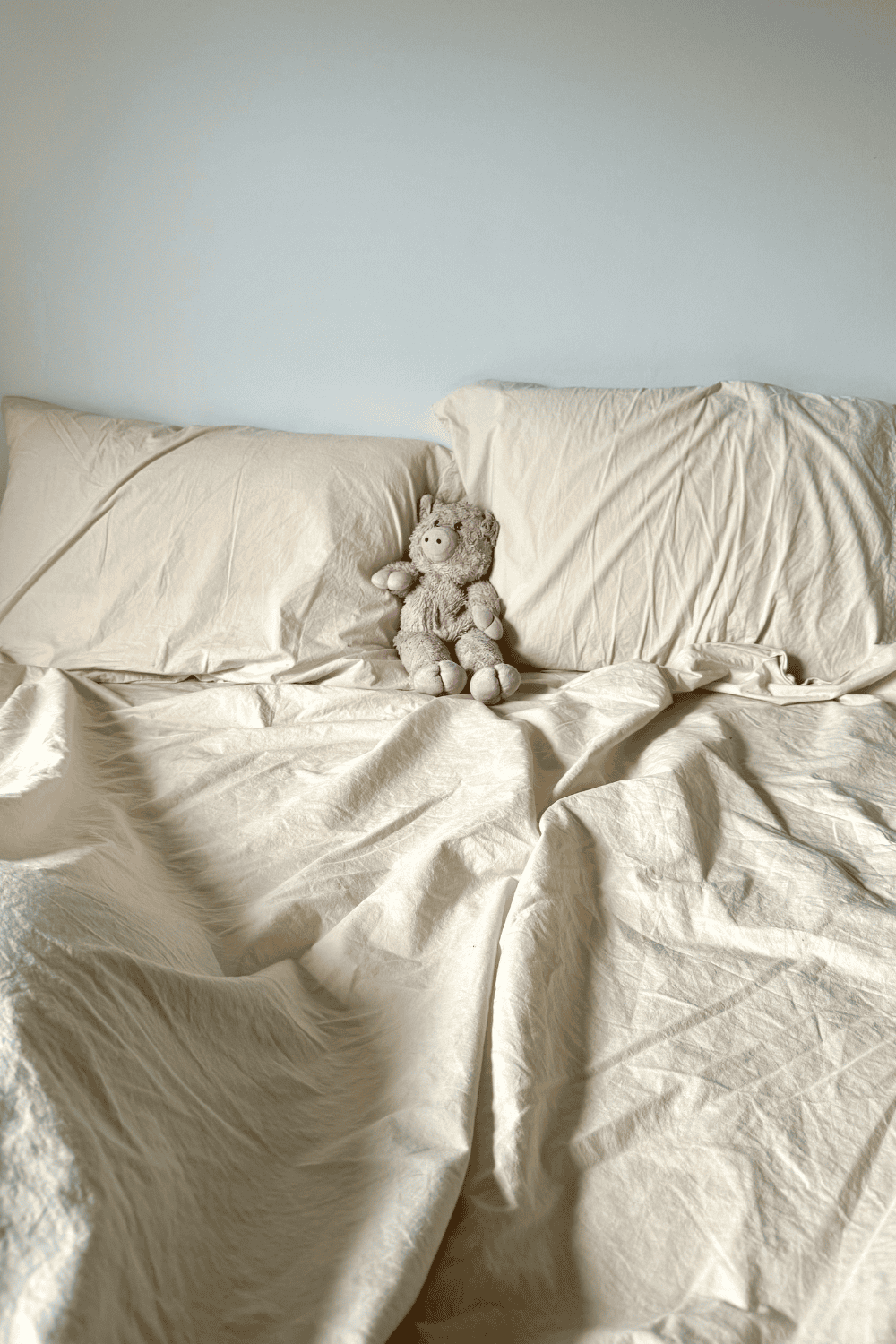
Price Range: $249-$429 (for a set)
Materials: 100% American-grown & spun cotton (some organic, some conventional)
If you’re someone who prefers to buy Made in the USA when you can, then you’ll want to check out American Blossom Linens. This is one of the only brands I’ve been able to find that makes their bed sheets entirely in the USA.
Yep. From growing and spinning the cotton, to the stitching and assembly, the entire supply chain is done by farmers and workers here in the U.S.
And of course, this bedding is also free from potentially toxic dyes and other chemical additives. (In fact, many of their options are completely undyed! They even have some sheets made with Foxfibre® Heirloom Cotton, which is naturally colored cotton.)
Use the code FILTERY for 15% off.
Birch
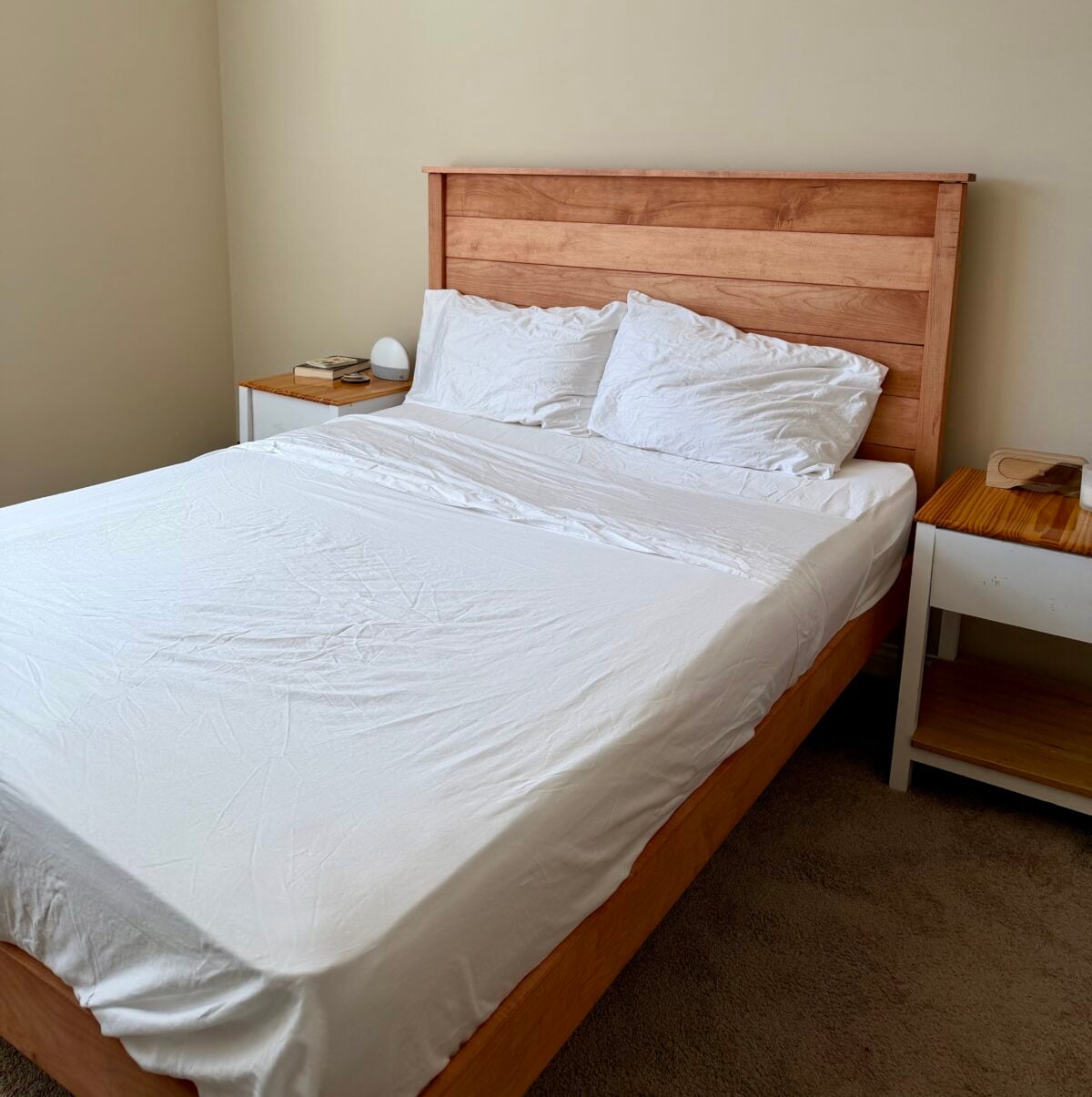
Price Range: $149-248
Materials: Organic cotton
In addition to their non-toxic mattresses and bed frames, Birch has just about everything you could need for bedding: from organic cotton sheets and pillow cases, to mattress protectors, duvet inserts, and more.
Their Fair Trade certified sheets are made out of 100% organic cotton with a luxurious sateen weave and come in a variety of neutral colors. Plus, you get free shipping, a 100-night sleep trial, and a 1-year warranty, too!
My Review:
I have their organic cotton sheet set in white and they’re pretty nice! I wouldn’t say they’re anything super special, but if you need a set of hotel-quality sheets at a more affordable price point (these go on sale all the time), then these are not a bad choice.
They are 320 thread count, which means they’re crisp while still being soft and comfortable. The fitted sheet is deep enough that it can easily fit a thicker mattress. And the pillow cases have pockets to keep your pillows in, which I always appreciate.
I will say that these sheets did smell a little bit when I first got them. It went away as soon as I washed them once (I wash all new sheets before I use them regardless), but those with chemical sensitivities will want to keep this in mind.
P.S. I actually ended up liking their pillow a lot more than their sheets. (I did not notice any smells when I first for the pillow.)
Use code THEFILTERY20 for 20% off your order.
Buffy
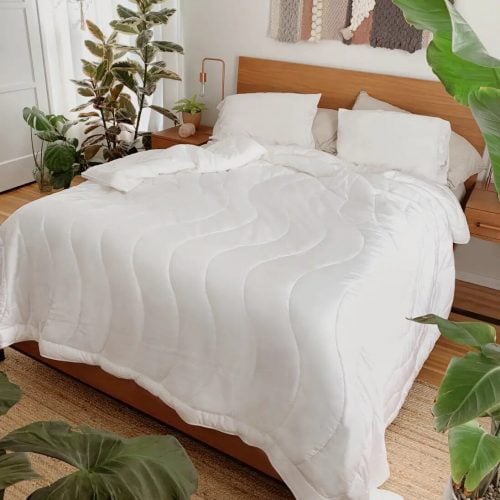
Price Range: $90 (on sale) – $598
Materials: TENCEL, linen, cotton (conventional)
Here’s another brand that offers cooling TENCEL bedding that is great for those who run hot at night.
Their eucalyptus sheets, comforters, and duvet covers are not only made from natural materials, but they’re better at regulating temperature than cotton—the fabric is literally cool to the touch.
They have a pretty generous guarantee, too. You can try Buffy for free to see if it works for you, and send it back if it doesn’t.
Parachute
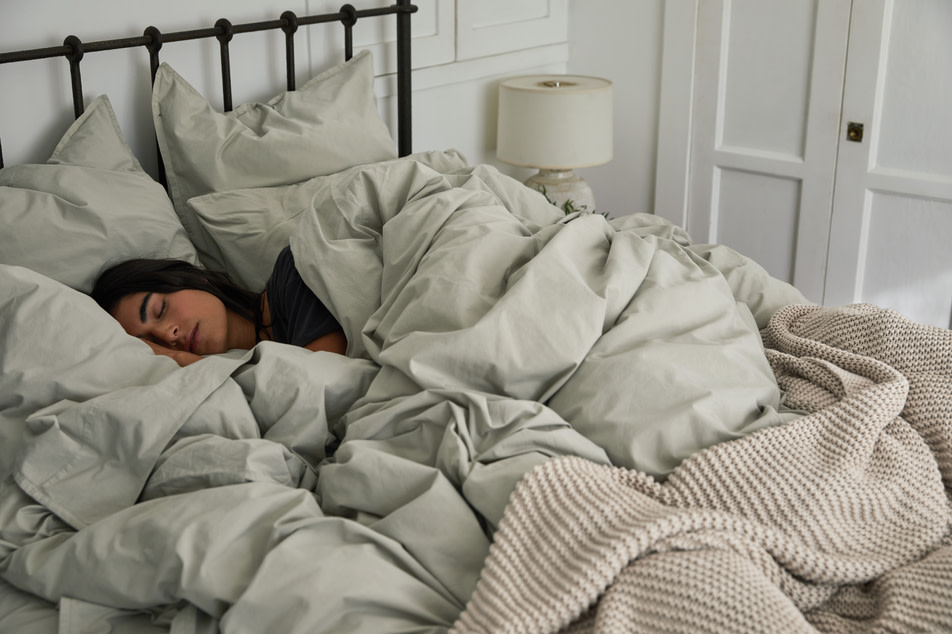
Price Range: $70-1,171
Materials: Organic cotton (percale, brushed, sateen, soft luxe), linen
I love my linen sheets from Parachute! They do sleep a little warm, so I especially like to put them on my bed during the winter.
Parachute has been creating affordable luxurious bedding and home goods with a direct-to-consumer model for a while now… but they’ve recently been building their organics collection, big time! Their bed sheet sets, duvet covers, pillows and pillow cases, & other bedding come with GOTS and OEKO-TEX certifications for safety and are ethically made in Portugal and the USA.
Other products in their Organics Collection include towels, bath robes, throw pillows, loungewear, and more.
Even more organic sheets
If by chance you didn’t find what you were looking for in the best organic sheets listed above, here are even more brands that offer cozy bedding made out of certified organic materials:
Happsy (organic cotton) | Amazon
Quince (variety of materials)
Brooklinen (conventional & organic cotton, linen) | Amazon
I told you there were a lot of organic cotton bedding brands to choose from! 😄
Bonus! My favorite organic/non-toxic weighted blanket
Weighted blankets use something called deep touch pressure (DTP), which has been shown to decrease cortisol and anxiety, and increase serotonin and melatonin in some people. With the amount of stress and anxiety so many people face today, it’s no wonder the trend has so strongly caught on!
But many people wonder: are weighted blankets harmful? Since they’re made out of much of the same materials, weighted blankets come with many of the same problems that other traditional bedding and sheets do. It’s important to take the same steps when looking for a natural, non-toxic weighted blanket: look for natural fabrics and third-party certifications that indicate safety.
My fave: Bearaby
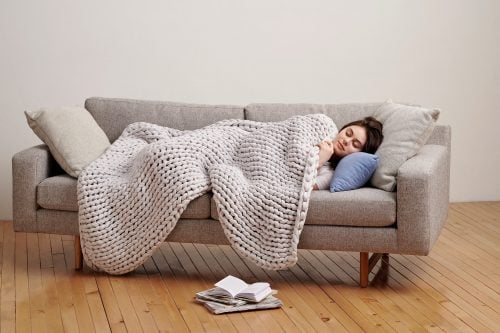
I don’t say this lightly (get it??): you are almost guaranteed to love Bearaby’s natural weighted blankets.
They have several different variations of their chunky knit blanket: the Cotton Napper (which is made from long-staple, GOTS-certified organic cotton), their Tree Napper (which is made from eco-friendly TENCEL fabric; this is the one I have), the Nappling (which is made from organic cotton just for KIDS!), and a few others.
Each of these blankets comes with several different third-party certifications, such as OEKO-TEX and Fairtrade International. They come in weights from 8 to 25 pounds, so you can get the best size for you (it’s recommended that your weighted blanket be roughly 10% of your body weight).
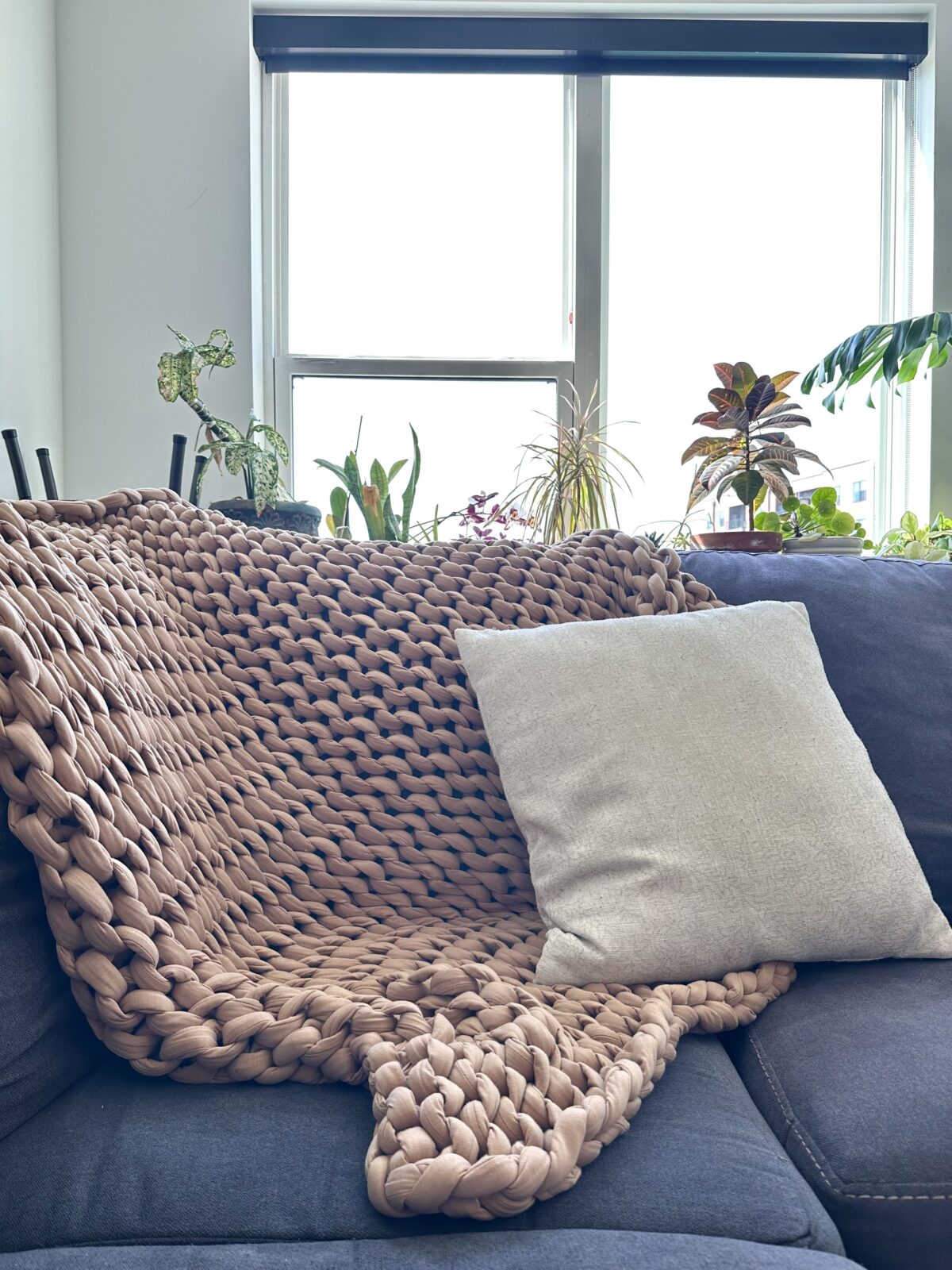
Do weighted blankets make you hot? Some can! But because Bearaby is hand-knit, the holes keep you from getting sweaty. If you normally tend to run hot while you sleep, I recommend getting the TENCEL blanket (the Tree Napper).
As I mentioned before, the TENCEL fabric (which comes from eucalyptus trees) has a cooling effect, so the surface temperature of the blanket legitimately stays cool, even after you’ve been snuggled up with it for hours! I use mine on the couch almost every night!
These blankets are gorgeous and come in lots of different colors, so you can get one that looks great thrown over your couch or on the end of your bed.
What makes bedding toxic?
Just like with other kinds of textiles, a lot of bedding and sheets are made using synthetic materials and chemicals that can cause serious long-term health issues.
I’ll go through the different harmful materials here, but first, let’s start with one of the most common culprits found in wrinkle-resistant and anti-static sheets: formaldehyde.
Formaldehyde, the “complete carcinogen”
Most people are aware that formaldehyde is toxic. It is a known carcinogen and is classified by the EPA as a “Hazardous Air Pollutant” that can cause allergic reactions and respiratory problems.
Short- and/or long-term exposure to formaldehyde can also cause things like headaches, scratchy and watery eyes, dizziness, nausea, rashes, fatigue, and insomnia.
People who are more at risk for the negative effects of formaldehyde exposure include babies and young children, elderly individuals, pregnant people, and those with conditions like asthma, respiratory illness, or chronic disease.
What you may not know is how often textiles like clothing and bedding are treated with formaldehyde. You know those labels that say things like “wrinkle-free” or “static resistant”? Those should be a red flag because there’s a good chance these fabrics have been treated with a formaldehyde-based permanent press process in an attempt to keep the wrinkles away.
Unfortunately, you can’t just wash the formaldehyde away after the fabric has been processed, either. Although washing, wearing, and airing out (“off-gassing”) the fabric can help decrease the amount of formaldehyde contained in the fabric, the chemical’s resin is a permanent part of the textile.
The worst part: there are currently NO regulations in the United States on formaldehyde in textiles.
Avoid chemically-treated sheets marketed as:
To avoid formaldehyde in your bedding and sheets, try to stay away from products and labels with words like:
Wrinkle-free
Easy-care
Shrink-free
Anti-static
Other potentially toxic chemicals found in bedding
In addition to formaldehyde, there are other harsh chemicals that are commonly found in conventional bedding as well. These include:
“Antimicrobial” and “Antibacterial” Additives
These are two more labels that should raise a flag for you. Chemicals like Triclosan are often added to textiles for their anti-microbial properties, but the chemical is a known endocrine disruptor. It was banned from hand soap by the FDA in 2017, but is still allowed in textiles.
Stain Repellants
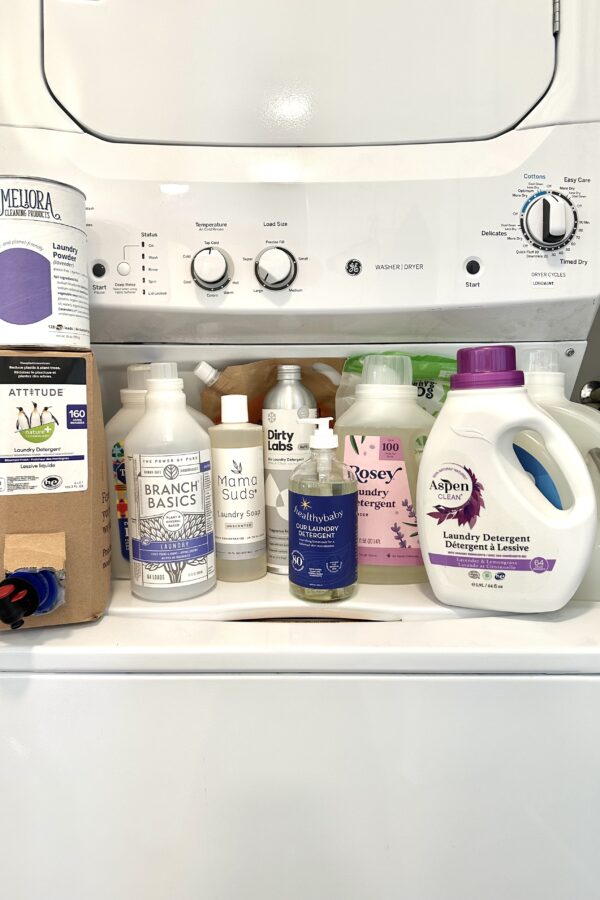
Many companies make their sheets stain-resistant using PFAS. PFAS are those “forever chemicals” that can cause cancer, autoimmune disease, infertility, and more. Plus, they build up in the body over time and we have virtually no way of “detoxing” them (hence their nickname “forever” chemicals). Instead of getting stain-resistant sheets with added chemicals, just use some really good non-toxic laundry detergent and stain remover instead!
Azo Dyes
A lot of textiles are conventionally colored with azo dyes, which can be carcinogenic. Look for brands that either don’t dye their bedding at all, or use non-toxic dyes instead. The OEKO-TEX and MADE SAFE certifications can help you ensure there are no azo dyes used in coloring your bedding (more on those labels below).
Pesticides (maybe)
Conventional cotton is grown and processed using pesticides, many of which can be toxic. It’s not entirely clear if (or how much) of this pesticide residue may end up on a final textile product. However, considering that the pesticides sprayed on cotton fields end up in our waterways, air, and soil, buying organic sheets is healthier for our overall health and that of our entire eco-system.
Polyester & other plastics
Many people wonder: is it okay to sleep on polyester sheets? Polyester, acrylic, and nylon are common synthetics used in bedding and sheets. But they’re petroleum products, aka plastic. That means they’re not good for the environment, but also might be bad for your health, too. Synthetic fabrics like these can contain endocrine disruptors and carcinogens.
(Not to mention: they shed microplastics into the waterways every time you wash them.)
It’s not always possible to avoid synthetic fabrics completely, but considering there are affordable organic sheets on the market, making the switch to all-natural bedding is one relatively easy step you can take.
The other thing to consider about polyester and other plastic fabrics is that they’re not usually as breathable as sheets made from natural and organic materials. So if you tend to sleep hot, that’s another reason to choose organic textiles.
What to look for in chemical-free, non-toxic bedding
Now, let’s talk about what to look for in your chemical-free bedding.
The good news is that there are honestly so many great options for organic sheets these days. Even big box stores like Target are offering more bedding made from organic materials!
We are surrounded by environmental toxins every day, and unfortunately, a lot of those toxins can’t be avoided. That’s why I usually recommend choosing the safer, healthier option when it comes to things we do have control over—and that includes the fabric we sleep on!
Making the switch to non-toxic home goods can help to prevent long-term health concerns in the general population, as well as help sensitive populations (babies, those with autoimmune conditions, etc.) take better care of themselves.
The first thing to look for in chemical-free bed sheets is 100% natural, wicking, and breathable fibers. Look for fabrics like:
Organic cotton
Linen
TENCEL (which is a semi-synthetic that’s great for cooling sheets!)
Hemp
Silk
Wool
Next, you’ll want to look for third-party certifications when possible.
Certifications to look for in non-toxic sheets
Third-party certifications are a great way to ensure your non-toxic bedding and sheets have passed a specific set of standards that ensure no toxic chemicals are used before the sheets get to you. Here are some of the most common certifications to look for:
Global Organic Textile Standard (GOTS)
This label indicates that the material used to make the non-toxic bedding (usually cotton) is grown without the use of toxic herbicides, pesticides, and other toxic chemicals. You may find an entire product is labeled as GOTS organic (which means at least 95% of the materials used are certified organic) OR you might find that JUST the cotton (or other raw material) is certified organic.
GOTS certified products also require other ethical and sustainable practices as well, like fair wages for workers and more.
And don’t forget about your pillow, too! Brands like Circadian offer all-natural and certified organic pillows that allow you to choose what’s best for you—from extra firm to super soft.
OEKO-TEX
Finished products with this certification have passed a certain set of criteria verifying that they’re free from a list of toxic chemicals, which includes formaldehyde and azo dyes. (OEKO-TEX also banned all intentionally-added PFAS from certified products in 2023/2024.)
OEKO-TEX also has a new certification for organic cotton, which is supposed to provide complete traceability. So now finished products can be certified with the OEKO-TEX Standard 100 label, but organic cotton products can also be certified for the entire supply chain as well.
MADE SAFE
MADE SAFE is a great label that’s similar to OEKO-TEX in that it investigates and certifies that certain products are made without chemicals that are known or suspected to be toxic to human and environmental health.
Fair Trade Certified
Although this doesn’t necessarily have to do with the chemicals involved, looking for a transparent and ethical supply chain is great, too. Organic cotton bed sheets that have been made in Fair Trade certified factory ensure that the workers have been paid a living wage and work in safe conditions, and that there is no child labor involved.
The Filtery has been an independently owned & run small business from the very beginning—and we’d like to keep it that way! If you want to back accessible, human-created, and well-researched content on reducing toxins in your home, consider supporting us.

Hi Abby! Thanks for this list. I am allergic to dust mites, so I try to find bed sheets that are 400 thread count. Do you know if any of these brands sell 400 thread count sheets? I really like Coyuchi, but the last time I checked Coyuchi is 300 thread count.
Yes, look at Naturepedic, My Green Mattress, and Avocado! They all have thread counts 400 and over available. I just added some additional info about that.
I can not thank you enough for making this list for us consumers. I love my job made easier to take the best possible care of my family. Y you have made me look good and full of knowledge. Thanks again MIckey Burgess PS Do any of these brands incorporate silver?
You’re welcome – I’m glad it could be helpful! 🙂 But no, I actually don’t generally recommend silver-impregnated fabrics. https://thefiltery.com/colloidal-silver/
I purchased these sheets before I started becoming aware of toxins; could you by chance tell me if they’re really bad? Thanks much!
Cosy House Collection 100% Rayon Derived from Bamboo Bed Sheet Set – Cooling, Breathable, Silky Soft 4-Piece Deep Pocket Bedding Set (King, White)
https://www.amazon.com/dp/B0B4F4NTBL?ref_=ppx_hzod_title_dt_b_fed_asin_title_0_0&th=1
No, they’re not really bad! Rayon is not non-toxic to manufacture (it’s polluting to the surrounding air/water where it’s processed), but there is no indication that it’s bad for the end user. So although I don’t recommend it for people shopping, since you already bought them, I would not worry about it. 🙂
This is helpful info.
In addition to sheets, I’m wondering what you’re recommending for comforters. We’ve loved our cotton outer/down filled blankets and comforters that need replacing.
Thank you.
Hey Annie! Yes, check out this guide: https://thefiltery.com/natural-organic-duvet-cover-comforter/
Great write up and recs. Thank you. In the market for new bedding and there’s lots to review now!
Hi, you mentioned targets organic sheets but I was wondering if you recommend these? https://www.target.com/p/300-thread-count-organic-cotton-solid-sheet-set-threshold-153/-/A-51818784?preselect=51598314#lnk=sametab
Hi Jess, yes – it looks like these come with both GOTS and OEKO-TEX certification so I would say they’re a pretty good option. 🙂
I’m alarmed to find out that there’s also toxicity found in bed sheets. I’ll definitely heed your warning and check out your tips
Thank you for this information. I certainly appreciate having the knowledge and the chance to care for my body! Now I will be able to relax and rest much better. Just today located your site! hooray! Nancy