Subscribe to our weekly email newsletter. →

These days, most makeup brushes, blenders, and sponges are made out of plastic.
Personally, I wouldn’t prefer to wipe plastic all over my face while I’m applying foundation each day. Are there any microplastics rubbing off the brush and into my skin? Is the makeup brush or sponge breaking down, releasing microplastics into the environment so that I then breathe them in?
Plus, makeup sponges need to be replaced relatively frequently. (About every three months is what’s recommended.) That’s just more plastic for the landfills, waterways, air, and soil.
But the problem is that going plastic-free for your makeup application is kind of complicated.
First, almost all natural, plastic-free makeup brushes are made with animal hair, which brings up the issue of animal welfare. I’d prefer not to use plastic brushes, but I also don’t want any animals to suffer for my makeup habits either.
Second, synthetic hair brushes tend to be more hygienic and easier to keep clean over the long run.
Sadly, it seems like there might not be a great option for non-toxic makeup sponges and brushes right now.
BUT, I’ve gathered together all of the options we currently have available so that you can at least make the best decision for you (even if it’s not the perfect one!).
This guide contains product recommendations and we may receive compensation if you purchase through certain links. As always, we only make recommendations that are genuine!
Here are your options for makeup sponges & brushes
When it comes to primary materials for makeup sponges and brushes, your basic options are:
- Plastic (what the majority of brushes & blenders are made of these days)
- Biobased plastic
- Animal hair (like goat, squirrel, or fox)
- Silicone
We’re going to talk about each one of these.
Brushes are more eco-friendly than sponges
One thing to consider as you make your purchasing decisions is that, over the long term, makeup brushes are more sustainable and low-plastic than sponges and blenders.
A beauty blender/sponge will need to be replaced multiple times per year, whereas a high-quality brush will last years—if not decades! (You’ll just need to wash it periodically, of course!)
For this reason, I’d argue that even if you choose a makeup brush with synthetic fibers, that’s still a better option than a blender/sponge in the long run.
Now let’s dive deeper into our options for makeup application tools…
Bio-based synthetics
Bio-based synthetics are an “okay” option when it comes to certain product categories.
Bio-based plastics are usually made from materials like castor bean oil, corn, or potato. They are still considered plastic, but they’re plant-based instead of petroleum-based.
I’m not a huge fan of bio-based plastics in general for a few reasons. We don’t have a ton of data about them, it’s not clear whether or not they truly biodegrade, and we don’t really know if they are free from all of the toxic chemical components that come with conventional, petroleum-based plastics.
That said, when bio-based plastics are basically the only option (especially the only vegan option), then I do think they are probably better than traditional plastic. We have to work with what we’ve got, right!?
Bio-based brands
Considering how many toothbrush brands are using bio-based bristles these days, I was surprised that I couldn’t find more options for makeup brushes and sponges. I’m guessing it’s probably because they haven’t figured out how to get the material to be soft/fine enough yet.
I was not able to find any biobased brushes, but I did find a couple of biobased sponges:
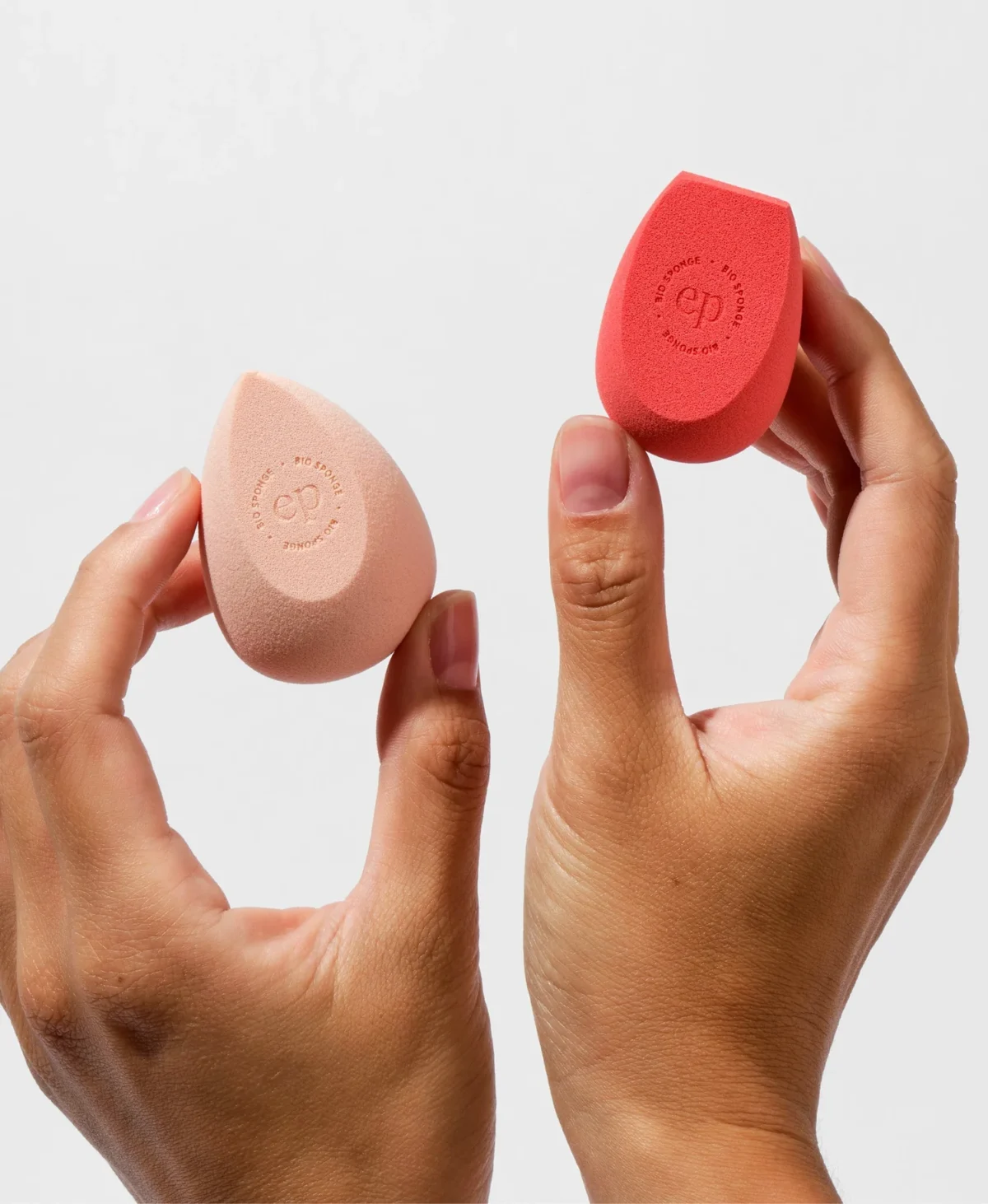
Ere Perez bio all-beauty sponge: This is one of my top choices for a non-toxic beauty blender that is plant-based and vegan. It’s made of a biopolyurethane that is extracted from corn, cassava, and sugarcane, and that they use flowers to dye it. (Note that Ere Perez’s brushes are made with nylon bristles though.)
You can find it at:
EcoTools Bioblender Makeup Sponge: This is another okay option. It’s made with water, corn, bionanopol**, a “natural preservative”, and “natural pigment”. I would prefer they were more transparent about what those last three ingredients are, so I reached out to ask. I’ll update this with more details if/when I hear back from them. (They say that the bionanopol is a “secret ingredient” that makes the sponge biodegradable and compostable.)
You can grab it at:
By the way, if you’re wondering about EcoTools makeup brushes, the bristles are synthetic. (The handles are made of bamboo and aluminum, though, so that’s better than all plastic!)
MCoBeauty Biodegradable Makeup Blender: Here is one more “biodegradable” beauty blender I found that appears to be “90% biobased”. It’s made of bio-based polyurethane, castor oil, plant pigments, and water (which is a very similar formulation as the EcoTools one). However, I don’t know much about this brand or how reputable they are.
Natural bristle makeup brushes (fude!)
In order to talk about natural makeup brushes, we have to talk about fude.
Now, I’m no expert on fude, but here are the basics:
Fude (筆) refers to handcrafted Japanese brushes, originally made for calligraphy and later adapted for cosmetics. Unlike most conventional makeup brushes on the market these days (which are mass-produced using synthetic materials), fude brushes are crafted by artisans using traditional techniques, and they often take weeks to complete.
Instead of machine-cut bristles, which can leave rough, uneven edges, fude brushes are shaped by hand to maintain the natural taper of each hair. This results in superior softness and product pickup, which is why they’re a favorite among professional makeup artists.
Traditionally, fude brushes feature natural hair from sources like goat, squirrel, fox, and horse.
Some animal hairs, like goat, can be sourced in ways that may minimize harm (like by shearing from the underbelly, where it doesn’t cause the animal pain). Some claim that when it comes to other animals, like squirrel or fox, the hair is almost always obtained in a less ethical way. Unfortunately, the overall lack of transparency in this area makes it pretty difficult to know the truth about what sort of conditions the animals are experiencing.
Considering that more folks are opting for vegan options these days, there are now high-quality synthetic fude brushes on the market, which are designed to mimic the softness and performance of natural hair.
In general, fude brushes are more expensive than conventional synthetic brushes, but because of how high-quality they are, they should last you a long time.
There are also some other issues you’ll want to consider before deciding whether or not you want to go with the fude brushes:
- They are prone to bugs. Yep, natural makeup brushes can be susceptible to insect infestations, particularly by mites and other small pests. These infestations may occur if brushes are stored in damp or humid conditions, or if they are not cleaned and dried properly after use. You’ll really have to maintain proper hygiene by regularly cleaning and drying the brushes, and storing them properly.
- Natural hair is also said to be more prone to hold on to things like bacteria and chemicals due to its irregular surface. So over the long term, synthetic brushes may be easier to keep clean and prevent skin irritation.
- There also may be some concern about what chemical cleaners are used during the manufacturing process of natural makeup brushes. In fact, Toups & Co. told us that the reason they decided to go with a synthetic makeup brush instead of natural is because of the chemicals used on natural bristles in order to deodorize them. Unfortunately, I wasn’t able to find very much information about this, but considering the fact that these bristles do come from animals and are prone to insect infestations, I would not be surprised if harsh chemicals were used. How much of those chemicals were still left on the final product, I have no idea.
If the concept of fude makeup brushes interests you, there are lots of great resources available online where you can dive deeper. (There’s a whole subreddit about it!)
Here are some of the most popular brands for fude makeup brushes:
Silicone
Silicone beauty blenders are an option too, although they come with mixed reviews from users. They were more popular several years ago, but they didn’t really catch on.
A lot of the silicone beauty blenders on the market are actually made of majority synthetic foam, and then they have a little silicone piece at the bottom (like this one for example). These aren’t really much better than any other synthetic sponge when it comes to reducing plastic.
There are a few all-silicone options on the market, though:
Silicone is not biodegradable or recyclable, so it’s not the most eco-friendly option out there. But it does tend to last longer than regular plastic and there is less concern about toxicity. 100% medical-grade silicone is best.
Again, there are very mixed reviews on the silicone beauty blenders. They don’t waste product the way brushes and sponges can, but they definitely feel different from foam. If you’re interested, you might just want to try it out yourself and see what you think!
Synthetic makeup brushes & sponges
As I noted above, there are pros and cons to synthetic makeup brushes. I would prefer a plastic-free option, but I also don’t want to have to worry about the hygiene issues that come with natural brushes…
I looked at over 50 brands for this article! Many of them I had to contact to ask what their brushes are made of. All of the brands listed below use synthetic material for their bristles. Some of them do use more eco-friendly materials for the handles though (such as FSC Certified wood or bamboo).
Many brands use a material called Taklon for their synthetic bristles. This is a soft type of polyester originally developed by DuPont that’s mostly just uses to make artist-quality paint, makeup, shaving and pin stripe brushes.
- 100% Pure
- Alima Pure
- Antonym (bamboo & aluminum handle)
- Artis
- Ciele
- Crunchi (handle is made from recycled aluminum)
- Earth Rhythm
- Elate (bamboo & aluminum handle)
- Exa (They do have a sponge that’s made of 50% coconut shell powder, but the other 50% is polyurethane foam).
- Fitglow
- Gressa (aluminum & wood handle)
- Hynt Beauty (handles are FSC certified wood + aluminum-plated brass)
- ILIA (wood & aluminum handle)
- Inika Organic (handle is made of a biobased PLA plastic)
- Jane Iredale
- Jenny Patinkin
- Jessup (This one literally says “plastic-free” but it’s not… Aka, it’s greenwashed.)
- Keys Soulcare (handles are FSC Certified wood + aluminum)
- Kosas
- Lys Beauty
- Love Peace Organic
- Merit (100% recycled aluminum handle)
- Miana (bamboo & recycled aluminum handle)
- Ogee (handles are FSC Certified wood + aluminum… This is the brush I use!)
- Piper Blue Makeup
- RMS (they give you directions on how to recycle their brushes through the Pact collective)
- Saie
- Sonia Kashuk™
- Taylor Made Organics (Their beauty blender is made of 50% upcycled coconut husks and 50% plant-based polyurethane foam — not sure what is used for the PU foam though.)
- Thrive Causemetics
- Toups & Co (They told me they decided to go with synthetic because of all the chemicals used on natural bristles to dye and sanitize them.)
- Uvé Beauty (They say they are made with at least 43% plant-based material. They’re also “antimicrobial” but they don’t tell you what’s used to make them antimicrobial, so I don’t recommend them.)
- W3LL People
- Zoeva (they used to use more natural animal hair but have since switched to mostly vegan synthetic)
Oorrr… You could just use your fingers?
The most natural and plastic-free makeup blender you can use is… your fingers!
This will obviously come down to preference. Some people are perfectly fine using their fingers, while others don’t like it. I think it largely depends on the type of product(s) you’re using. I personally have no problem using my fingers to apply stick-type makeup (like this or this, for example). But when it comes to things like liquid foundation or powdered eyeshadow, I do think brushes work better than fingers.
Ultimately, I just wanted to throw this out there as another option to consider!
Questions to help you decide what’s best for you
- Have you tried using your fingers? Could you go without a tool at all?
- Do you want a vegan option?
- Do you prefer a brush or a sponge? Or a mix of both?
- How much of an investment do you want to make? (Fude brushes tend to be more expensive.)
- Will you realistically keep up with the cleaning & maintenance required for a fude brush?
- How can you minimize the number of tools you need?
What I’m currently using

I’m currently using 3 makeup brushes:
- The Ogee Blender Brush, which I use for foundation and contour blending.
- Two old brushes I’ve had for a really long time — one for applying eyeliner and one for eyeshadow. I have no idea what brand these are. The handles seem to be made of plastic and aluminum. I can almost guarantee the bristles are synthetic as well.
As you can see, I’m still using makeup brushes with synthetic bristles! As I said before, I would prefer not to use plastic, but I also don’t want to deal with the hygienic issues that come with a natural brush. I also don’t want to spend the extra money on an ethically-sourced animal hair brush. Maybe if I was super into makeup, I would look into investing in one… But I’m not! 
I personally prefer brushes to sponges because you can use them for such a long time without having to rebuy them. Save on money and waste!
I hope that in the coming years, someone somehow invents a makeup brush or sponge that is both plastic-free and animal-free!
Non-toxic makeup brush cleaners
You’d think there would be more non-toxic makeup brush cleaners on the market, but there aren’t! Here are your best options for keeping your tools clean:
- Ogee (this is what I currently use, pictured above)
- Force of Nature (this is what I used before I got the Ogee brush cleaner)
- Thrive also has a cleansing pad that you can use with any non-toxic soap
- Or, you can easily DIY a makeup brush cleaner. (Stay tuned for another guide on that!)
If you have any other questions or thoughts on this topic, leave a comment below. And let me know which makeup application tool you end up choosing!