
I used to include quite a few Public Goods products on The Filtery.
I really like how affordable and “normie-friendly” the brand is, it’s a “one-stop-shop” where you can get a lot of different things in one place, and they have various safety & sustainability initiatives throughout the company.
But… Over the years, I have found myself removing them from various guides. I’ll go in to update a specific guide (like our hand sanitizer one, for example), and find that the Public Goods’ hand sanitizer formulation has changed and now includes undisclosed fragrance.
It’s not uncommon for brands to make changes to their formulations (for valid reasons!), but it’s always disappointing to see a brand move in the wrong direction when it comes to ingredient transparency and safety.
In general, I would put Public Goods in the better but not best category when it comes to ingredient safety and sustainability. I would buy some of their products, but not others (and I’ll tell you which ones below!)
In this deep dive (which was voted on by Premium Members!), I’m going to give you all the pros & cons of Public Goods from my point of view. And I hope that it will help you decide if you want to shop from them yourself!
P.S. You can use the code FILTERY20 for 20% off if you decide to buy anything.
What this review covers:
- The PROS. Here is what I LIKE about Public Goods:
- The CONS. Here is what I DON’T like about Public Goods:
- A few other things you might care about:
- My thoughts on using Public Goods products
- Let’s break it down… Here are the products I would buy, and the ones I wouldn’t
- All things considered: Is a Public Goods membership worth it?
- 🍋 Join Thousands of Subscribers Reducing Toxic Chemicals
This guide contains product recommendations and we may receive compensation if you purchase through certain links. As always, we only make recommendations that are genuine!
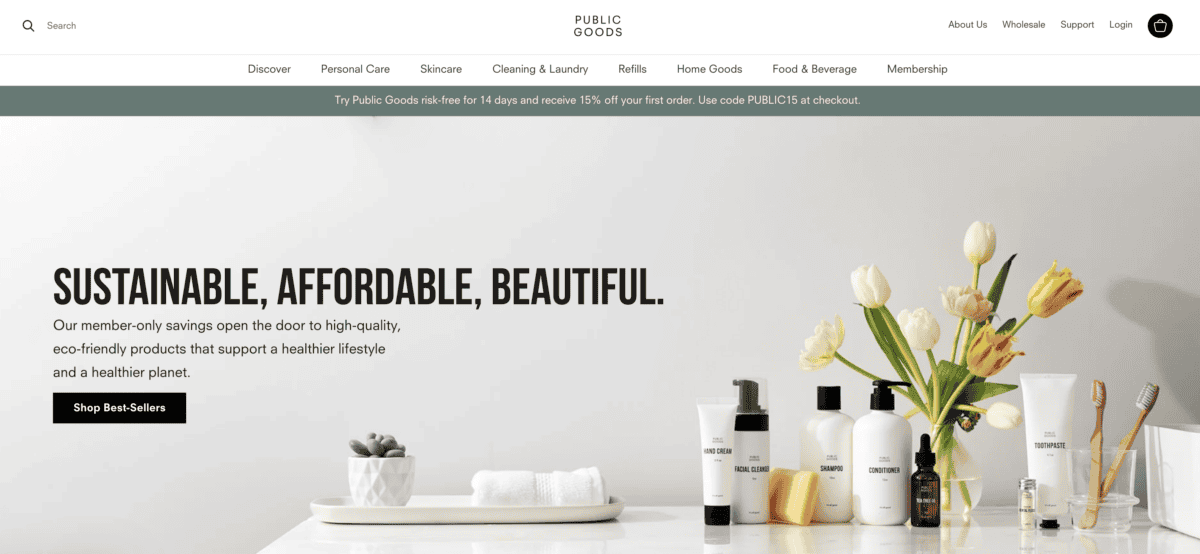
The PROS. Here is what I LIKE about Public Goods:
- Their products are free from all of the worst stuff like phthalates, parabens, and PFAS.
- It’s very “normie-friendly.” My little brother (who is not super into non-toxic stuff) loves Public Goods. I don’t know where he discovered the brand either; I didn’t tell him about it. I love knowing that my brother, and lots of others like him, are using safer (even if imperfect) products that are free from things like phthalates, etc.
- They carry a lot of stuff, so you can get a lot of different things in one place—personal care, home goods, groceries, etc. This can make shopping easier and cut down on shipping costs/carbon emissions.
- Although they do still use a good amount of plastic, a lot of their stuff is plastic-free, low-plastic, and/or refillable.
- Their grocery items are made with minimal ingredients, many of which are organic.
- I like their minimalistic and gender-neutral aesthetic.
- I have had a good experience with their customer service. They are usually quick to respond and answer my questions.
- Students can get 20% off their first order.
- They give back to non-profit organizations, including tree-planting initiatives and food banks.
The CONS. Here is what I DON’T like about Public Goods:
- There’s definitely some room for improvement when it comes to ingredient transparency. For example, some of their products contain unspecified “fragrance.” And there were a few products where I had a hard time even finding the full ingredient/material list at all.
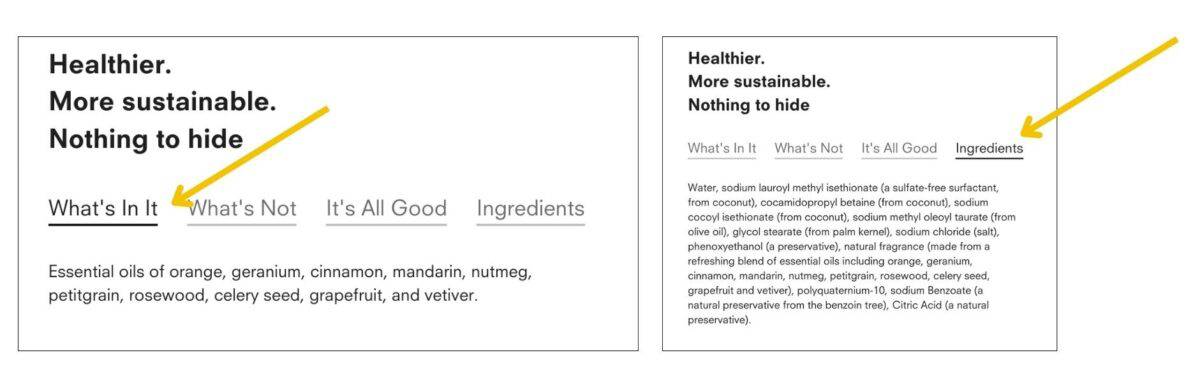
- Similarly, I think the way they have the details on their product pages set up is a bit confusing/misleading. They have a “What’s In It” section, which SEEMS like an ingredient list, but isn’t. Then they have a separate “Ingredients” section, which actually has the full list.
- They still use quite a bit of plastic.
- Some of their products contain ingredients that I usually stay away from, including undisclosed “fragrance.”
- Some of their products also contain various “iffy” ingredients that aren’t the worst, but aren’t the best either. This includes things like ethoxylated ingredients (which come with potential contamination concerns) and phenoxyethanol (which is a preservative that some folks prefer to minimize).
- When it comes to choosing whether or not YOU will buy products made with these “iffy” ingredients, it honestly just depends on how picky you are. Phenoxyethanol, for example, is considered “clean” by some, but not others. (Members can read a deep dive into this ingredient here!)
A few other things you might care about:
- They have a membership-model, which includes a free 14-day trial and then a $79 annual charge after that. (This is similar to something like a Costco membership, and it allows them to keep the cost of their products down. You’ll have to decide whether or not this membership is worth it to you based on how much you buy from them.)
- Their products are made all over the world. USA, Canada, China, etc. So if you’re curious, you’ll have to check the details on the specific product page.
- Many of their products are vegan (though not all—for example, their floss uses silk). So again, you may want to check the specific product details if you are vegan.
My thoughts on using Public Goods products
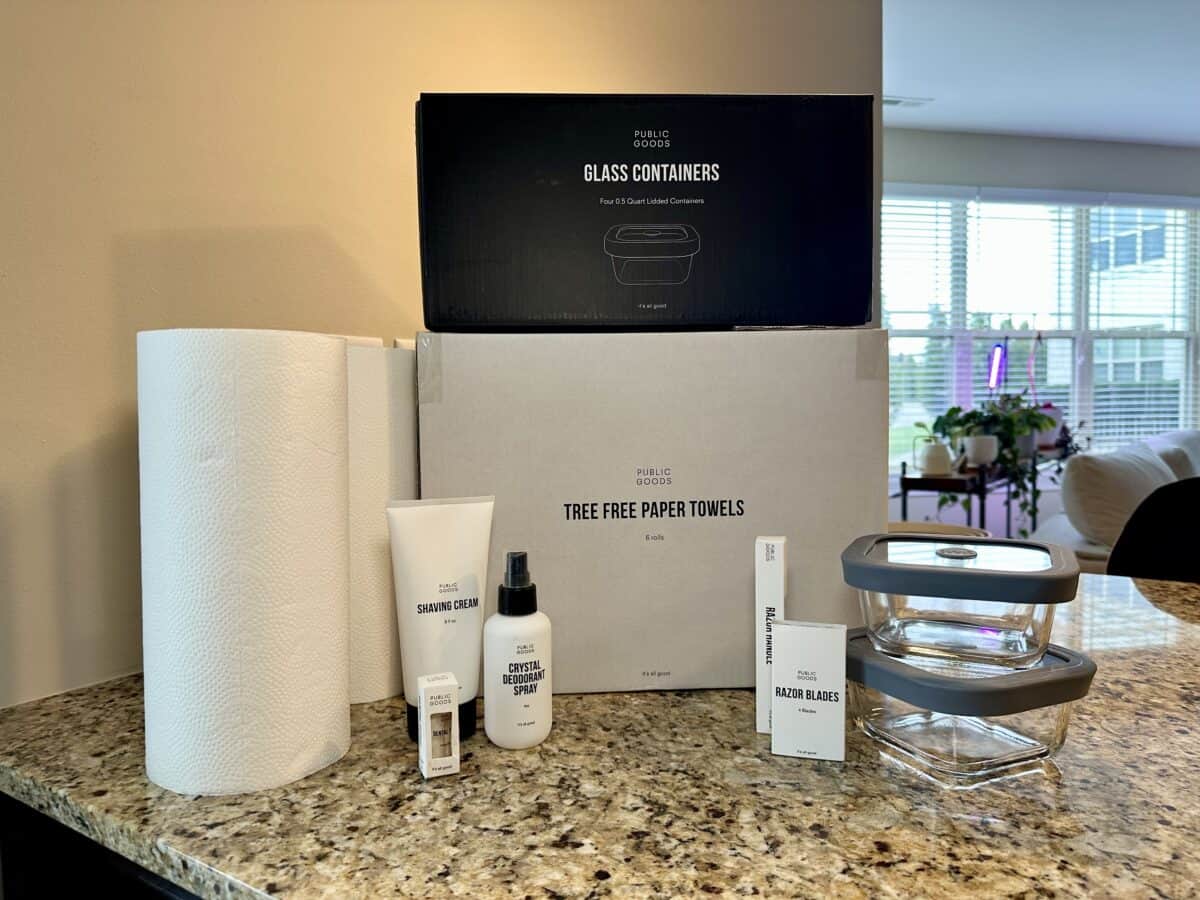
I have used various Public Goods products over the years. I’ve used several products that are now on the “iffy” or “wouldn’t buy” lists, including the liquid shampoo, body wash, and wax pomade. I have their wool dryer balls, which I still use. I’ve used their PFAS-free floss, which I would buy again. You get the idea.
Honestly, I’ve never disliked anything I’ve bought from them from a user perspective. Their products are very basic and functional—they get the job done well, without a bunch of fancy bells and whistles. The minimalist in me definitely loves this aspect!
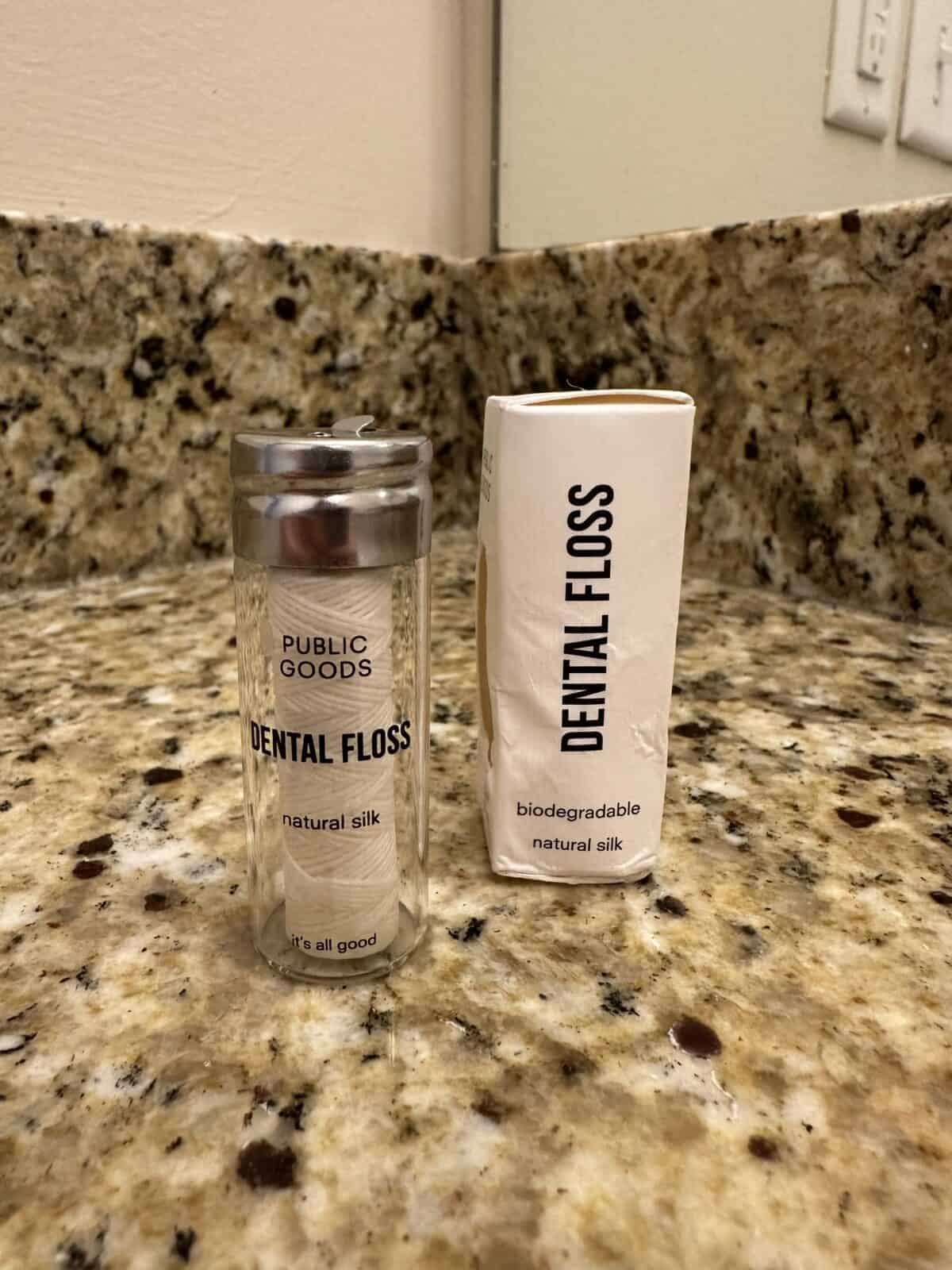
I like their floss! It’s strong enough that it doesn’t break apart or anything while I’m using it. And it glides well. Like pretty much all of the other natural silk flosses, it has more of a round shape rather than the flat thread that Glide carries. But this is fine with me, and I’m used to it.
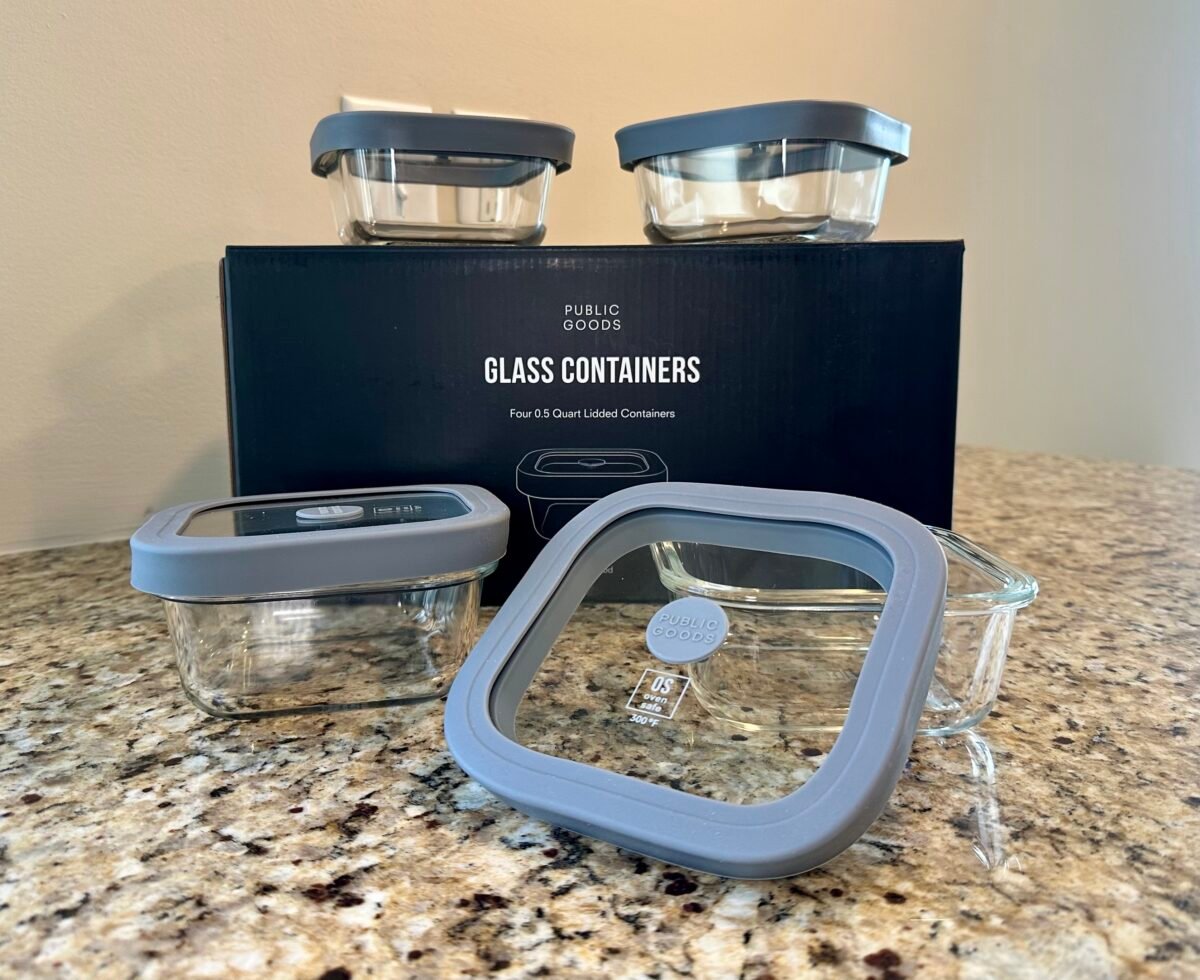
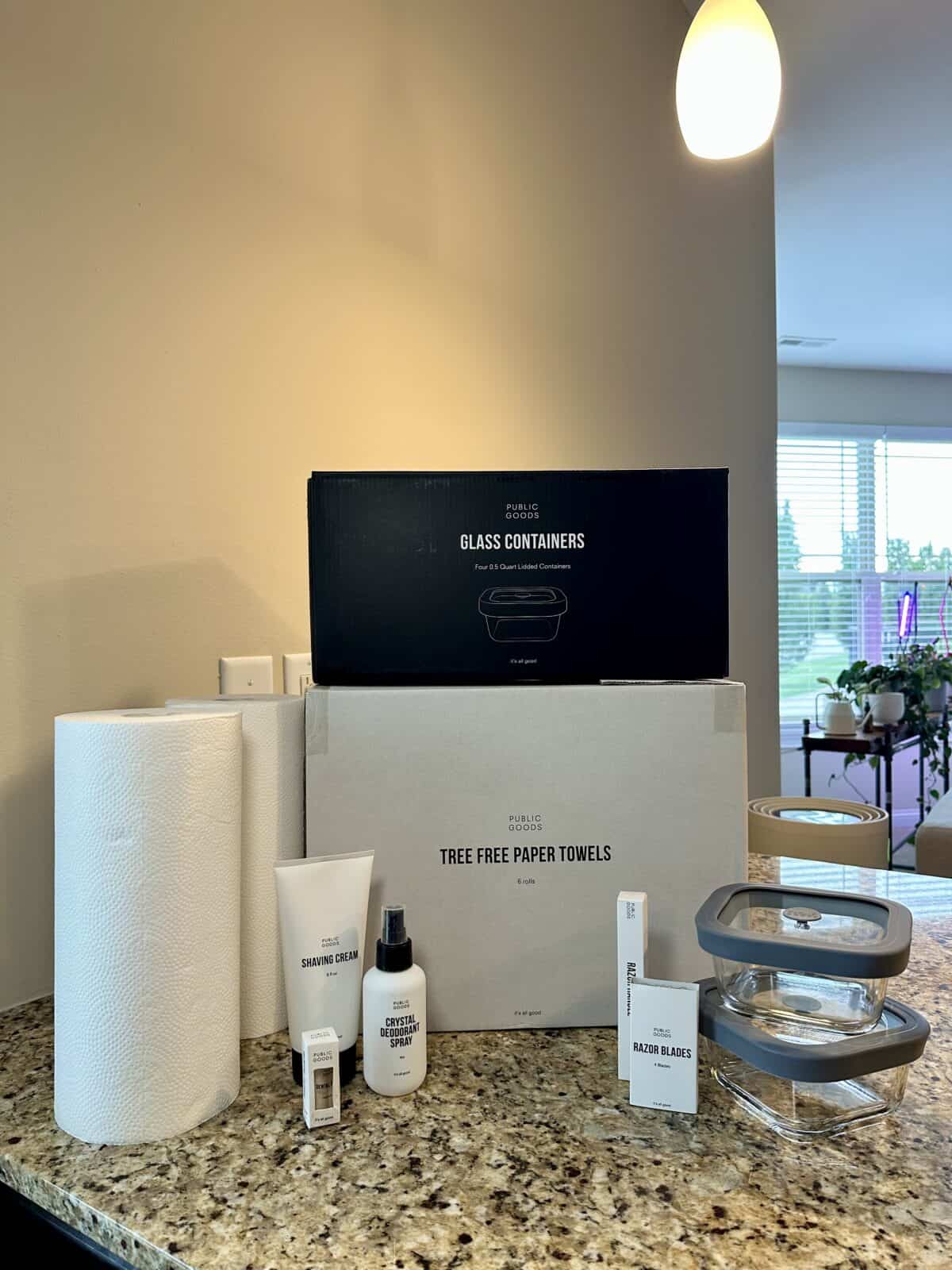
I like their food storage containers as well. They are completely plastic-free (glass and silicone), which is great! There are still not a ton of totally plastic-free options on the market (most brands still come with plastic lids, so I appreciate this product.
The glass is thick and high-quality, and the silicone lids seal the container airtight.
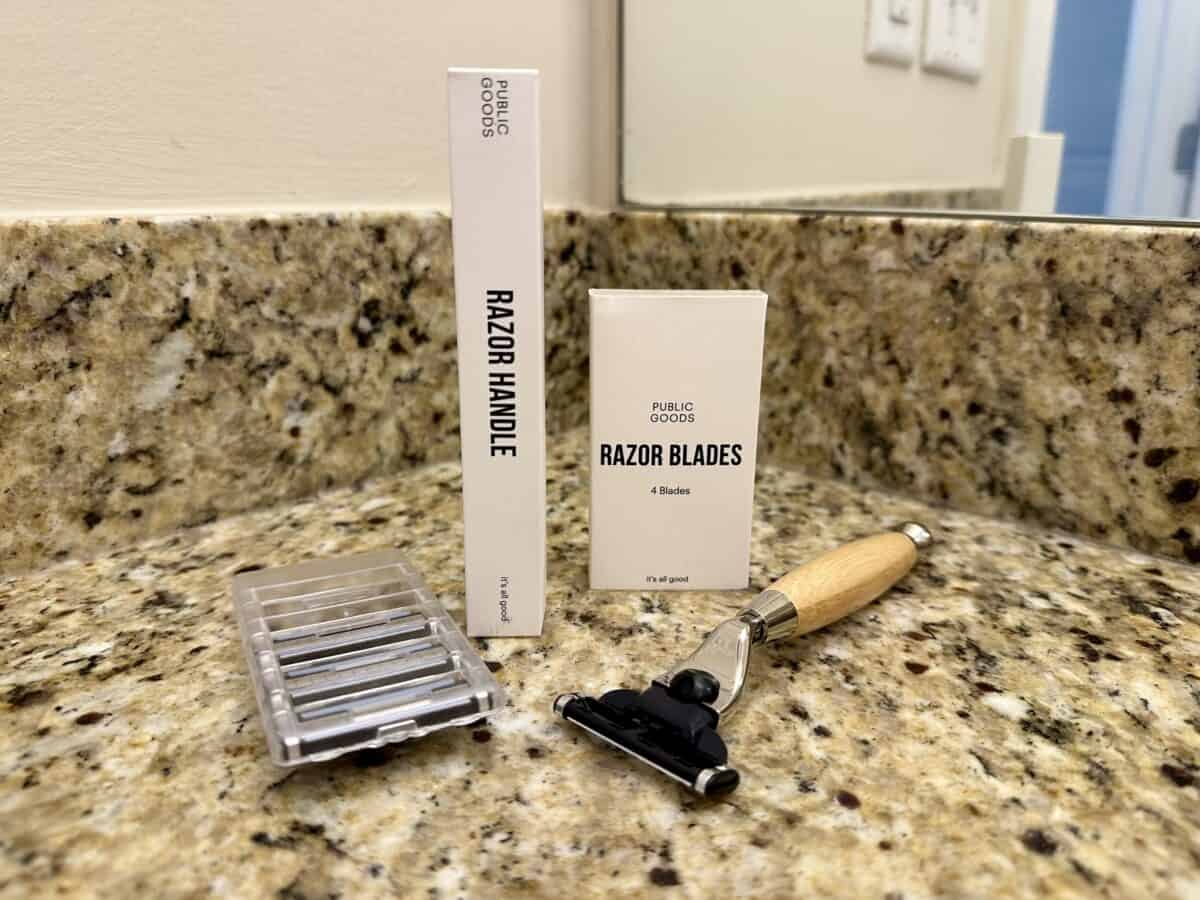
I like this razor. I like that it’s gender-neutral, so anyone can use it. And it has a sleek look to it, with the bamboo and stainless steel handle. The head is on a little bit of a swivel, so it can bend with your body’s curves.
The replaceable razor blades are your pretty standard 3-blade head, which gives you a close shave. The gel strip part is not huge, if that matters to you. I will probably re-buy the replacement blades and keep using this one when I run out.
Plus, it’s one of the very few razors that is PFAS-free.
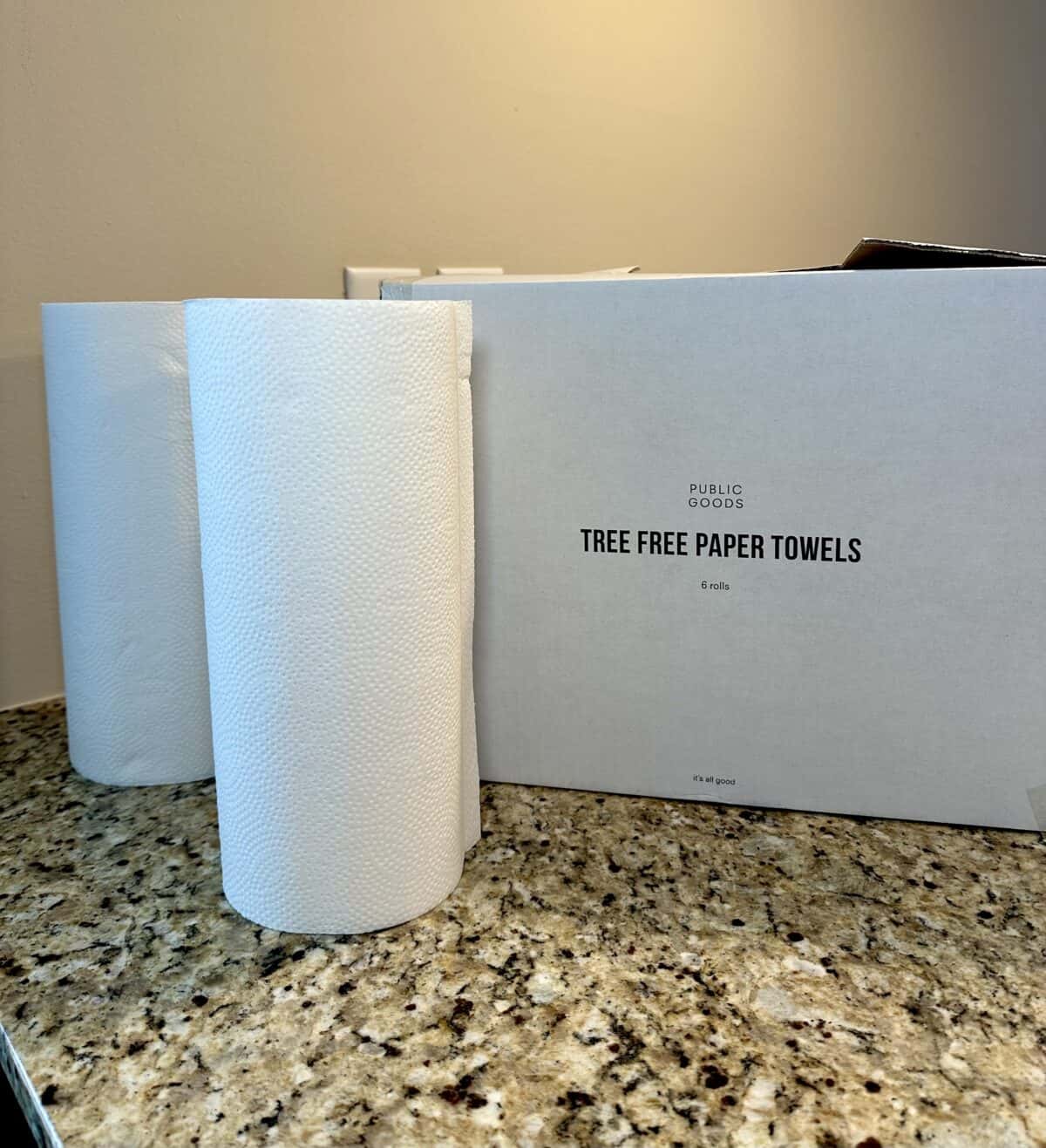
I like these! They aren’t as strong & thick as Bounty (none of the more eco-friendly brands are, to be honest), but I personally don’t need something like Bounty! These are strong enough for cleaning up messes, wiping down counters, or re-oiling my cast iron pan. My husband (who is more of the paper towel person in the family, haha) approves of them too.
The only thing I don’t love is that they don’t give you the option to create ‘half sizes’ of the paper towels. I like the ones that allow you to rip off smaller sizes—it’s less waste and also sometimes I just don’t need a big one!
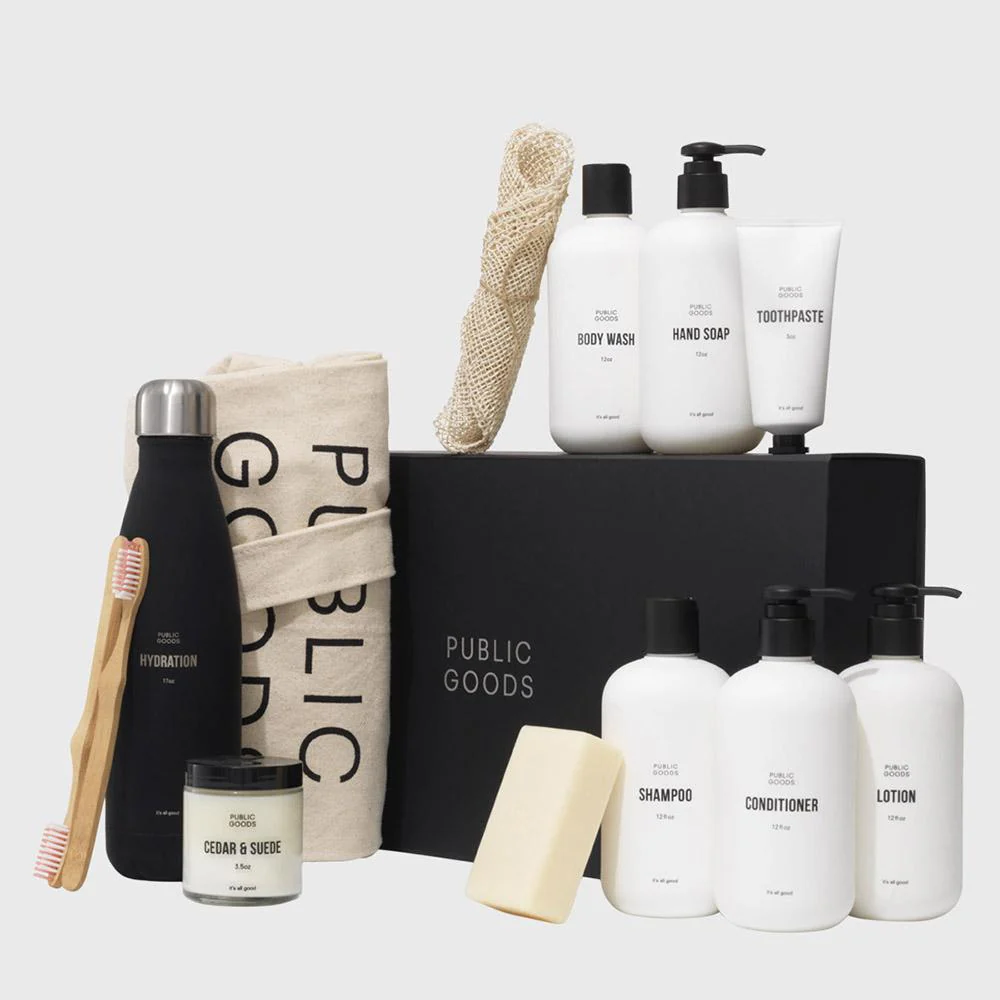
Let’s break it down… Here are the products I would buy, and the ones I wouldn’t
I don’t always do this, but because of the fact that some Public Goods products are better than others, I went through every single product on their website and looked at the ingredients and materials to see if I would buy it or not.
Now, for this section, when I say whether or not I would buy something, I’m mostly talking about ingredient/material safety. I’m not necessarily talking about the packaging, sourcing, or things like that.
As you’ll see, there are many products that fall into the “iffy” section. Again, this is where you’ll have to decide for yourself how ‘picky’ you want to be. I’ve made notes of why those products fall into the “iffy” camp so that you can decide what’s best for you!
Keep in mind that they do change their product lineup and formulations regularly. I went through this process in mid-2024. So depending on when you’re reading this, you may want to double-check ingredients to make sure what you’re buying fits your standards. I will do my best to keep things updated as I notice changes!
These are the products I would buy
Skincare
Personal Care
- Shampoo Bar
- Breath Mints
- Razors
- Floss (confirmed with them that it’s PFAS-free. Made with silk and candelilla wax)
- Sea Sponge
- Ayate Washcloth
- Ayate Bath Strip
- Stainless Steel Water Bottle (but you should just get a Filtery one instead, lol!)
- Organic Cotton Tote Bag (if you actually need another one! 😆)
- Stoneware (toothbrush holder, cotton round holder, utensil holder, soap dish, vanity jar, etc.)
- Banana Leather Notebook (actually looks pretty cool)
Cleaning & Laundry
Home Goods
I would actually buy a lot of the home goods. Mostly because they are affordable, plastic-free reusables.
- Glasses (wine glasses, tumblers, etc.)
- Stainless Steel Silverware
- Organic Cotton Placemats & Napkins
- Glass Canisters
- Ceramic Dinnerware, Serving Dishes, & Mugs
- Salt & Pepper Shaker
- Wooden Serving Board
- Popcorn Popper
- Wine Opener
- Pour Over
- Mesh Strainers
- Utensil Rest
- Storage Containers
- Ice Mold
- Funnels
- Bag Clips
- Infuser Pitcher
- Silicone Storage Bags (even though I would probably choose Stasher instead because they seal and stay shut better)
- Silicone Bowl Covers
- Silicone Ice Cube Trays
- Wooden Utensils
- Serving Utensils
- Peeler & Y Peeler (Go with the uncoated ones just to be safe. I was not able to find out what the coated ones are actually coated with.)
- Garlic Press (Same—go with the uncoated)
- Wine Opener (Same—go with the uncoated)
- Bathrobe (organic, but would be nice if it was certified)
- Apron
- Oven Mitts & Pot Holders
- Bath Towels, Hand Towels, Kitchen Towels
- Bath Mat
- French Press
- Coffee Filters
- Mesh Tote
- Bamboo Straws
- Cotton Produce Bag & Mesh Grocery Bag
- Stationary Set, Notecards, & Envelopes
- House Plants
Food/Grocery
- With just a couple of exceptions (listed below), I would pretty much buy most of their groceries. A lot of it is made with organic and/or Fair Trade ingredients (some of which is third-party certified and some of which is not.) I also like that they use minimal ingredients for the most part and that they try to use low-plastic packaging as much as possible.
These are the iffy ones
These products aren’t the worst, but they’re definitely not the best either. If I already had these products, I would have no worries using them up, but then I probably wouldn’t re-buy them since better alternatives exist.
Also, you’ll notice that phenoxyethanol is the only potentially-concerning ingredients in many of these, and that one might not bother you!
Skincare
- Foot Cream (natural fragrance, PEG 40)
- Vitamin C Serum (phenoxyethanol & a few other not-great ingredients)
- Eye Cream (phenoxyethanol)
- Clay Mask (phenoxyethanol)
- Hand Cream (probably fine for most people, but contains a few allergens)
- Hair Oil (rapeseed oil is highly processed; I think there are better alternatives)
- Body Wash (undisclosed fragrance, phenoxyethanol)
- Lotion (undisclosed fragrance, phenoxyethanol, other iffy stuff)
- Bar Soap (fragrance)
- Facial Cleanser (phenoxyethanol is really the only one iffy one here, and it’s not a huge deal since you’re washing it off)
- Creme Cleanser (same with this one: phenoxyethanol, but you’re washing it off)
Personal Care
- Tampons (says they’re chlorine free, but not certified organic)
- Hand Sanitizer Spray (Contains a few fragrance allergens. I personally would feel fine using this because I don’t struggle with allergies, BUT I probably wouldn’t buy it because I would be using it in public and want to be mindful of others who do have allergies/sensitivities.)
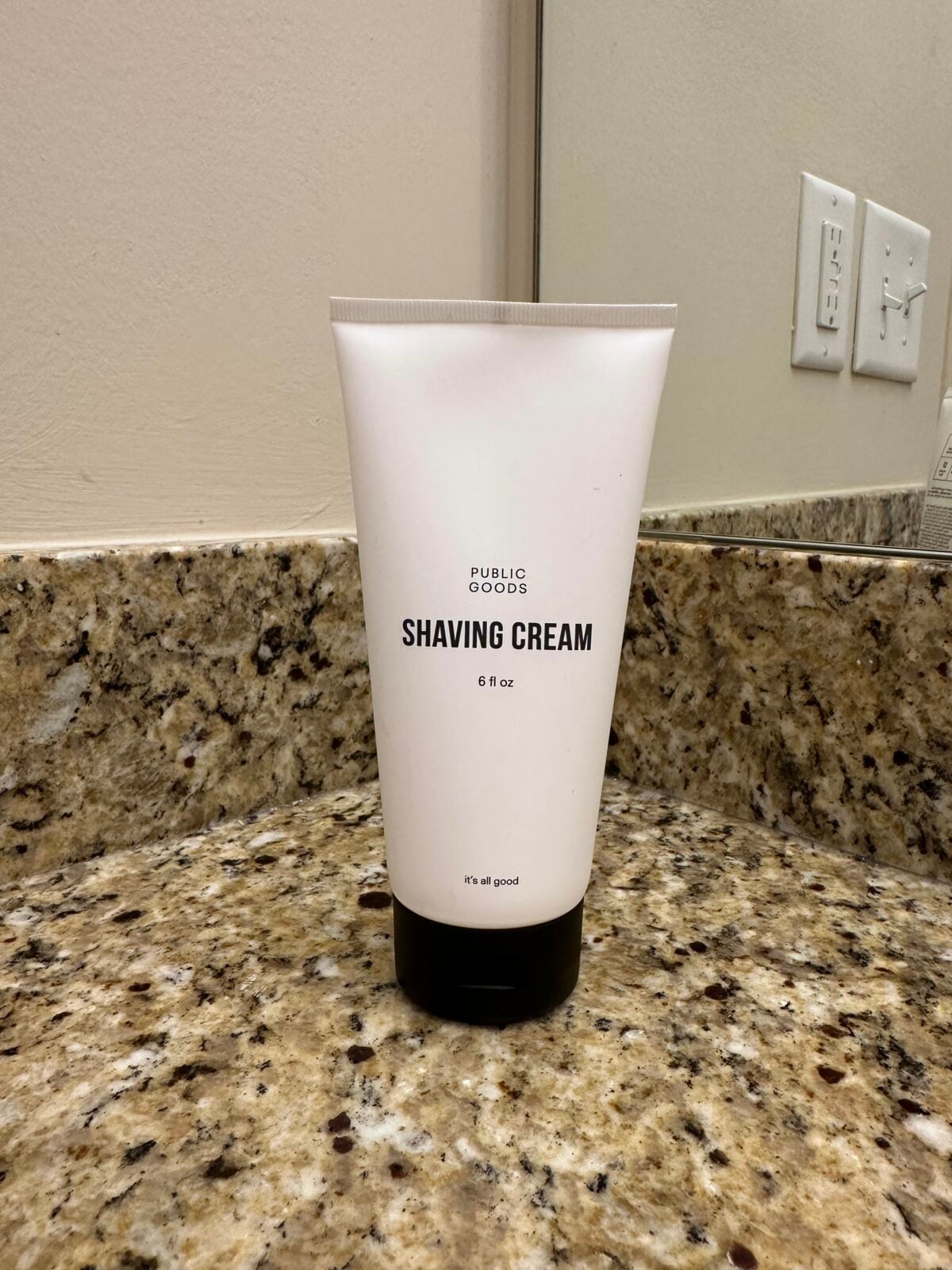
- Shaving Cream (undisclosed natural fragrance, phenoxyethanol, potassium hydroxide) [More shaving cream options here.]
- Bath Salts (this is probably fine but honestly, it’s just not clear if all of the ingredients are listed on the product page or not)
- Wax Pomade (phenoxyethanol)
- Toothpaste (is fluoride-free which is good, but contains cocamidopropyl betaine which I don’t love)
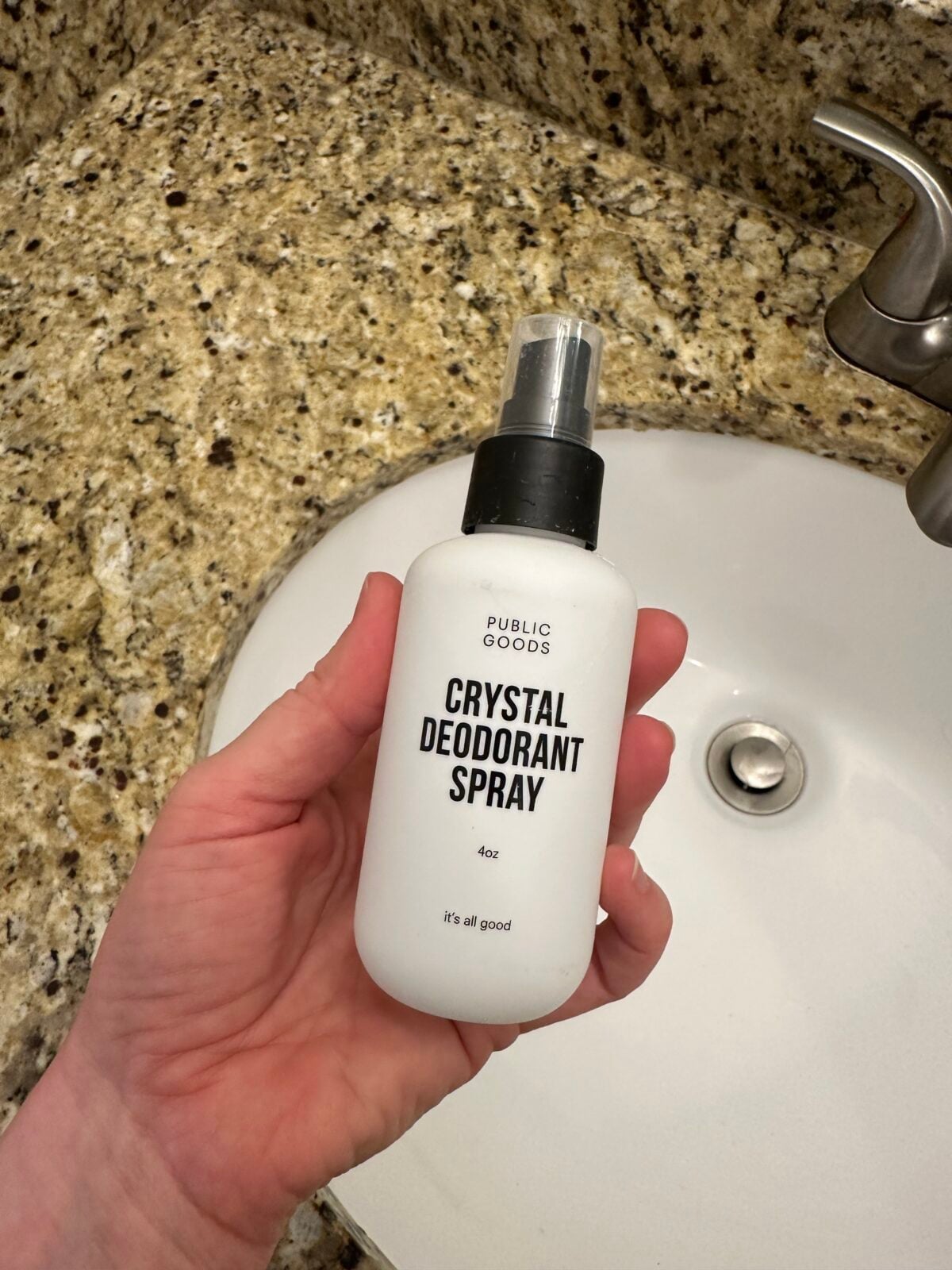
- Crystal Spray Deodorant (contains potassium alum, which means it’s not totally aluminum-free, but it’s said that the particles are larger so they supposedly can’t soak through the skin. I’ve tried this deodorant and it works pretty well. More info here.)
- Hand Soap (undisclosed natural fragrance, phenoxyethanol)
- Tweezers, Nail Clippers (These are probably fine. They are “powder-coated,” but they told me they are PFAS-free. When I asked what was used instead of PFAS to make them corrosion resistant, they weren’t able to give me an answer.)
- Disposable Razors (I personally wouldn’t use these just because I’d rather get ones with replaceable heads to cut down on waste even more. That said, it does say these are home compostable which is pretty surprising!)
- Conditioner (cetrimonium chloride, dimethicone, phenoxyethanol)
- Liquid Shampoo (undisclosed natural fragrance, polyquaternium-10, phenoxyethanol)
Cleaning & Laundry
- Compostable Garbage Bags (These are industrial compostable only, and while this is not ideal, it’s also currently the ‘norm’ for ‘compostable’ trash bags.)
- Tissues, Napkins, & Paper Towels (Bleached with the ECF method, not TCF. So it’s better, but not best. More on that here.)
- Toilet Paper (It’s not clear how these are bleached)
- Dish Soap (Just a couple of not-amazing ingredients; there are better brands here)
- Bathroom Cleaner & All-Purpose Surface Cleaner (These are okay, but they do have a couple of ingredients that can potentially come with contamination concerns.)
Home Goods
- Tongs (These have silicone at the end, which is usually okay below 350 degrees F, but I would personally probably skip the silicone and go with just stainless steel.)
- Silicone Utensil Set (Same thing—definitely better than plastic, but I would still choose wood or stainless steel instead.)
- Cutting Board (I asked them for more info about what this is made of and they said: “It’s layers of wood fiber and paper bound with resin. The resin is 20% of the item. Wood fiber and paper comprise 80% of the item. The resin is a non-formaldehyde-based epoxy.” I personally would just use a regular solid wood cutting board instead.)
- Reusable Food Storage Wraps (unspecific ingredients: “plant oils and tree resin.” I would just use Bee’s Wrap instead.)
- Candles (Probably fine, but they don’t disclose all of the specific ingredients; it just says “essential oils”.)
Food/Grocery
- A few of their products contain “natural flavors” (like the salsa, for example), though not many of them. Some of them also use canola and/or other seed oils. These ingredients are not super concerning to me, but you may want to check the ingredients based on your own preferences.
These are the things I would not buy
Skincare
- Foot Scrub (fragrance & a few other not-amazing ingredients)
- Facial Moisturizer (dimethicone, phenoxyethanol, other stuff)
- Micellar Water (multiple not-good ingredients)
- Reusable Cleaning Rounds (contains polyester; you can get organic cotton ones somewhere else)
Personal Care
- Hand Sanitizer Gel (undisclosed fragrance)
- Toothbrush (nylon bristles; pick one of these instead)
- Spa Headband (made from recycled plastic; you can get a natural/organic one somewhere else, like from KOOSHOO)
- Vitamins & Supplements (Since these are not well-regulated, I would personally just rather get my supplements from a more reputable supplement brand that has more information about sourcing, testing, quality control, etc., especially if I’m going to be taking them over a long period of time.)
Cleaning & Laundry
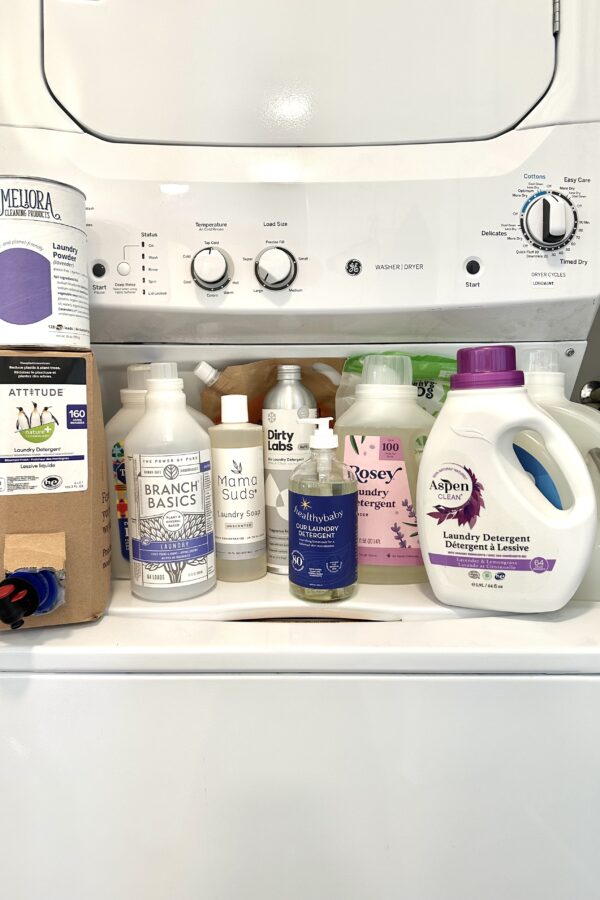
- Laundry Detergent Pods (I have moved away from PVA pods—here’s why)
- Dishwasher Detergent Pods (Same)
- Fabric Softener Sheets (Too many not-great ingredients. Better alternatives here and here.)
- Laundry Detergent Sheets (They don’t even list the full ingredients for these)
- Walnut Scouring Pad & Scubber Sponge (Materials are too vague—”non-toxic adhesive,” “plant-based cellulose,” “recycled fibers”… That doesn’t tell me enough about what it’s actually made out of.)
Home Goods
- Powder-Coated Tools (Garlic Press, Wine Opener, Peeler, etc.) (They told me that these are PFAS-free, but they were not able to tell me what exactly they were coated with. I would just choose the uncoated options.)
Food/Grocery
- Tea Bags (They use nylon and PET.) More on non-toxic tea bags here.
- Coffee Pods (Plastic—more info here.)
- Canned Goods (They are mostly likely lined with BPA or a similar bisphenol, like BPS. This is, however, still the norm when it comes to canned goods from pretty much all brands. So I personally just try not to eat a lot of canned goods in general.)
All things considered: Is a Public Goods membership worth it?
Honestly, this is a tough question to answer because it comes down to your own personal preferences and priorities!
I think the Public Goods membership would be worth it for you if:
- You aren’t super picky about ingredients and you mostly just care about staying away from the worst stuff like phthalates, parabens, and PFAS.
- You really appreciate the convenience of getting a lot of your goods in one place—personal care, groceries, home goods, etc.
- You dig the minimalistic aesthetic.
- You don’t mind some plastic packaging.
I think the Public Goods membership would not be worth it for you if:
- You have more strict standards when it comes to ingredients and prefer to shop from the cleanest and most transparent brands.
- You’re trying to go as low-waste/plastic-free as you possibly can.
I hope that all helps you decide whether Public Goods is a brand for you or not! If you have any additional questions that weren’t addressed here, let me know in the comments below.