
Here are my picks for the best water filters by category:
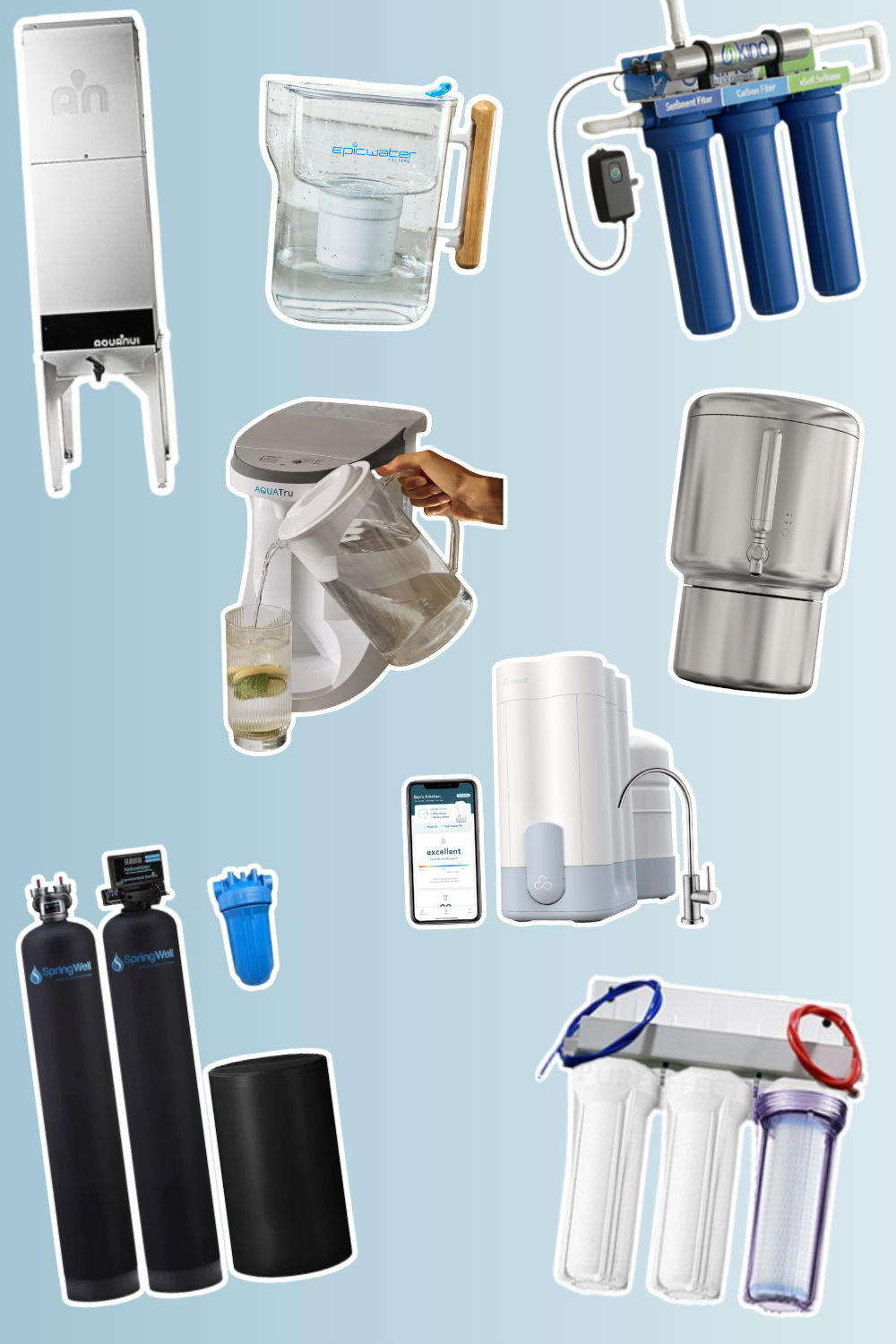
- Best plastic-free countertop water filter: Rorra
- Most affordable & accessible: Epic or Clearly Filtered
- For an under-the-sink: almost all of the brands below have options
- Under-sink for renters (hooks up to existing sink faucet): Epic, Clearly Filtered, Pure Effect, and Kind
- Best whole-house water filter: SpringWell
- Best distiller: Aquanui
- Sleekest & smartest water filter: Cloud
- Best for removing fluoride without wasting water (non-RO): Pure Effect
If you want to understand why I chose these, keep reading below for a breakdown of common contaminants, filter types, certifications, and more.
Honestly, it’s impossible to recommend the “best” water filter.
Not only does water contamination differ depending on where you’re located, but the best water filter for YOUR home will depend on questions like: what’s your budget? How many people are in your family? How much space do you have? How much effort do you want to put into installation? and more.
You could go down a loooong rabbit hole on the topic of water filters. There are a lot of things to consider—different types of contaminants and filtration media, whether or not to get a countertop, under-sink, or whole house filter, etc.
My goal with this guide is to bring you the short version of that rabbit hole: I’m giving you the low-down on all the important things to know, while simultaneously keeping it straightforward as possible.
If you ask me, filtering your drinking water is one of the most impactful things you can do to reduce your exposure to environmental toxins because:
- It’s a one-time swap (for the most part—though you do need to make sure the filters get changed).
- It’s something you use every single day, multiple times a day. (The things you do/use more often are more important than the every-once-in-a-while stuff.)
- You’re reducing multiple different types of contaminants at once—pesticides, heavy metals, PFAS, microplastics, and more.
What this guide covers:
- Choosing the right filter for your lifestyle
- ✨ Any water filter is better than no water filter
- Here are my picks for the best water filters for your home
- Best countertop water filter brands (pitchers and dispensers)
- Best under-the-sink and whole-house water filters
- What about shower filters?
- How to find out what’s in your water
- Contaminants you want to filter out
- Types of filtration media
- What water filter certifications to look for
This guide contains product recommendations and we may receive compensation if you purchase through certain links. As always, we only make recommendations that are genuine!
Choosing the right filter for your lifestyle
Like I said, there’s no one-size-fits-all when it comes to water filtration. Here are some practical things to consider as you decide what’s right for you:
Filter format: Do you want a Brita-style pitcher that you can keep in the fridge? A countertop unit? A sink faucet attachment, under-the-sink installation, or whole-house filter?
Each has trade-offs in terms of cost, installation, filtration power, and convenience.
Renting vs. owning: If you’re renting, you probably don’t want to invest in a whole-house system that requires intense installation or drilling a hole in your countertop. Pitchers and countertop units are generally much better options for renters since they’re more portable and don’t require modifications to your space.
Upfront vs. long-term cost: Whole-house and under-sink filters cost more upfront, but their filters tend to last longer and need replacing less often. Pitchers and faucet filters are cheaper to buy initially, but replacement cartridges add up over time. If saving money is important to you, it might be worth doing the math on the total annual cost before deciding.
Electricity vs. gravity: Some filters require electricity to run, which adds to your energy bill and means they won’t work during a power outage. Gravity-fed filters and standard carbon or RO systems don’t have this issue. Something to think about!
Filter replacement frequency: I think this is one of the most most important (and maybe more overlooked) factors. Every filter needs to be replaced on schedule. When you don’t replace your filter, contaminants can build up and actually start leaching back into your water, making it worse than unfiltered. 😬
Some types of media, like carbon, can also grow bacteria over time if not replaced. So whatever filter you choose, make sure the replacement schedule is something you can realistically keep up with.
⚠️ I repeat: make sure you swap out your filter when it’s time to be replaced!
Well water: If you’re on well water, it’s important to know that the EPA does not regulate private wells (which I’m sure you already know). That means testing and filtering your water is entirely up to you. The EPA recommends testing annually, and you’ll want to pay special attention to contaminants that are more common in your region. Those on well water may also want to consider UV treatment, since the risk of biological contamination is higher without municipal disinfection.
Should you worry about plastic in the pitcher or other components? That’s up to you. I’ve included plastic-free and low-plastic options below. But personally, I believe that using a plastic pitcher is still a net positive. Here are my thoughts on this in a nutshell:
- The amount the pitcher filters out outweighs the downsides that might come from the plastic. (Net benefit.)
- Many of the brands below use Tritan plastic, which is one of the ‘least bad’ types.
- The water is not exposed to heat, friction, or long periods of time while inside the pitcher. (Those things increase leaching.)
- It’s accessible. A plastic pitcher might be a better fit for people on a budget, renters, people who just prefer the Brita style, or people who are just generally overwhelmed with life and want an easy answer!
✨ Any water filter is better than no water filter
Like I said, this topic can be an overwhelming rabbit hole. But I’m begging you: please don’t let the complexity of water filtration stop you from filtering your water at all.
I don’t recommend a basic Brita filter, but if that’s what you already have and you’re replacing the cartridges when you should, then great. It’s still removing some contaminants and lowering your overall exposure, which is the whole point. You can always upgrade later. The goal isn’t perfection; it’s reduction.
Here are my picks for the best water filters for your home
First we’ll talk about the best countertop water purifiers, then we’ll get to under-sink and whole-home filtration systems.
Best countertop water filter brands (pitchers and dispensers)
Epic
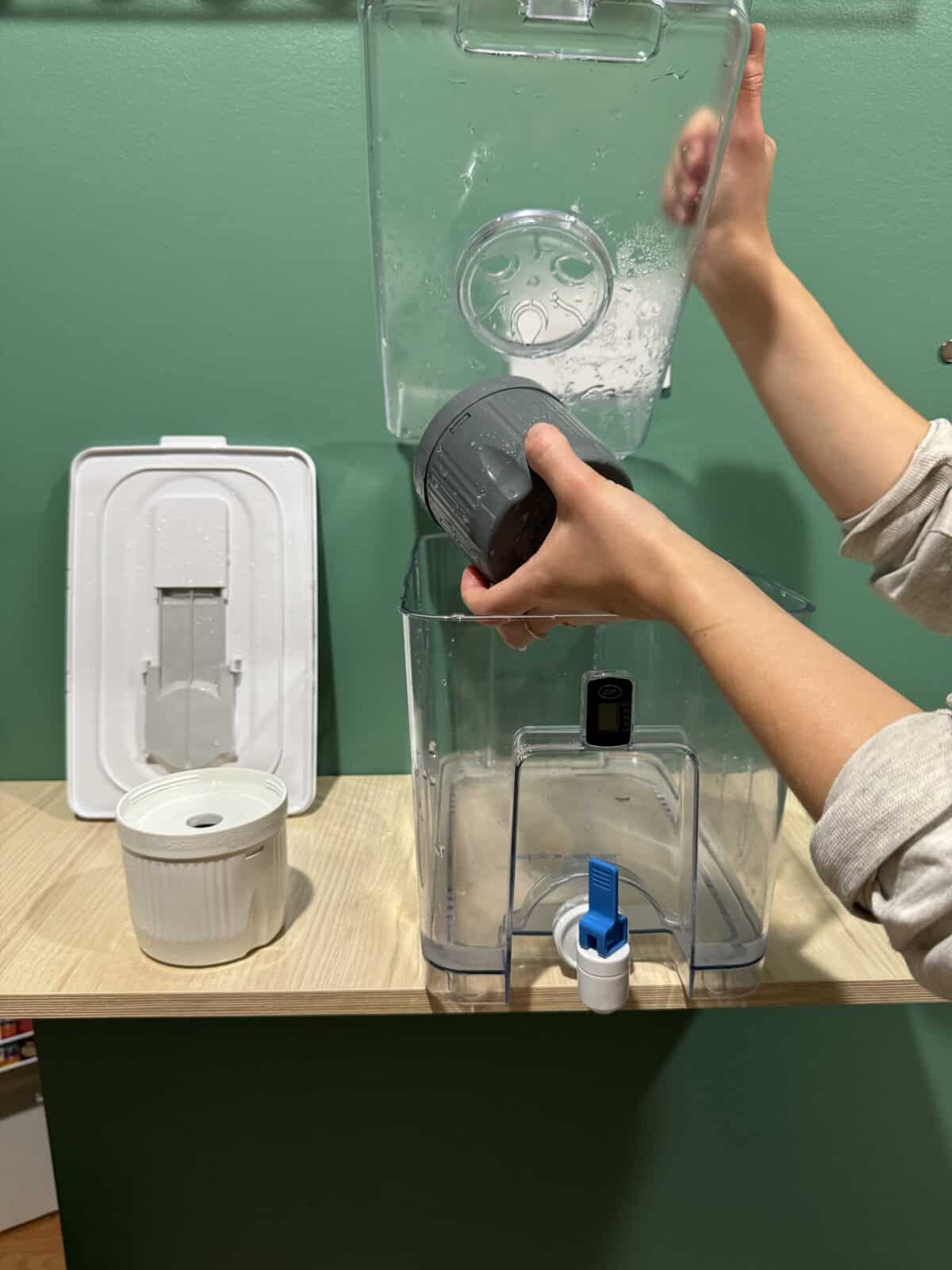
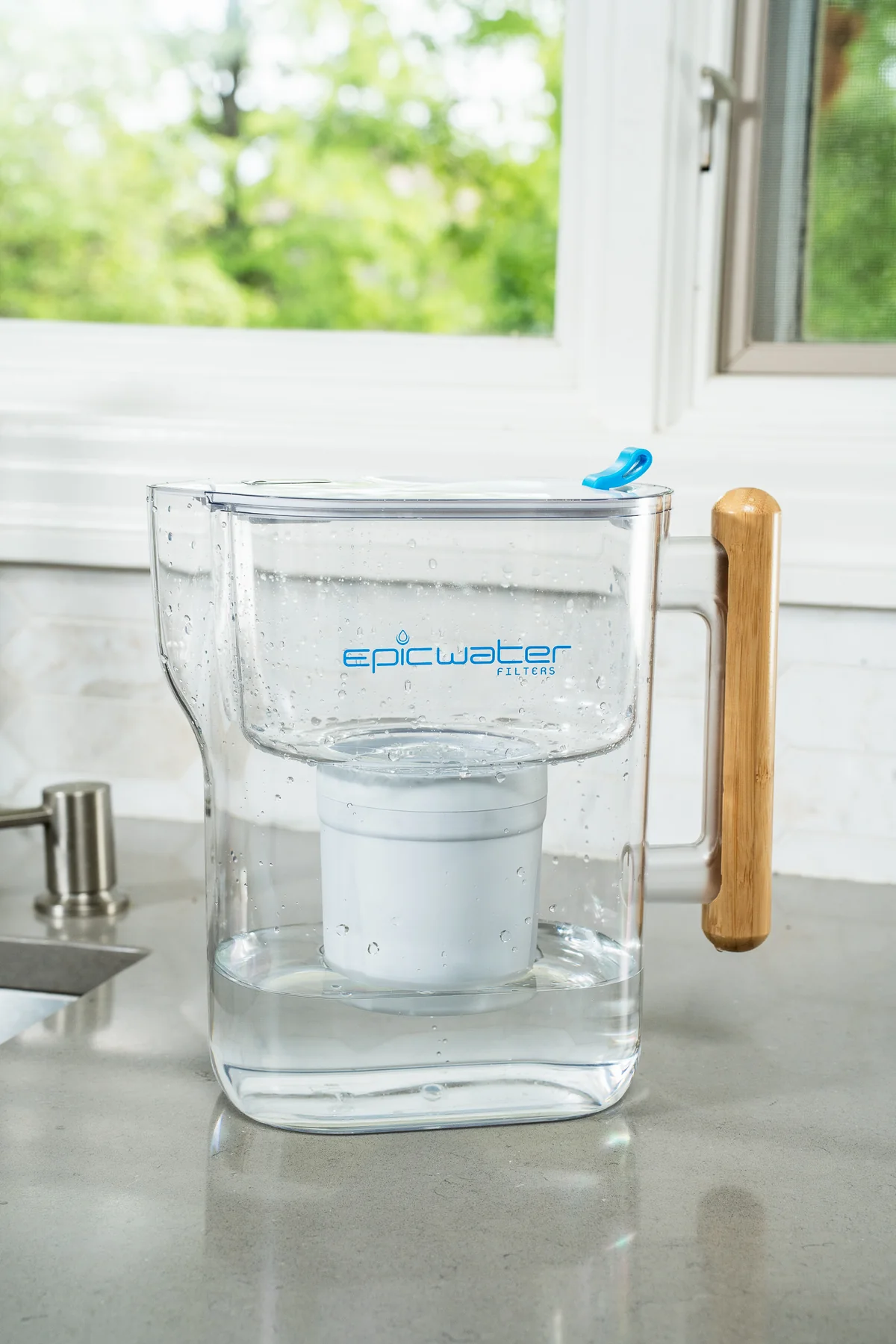
Best for: People in apartments and those who want an easy, affordable entry point into better water filtration (great Brita upgrade)
Types: Pitchers, dispensers, filtered water bottles, and an under-sink system
Up-front price: ~$35–$70 depending on pitcher vs. dispenser
Replacement filter cost + frequency: ~$30 per filter; lasts 150 gallons (3–4 months for most households)
Filtration media: Solid carbon block (with proprietary blend)
Certifications: Some products carry official NSF/ANSI certification 42 (plus 372 for material safety); others are third-party tested to NSF standards (including but not limited to 53, 401, P231, and P473) but not officially certified
HSA/FSA eligible? Yes, through Truemed
This is one of the best countertop water purifiers for home use because it can filter out a lot more than your standard Brita, but it’s still very accessible.
They have two main pitcher/dispenser lines: the “Pure” (which is good for harder-to-filter contaminants like PFAS and fluoride) and the “Nano” (which is better for filtering bacteria).
Both reduce over 200 contaminants, including PFAS, lead, pharmaceuticals, microplastics, and chlorine—all while retaining beneficial minerals like calcium and magnesium(!).
Their newer “XP” line is an upgraded, more sustainable version of their regular filters—the XP options have a 2-layer design (carbon block + nanofiber) that offers 30% faster flow, better contaminant removal, and a replaceable inner cartridge to reduce plastic waste. (I always love to see brands making improvements like these.)
Made in the USA.
Use code THEFILTERY for 15% off.
Clearly Filtered

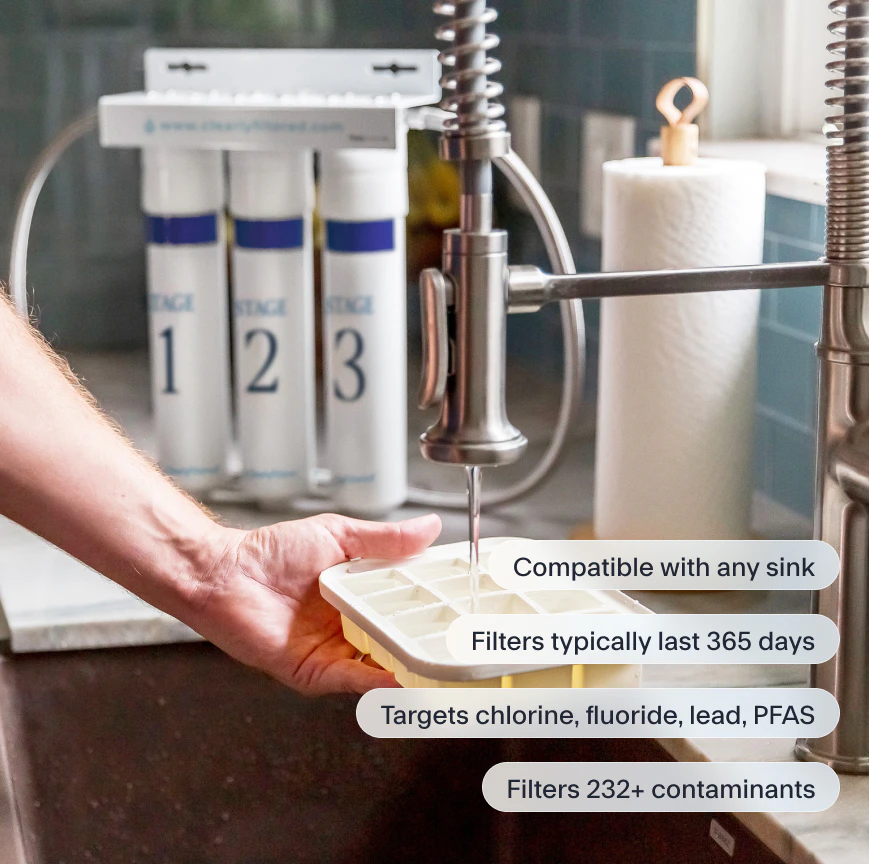
Best for: A high-performance “middle ground” filter; great water filter for apartments, older folks, and single-person households
Types: Pitchers, filtered water bottles, under the sink system, fridge filter
Up-front price: ~$81 (with autoship) / ~$90 without
Replacement filter cost + frequency: ~$50 per filter; lasts 100 gallons (roughly every 4 months for a single person, more frequently for larger households)
Filtration media: Proprietary 3-layer system (screening layer, carbon layer, composite layer) using 6 types of media
Certifications: As of right now, they are tested to meet several NSF/ANSI standards (including 42, 53, 401, and 473, depending on the specific product). They are in the process of obtaining official NSF certification. They do publish full lab results on their website, which I appreciate.
HSA/FSA eligible? Yes, through Truemed
Clearly Filtered is another great option if you’re looking for a high-performance pitcher filter that’s still affordable and easy to use.
Their pitcher uses a proprietary “Affinity® Filtration Technology” with three layers and six types of filtration media to remove over 365 contaminants, including PFAS, fluoride, lead, pesticides, microplastics, and pharmaceuticals, all at 95–99%+ removal rates. It also retains beneficial minerals.
Made in the USA.
Use code THEFILTERY10 for 10% off new filtration systems.
Rorra
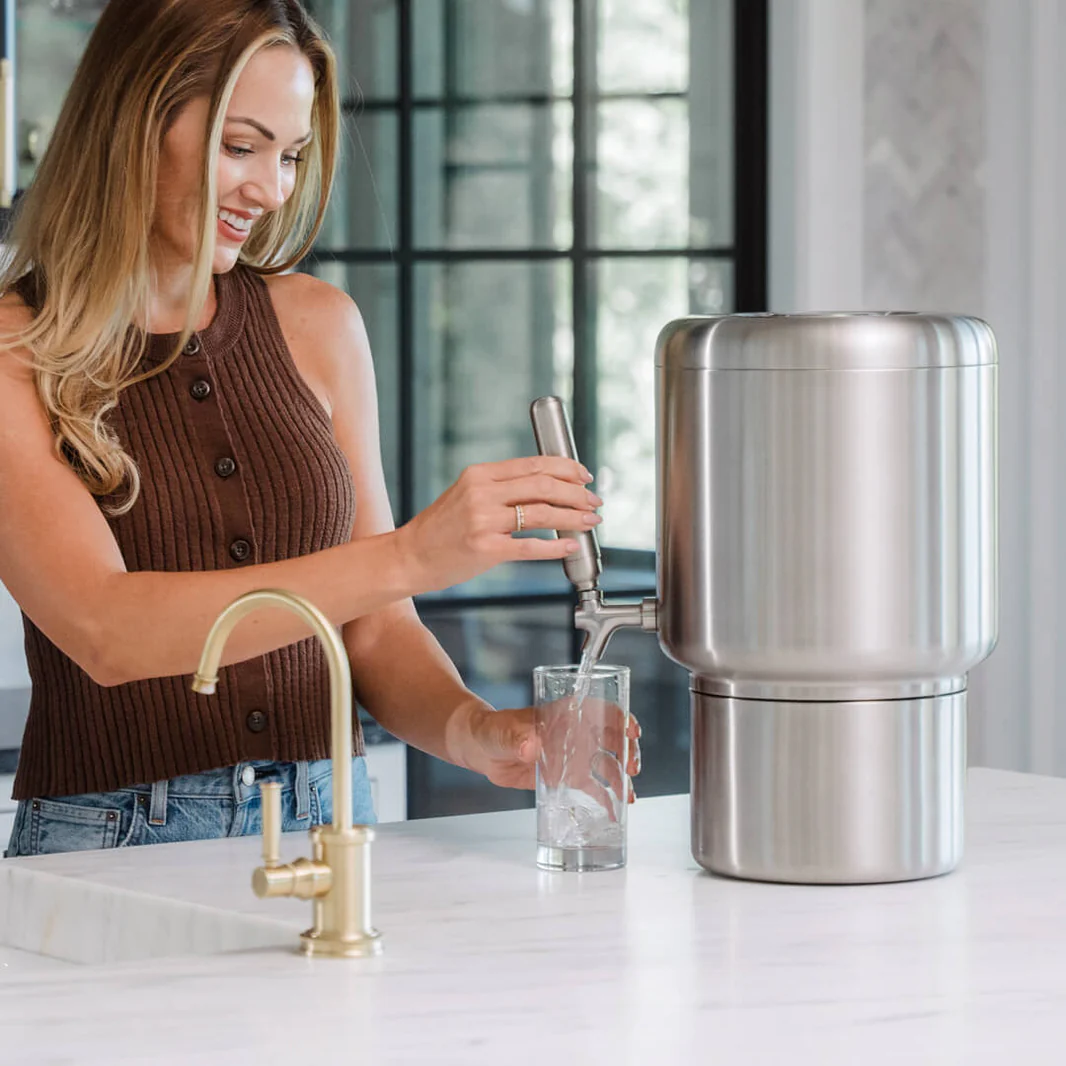
Best for: Berkey alternative. Plastic-free, gravity-fed countertop option.
Types: Countertop, showerhead
Up-front price: ~$449-$549 depending on the bundle
Replacement filter cost + frequency: $65 per filter; every 90 days (~$260/year)
Filtration media: Electrokinetic nanofiber (proprietary “Enfinity” technology)
Certifications: Tested to NSF/ANSI standards (at accredited labs) 42, 53, and 401; not yet formally NSF certified, but working toward it. It is also California Prop 65 compliant (unlike Berkey/BOROUX).
HSA/FSA eligible? Yes, through Truemed
I frequently get asked about Berkey and BOROUX and unfortunately, I don’t really recommend them.
But I totally get why people like the idea of them! They’re (almost) plastic-free, require no electricity, you don’t have to change the filters very often, and they look nice in the kitchen.
So I’ve had my eye out for a Berkey alternative for a while now… And was happy to finally come across Rorra.
Rorra is a newer brand (launched in late 2024) that offers a gravity-fed countertop system made entirely from stainless steel, which is a nice differentiator if you want to avoid plastic. It uses “Enfinity” electrokinetic nanofiber technology (which is proprietary) to target 50+ contaminants, including PFAS, lead, microplastics, chlorine, and pharmaceuticals, while retaining beneficial minerals. (No need to remineralize like with RO.)
A few other things I really like about Rorra:
- It’s got a performance indicator light that tracks water levels and filter life, so you don’t have to keep track yourself. 🙌
- It’s made of medical-grade stainless steel
- No installation or electricity required.
It does not remove fluoride. (This is common for this type of filter; they basically all have trouble removing fluoride. Rorra has said they are working on an option for reducing fluoride for the future, though.)
Made in the USA.
This link will get you 15% off if you decide to purchase.
AquaNui
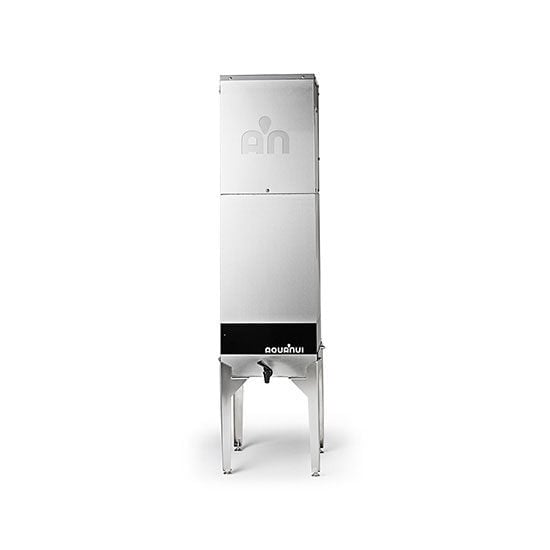
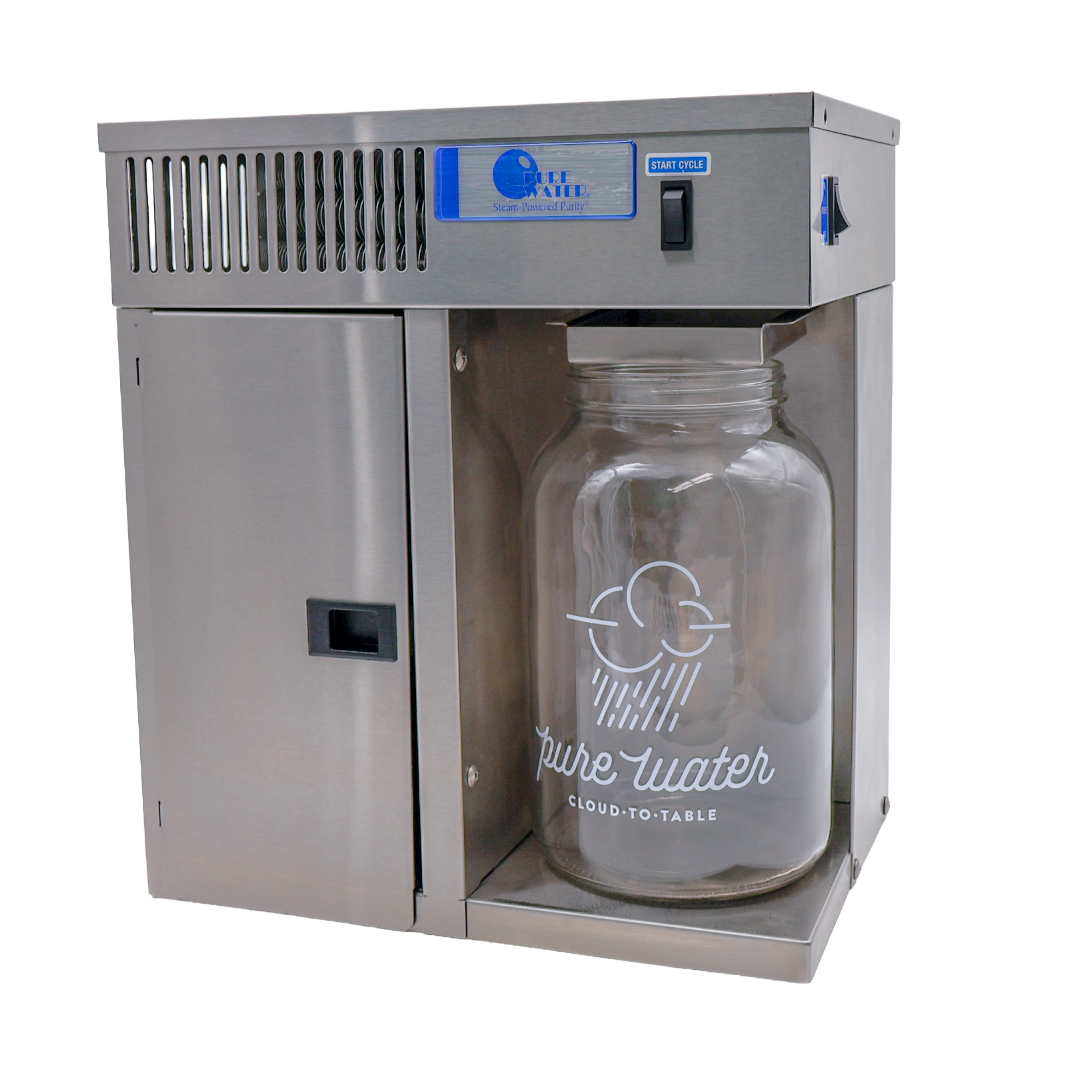
Best for: Those who want distilled water. Good for: plastic-free/low-plastic option, renters (no installation needed), most thorough water purification without water waste, well water, and areas with unknown contaminants.
Types: Countertop and stand-alone distillers for home and commercial
Up-front price: ~$650 to ~$4,195
Replacement filter cost + frequency: Very low; just the activated carbon post-filter, which costs under $50/year
Filtration media: Steam distillation + activated carbon post-filter
Certifications: Not applicable in the traditional NSF/ANSI sense (distillers aren’t typically certified the same way). But you can check out their test results here. 15-year warranty on stainless steel, 2-year on electrical components.
HSA/FSA eligible? Do not appear to be at this time
If you’re interested in distillation as your water purification method, Aquanui (made by Pure Water) is the gold standard. They’ve been manufacturing water distillers in the USA for over 55 years.
This is actually the brand that Filtery writer Jeanne recommends; her family has been using it in their home for many years.
Just in case you’re not already aware: distillation works differently from all the other filters on this list. Instead of passing water through filtration media, it boils water into steam and then condenses it back into liquid, leaving contaminants behind. This means it can remove virtually everything (or reduce by around 99%): heavy metals, fluoride, PFAS, pesticides, pharmaceuticals, bacteria, viruses, nitrates, radioactive contaminants, and more.
AquaNui/Pure Water systems are constructed from 304-grade stainless steel, and the water never comes into contact with plastic during the purification process.
A few things to know about distillers in general:
- They are slow. You might want to consider this when choosing the size you want—if you have a big family, you’ll definitely want to get a larger one to ensure you always have enough water.
- Like RO systems, they remove beneficial minerals. So you might want to add those back in.
- But unlike RO filters, they do not product waste water.
- They do require electricity.
- They can be expensive up front, but the ongoing costs are very low.
- They require periodic cleaning of the boiling chamber to remove scale buildup.
You can use code THEFILTERY5 for 5% off.
Best under-the-sink and whole-house water filters
Whole-house and under-sink systems offer more comprehensive filtration with less day-to-day maintenance, but they do come with a higher upfront investment and a more involved setup.
While the upfront cost is higher than pitchers & countertop dispensers, the ongoing maintenance is usually simpler and less frequent. (You don’t have to change the filters as often.)
This probably goes without saying, but they’re generally better suited for homeowners than renters. That said, some under-sink options can totally still work for renters!
One thing worth knowing here: even though reverse osmosis is one of the most effective filtration methods available, it does waste a significant amount of water in the process—typically 3–4 gallons for every 1 gallon filtered (depending on the brand). That’s a lot. 😬
For that reason, reverse osmosis is generally best suited for countertop or under-sink drinking water use rather than whole-house systems.
SpringWell
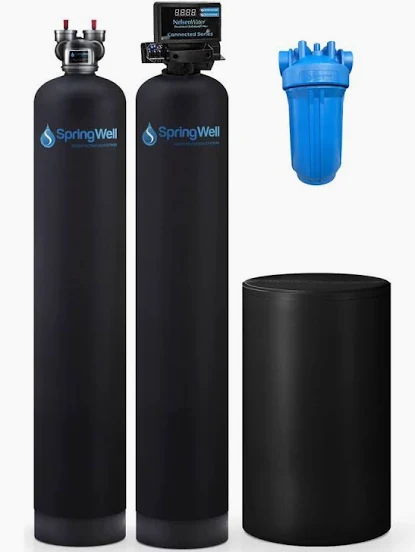
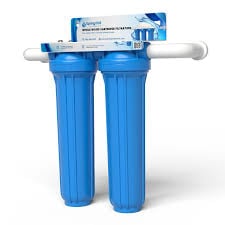
Best for: Whole house filtration for municipal water (also options for well water)
Types: Whole house filters, under-sink filters, and add-ons for specific things like lead & cysts, PFAS, UV disinfection, water softeners, tannin removal, and more.
Up-front price: ~$550-$1218 for the whole-house filters (before add-ons); $399 for under-sink
Replacement filter cost + frequency: $35-$400, depending on the specific filter being replaced. Main filtration media lasts an estimated 3–5 years (up to 1,000,000 gallons). Check out this page for a cost comparison on the whole-home options.
Filtration media: KDF + catalytic carbon (whole house CF system); RO membrane (under-sink). Other options depending on which add-on(s) you’re considering.
Certifications: Not certified for contaminant reduction performance; components are certified (NSF/ANSI 42 and 53 component-level)
HSA/FSA eligible? Does not appear to be at this time.
SpringWell is a well-regarded brand in the whole-home filtration space, and their CF system has performed well in independent before-and-after testing.
The main filtration tank has a very long media lifespan and requires minimal ongoing maintenance, making the long-term cost quite low.
The system comes with a 6-month money-back guarantee, plus a lifetime warranty on tanks and valves.
They also offer a wide range of systems beyond the whole-house filter, including well water systems, water softeners, a salt-free conditioner, UV add-ons, and an under-sink RO option. So there’s a lot of flexibility if you want to layer or customize your filtration setup.
The main caveats: SpringWell is not certified for contaminant reduction performance (only component-level certifications exist). This is a pretty common, industry-wide issue. Certification is expensive to begin with, but then it’s even worse for whole-home filters because the testing has to be done at double the claimed capacity.
Also note that depending on which system you choose, you may need a professional plumber to help.
The whole-house system will not remove fluoride (which is typical for whole-house filters; you’d need an additional drinking water add-on for this).
Made in the USA.
Pure Effect
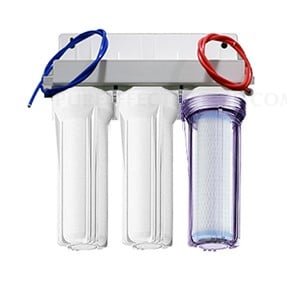
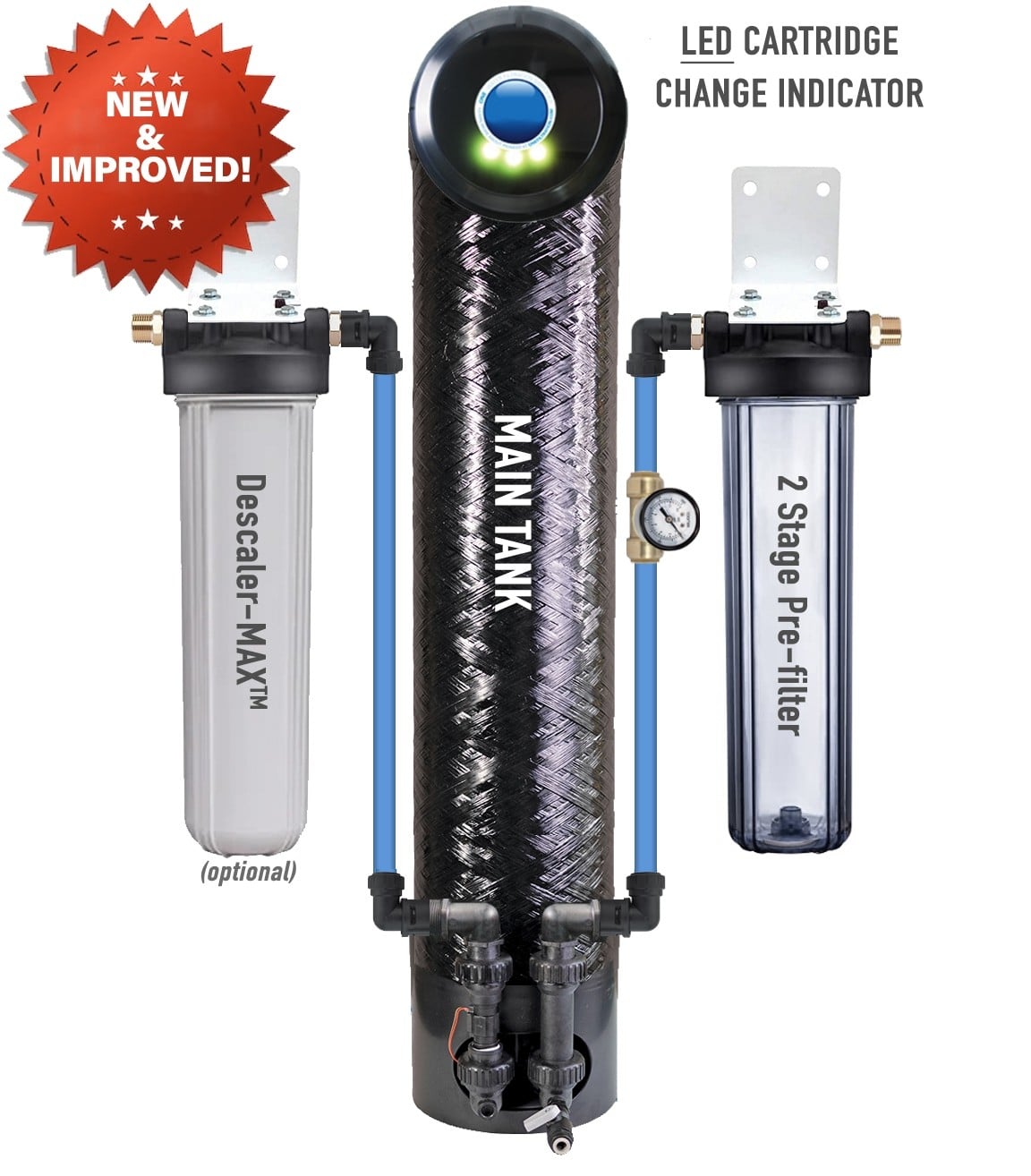
Best for: Fluoride removal without reverse osmosis, or renters who want advanced filtration without installation. Also a good option for those concerned about radioactive contaminants.
Types: Mostly under-sink filters, but they also have a whole-house and shower filter
Up-front price: ~$195-$2,649.00, depending on the model
Replacement filter cost + frequency: Filters replaced every 6-12 months depending on usage; $68-$650
Filtration media: Dual catalytic carbon block, proprietary FluorSorb-MAX (fluoride), zeolite (radiation), KDF; UV-LED available on Disinfect models
Certifications: No NSF performance certifications; filter housings are NSF certified for material safety. Third-party test results published on website.
HSA/FSA eligible? Do not appear to be at this time
Pure Effect is a small, family-owned brand that offers something different from most of the other filters on this list: their systems can remove fluoride without using reverse osmosis. (That means more effective filtration without wasting water!)
They use a proprietary calcium and carbon-based media called “FluorSorb-MAX” (not activated alumina) that has shown to be effective at fluoride removal, while retaining beneficial minerals and maintaining alkaline pH.
This can also be a great option for apartments because their countertop models connect to your existing faucet with a simple diverter valve, so there’s no drilling or separate faucet needed.
They also have under-sink models for homeowners who have a separate faucet.
I don’t love that these don’t come with certifications, but they do publish their third-party test results for a lot of different contaminants right on the product pages, so I do appreciate that. Also, the filter housings themselves are NSF certified for material safety.
No electricity required (unless you’re using the UV add-on).
Made in the USA.
Cloud RO
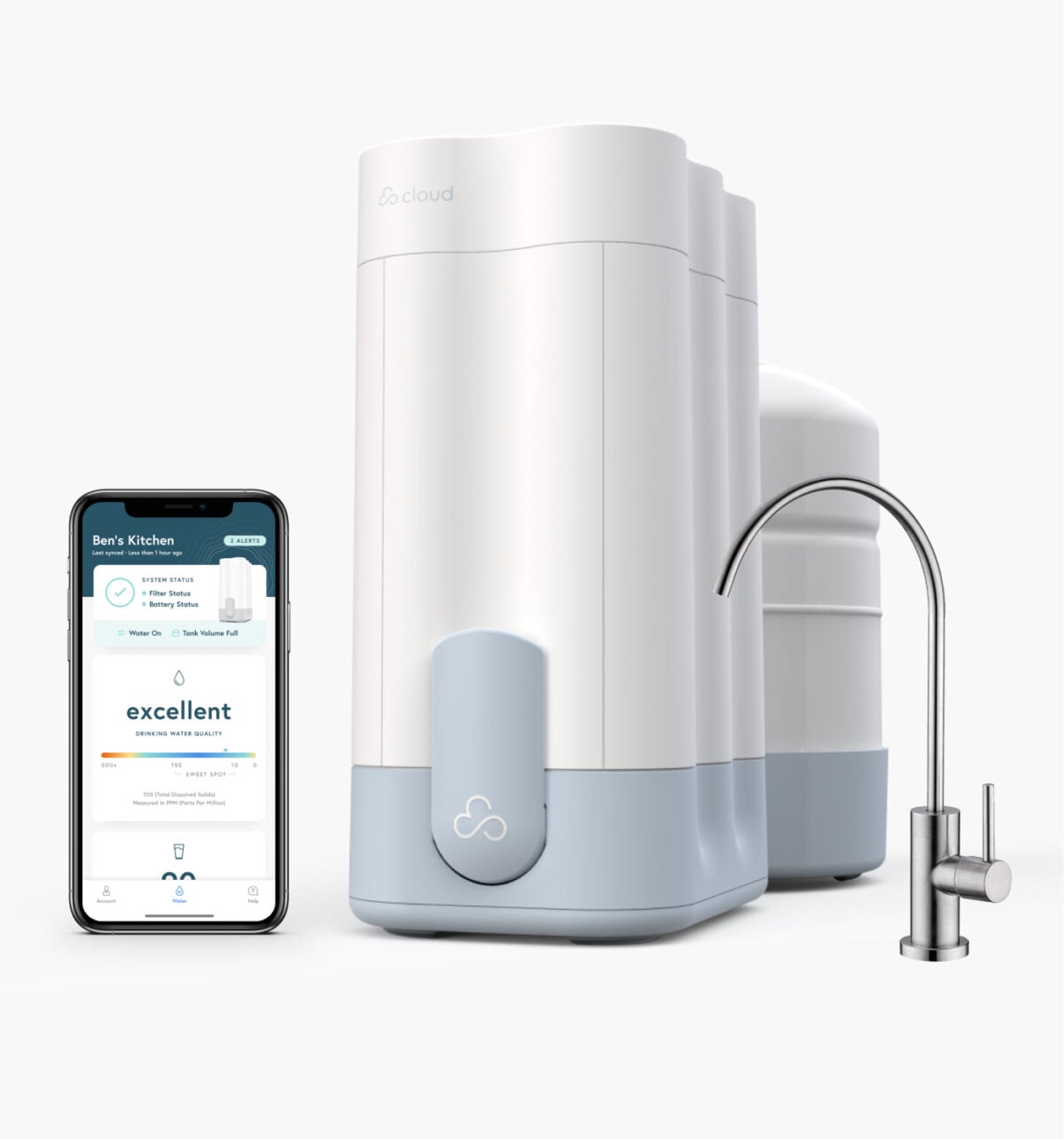
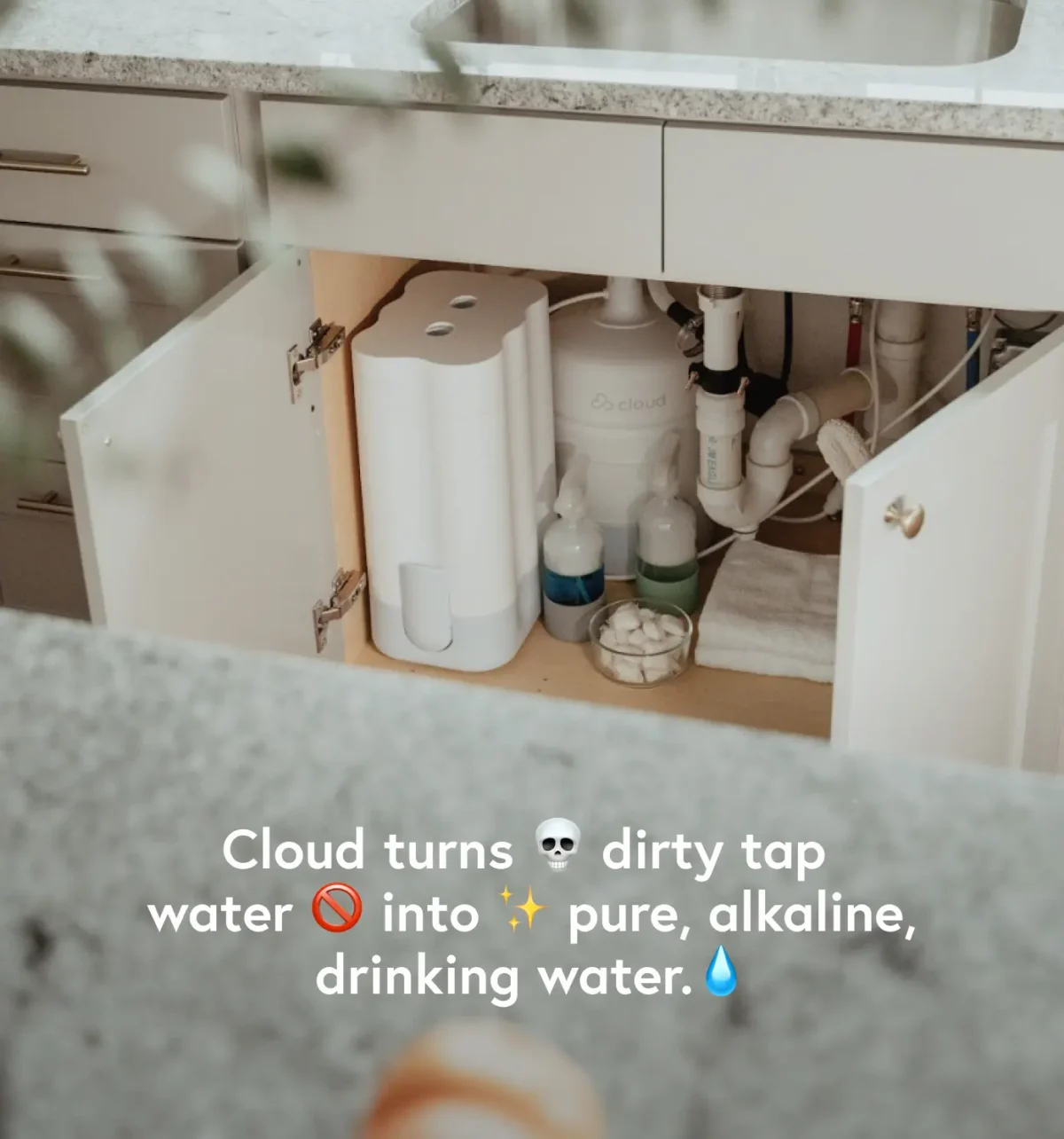
Best for: People who like sleek setup-ups and smart devices (combined with thorough filtration). Mostly for homeowners, as a drinking water faucet is required.
Types: Under-sink (they only have one product at this time)
Up-front price: ~$649 (but sales and discounts are common)
Replacement filter cost + frequency: ~$200/year. Pre/post filters every 6 months, RO membrane every 18 months
Filtration media: Reverse osmosis system: sediment filter, activated carbon block, reverse osmosis membrane, remineralization post-filter
Certifications: NSF 58 certification (which is specifically for RO systems and looks at a range of different contaminants). They say they are working on additional official certifications. You can see the test results here.
HSA/FSA eligible? Yes, through Truemed
This one is for you if you have an Oura ring, a Snoo bassinet, or an Eight Sleep mattress. In other words: you’re into the smart trackers!
Cloud RO is not only sleep and easy-to-install, but it also has a companion app that tracks water quality, consumption, and filter life in real time. So you’ll never have to worry about missing a filter change or wondering if something is wrong.
Although installation is necessary (and still requires a hole for a separate sink faucet), Cloud is designed to be more compact, efficient, and user-friendly than traditional under-sink RO setups.
It uses a 4-stage filtration process (your typical 3-stage RO, plus a built-in remineralization post-filter) to remove up to 99% of contaminants, including fluoride, PFAS, lead, pesticides, and pharmaceuticals. The remineralization stage adds back minerals like calcium and magnesium and raises the water’s pH to a more alkaline level.
Cloud does waste water (as all RO systems do), but at a 1:1 ratio, which is significantly better than the 1:4 ratio of traditional RO systems.
It does not require an electrical outlet; it runs on a battery pack (which will also need to be changed with the filters).
Made in China.
Kind Water Systems
Best for: Homeowners who want filtered water from every tap (including showers) and/or salt-free hard water conditioning
Types: Whole-house and under-sink systems for city and well water. They also have more specialized products such as water softeners (salt & salt-free), UV purification, and iron filtration.
Up-front price: ~$400 (under-sink RO) to ~$3,700 (E-4000UV), depending on configuration
Replacement filter cost + frequency: ~$120-$300/year; sediment and carbon filters replaced every 6-12 months, salt-free conditioning cartridge lasts the lifetime of the system
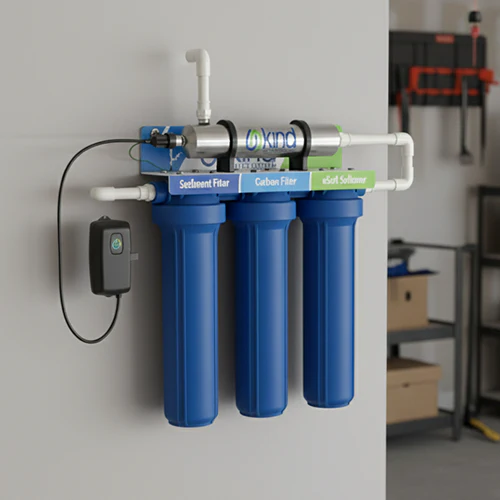
Filtration media: 5-micron sediment filter, solid catalytic carbon block, eSoft salt-free conditioning cartridge (TAC technology); UV available as add-on
Certifications: NSF certified 42, 61, 372, and/or 58 (depending on the specific product)
HSA/FSA eligible? Does not appear to be at this time.
This one might be for you if you have hard water but want a salt-free solution.
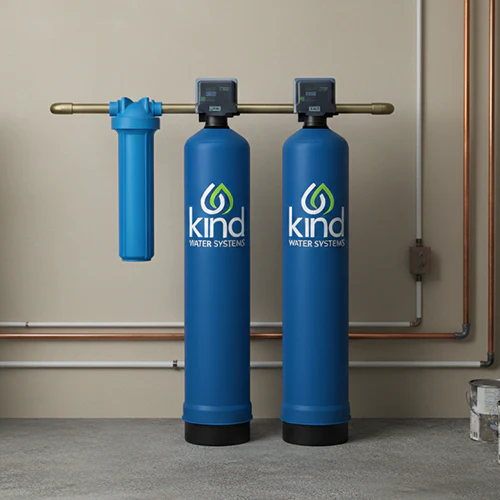
Their systems use catalytic coconut shell carbon block filtration to remove chlorine, chloramine, VOCs, pesticides, sediment, and other contaminants from every tap in your home, including showers.
They offer several whole-house configurations, whether you have municipal or well water, hard or soft water. The E-3000 is their most popular pick for people who have hard water.
They also have an under-sink reverse osmosis option, which you can either use on its own (if a whole-house filter is not in the budget), or in addition to the whole-house filter if you want even more filtration for your drinking/cooking water. The whole house filter doesn’t remove harder-to-filter chemicals like PFAS, which is why you may want to add an additional filter for drinking. I will note that the RO system does waste about 3 gallons for every 1 gallon of purified water, which is more than the Cloud option.
The whole-house systems are compact, wall-mounted, require no electricity, and come with a limited lifetime warranty.
I do not love that the lack of information on testing and certifications. I cannot find published third-party test results or information about specific contaminants the way I can for some of the other brands listed here. However, Brian at Water Filter Guru has done his own comprehensive testing. Based on his (very extensive) experience, he gave the Kind Water E-1000 the “best cartridge based” whole house filter pick.
Be aware that these systems may be a bit more difficult to install on your own. If you need some extra support, check here or don’t hesitate to reach out to their team for help.
If you’re not sure which filter is right for you, you can take their quiz to get a personalized recommendation.
Does not require electricity.
Made in the USA.
What about shower filters?
Stay tuned! I do have a shower filter guide, but a lot of new brands have come onto the market since I originally published it. I plan to update that soon!
How to find out what’s in your water
If you ask me, most people don’t really need to test their water before choosing a filter.
We already know that virtually everyone’s tap water is contaminanted, and in most cases, you’re going to end up with the same conclusion: get a good multi-stage filter that covers the broadest range of contaminants possible.
That said, if you’re curious about what’s specifically in your water, there are a few free or low-cost ways to find out:
- Your municipality is required to publish an annual water quality report, which you can usually find by googling “water quality report [your city] [year].”
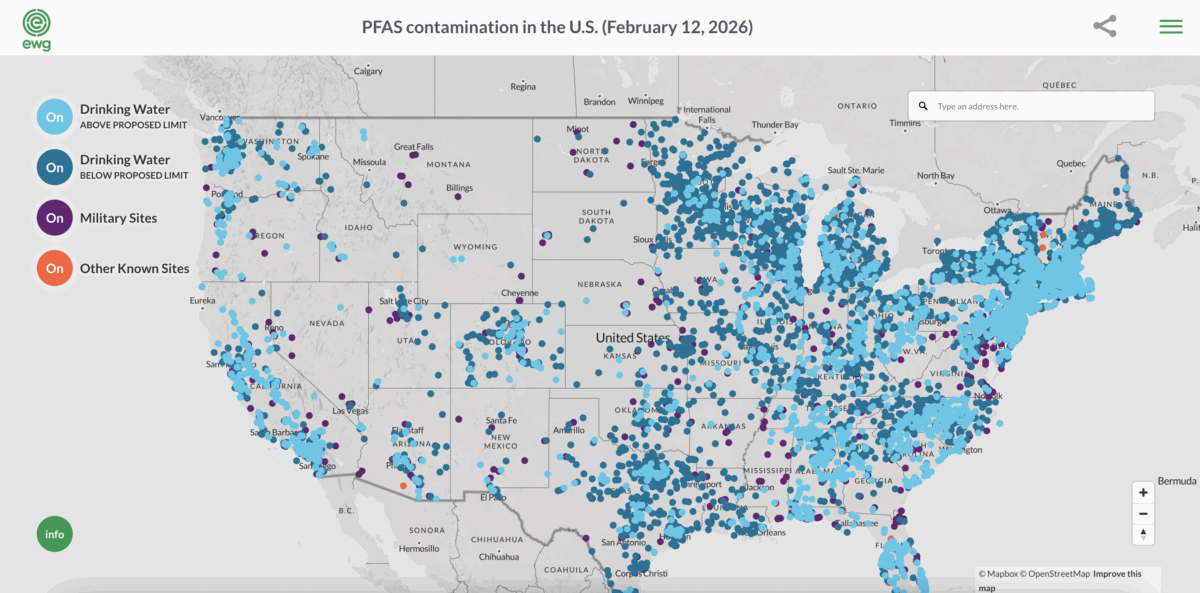
- The EWG Tap Water Database is another great resource that lets you look up your zip code and see which contaminants have been detected in your local water supply, how they compare to legal limits, and which ones don’t have legal limits at all. (EWG just pulls publicly-available data together to put it into an easy-to-use tool.)
You probably don’t need to test your water first
Again, I personally don’t think it’s necessary for most people to spend money on testing before buying a filter.
That said, if you do want a more thorough analysis of your specific water (for example, if there’s been a chemical spill in your area, or if you’re on well water), Tap Score is a consumer-friendly testing service that makes the process easy.
Contaminants you want to filter out
While water treatment facilities do a great job of protecting us from acute illness caused by biological contaminants, they were not designed to remove many of the chemical contaminants that are now prevalent in our water supply. Even the ones that are regulated aren’t always kept within legal limits.
So here are the main types of contaminants we are looking to filter out of our water:
PFAS: Nicknamed “forever chemicals,” PFAS are found in everything from nonstick cookware to firefighting foam. They’ve made their way into drinking water across the country. They’re linked to cancer, thyroid dysfunction, reproductive issues, and more.
In April 2024, the EPA finalized the first-ever enforceable drinking water limits on six PFAS chemicals (there are over 15K different types); however, in 2025, four of those limits were rolled back. In other words: it’s very much up to us to filter PFAS out of our drinking water.
Best removed by: Activated carbon (solid block preferred), reverse osmosis, ion exchange
Heavy metals: Heavy metals like lead, arsenic, and hexavalent chromium (aka the “Erin Brockovich chemical”) can leach into water from aging pipes, natural deposits in the earth’s crust, and industrial contamination.
How much of each you’re exposed to depends a lot on where you live—for example, arsenic concentrations tend to be higher in parts of the Northeast, upper Midwest, and Texas due to natural geological deposits, while lead levels are often worse in older cities with aging pipe infrastructure.
You probably already know that there is no safe level of lead exposure according to both the EPA and the CDC, and yet a 2021 NRDC analysis found that roughly 56% of the U.S. population was drinking water with detectable lead levels above what the American Academy of Pediatrics recommends for children.
Best removed by: Reverse osmosis, activated carbon (for lead and mercury), ion exchange (for arsenic), KDF, distillation
Chlorine & chloramine: Chlorine and chloramine are added to water on purpose. These are the disinfectants used to kill bacteria and prevent waterborne disease
This is obviously very important, but there is a trade-off. Drinking chlorinated or chloraminated water long-term has been associated with increased risk of certain cancers and other health concerns such as heart disease.
It’s worth knowing which one your municipality uses, because they require different types of filters to remove. (Chloramine is more difficult to remove.)
Best removed by: Activated carbon (for chlorine), catalytic carbon (for chloramine), KDF, vitamin C (partial chloramine reduction)
Disinfection byproducts (DBPs): When chlorine or chloramine react with the natural organic matter in water, they create disinfection byproducts, including trihalomethanes (THMs) and haloacetic acids (HAAs).
These are linked to bladder and colon cancer, reproductive problems, and birth defects.
So basically: while disinfection (via chlorine or chloramine) is necessary, we should also be filtering out the resulting contaminants afterward.
Best removed by: Activated carbon, catalytic carbon, reverse osmosis
Fluoride: Fluoride is added to roughly 72% of U.S. public water systems for cavity prevention, but, I’m sure you know, it’s controversial!
Most countries in the Global North—including 97% of Western Europe—actually don’t fluoridate their water, and WHO data shows no significant difference in cavity rates between fluoridated and non-fluoridated countries. The overall decline in cavities has been largely attributed to fluoridated toothpaste (which, importantly, is topical, not ingested) improved dental hygiene, and better access to dental care—not water fluoridation.
Health concerns associated with fluoride include dental fluorosis, thyroid suppression, and neurotoxic effects in children, and others.
Best removed by: Reverse osmosis, activated alumina, distillation
Microplastics: Tiny plastic particles are not just a problem with bottled water—they’re in tap water too. A 2017 study found microplastics in 94% of U.S. tap water samples tested (and 83% worldwide).
Research on the specific health effects is still emerging, but what we do know about plastic’s impact on human health—combined with the fact that microplastics can cross the blood-brain barrier and act as carriers for other toxic chemicals—is reason enough to filter them out.
Best removed by: Reverse osmosis, solid block carbon (0.5 micron or smaller), distillation
Pesticides: Pesticides like atrazine and glyphosate are widely used in agriculture and end up in our water supply through runoff.
Atrazine, which has been banned in the EU since 2004, is one of the most commonly detected pesticides in U.S. tap water and is linked to endocrine disruption, birth defects, and cancer. And glyphosate was classified as “probably carcinogenic to humans” by the IARC in 2015.
Other widely-used pesticides that are linked to negative health effects include chlorpyrifos, dicamba, and others.
Best removed by: Activated carbon, reverse osmosis, distillation (limited effectiveness for some pesticides)
Pharmaceuticals: Prescription and over-the-counter drugs enter our waterways through human waste, agricultural runoff, and improper disposal.
This includes everything from antibiotics and antidepressants to hormones, blood pressure medication, and more.
Most water treatment facilities were not designed to filter these out, and the EPA currently doesn’t regulate any pharmaceuticals in drinking water.
Best removed by: Activated carbon, reverse osmosis, distillation
Biological contaminants: Bacteria, viruses, and parasites (including Legionella, Cryptosporidium, E. coli, and others) can cause acute illness and are especially dangerous for immunocompromised individuals, the elderly, and young children.
Filtering these things out is the one thing our modern-day treatment facilities are actually really good at. That said, it does still happen, so it’s worth being aware of and taking boil advisories seriously.
Best removed by: UV, distillation, reverse osmosis; also addressed by boiling in emergency situations
Radioactive contaminants: Radioactive elements like radium and uranium occur naturally in the earth’s crust and can seep into groundwater, especially in areas where activities like fracking and mining have disturbed deeper bedrock.
The EPA does regulate radium and uranium in drinking water. Health effects of exposure include cancer, immune suppression, and anemia.
Best removed by: Reverse osmosis, ion exchange, distillation
Other contaminants worth mentioning: This is far from an exhaustive list. There are other contaminants commonly found in drinking water—including nitrates, perchlorate (used in rocket fuel and fireworks), and many others. In total, over 300 contaminants have been detected in U.S. drinking water systems, and only 90 are federally regulated.
Types of filtration media
There are quite a few different types of water filtration media out there. None of them are perfect—they all have their pros & cons. Here are the basics about each one:
Activated carbon: This is the most common type of filtration media on the market. It’s what’s in most pitcher filters, faucet attachments, and fridge filters (including your standard Brita).
It works well for removing chlorine, VOCs, pesticides, and some disinfection byproducts.
There are two main subcategories: granular activated carbon (GAC) and solid block carbon. Solid block filters generally do a better job because the water passes through more slowly, giving contaminants more time to get trapped, but they do filter more slowly as a result.
Carbon filters cannot effectively remove chloramine, fluoride, arsenic, nitrates, or bacteria, which is why the best filters combine carbon with other types of media. When shopping, you’ll ideally want to look for filters that can filter down to 0.5 microns or smaller.
Catalytic carbon: This is a more specialized (and usually more expensive) form of carbon that can do everything activated carbon does, plus remove or significantly reduce chloramine (which regular carbon can’t do).
It’s also more effective at removing disinfection byproducts and hydrogen sulfide (the rotten egg smell some people notice in their water). You’ll usually find catalytic carbon in multi-stage under-sink filters rather than in pitchers.
Reverse osmosis (RO): RO is one of the most thorough filtration methods available. It removes the vast majority of contaminants, including many that other filters can’t touch— like fluoride and PFAS.
Filtering out practically everything sounds great, but it’s not without its downsides:
- When I say it removes everything, I mean everything—even the good stuff. It strips out beneficial minerals like calcium, magnesium, and potassium, so you’ll want to add a remineralization step at the end.
- It also wastes water. Some systems use 3 to 9 gallons of water to produce just 1 gallon of filtered water, though some newer brands have reduced that significantly.
Distillation: This one is similar to RO in that it removes a very wide range of contaminants, including fluoride. The biggest drawbacks here are speed and energy use. It can take around 3 hours to produce one gallon of water, and it requires electricity to run. Like RO, it also removes beneficial minerals. It’s less effective against certain VOCs and some pesticides, so it’s best paired with a carbon pre- or post-filter.
Ion exchange: These filters use resin beads to swap contaminant ions (like arsenic, nitrates, perchlorate, and radionuclides) for sodium ions, making them a good option for water softening as well.
You’ll usually find ion exchange as one part in a multi-stage under-sink or whole-house system (not in pitchers).
One thing to note: because it adds sodium to the water, it may not be the best choice for people managing high blood pressure. Some cities and states have also banned water softeners, including ion exchange systems, due to their environmental impact on local waterways. So that may be something to consider as well.
KDF: KDF (kinetic degradation fluxion) filters use a blend of copper and zinc to trigger a chemical reaction that breaks down contaminants into less harmful forms.
They’re effective at removing chlorine and heavy metals like lead, mercury, and chromium. They can also help reduce chloramine, though they’re usually paired with catalytic carbon for more complete chloramine removal.
KDF is one of the few filter types that can handle hot water, which is why it’s commonly used in shower filters.
UV: UV filtration is great for killing biological contaminants—bacteria, viruses, and parasites like E. coli, Cryptosporidium, and Giardia.
But it doesn’t remove chemical contaminants like PFAS, pesticides, or heavy metals, so it should always be used alongside another type of media.
UV may be especially worth considering if you’re on well water, where biological contamination risk is higher. It does require electricity (or a battery, in the case of UV water bottles).
Vitamin C: Vitamin C filters are decent at neutralizing chlorine and can reduce chloramine by around 30%, but they don’t do much for heavy metals, PFAS, pesticides, or other chemical contaminants. You’ll mostly see them in shower filters, often paired with KDF or carbon.
Activated alumina: This is one of the few filtration media that can remove fluoride (in addition to RO and distillation), making it an important option if fluoride is a concern for you. Worth noting: despite the name, activated alumina is not aluminum and does not add aluminum to your water.
A note on fridge filters
Most refrigerator filters use basic granular activated carbon, which means they’re mainly improving taste and odor by reducing chlorine and some particulates. They’re generally not removing things like PFAS, fluoride, heavy metals, or pharmaceuticals.
If your fridge filter is your only line of defense, it’s better than nothing, but it’s worth considering a more robust filter for your drinking water.
What water filter certifications to look for
When shopping for the best water filter system for your home, you’ll probably come across NSF/ANSI certifications. Here are the key things to know:
- There are no federal regulations on water filters in the U.S., so NSF/ANSI certifications are the closest thing we have to a quality assurance system. They’re voluntary for water filter companies, but they’re the best way to verify that a filter actually does what it claims to do.
- Not all certifications are equal. There are different standard numbers that cover different things. For example, NSF/ANSI 42 only covers aesthetic improvements like taste and odor, while NSF/ANSI 53 covers health-related contaminants like lead and VOCs. Always check the standard number and which specific contaminants are included.
- A filter that isn’t certified isn’t automatically bad. Certification is expensive (we’re talking $30,000 to $80,000 per product, plus annual renewal fees), so many smaller companies skip it or certify for only a few contaminants. If a filter isn’t certified, look for published third-party test results on the company’s website.
- Watch out for misleading claims. It can get confusing. There’s a difference between “NSF certified” and “tested to NSF standards.” Additionally, certifications like NSF/ANSI 372 only means the filter device itself is lead-free, not that it removes lead from your water.
Sorry to say it, but the topic of water filter certification is a rabbit hole in and of itself. I go into a lot more detail, including a breakdown of all the different standard numbers, in my full guide to NSF/ANSI water filter certifications, so check that out if you want to learn more.
This is by no means an exhaustive list of every water filter that can adequately clean your water. If there’s another brand you have in mind or if you have any questions, let me know in the comments and I’ll try to help you shop!



Do you know what drinking water system Ocean Robbins recommends?
I do not.
Hi! Was wondering about the Culligan gravity filters? Are these a good option? Thanks!!
actually, their MaxClear line looks pretty good!